
Best Business Process Management Software in
Are you looking for Business Process Management Software for your Business in ? SaaS Adviser brings you the best Business Process Management Software to ease your worries. In order to make your work smooth and swift, SaaS Adviser has compiled a list of the best software available. Compare the Best software features, pricing, free demo, and trial to select the best Business Process Management Software for your organization.
 Researched and Written by Akash Patel
Top 3 Featured Softwares


List of Top Business Process Management Software

Get Free Consultation


What Is Pipedrive?Pipedriv Read More...
View Profile

What is Monday.com?Monday.com is a cloud-based Work Operating System (Work OS) designed to help teams plan, track, and manage their projects and workflows efficiently. Its high...
View Profile
.jpg "Visma-eAccounting")
Visma eAccounting is ideal for small businesses that need a scalable, user-friendly, and cost-effective accounting solution. Whether you’re a sole trader or running a growing ent...
View Profile

Trainual is a cloud-based training and process documentation platform designed to help businesses organize their knowledge, standardize operations, and streamline employee onbo...
View Profile

Sage Accounting software is designed to provide small and medium businesses around the world with the information, insight, and tools they need to grow their businesses. With its s...
View Profile

The best thing about Kissflow is that it is very user-friendly and can be integrated with other software and applications easily. Kissflow is an automated workflow software whic...
View Profile

Appian is a low-code and unified app development platform that enables enterprises of all sizes to rapidly develop powerful customized applications. Appian provides industry-leadin...
View Profile
Bizagi offers a business process management (BPM) package that is perfect for businesses. This package offers features like automation, modeling, and execution of business operat...
View Profile

Nintex is a workflow automation software that enables optimization, management and automation of business processes using drag and drop designer tools. It creates documents, forms,...
View Profile

Pipefy is a Work Management platform that gives users the ability to streamline and automate any business process, from employee onboarding to customer service to agile development...
View Profile

Process Street is a cloud-based task manager that helps users with diverse business solutions. It contains different useful features, such as business process management, quality m...
View Profile

ProcessMaker provides workflow software solutions that help businesses improve efficiency by building, running, reporting, and optimizing business processes in a user-friendly inte...
View Profile

Creatio CRM

AI-Native Platform to Automate CRM and Workflows with No-Code
Creatio CRM is a comprehensive no-code/low-code customer relationship management (CRM) platform designed to optimize sales, marketing, and customer service operations. It offer...
View Profile
FlowForma is a no-code business process automation and management tool that is designed to empower businesses to digitize a wide range of processes from the comfort of their device...
View Profile

Mobile2b
Business Process Management & Workflow Automation Platform
Mobile2b is a German-based technology company that specializes in mobile enterprise applications, workflow automation, and IoT (Internet of Things) solutions. The company develops ...
View Profile

iGrafx is a top-tier Business Process Management (BPM) solution that facilitates identification and correction of resource bottlenecks for enhanced efficiency. Its executive strate...
View Profile

Microsoft Flow
By Microsoft Flow
Microsoft Flow enables you to create automated workflows that connect your apps and services, saving you time and boosting productivity. For example, you can use Microsoft Flow t...
View Profile

What is Comindware TrackerComindware Tracker is a workflow and task management software designed to automate and streamline business processes without requiring complex coding. It ...
View Profile

What is Zoho Creator?Zoho Creator is a low-code application improvement platform that empowers companies and individuals to build custom apps fast with minimal coding. It simpl...
View Profile

AgilePoint NX
By AgilePoint NX
AgilePoint NX is a Low-to-no-code Application Development platform that empowers businesses to easily build responsive business applications. AgilePoint NX accelerates Digital Tran...
View Profile

Table of Content
What Is Business Process Management Software?
Most organizations have daily work processes that have many steps, approvals and handovers that are easy to get lost or may be delayed. These can be enhanced with the use of Business Process Management Software, which offers a systematic way of designing, implementing, and controlling tasks. It enhances visibility, lessens manual errors, and moves all activities in the correct order. It is often combined with the automation capabilities of present-day BPM software by many companies to accelerate the work of routine tasks, and a flexible business process management system promotes improvement. In massive and collaborative workplaces, companies usually contrast alternatives in terms of features comparable to the best workflow management software, particularly when considering the resources to find superior tracking, communication, and efficiency.
1. Which Features Of Business Process Management Software Drive Real Efficiency?
Contemporary organizations have to deal with several tasks, approvals, and documentation daily. Business Process Management Software offers an organized manner of designing, tracking and refining normal workflows to accommodate these operations without a hitch. It allows minimization of manual mistakes, aids in automation and provides complete visibility in the departments. This strategy is used by many companies to simplify complex activities and enhance productivity. The following are the core and advanced features that contribute to the actual operational efficiency.
1. Core Features
The key functions of BPM software that facilitate daily working processes, enhance visibility and lessen manual work are core features. They assist teams to organize, monitor performance and be consistent throughout the business operations.
-
Process Modeling And Design: The aspect assists in visualizing workflows and constructing process maps in a simple design. It enables companies to design step wise sequences and modify flows with ease. It is also used in many organizations together with business process management solutions to enhance consistency. This is more beneficial when compared to business process management software for assessing flexibility.
How it Helps: It makes the instructions of processes clearer and minimizes confusion and delays. The support teams can respond quickly to consumers as the tasks are organized in a systematic sequence.
-
Workflow Automation: It automatically directs the tasks to the appropriate individual and eliminates repetitive manual labor. This is preferred by companies to enhance turnaround time and eliminate unwarranted delays. It can be commonly found in the best business process management software that can be used to support different approval cycles.
How it Helps: Information processing is faster and problems are solved faster. At the consumer level, there is reduced error in handling of the manuals and an accelerated delivery of services.
-
Forms And Data Capture: Forms make teams reliable in gathering vital information. They minimize mistakes and omissions and assist in keeping data clean. When used with a business process management platform, these forms are more efficient in most instances to enhance traceability.
How it Helps: Consumers are not asked the same question again and again as information remains structured. Service teams are also more accurate in communicating with them.
-
Reporting And Analytics: The dashboards present the real-time status and bottlenecks. Analytics assists the decision makers to learn the trends in performance. This is a feature that is frequently applied by organizations to a BPM solution in order to track output and efficiency.
How it Helps: Business people also benefit as the flow of service is smoother since internal wastes are easily detected. Their problems are solved in a more stable way through factual understanding.
-
Integrations: This is a characteristic linking third-party software and minimizing data silos. It allows teams to operate within a single environment as opposed to switching systems. Integrations are also used by many businesses in order to compare business process management software with others in terms of compatibility.
How it Helps: Customers do not delay until they receive information that is contained in other tools. The service teams are able to reply immediately due to the connection of all records.
-
Document Management: It can secure files and can be accessed within workflows easily. This aspect enhances control inversion and the security of confidential data. This is compared to the best document management for remote teams by remote organizations in the review of storage options.
How it Helps: Accurate documents are given to the consumers without a mix-up of files. Their personal records are safeguarded in all departments.
-
Task and Case Management: Priorities, deadlines and responsibilities can also be attributed to teams. It maintains activities in a structured manner. This is also a consideration of many organizations aiming to get better task-handling support when combined with the best BPM tools.
How it Helps: Consumers receive quicker tracking of issues and fewer communication breakdowns. They are dealt with equally regarding their problems.
-
Access Control and Permissions: This aspect will make sure that sensitive information is only accessed by authorized individuals. Role or department-level permissions are possible. Companies assess this using BPM software solutions to meet compliance requirements.
How it Helps: The consumers are confident that no unauthorized personnel can access their data. It minimizes the threat of illegal exposure.
2. Advanced And Emerging Features
Modern technologies, such as AI and predictive analytics, have been applied to advanced and emerging features to automate complicated workflows and serve to assist in smarter decision-making. These are the abilities that enable companies to grow more quickly than their needs are evolving.
-
Low-Code/No-Code Development: The tools allow users to create custom flows without complex programming skills. They facilitate experimentation and updates at a faster rate. They are frequently used by companies as a component of BPM software to reduce the time spent in development by a small business.
How it Helps: Changes in the features are delivered to the consumers earlier since they do not require much time to construct. The support teams have the opportunity to make the forms and steps consumer-centric.
-
Artificial Intelligence (AI) and Machine Learning (ML): AI predicts delays based on past trends. ML automates the points of decision within workflows. This is compared to free business process management software by many teams to check the depth of automation.
How it Helps: Consumers receive faster approvals, smarter suggestions and better query solutions. AI minimizes redundant validation procedures.
-
Robotic Process Automation (RPA): RPA processes contain eventual clicks, data transfer, and system updates. It liberates employees to work significantly. RPA entry is frequently reconsidered as one of the popular BPM tools to be used in the future.
How it Helps: The consumers enjoy speed in entering their data, reduced errors and faster service updates. They also have a shorter waiting time.
-
Collaboration Tools: These enhance text messaging, remarks, as well as joint perceptions of activities. They substitute fragmented e-mail exchanges. There are also many organizations that seek the best collaboration software to enhance more powerful communication.
How it Helps: Customers receive regular reports on the progress of issues. Their requests do not become misplaced across departments.
-
Role-Based Access Control: The roles designate what information can be accessed or changed by a particular individual. It helps to avoid abuse and enhance security. This is evaluated by teams when they are checking the top 10 business process management tools in order to check their compliance.
How it Helps: Customers are safer in their data manipulation and are less worried about their privacy. The requests are handled by qualified specialists.
-
Scalability: A scaling system is used to support the increase in users without performance degradation. It remains consistent with increased data. This will come in handy when choosing the best BPM software for small startups in 2025, as a small startup looking to expand in the long term.
How it Helps: There is no deterioration of service quality when under peak loads. Delays are not experienced by the consumers as the business activity increases.
-
Cloud Deployment: The deployment of a cloud eliminates the massive installation. It has remote access and automatic updates. When comparing the features to the best business management software, some companies are compared.
How it Helps: The system is available at all times and maintains uninterrupted services to the consumers. They also receive faster updates without delays in maintenance.
2. How Do The Benefits Of Business Process Management Software Drive Business Growth?
The ability of a business to respond swiftly to change, consistent operation, and smooth business growth depends on its business operations. Business Process Management Software is currently employed by modern organizations to simplify complicated operations, minimize delays, and have deeper control of everyday processes. With an established hierarchy in the departments, firms can eliminate wastage, duplication of work, and deliver more quickly. The size of the global market of business process management is estimated to be USD 20.38 billion in 2024 and USD 24.26 billion in 2025.
1. Enhanced Efficiency And Productivity
This advantage deals with the accomplishment of tasks in less amount of time, with reduced mistakes. Manual work can be minimized by automating repetitive processes and enhancing the quality of output by teams. It ensures that the departments are on track and produce results at the right time without incurring needless delays. Greater exposure to work also eliminates duplication of effort. This enhances the performance of the team over time and alleviates the stress of working.
-
Workflow Automation: Automation of workflow assists in eliminating manual work and repetition. It links various departments and makes each process operational in a proper sequence. Increased productivity through a dependable BPM tool saves time that teams spend on approvals and enables them to work on activities that are significant.
-
Bottleneck Removal: The feature determines the slack points of the process and puts into focus the wastage of time. Managers are able to identify the delays promptly and resolve them to fit into the other departments. It creates a seamless flow of processes, as is observed in numerous business process management cases.
-
Process Standardization: Standardization imposes regulations, styles, and procedures in every team. It eliminates confusion in the operation and prevents repetitive work. Compliance is also enhanced by consistency, which, in comparison studies on BPM tools, is frequently equated.
2. Significant Cost Reductions
This advantage will save additional time expenditures; it eliminates wastages, reduces rework, and ensures that the processes do not fail. Improved visibility and automation reduce the operational costs, which can save money and improve the performance of the business. It also means less reliance on manual labor to do manual work. The long-term profitability becomes attainable as the operations are made leaner.
-
Waste Elimination: This advantage eliminates redundant procedures and additional use of resources. It assists teams in focusing only on value-added activities, enhancing the quality of the end output. Software for the business process management strategies is supported by in depth insights.
-
Operational Savings: Minimized human error and automated processes reduce the cost of operation. Teams do not need many tools to achieve a lot and reduce the expenses in the long term. Such factors are considered by organizations in the business process management software comparison research.
-
Audit-Ready Compliance: Documentations and logs automatically remain updated. This eases the pressure at the time of an audit and it is in accordance with the regulations. Strong compliance tools are usually emphasized by the providers of business process management software companies.
3. Improved Agility And Adaptability
This advantage allows organizations to respond quickly to changes in processes because of the market. Teams are able to renew workflows without halting the operations, which will enable the teams to remain competitive and adapt to new needs. Processes can be changed immediately as the demands of customers change. This is necessary considering the high rates of technological changes in industries.
-
Rapid Adjustments: Organizations are able to change processes without disrupting the current work. New conditions and rules may be implemented immediately. Firms tend to pick the most favorable BPM software to favor fast modifications.
-
Continuous Improvement: Analytics help to make informed decisions. Companies are able to track their performance and modify regulations according to the outcome. This would be consistent with the growth-oriented business process management solutions.
-
Rapid Scaling: The system automatically changes with the workloads. Teams are able to handle additional requests and data without slowing down in terms of performance. It is also compatible with the platforms considered as the best SaaS project management software alternatives.
4. Better Customer Experiences
This advantage means that the customers will be served faster, consistently, and accurately. Fluent internal processes will lead to a cut down of waiting time and improve communication which will earn trust and satisfaction in the long run. The customers become more confident with the service when there are fewer errors. Greater responsiveness builds devotion and recompense for business.
-
Faster Service Delivery: Automated routing takes a shorter time to respond to customers. Problems are fast solved and satisfactory rates are enhanced. This is a typical asset of numerous BPM software used in small business deployments.
-
Consistent Interactions: All customers are provided with equal services in terms of quality and speed. This will ensure there is no miscommunication and trust is boosted. This is observed by businesses when they are venturing into the market of business process management BPM software.
5. Increased Visibility And Security
The advantage will give a good command over the process through real-time monitoring and secure access. It helps managers make insights in a very limited time frame, it averts unauthorized activity, and it also safeguards data. Through proper understanding, the leadership will be able to deal with issues promptly. Good access control also makes sure that there is adherence to security rules.
-
Real-Time Insights: Live dashboards will be used to indicate the current process status. The teams are able to monitor performance in real-time and make decisions accordingly. This openness is frequently covered in comparison of business process management software reviews.
-
Enhanced Security: Data usage by unauthorized persons is stopped by access-based controls. Permission is used to retain sensitive information. Security levels are an important element of any BPM solution.
6. Enhanced Employee Satisfaction
This is an advantage that the work environment is enhanced by minimizing redundant activities and promoting teamwork. Employees will be able to concentrate on valuable work and interact effortlessly, and become more confident about their jobs. Having a specific task assignment does away with the confusion of workload. When the level of daily friction is reduced, employee retention tends to rise.
-
Reduced Frustration: Automation eliminates monotonous work and employees can be able to work on areas that matter. This helps in the reduction of stress and enhances morale. It is also in line with similar tools that are of best task management software category.
-
Improved Collaboration: There is a possibility of communication between teams using the same platform. Collaborative dashboards will help to minimize misunderstandings and accelerate the completion of the project. The migration of business process management tools to alternatives to enhance teamwork is common among many users.
-
Empowered Teams: Access to correct information enables employees to make decisions at a quicker rate. It promotes responsibility and competence. These functionalities promote small groups choosing the most appropriate business management software strategy.
3. What Should You Look For When Choosing Business Process Management Software?
The choice of Business Process Management software is significant for the smooth operation of a company. The appropriate platform must enhance control of the working process, minimize human labor, and contribute to sustainable development. Flexibility, the power of automation, and ease of use should be reviewed by companies before picking the solution. Assessing those aspects, organizations can prevent downturns, eliminate mistakes, and enhance cross-departmental collaboration.
1. Usability and User Interaction.
The software must possess an easy-to-use interface that the employees can learn easily. Teamwork minimizes errors and reduces the time spent in training because of the easy navigation. Most businesses consider a BPM tools comparison to select platforms that have the most favorable balance of usability.
2. High level of Automation.
Automation functions eliminate human interventions and accelerate the process of work. They are also useful in ensuring accuracy in cases where there are many departments. In numerous business process management examples, the level of automation can be considered reliable.
3. The Integration with Other Tools.
A good BPM platform should comply with the available systems, such as email, databases, and project tools. Seamless integration prevents teams not to changing between multiple applications. To ensure efficient operations, many companies would rather use those that are compatible with the SaaS project management software.
4. Scalability to Future Growth.
The platform must be able to sustain the operations as the company expands. Modular workflows and customizable access will allow it to grow without interruption. Most companies are interested in the best BPM software solutions when it comes to long-term scaling.
5. Individualization and Adaptability.
The software is supposed to enable users to create workflows according to individual business requirements. Specialized regulations, approvals, and forms aid in ensuring the accuracy of processes. When considering business process management tools, teams tend to compare flexibility, particularly when combined with the best task management software in order to coordinate over a long time.
4. What Are The Top 5 Business Process Management Software Tools Leading The Market Today?
Process automation, compliance tracking, and operational efficiency are becoming hot topics of concern among modern organizations. The Business Process Management software assists firms in streamlining operations, eliminating human error, and gaining real-time visibility in operations. The tools mentioned below are familiar tools in any industry because of their scalability, flexibility of customization, and architecture that is easy to automate.
1. Appian
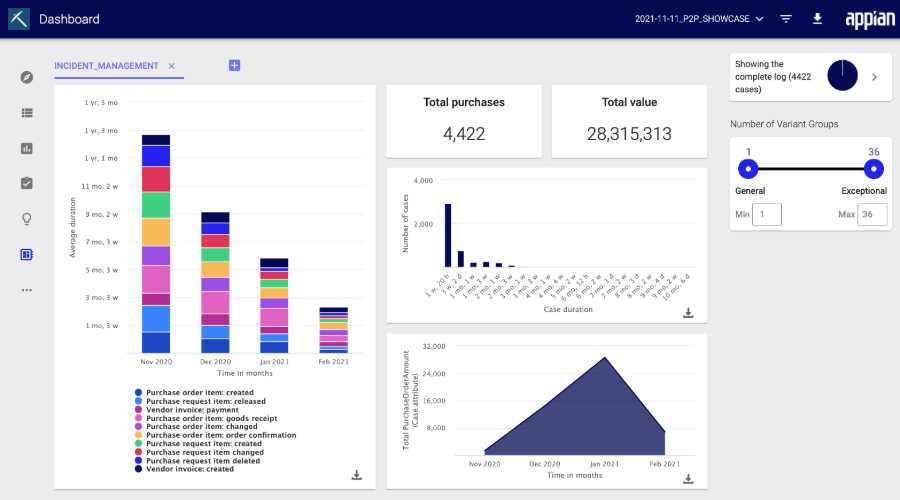
Appian is a high-power, low-code BPM platform designed to support enterprises that require automating complex workflows. It provides a clean interface, directed process modelling and good integration support of the existing business systems. Companies like Appian are selected because of their flexibility and ability to automate on an enterprise level.
Key Features:
-
Low-code workflow design that can be deployed quickly without high coding skills.
-
Live-time performance tracking and performance decision making.
-
Powerful compliance automation, which suits controlled sectors.
-
Artificial intelligence processes recommendations that improve both accuracy and productivity.
-
Multi-department workflow orchestration: Scalable.
Pros
-
Very flexible to the needs of enterprises.
-
Has strong security control and governance.
Cons
-
Training is necessary because it has high capabilities.
-
Reduced flexibility in the customization of design.
Pricing: Contact Appian sales to receive custom pricing
2. Kissflow
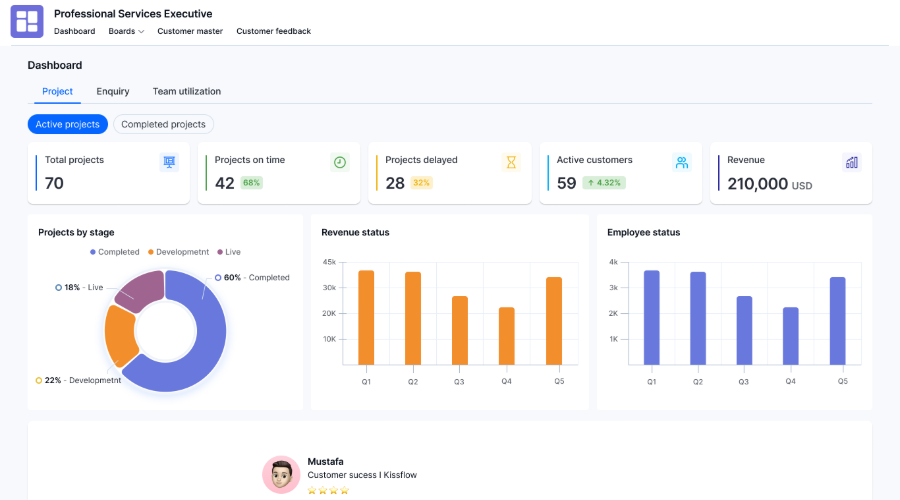
Kissflow has a reputation for being simple and having a strong workflow automation engine. It enables business units to develop automated processes without necessarily relying so much on IT units. Its user-friendly drag and drop platform renders it appropriate to the low-code digital transformation of companies.
Key Features:
-
Supporting repetition-related automation in the visual workflow builder.
-
Smart decision routing rule engine via the cloud.
-
CRM, HRMS, and core business application integration.
-
Operational, finance and HR-specific approval workflows.
-
Special analytics boards with process bottlenecks.
Pros
-
Extremely easy to use by non-technical employees.
-
Offers cloud performance with scalability.
Cons
-
Reporting graphics may be elaborate.
-
Poorly developed advanced AI automation.
Pricing: Pricing starts from $2,500/month.
3. Bizagi
Bizagi has good modelling features, and it is suitable for those companies that prefer simulation of processes prior to implementation. Its interface is centered on clarity, enabling teams to record workflows in a coherent and effective way and implement automation strategies effectively.
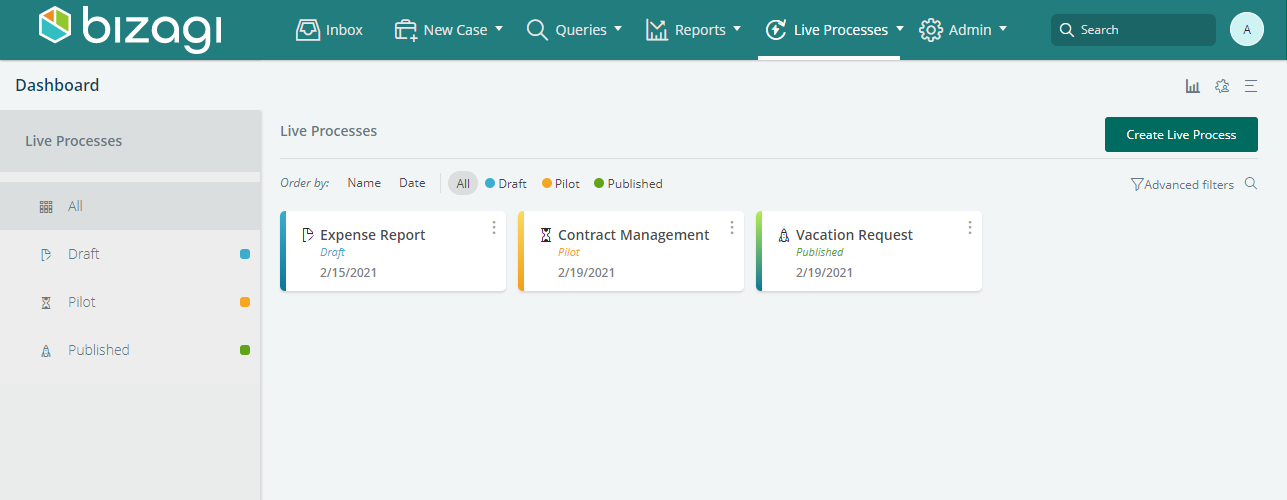
Key Features:
-
Tools to simulate processes used in workflows before rollout.
-
Documents easily through drag-and-drop modelling.
-
A cloud automation system to achieve higher performance.
-
Integration with other related operation systems like ERP and CRM.
-
Access control with governance and compliance attainment.
Pros
-
Superior to visualizing and testing workflows.
-
Vigorous auditing support documentation.
Cons
-
Learning curve for new users.
-
Premium support might be necessary to be customized.
Pricing: Bizagi has its own prices (contacting the official site is necessary).
4. Nintex
Nintex is a process mapping, automation, and document generation company operating on a single platform. It is popular, as it can be easily integrated with Microsoft platforms, SharePoint, and Teams.
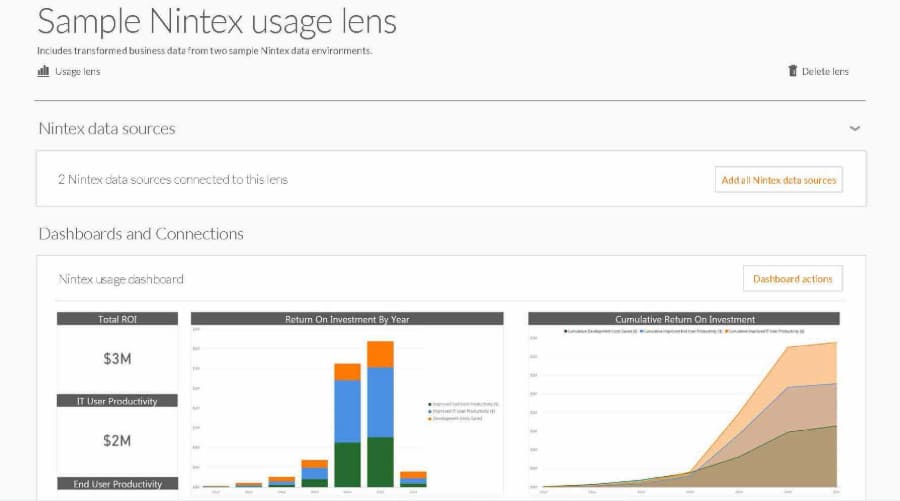
Key Features:
-
Process mapping tools to have a better view of the workflow.
-
Drag-and-drop automation designer less manual labour.
-
Document creation capabilities on templated outputs.
-
Repetitive actions handled by robotic Process Automation (RPA).
-
Optimization workflow analytics reports.
Pros
-
Close working with Microsoft products.
-
Multidimensional support of document automation of enterprises.
Cons
-
Licensing of advanced RPA is expensive.
-
The visual appearance of the interface might be more modern.
Pricing: Nintex has sales team-based pricing.
5. Processmaker
ProcessMaker offers a highly adaptable BPM platform that can be adopted in any organization that wants to have thorough control of automation. It can be used in process-intensive industries such as finance, healthcare, and operations, and is most efficient in terms of its architecture.
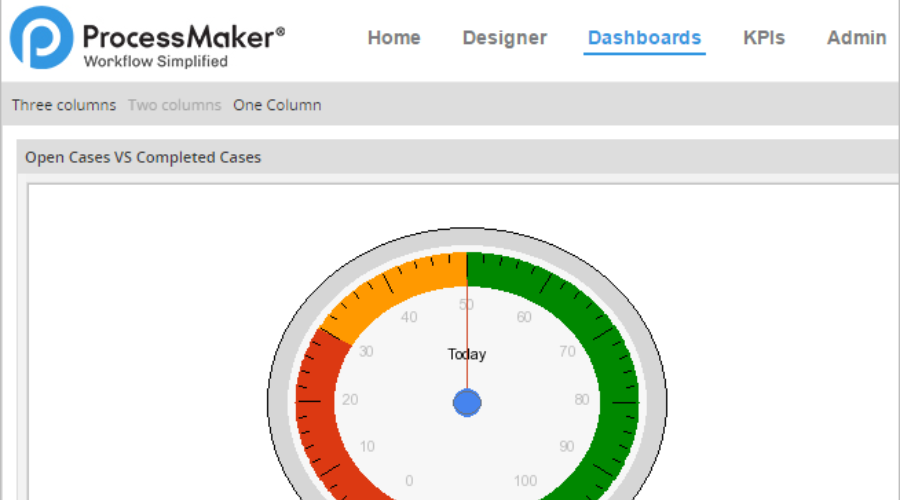
Key Features:
-
Creation of forms to facilitate the smoothing of data collection and routing.
-
API-based architecture to facilitate easier system connectivity.
-
Rule-based routing of multi-stage approval workflows.
-
Bottleneck-based dashboard analytics.
-
Drag-drop BPMN editor assisting in visual process drawing.
Pros
-
Highly adaptable to complicated processes.
-
Good API documentation of IT alignment.
Cons
-
This might involve professional administrators.
-
There are poor customization options in UI design.
Pricing: Pricing starts from $3,000/month.
5. Why The Importance Of Business Process Management Software Cannot Be Ignored In Modern Businesses?
The environment of the modern company is extremely competitive, and speed, accuracy, and seamless coordination are valued as never before. Business Process Management Software assists in organizing the processes, minimizing mistakes and ensuring transparent responsibility in departments. It promotes superior automation and improves the transition of tasks from one team to another. The more companies expand, the more complicated the processes are and it is more difficult to control them manually
1. Better Control of Operations.
BPM platforms enable managers to monitor tasks, deadlines, and responsibilities in a better way. They provide complete transparency of progress and prevent teams from neglecting significant steps. A lot of companies research BPM tools comparison in a bid to identify solutions that have powerful monitoring capabilities. With proper control of the operations, there will be consistency in the quality of output as it will be in all the departments.
2. Faster Adaptation to Change
Changing policies or requirements can be easily updated by using BPM systems. This is flexible in relation to industries that are quickly changing based on the market requirements. There are automation alternatives available in the software of the best low code development platforms used by some organizations to alter processes without excessive coding. The rapid changes avoid wastes of time and aid in ensuring efficiency in the case of transitions.
3. Increased Co-ordination within Teams.
BPM systems assist the departments in exchanging information with ease and reduce communication gaps. There are clear routing rules so that there is no confusion about tasks going to the right person. The majority of companies combine these platforms with the tools that resemble the top task management software to minimize the misalignment. Such coordination enhances the efficiency in delivery time and boosts internal cooperation.
6. Conclusion
Business Process Management Software is now a necessity to every firm that wants to remain efficient, scalable and competitive. It can assist organizations to enhance the decision-making process and ensure that the quality across the departments remains the same by standardizing workflows, minimizing manual errors, and providing real-time visibility. The automation, collaboration, and secure data manipulation are also supported by modern business process management tools, and the teams can concentrate on the activities that generate real value. As the demand increases, businesses will be able to respond promptly and make the communication process more efficient and lessen the expenses. With the changing world of technology, a comparison of the options using BPM tools becomes critical. Proper use of BPM leads to productivity, enhanced customer experience, and long-term development in dynamic markets.