
Best Database Management Software in
Are you looking for Database Management Software for your Business in ? SaaS Adviser brings you the best Database Management Software to ease your worries. In order to make your work smooth and swift, SaaS Adviser has compiled a list of the best software available. Compare the Best software features, pricing, free demo, and trial to select the best Database Management Software for your organization.
 Researched and Written by Nikita Rao
Top 3 Featured Softwares


List of Top Database Management Software

Get Free Consultation

ManageEngine Network Configuration Manager

Simplify network management with Network Configuration Manager!
Network Configuration Manager is an extensive tool for managing network configurations in a comprehensive manner. It includes capabilities such as backup, change management, co...
View Profile

Thordata
Easy Access to Web Data at Scale,Perfect for AI
Thordata is an advanced web data infrastructure platform designed to simplify large-scale data extraction, proxy management, and scraping workflows. It provides businesses and ...
View Profile
Aiven for PostgreSQL
By Aiven for PostgreSQL
Aiven for PostgreSQL is a SQL database that can be deployed in the cloud of your choice. It can be integrated into your existing workflows with the click of a button, and you can...
View Profile
MySQL is an open source relational database management system that is based on SQL or Structured Query Language. It helps to organize your business data in an orderly manner. ...
View Profile
Oracle Database software helps you manage data and process transactions easily. It supports data migration and replication, and also offers data conversion facilities. Performance ...
View Profile
This Business Intelligence software from Microsoft has everything you need to grow your business with the use of meaningful insights into your business. With Microsoft SQL Server...
View Profile

MongoDB is a cloud-based database management solution that can be installed on Mac and Windows. The software can also be availed as a SaaS version. It comes with multiple databas...
View Profile

MariaDB is an enterprise-level database solution that helps companies store their data and manage it efficiently. It is a powerful platform that supports transactional, analytica...
View Profile

Elasticsearch is a powerful search engine that can be used to solve a variety of different problems. It is centrally located so that you can easily access your data, and it allows ...
View Profile

DbVisualizer
By DbVisualizer
DbVisualizer is a successful software product with a word-of-mouth following and a user-friendly interface. It is focused on its original objectives and not bloated with unneeded...
View Profile

Teradata Vantage
Cloud analytics to drive faster innovationRegarding tackling the most difficult data problems at scale, Teradata is the leader in cloud data analytics platforms. It was created for a hybrid multicloud reality. We assist yo...
View Profile

OrientDB
By OrientDB
It is a database management system (DBMS) that helps software professionals to learn NoSQL database with easy and simple steps. It comes with a graph editor to visualise, modify an...
View Profile

What is MongoDB Cloud Manager?MongoDB Cloud Manager is a cloud-based service that enables users to deploy, screen, back up, and control MongoDB clusters through an intuitive interf...
View Profile
Amazon RDS
By Amazon Web ServicesLaunched in 2006, Amazon Web Services (AWS) started out exposing key infrastructure services to groups in the form of web offerings -- now widely called cloud computing. The final ...
View Profile

Toad Edge
By Toad Edge
Toad Edge is a desktop toolset that makes it easy to develop and manage open source databases. With Toad for MySQL and PostgreSQL, you can quickly master new database platforms. ...
View Profile
Neo4j Aura
By Neo4j Aura
Neo4j Aura is the best way to run Neo4j in the cloud. It is completely automated and fully-managed, so it delivers the world’s most flexible, reliable, and developer-friendly g...
View Profile

Claris FileMaker
By Claris
Check How Claris FileMaker can help to automate Indian Business. SaaSAdviser provide their list of features, pricing, Free demo and Comparison with the best alternative
View Profile
IBM Informix
Need for speed in threat detectionUtilize data in ways that are flexible and scalable indefinitely. A secure embeddable database that is well-suited for OLTP and Internet of Things (IoT) data is IBM Informix. SQL, ...
View Profile

Couchbase Server
By CouchbaseCheck How Couchbase Server can help to automate Indian Business. SaaSAdviser provide their list of features, pricing, Free demo and Comparison with the best alternative
View Profile
dbForge Studio for MySQL is a universal GUI tool for MySQL and MariaDB database development, management, and administration. The IDE allows you to create and execute queries, dev...
View Profile

Table of Content
What is Database Management Software?
Database Management Software is an application that allows effective storage, organization, and management of business data. Either clientele information, sales transactions, or any other form of information, whether small or big in quantity, the appropriate database software guarantees safety, accessibility, and ease of handling. A database management system software is, therefore, a digital filing system that controls how data is added, accessed, and maintained. The choice: to feed companies both complex and high volume data, especially in the analytics and AI age, would be whether to pick scalable Big data software. The aim is so basic: to organize data better, make swift decisions, and have everything run in an operating flow.
1. Conclusion
Managing your data effectively and safely depends a lot on selecting the right database management software. If you’re looking for flexibility, speed or advanced enterprise features, you can find the right option. And if you Still aren’t sure which solution would suit your business best then Let the experts at SaaS Adviser lead you.
We simplify your software buying journey by helping you compare top database application software and database management system software tailored to your requirements. Visit SaaS Adviser today to get personalized recommendations, pricing insights, and expert advice—all in one place. Because choosing the right database management solution shouldn’t be a guessing game.
2. Top 5 Database Management Software in USA
Here are top five picks that you can consider-
1. MySQL
MySQL, widely used, is an open-source Relational Database Management System, known for reliability and ease of use.
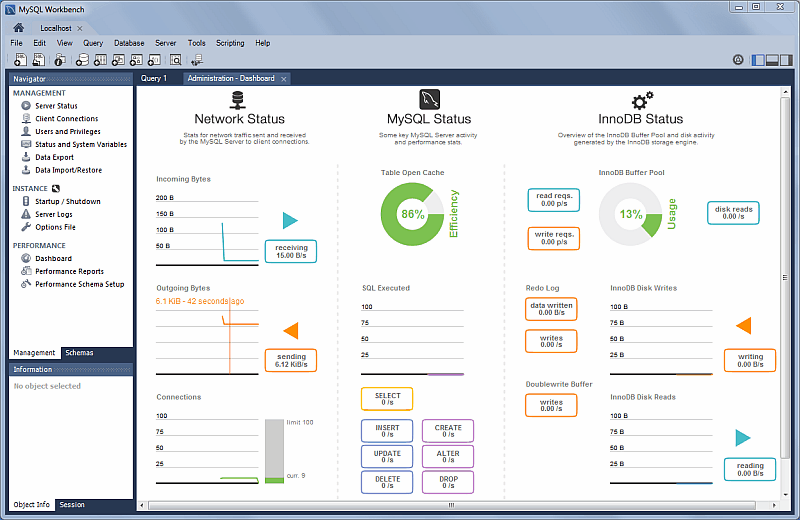
Key Features:
- Support for large databases.
- Comprehensive security features.
- High performance and scalability.
- Cross-platform support.
- Extensive documentation and community support.
Pros:
- Free and open-source, reducing total cost of ownership.
- Widely adopted with a large support community.
Cons:
- Limited support for advanced analytics compared to some competitors.
- May require additional tools for certain enterprise features.
Pricing: MySQL is available under the GNU General Public License (GPL) for free. Commercial licenses and support are available through Oracle, with pricing varying based on requirements.
2. Aiven for PostgreSQL
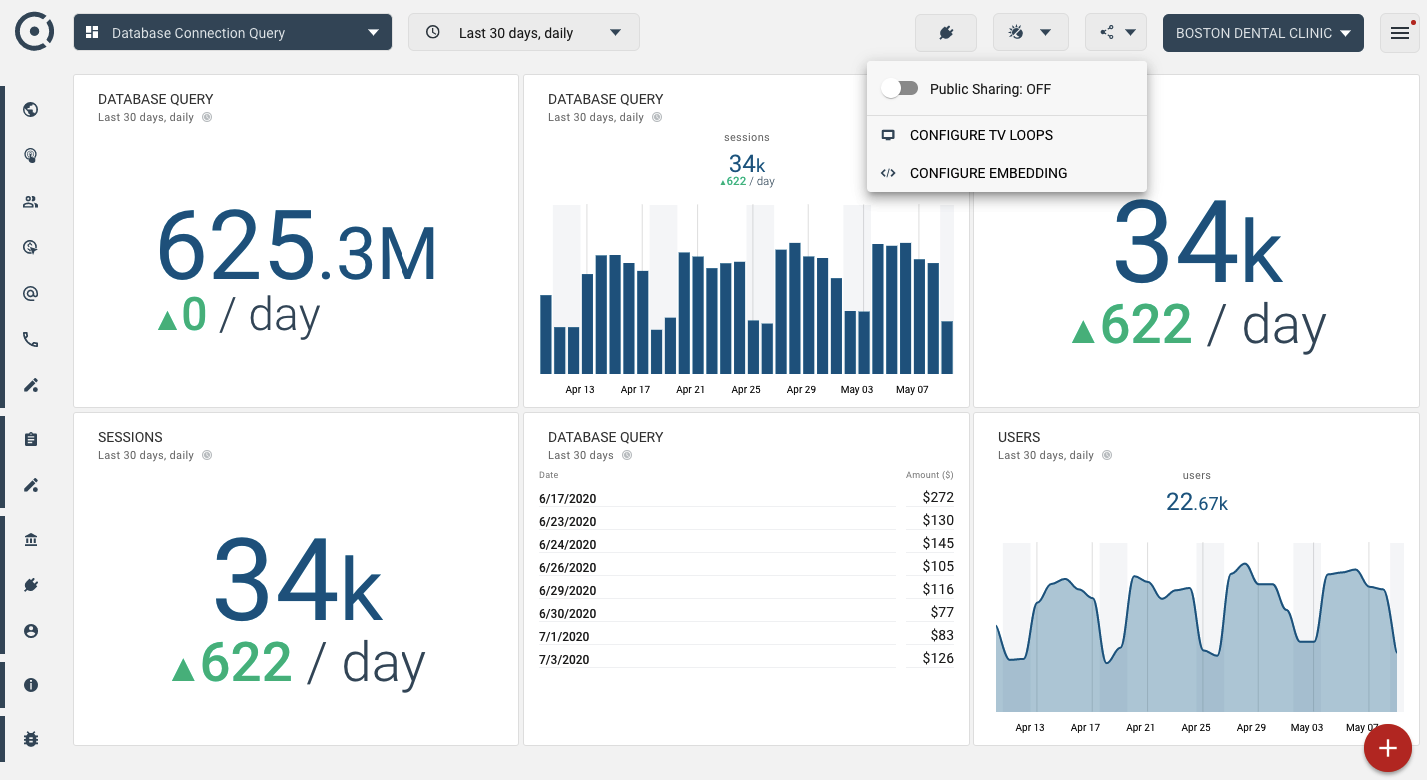
PostgreSQL is an open-source database system that is famous for being both strong and meeting standards.
 Key Features:
- Advanced data types and indexing.
- Full ACID compliance.
- Extensible with custom functions.
- Strong concurrency support.
- Comprehensive security features.
Pros:
- Completely free and open-source.
- Highly extensible and customizable.
Cons:
- Can be complex to configure for beginners.
- Some features may require additional extensions.
Pricing: PostgreSQL is free to use under the PostgreSQL License.
3. MongoDB
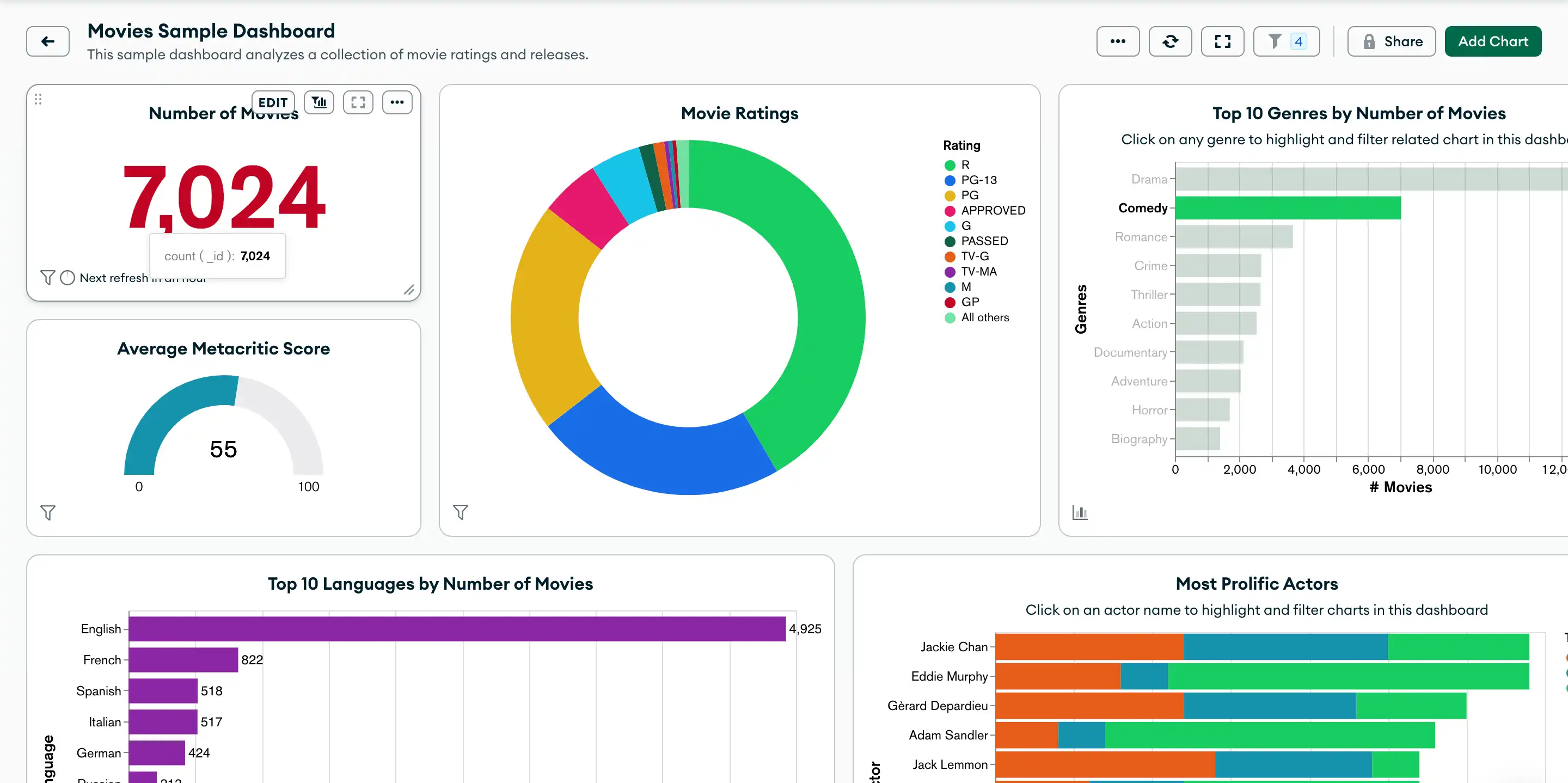
MongoDB is a popular NoSQL database, famous for being flexible and scalable and it is well-suited for storing unstructured data.
 Key Features:
- Document-oriented storage.
- Dynamic schemas.
- Horizontal scalability.
- Integrated aggregation framework.
- Support for geospatial queries.
Pros:
- Flexible schema design allows for rapid development.
- High performance for read and write operations.
Cons:
- Lacks traditional relational features like joins.
- May require additional tools for complex transactions.
Pricing: MongoDB offers a free Community edition. MongoDB Atlas, the managed cloud service, has pricing starting from $0.08/hour for dedicated clusters, with costs scaling based on resources used.
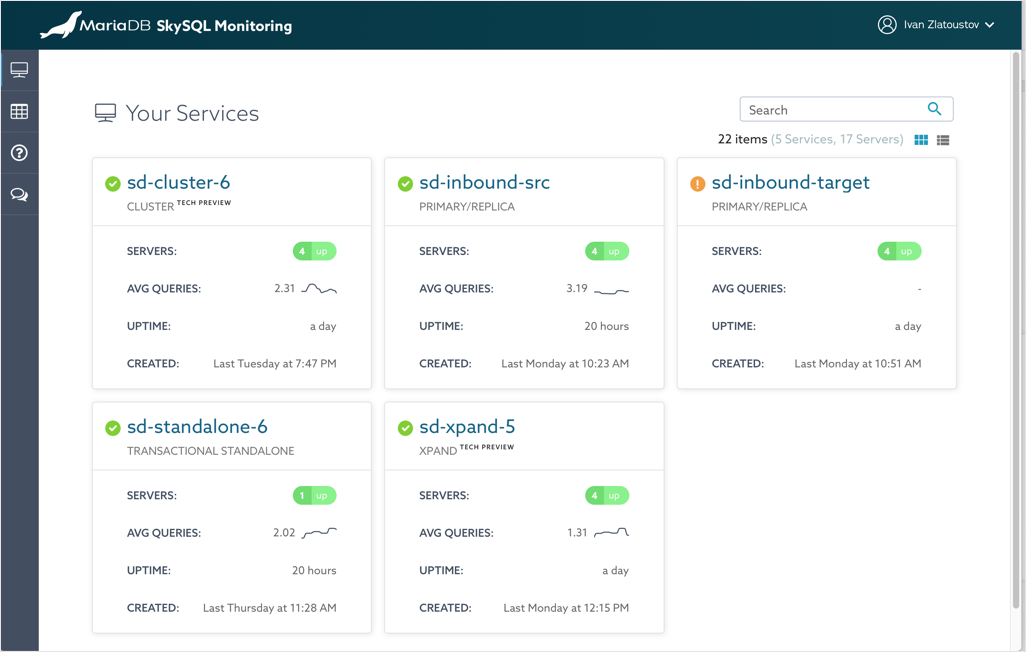
4. MariaDB
MariaDB which is a community-made version of MySQL, offers additional features and better performance.
Key Features:
- Compatibility with MySQL.
- Advanced storage engines.
- Improved replication capabilities.
- Enhanced security features.
- Support for JSON and dynamic columns.
Pros:
- Free and open-source with active community support.
- Improved performance over MySQL in certain scenarios.
Cons:
- Some features may lag behind MySQL updates.
- Smaller ecosystem compared to MySQL.
Pricing: MariaDB Community Server is free. Enterprise subscriptions with additional features and support are available, with pricing details provided upon request.
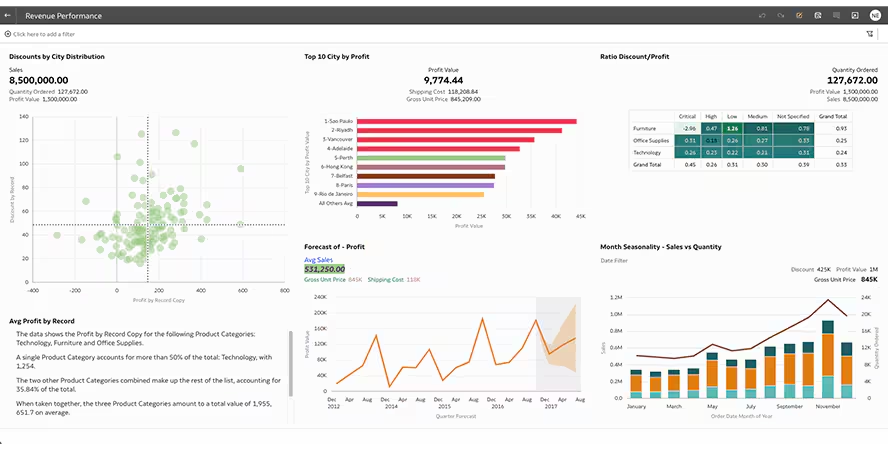
5. Oracle Database
Oracle Database is a database management system that can handle several types of data and it is well-known for its robustness and many features, used widely in companies.
Key Features:
- Advanced security and compliance features.
- High availability and disaster recovery solutions.
- Comprehensive analytics and reporting tools.
- Support for multi-tenant architecture.
- Integration with cloud services.
Pros:
- Extensive features suitable for large-scale enterprise applications.
- Strong support and regular updates from Oracle.
Cons:
- High licensing and support costs.
- Complexity may require specialized DBA expertise.
Pricing: Oracle Database pricing varies based on edition and deployment. For example, the Enterprise Edition license starts at $47,500 per processor core.
3. What are the Latest Trends in Database Management Software?
The world of database management is rapidly evolving—businesses today must adapt to modern trends to stay competitive, secure, and scalable.
1. Cloud Native Databases
The move to cloud-native databases is picking up, pushed by the need for scale, flexibility, and cost. These databases are meant to use the cloud completely, giving good links to cloud services and making fast deployment easy. Big sellers like Amazon Web Services, Microsoft Azure, and Google Cloud keep making better their cloud-native database offers to meet all kinds of business needs.
2. Augmented Database Management
An augmented staff would better focus on applying AI and ML to automate performance tuning, as well as anomaly detection and query optimization. This direction redefines the typical management of a database by lessening the manual efforts and introducing the ability to make predictions, which would make choices on time that is proactive.
3. Multi Model Databases
Multi-model databases support different data models within a single integrated backend. These may include relational, document, key-value, and graph models. Such diversity enables organizations to efficiently handle different data types and workloads without relying on multiple specialized databases, thus simplifying data management architectures.
4. Data Security
With the rise in cyber threats and tightening regulations, data security has become the top worry in the database management practice. The world market for security software in databases is expected to rise from USD 15.9 billion in 2024 to USD 68.3 billion by 2034, showing strong growth at 15.7% CAGR during the forecast years. This trend results from the increasing demand for protecting information and following rules related to the security of data.
5. Graph Databases
Graph databases have come into the limelight because they can model and ask about the complicated ties that exist in social networks, recommendation engines, and fraud detection systems. With data shown as nodes and edges, easy travel and analysis of linked data are made possible with graph databases, offering insight that traditional relational databases would find difficult to unlock.
6. Hybrid and Multi-Cloud Deployments
Companies are choosing hybrid and multi-cloud plans more and more so that they do not get stuck with a single vendor, to build better strength, and to use money in the best way. This also means that database work has to be done on both home setup and many cloud companies, so the DBMS tools need to work well and be easy to use on all kinds of places.
7. Data Democratization
Data democratization is the process that makes data available to those non-technical members, thus empowering them to find insights and make decisions accordingly. Leading modern DBMS providers are offering intuitive interfaces, self-service analytics, and simple, natively written languages to enable broader access to data while maintaining the tight governance and security controls already in place.
8. In Memory Databases
In-memory databases store data in the main memory rather than on disk. It significantly reduces the times required for data retrieval and enhances speeds at which transactions are processed. This is technology best applied where there is paramount importance to be placed on the performance that is needed, with real-time analytics applications and high-frequency trading applications.
9. Integration of Data Analytics
The DBMS platform directly integrates advanced analytics which makes for data-work simplification and real-time insights. With machine learning models, predictive analytics, and vis tools placed inside the database environment, decisions are made possible to make with an expedited process and less data movement overhead.
4. What are the Challenges of Database Manager Software?
Here’s what you need to know:
1. Data Quality
The most advanced database management program is only good with the data it handles. Inconsistent, duplicate, or outdated information leads to poor decision making and unreliable analytics; validation and cleansing of data must be a priority.
2. Data Growth Issues
As your business scales, so does your data. Managing increasing volumes without slowing performance is a major challenge. Many programs for database management require careful planning around storage, indexing, and load balancing to maintain speed and efficiency.
3. Data Changes
Businesses evolve—and so do their data structures. Frequent schema changes or updates to the database can disrupt operations if not handled properly. Staying agile while maintaining data integrity becomes a critical balancing act.
4. Data Classification
Proper classification is essential for access control and compliance. Unfortunately, many businesses struggle to label data based on sensitivity, importance, or usage. Without a strategy, your database management program can become chaotic and risky.
5. Data Governance
Strong governance ensures that data is accurate, secure, and used responsibly. But enforcing consistent policies across teams and platforms is no small feat. Poor governance can lead to regulatory issues and loss of trust.
6. Multiple Data Storage
Handling several databases over cloud, on-premise, or hybrid systems adds complexity. Synchronizing data in real time and ensuring its consistency across the types of storage is a challenge that many organizations face every day.
7. Performance Optimization
Query lag and long load times, slow backups and long load times—it is what indicates performance issues. The task of optimizing performance in a growing system is going to require monitoring and tuning check-ups on a regular basis, especially in high-demand environments.
8. Data Silos
When teams store data independently without centralized access, it creates silos. This isolation hampers collaboration, slows decision-making, and leads to redundant efforts—something even the best programs for database management struggle to fix without proper integration.
5. How to Choose Programs for Database Management Software?
Selecting the right programs for database management is critical for building a scalable and secure data foundation. Here's what to consider:
1. Data Model
Start by identifying the type of data you need to manage. Will a relational structure suit your operations, or do you need more flexibility with NoSQL or object-oriented models? Your chosen database manager software should support the right data model to ensure efficiency and compatibility with your use case.
2. Scalability
As your data grows, so should your system. A good database management program should offer horizontal and vertical scalability to accommodate increased users, queries, and data volumes—without compromising performance.
3. Performance
Speed matters. The programs for database management you evaluate should deliver fast query responses and handle multiple transactions simultaneously. Look for features like indexing, caching, and optimization tools to ensure smooth performance even under pressure.
4. Security Features
Your data is your asset—and protecting it is non-negotiable. Choose database manager software that includes encryption, access control, user authentication, and regular security patches. Robust security features ensure compliance and protect against data breaches.
5. Cost and Deployment
Consider your budget and preferred deployment method. Do you need on-premise control or the flexibility of a cloud-based database management program? Weigh licensing fees, maintenance costs, and long-term ROI before you decide.
6. Community Support
Strong community and vendor support can make or break your experience. Opt for programs for database management with active forums, reliable documentation, and responsive customer service—so help is always within reach when you need it.
6. What are the Key Features of Database Management System Software?
Let's dive into the core functionality that matters in the first place while thinking about database management software. Here’s what to look for:
1. Data Organization
With data organized in tables, rows and columns by a good database management system software, access, updating and managing the data become much simpler. This structure forms the foundation for efficient operations, especially when paired with best android app builder software.
2. Data Redundancy Control
Duplicate data can clutter your system and create confusion. The best database management solutions help eliminate unnecessary data copies by storing a single, unified version—saving both storage space and processing time.
3. Backup and Recovery
Data loss cannot be tolerated. The best software for database management includes tools for automated backup and recovery to keep your info safe in case there is a failure, ensuring recovery without manual effort.
4. Transaction Management
From processing online orders to updating employee records, every action is a transaction. A DBMS ensures that all transactions are completed fully or not at all—maintaining data consistency, even during system interruptions.
5. Concurrency Control
Conflicts arise when multiple users access or update data. Concurrency control guarantees the smooth operation of simultaneous access so that your team can collaborate without any risk to the accuracy of the data or performance of the system.
6. Data Retrieval
Quick access to the right information is a game-changer. With advanced indexing and query optimization, database management solutions ensure your data is just a few clicks—or queries—away.
7. Database Access Language (SQL)
SQL is the standard way of interacting with databases through the use of query language. Any database management system that is strong supports SQL for the users and developers to fetch, update, delete, and manipulate data easily—making it compatible with various applications, including app builder software.
7. What are the Types of Database Management Software?
Before investing in the best database management software in USA, it is good to first know the different types that exist. Here is a quick breakdown:
 (2).png)
1. Hierarchical DBMS
This type of data organization works with a hierarchical tree structure, and it is best suited for those applications that uniformly maintain a relationship between the data and are commonly used in applications like the banking sector and telecom services. If your business requires high-speed access to structured data, this database application software model could be a fit.
2. Network DBMS
A more flexible version of the hierarchical model, a Network DBMS allows each child to have multiple parents. It’s useful for complex data relationships and is still found in legacy systems. While not as popular today, it's valuable in scenarios where you manage multiple interrelated data sets—such as in logistics or manufacturing systems.
3. Relational DBMS
The most widely used and popular model, Relational DBMS stores data in tables and allows you to run queries using SQL. Ideal for a wide range of industries, this model supports structured data and is compatible with many qualitative data analysis software tools. If you're looking for scalability, strong community support, and robust data integrity—this is often the go-to for buyers in the USA.
4. Object-Oriented DBMS
Data is kept in objects, much like object-oriented programming; especially good for applications that use complex data types, such as multimedia, CAD or AI systems. Businesses handling large volumes of varied data should consider this as part of their database application software toolkit.
5. Distributed DBMS
Perfect for enterprises with multi-location operations, a Distributed DBMS stores data across multiple servers but presents it as a single database. It enhances performance and ensures data availability. If your organization works with big data or has a remote-first team, this might be the best database management software in USA for you.
8. What are the Benefits of Database Application Software?
Here’s how investing in reliable DBMS software can benefit your organization:
.png)
1. Data Organization and Accessibility
Organizing data structures with the database application software can store, sort, and retrieve data easily when needed. Thus, it brings quick access to the needed information at the right time.
2. Data Security
Since your data is valuable, preserving it is essential. Modern dbms software comes ready with security protocols like user authentication, plus access controls to thwart access by unauthorized parties.
3. Data Integrity
Accurate data means confident decisions. A robust database manager software maintains consistency by applying rules and validations, ensuring that only clean and correct data enters your system.
4. Data Sharing
Whether you work across departments or locations, database application software enables multiple users to access and update data in real time—without conflicts or duplicates.
5. Data Management Efficiency
Why waste time on manual entry and redundant processes? With automation features, dbms software reduces errors, accelerates workflows, and makes data management smoother and more efficient.
6. Backup and Recovery
Unexpected issues then no problem. Most modern software development applications includes automated backup and recovery tools, so your data remains safe and restorable in the event of a system crash.
7. Data Access Control
Not every user requires access to all data. Define user roles and permissions such that sensitive data is visible and editable only by the right set of people, thus improving operational security.
8. Data Analysis and Reporting
If you meed insights then your database manager software can generate real-time reports and analytics, helping you track trends, identify opportunities, and make data-driven decisions quickly.
9. Data Integration
Easily connect your dbms software with other tools like ERP, CRM, or application development software to unify your data ecosystem and remove silos between departments.
10. Compliance with Regulations
With features that help track changes, manage audits, and store data securely, database application software supports compliance with industry regulations, keeping your business legally sound.
9. Criteria for Choosing the Best Database Management Software in USA
Choosing the right database management software is a strategic decision that can impact your operations, scalability, and performance. Here’s how to approach it:
1. Define Your Requirements
Start by identifying what you need the database management system software to do. Are you managing customer data, product inventories, or high-volume transactions? Consider your data size, user base, integration needs, and security requirements. This step will help you narrow down options that fit your exact use case.
2. Choose a Data Model
Different databases software use different structures—relational (SQL), NoSQL, column-based, graph-based, etc. Depending on your data type and access patterns, choose a model that aligns with how you plan to store and query information. For example, if you're handling big data software requirements, NoSQL or distributed systems might be more suitable.
3. Compare Different DBMS Options
Evaluate leading options available in the US market—like Oracle, MySQL, Microsoft SQL Server, MongoDB, or Snowflake. Look at factors like performance, scalability, support, community, and pricing. Enterprise-grade solutions might offer better support and features, while open-source tools could suit smaller teams with technical expertise.
4. Test and Validate Your Choice
Before finalizing, run a pilot. Check how the database management software handles your actual workload, integrates with existing tools, and supports your team. Testing ensures you avoid surprises post-deployment and confirms that the solution delivers on both performance and reliability.