
Imagine this: The time is Monday morning. Salesperson Sarah is in dire need of client information for a presentation that might make or kill her business. She discovers that she has no idea which of the four copies of the identical information she finds when she checks three different systems. Does that sound familiar?
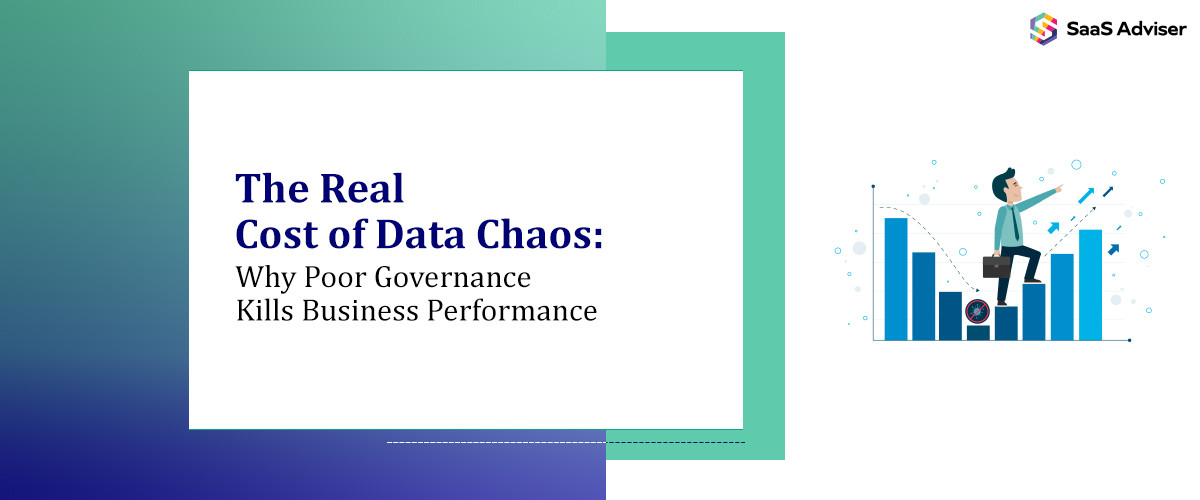
This isn't merely a small annoyance; rather, it's a sign of a larger issue that is subtly harming companies all across the world. Data chaos is what we call it, and it's probably costing your business more than you realize.
Your company continuously generates data. Every email sent, inventory update, and consumer purchase adds a piece to the puzzle. However, without adequate management and structure, that important data becomes digital sand, trapping your team in inefficiency.
Although data governance may sound like business speak, it's actually quite simple. Consider it the manual for how your business manages information, including who has access to what, how it is stored, and what occurs in the event of a problem. Your data can be used as a competitive advantage if you do it correctly. You will be up against your own information if you make a mistake.
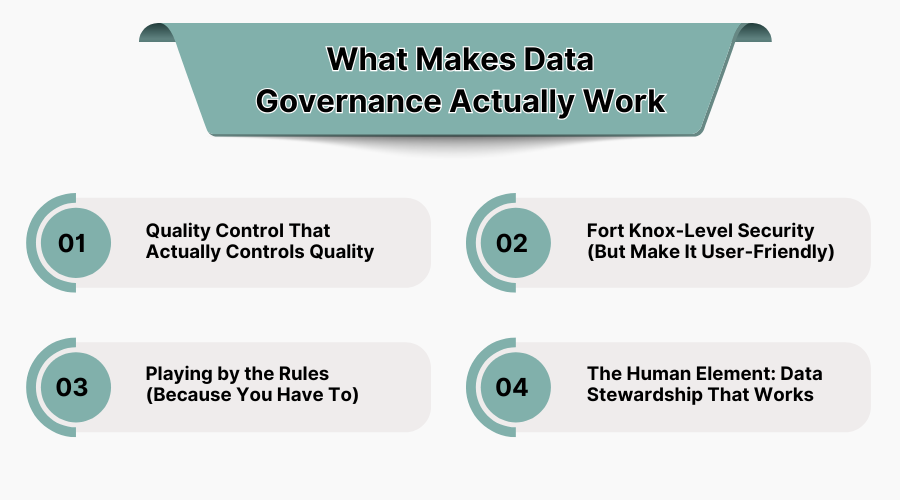
The Building Blocks: What Makes Data Governance Actually Work
-
Quality Control That Actually Controls Quality
Having the correct figures is only one aspect of data quality. Your data must be recent, accurate, consistent, and comprehensive. In the same instant. Because you are effectively operating two separate businesses when your marketing team has the most recent updates and your sales team is working with out-of-date consumer preferences.
Considering data quality to be similar to auto maintenance. Though many businesses do just that with their information systems, you wouldn't overlook odd noises and expect flawless operation.
-
Fort Knox-Level Security (But Make It User-Friendly)
Data security has evolved beyond simply preventing hackers from accessing data. In light of laws like GDPR, you need robust solutions that safeguard client data while enabling your staff to do their duties efficiently.
Creating security that is impermeable to attacks but feels invisible to authorized users is the trick. It's similar to having a very skilled bouncer who is aware of who belongs and who doesn't.
-
Playing by the Rules (Because You Have To)
Compliance management may be as dull as watching paint dry. However, the truth is that most things take longer to shut down a business than breaching the law. You can't ignore the need to maintain accurate financial records or adhere to industry-specific regulations.
Rules vary from industry to industry and are subject to frequent changes. You could end up in trouble today for what worked last year.
-
The Human Element: Data Stewardship That Works
Someone must own your data. The "I'm responsible for making sure this information is reliable and accessible" tone is different from a possessive, domineering one. Like your company's librarians, data stewards are aware of where everything is and how to keep it organized.
When ownership is unclear, data becomes the duty of all. It implies that no one is held accountable for it anymore.
Data governance services provide the expertise and tools needed to implement these components effectively. Many businesses find that bringing in external specialists helps them establish robust governance frameworks much faster than trying to build everything themselves from scratch.
Why This Matters More Now Than Ever
When did companies start to worry about a lack of information? We are long past those days. In just ten years, the average company now gathers more data in a month than whole industries did.
The data on consumer behavior overwhelms marketing departments. Managing supply chain data from numerous sources is a challenge for operations managers. In order to make decisions that cannot wait until tomorrow, financial teams require real-time information.
It's not a lack of data that's the issue, but rather the widening gap between the amount of data we're gathering and the quality of our management of it.
Businesses frequently end up in information quicksand when they lack effective governance. Data becomes dispersed among uncommunicative systems. Teams use different iterations of the same data. Nobody is certain which numbers to believe.
Having more knowledge makes decision-making more difficult rather than easier, which leads to paralysis. Teams engage in detective work using their data rather than taking bold action.
The Price Tag of Digital Chaos
-
Financial Costs That Add Up Quickly
Poor data management can hurt your business significantly, and the costs add up quickly. When workers spend too much time looking for information or making copies of data that's already there, it's like paying a lot for unnecessary tasks.
I've seen companies buy the same software multiple times because they can't find existing solutions.
Others spend a lot of money fixing problems like having too many copies of customer information or dealing with conflicting financial records.
There's also the risk of getting fined for not following the rules. Breaking privacy laws can cost millions, and even smaller fines can significantly impact small businesses that are already struggling.
Consider these hidden costs:
-
Hours spent searching for information instead of using it
-
Duplicate system purchases across departments
-
Regulatory fines that could have been prevented
-
Marketing campaigns that fail because of bad data
-
Inventory mistakes from inaccurate forecasting
-
The Productivity Killer You Can't See
Beyond the direct financial hits, poor data governance creates invisible friction that slows everything down. Decision-making crawls when managers can't trust their information. Projects stall when teams discover they're working with conflicting data.
I've watched sales and marketing teams essentially work against each other because they had different versions of customer information. The result? Confused prospects, missed opportunities, and a lot of frustrated employees.
-
Reputation Damage That Lasts for Years
When data governance goes wrong in public—through breaches, noncompliance, or humiliating errors—the harm to one's reputation can persist for years after the incident itself. Customers that have their personal information mishandled by businesses don't forget it easily.
Inadequate data governance undermines trust even among agencies. Workers start coming up with solutions when they lose faith in business data, which exacerbates the fundamental issues.
Key Steps to Implementing Effective Data Governance
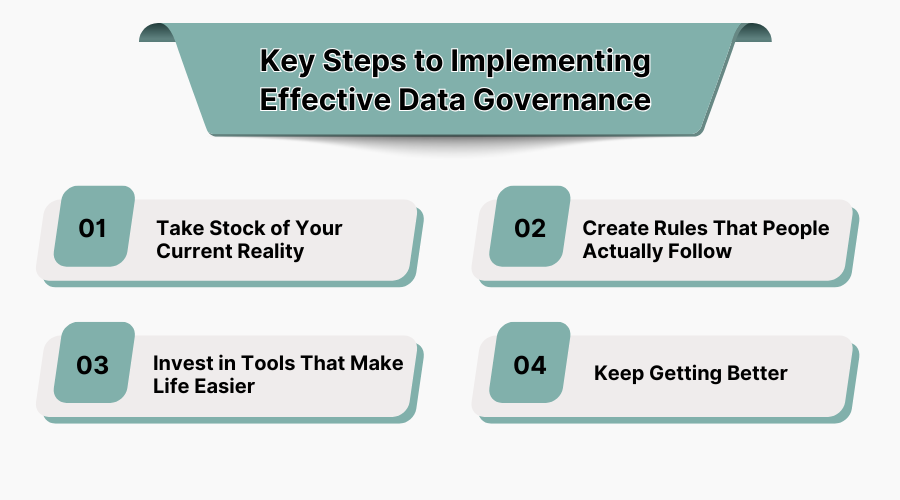
Step 1: Take Stock of Your Current Reality
Understanding what you're dealing with is essential before making any repairs. This entails being honest about the positive, negative, and ugly aspects of your present data scenario.
What location does your data reside in? What is the number of distinct systems that teams use? What is accessible to whom? Where are the evident concerns with quality and bottlenecks?
Even if something is embarrassing, make sure to record it. Nothing you don't acknowledge can be improved.
Step 2: Create Rules That People Actually Follow
Effective data policies need to be clear enough for everyone to understand and practical enough for people to actually follow. Overly complex rules get ignored, while vague guidelines create confusion.
Your policies should cover the basics:
-
How to classify different types of information
-
Who gets access to what data and why
-
Quality standards that make sense for your business
-
How long to keep different types of information
-
What to do when things go wrong
Step 3: Invest in Tools That Make Life Easier
Modern data governance tools can handle much of the complex work automatically. They check the quality of data, ensure only authorized personnel can access it, and spot issues before they turn into big problems.
The important thing is to pick tools that fit with your current systems instead of causing trouble.
The best governance tools work in the background without anyone noticing, but still offer strong control and management.
Step 4: Keep Getting Better
Data governance is a continuous endeavor. Regulations change, business demands change, and new data sources are added all the time. What is effective now might not be tomorrow.
Frequent check-ins assist in identifying areas for progress and detecting new issues early. Continuous improvement, not instant perfection, is the aim.
Turning Data From Enemy to Ally
Businesses that are proficient in data governance not only steer clear of issues but also acquire real competitive benefits. They act more effectively, make decisions more swiftly, and adjust to changes in the market more quickly.
Information can be turned from a source of annoyance into a competitive advantage with effective data governance. Everything else is made easier when teams can trust their data.
Better choices, lower operating expenses, and fewer risks. Investing in effective governance pays for itself. Businesses that do this well set themselves up for long-term success in a world where knowledge is becoming more and more important.