
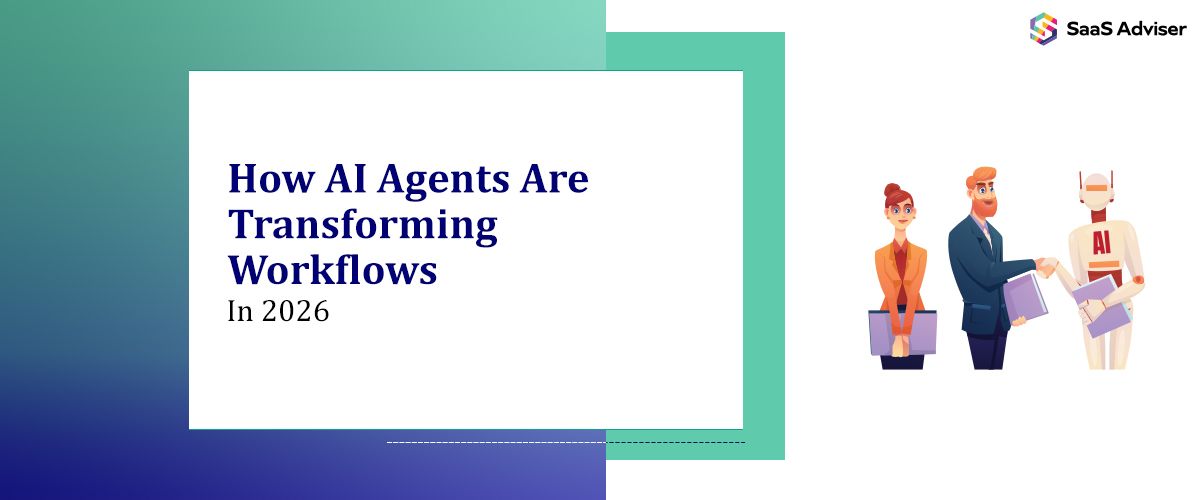
Workflows aren’t just getting automated in 2026—they’re becoming autonomous. For the first time, businesses are moving beyond simple scripts and rule-based automations. AI agents can now think, reason, plan, collaborate with other agents, and execute tasks without human prompts. Every team—sales, support, marketing, operations, HR—is redefining how work gets done. With rising workloads, the need for accuracy, and the pressure to deliver faster, companies are finally embracing intelligent agents as the backbone of daily operations.
2026 isn’t just another year of incremental AI improvements. It’s the turning point where intelligent agents shift from “helpful assistants” to “core operators.”
What Exactly are AI Agents?
AI agents are intelligent systems that can understand goals, make decisions, and execute tasks autonomously. Platforms that let you Create AI Agent solutions go beyond traditional automation, enabling systems to reason, plan multi-step actions, remember context, and collaborate with other agents to complete complex workflows.
Instead of acting like simple bots, they function as digital teammates: analyzing inputs, choosing the best next step, and adapting in real time. This allows them to run sales, support, marketing, and operations processes end-to-end with the speed and accuracy that manual work can’t match.
For readers exploring agent-based systems in more depth, this guide on what is open claw offers a practical look at how autonomous AI agents are being built and deployed in real-world workflows.
The Core Ways AI Agents Are Transforming Workflows
1. Automating Complex, Multi-Step Processes End-to-End
AI agents can run entire workflows without waiting for human intervention. Examples include:
- Handling customer support cases from intake → resolution
- Managing lead qualification and scheduling
- Processing refund requests or returns
- Running multi-step marketing workflows
If a workflow spans multiple apps and decisions, agents can now complete it independently. Many organizations are turning to structured ai agent development services to design agents capable of managing these interconnected processes effectively.
2. Enhancing Human Productivity by Eliminating Repetitive Work
Rather than replacing employees, AI agents act as “digital assistants.”
They:
- Pull data from various tools
- Create summaries and reports
- Execute administrative tasks
- Draft emails, messages, or replies
- Route tasks to the correct department
Teams work faster because they no longer have to manage trivial details; agents handle them instead. For example, the Skara AI agent automatically qualifies leads, handles customer queries, routes conversations, and updates CRM data in real time without human involvement. Similarly, HubEngage’s HR chatbot, powered by multiple AI agents, can create knowledge base-driven FAQs, answer employee questions, and recommend next actions.
3. Enabling Cross-Department Collaboration Through Multi-Agent Systems
Departments often operate in silos. An AI agent breaks those barriers.
Picture this scenario: A support agent resolves a customer issue → a sales agent identifies an upsell opportunity → a marketing agent triggers a personalized nurture message.
All without manual coordination. Multi-agent collaboration means smoother handoffs, fewer delays, and more consistent experiences. Getting these multi-agent systems to work reliably across departments is rarely plug-and-play, though most teams without in-house AI engineers rely on providers offering end-to-end OpenClaw consulting and implementation to handle the full lifecycle, from workflow design and custom agent development through secure deployment on the company's own infrastructure.
4. Delivering Personalized Customer Journeys at Scale
2026 buyers expect real-time personalization—across email, chat, SMS, ads, and websites. AI agents, with their ability to interpret behavior and adapt instantly, deliver:
- Context-aware responses
- Real-time product recommendations
- Dynamic workflows based on intent
- Personalized messaging by channel
This level of precision is impossible with manual processes.
5. Turning Unstructured Data Into Actionable Insights
Businesses generate more unstructured data than they can analyze manually — especially across CRM systems, support platforms, and even enterprise search tools.
AI agents can:
- Read tickets, chats, emails, documents, and meeting notes
- Identify themes, sentiment, and root causes
- Generate insights and predictions
- Recommend next steps
Instead of drowning in data, teams finally get clarity.
Industry-Specific Workflow Transformations in 2026
1. Retail & eCommerce
AI agents are reshaping the buying experience:
- Responding instantly to product, size, or availability questions
- Recommending items based on browsing behavior
- Tracking orders and handling return/exchange flows
- Executing cart-recovery sequences across channels
They also support backend tasks like inventory predictions and SKU-level demand forecasting.
2. SaaS & B2B Sales
Sales teams are benefitting from fully autonomous workflows:
- Lead qualification and scoring
- Meeting scheduling
- Follow-up emails and outreach
- Proposal or quote preparation
- Pipeline insights and forecasting
AI agents can even monitor pipeline health and flag missing steps before deals stall. With this capability, an AI sales agent can track each stage and alert teams to gaps that might slow progress.
3. Customer Support & Service
Support teams have seen the most dramatic impact:
- First-line queries handled automatically
- Ticket categorization and routing
- Sentiment analysis and priority ranking
- Automated SLAs and escalations
- Resolution workflows that complete end-to-end
The result is faster resolution and less agent burnout.
4. Operations & Logistics
AI agents excel at execution-heavy, time-sensitive workflows:
- Route optimization
- Delivery tracking
- Exception handling
- Vendor communication
- Predictive resource allocation
Operational efficiency rises while costs fall. in field home industry, this impact is especially visible, an AI agent for HVAC can autonomously handle inbound calls, schedule maintenance jobs, prioritize emergency repairs and route technicians, all without a dispatcher.
Conclusion
AI agents aren’t just improving workflows; they’re redefining how work gets done. In 2026, businesses are unlocking higher productivity, more accuracy, and dramatically better customer experiences by letting autonomous agents run processes end-to-end. As capabilities evolve, AI agents will become as essential as CRMs or communication tools, powering the next generation of efficient, scalable, AI-driven operations.
AI agents are intelligent systems that automate tasks, make decisions, and interact with software to improve efficiency.
They handle repetitive tasks, reduce manual effort, and speed up operations, allowing teams to focus on strategic work.
Healthcare, finance, marketing, customer support, and manufacturing see major workflow improvements from AI agents.
No, they support humans by automating routine work while people manage creativity, strategy, and complex decisions.
Yes, with advanced cybersecurity and compliance standards, AI agents are becoming safer and more reliable than ever.