


Modern systems now include robust employee portals where staff can download pay reciepts, update tax details, or request leave all without involving HR. This trend aligns with the rise of easy payroll programs for small business and reduces the administrative burden on small HR teams. Portals also improve employee engagement by giving staff more control over their information. Payroll Outsourcing Software also supports businesses in handling complex payroll operations efficiently.
Best Payroll Software For Small Business in
Are you looking for Payroll Software For Small Business for your Business in ? SaaS Adviser brings you the best Payroll Software For Small Business to ease your worries. In order to make your work smooth and swift, SaaS Adviser has compiled a list of the best software available. Compare the Best software features, pricing, free demo, and trial to select the best Payroll Software For Small Business for your organization.
 Researched and Written by Akash Patel
Top 3 Featured Softwares
List of Top Payroll Software For Small Business
Get Free Consultation

SaarHR

By SaarHR
SaarHR is a cloud-based solution provided by W3OCN. It is smart and simple software built for businesses to manage and engage the entire workforce from pre-hire to retire. The so...
View Profile
Starting From:
₹13500.00
HR3 Payroll
By HR3 Payroll
ReadyTech (ASX listed, RDY) is the leading provider of people management software for employers, educators and facilitators of work transitions. HR3 is a part of ReadyTech, bring...
View Profile
Starting From:
₹13500.00
Wagepoint is a payroll management software for small businesses that offers a variety of features to make managing payroll easier for employers. These features include the abilit...
View Profile
Starting From:
₹13500.00

Make My Office
By Make My Office
My office is a complete office management solution software. It further specializes in providing Payroll and HR related solutions to its clients for their companies. As an HR sol...
View Profile
Starting From:
₹13500.00

Payzaar
By Payzaar
Payzaar is an open-source global payment platform designed to connect and incorporate all users' local payments. This software assists various multinational businesses to connect...
View Profile
Starting From:
₹13500.00
WavePayroll
By WavePayroll
Wave is a payroll management platform that offers you an intuitive dashboard to keep track of your earnings, spending, payments, and invoices. This configurable invoicing softwar...
View Profile
Starting From:
₹13500.00

Square Payroll
By Square Payroll
Square Payroll is an all-in-one employee payment solution that works with every type of business. It allows employers to pay employees and contractors monthly or at an hourly rate,...
View Profile
Starting From:
₹13500.00

greytHR is a centralized platform that helps you manage payroll processing, attendance, employee lifecycle management, and compliance in one place. With greytHR, you can process pa...
View Profile
Starting From:
₹13500.00

Remote.com is a leading remote organization management platform that helps large and small companies manage payroll, benefits, taxes, and compliance. With Remote.com, you can link ...
View Profile
Starting From:
₹13500.00

Goodbook
By Goodbook
Goodbook is the solution for busy professionals who need to generate custom payslips quickly and easily. With Goodbook, anyone can create accurate and professional-looking paysli...
View Profile
Starting From:
₹13500.00

Arbonum
By Arbonum
Arbonum is a cutting-edge platform that facilitates the efficient administration of game development talent and remote contractors, surpassing the speed of traditional solutions....
View Profile
Starting From:
₹13500.00

Solar Staff
By Solar Staff
Solar Staff is a secure way to pay freelancers for their services. With Solar Staff, you can post a job, select a contractor from a list of pre-approved freelancers, and make a pay...
View Profile
Starting From:
₹13500.00

Paymate
By Paymate
Paymate Software has been providing businesses of all sizes with cost-effective payroll and HR solutions for more years. It provides simple and reliable software solutions to org...
View Profile
Starting From:
₹13500.00

Coverio
By Coverio
If you are an employer, you know that paying your employees is one of the most important aspects of running a business. Not only do you need to make sure that they are paid on ti...
View Profile
Starting From:
₹13500.00
Gloroots
By Gloroots
Gloroots is the perfect platform for employers looking to hire talent seamlessly across the globe. Their specialization in international hiring and onboarding, as well as their s...
View Profile
Starting From:
₹13500.00

Excelforce
By Excelforce
Excelforce is an adaptive, award-winning workforce solution and mobile application platform designed to simplify your payroll and time & attendance. With Excelforce, you can stre...
View Profile
Starting From:
₹13500.00
Voyon Folks Payroll
By Voyon Folks Payroll
Voyon Folks Payroll service manages various workflows and validations involved in salary calculations, making payroll processing easy. All activities related to payroll processin...
View Profile
Starting From:
₹13500.00

Online Paystub Generator
By Online Paystub Generator
The QuickPaystubs Online Paystub Generator is the simplest, most user-friendly tool on the market for creating accurate, professional pay stubs. You don't need any special knowle...
View Profile
Starting From:
₹13500.00

Pilot is an HR software that enables brands to manage payroll, compliance and benefits for their remote teams. The software can be used to send payments to contractors residing a...
View Profile
Starting From:
₹13500.00

Panther
The temporary recruitment software of the future. Built for speed, compliance and profit.
What is Panther?Panther is a cloud-based workforce management and recruitment platform designed to streamline the hiring and management of global talent. It enables businesses to h...
View Profile
Starting From:
₹13500.00

Table of Content
What is Payroll Software for Small Business?
Small business payroll software functions as a digital instrument that automates processes for salary calculations alongside tax deductions and employee payments while ensuring compliance reporting. Small business owners can manage payroll processes without possessing extensive accounting expertise. The integration of these tools with time management software and employee self-service portals provides HR managers with a streamlined method to manage compensation processes. Paycheck software for small businesses operates differently from manual payroll systems by reducing mistakes and guaranteeing on-time tax submissions. A majority of systems provide cloud access, which enables business owners and HR staff to manage payroll remotely. Certain systems offer integrated benefits administration tools alongside onboarding software, which transforms them into comprehensive HR solutions for small teams.
1. Criteria for Selecting the Right Payroll Software for Small Businesses
Finding the right payroll solution involves selecting one that achieves a balance between automation, cost, and legal compliance. When choosing software for small business payroll, look out for these things:
1. Ease of Use and Automation
A reliable payroll program should have a simple navigation structure and complete the most important functions, like pay runs, tax filing, and direct deposits, on its own. Companies using leave management software find the integrated aspects just as useful, as they reduce the need for manual data entry and streamline the process. Seek out drag-and-drop dashboards alongside guided workflows that demand minimal training effort. Automation features should encompass notifications for uncompleted payroll processes and missed deadlines.
2. Integration with Accounting Tools
The payroll system you use needs to integrate flawlessly with your current accounting platform. A large number of leading small business accounting and payroll software solutions connect with QuickBooks, Xero, and FreshBooks. This guarantees book precision while facilitating financial reporting processes. The implementation of such integrations eliminates the need for redundant data entry while decreasing potential reconciliation discrepancies between payroll records and general ledger accounts.
3. Employee Self-Service and Portals
Systems enabling workers to access pay records and modify personal information while tracking leave balances promote transparency. These are typically found in easy payroll program for small business that also serve as basic HR hubs. Self-service features can also include tax form downloads, bank detail updates, and viewing historical pay cycles—freeing HR from repetitive tasks. For businesses using onboarding software, these portals help employees get up to speed from day one.
4. Scalability and Compliance Updates
Your payroll software will need to be capable of flexibly accommodating your growing business and adapting to the evolving tax laws. Find out if the program has built-in compliance features that will let you know about these changes. If there are more locations, states, etc., make sure that the software can handle payroll for that location. Check to see if the system can automatically update tax tables and send you reminders to file paperwork.
5. Customer Support and Learning Resources
The intricate nature of payroll regulations makes robust customer support a necessity. Seek out platforms that provide immediate communication channels alongside onboarding assistance and extensive documentation resources. This is a must for those combining payroll with talent management SaaS or performance tools. Providers that offer dedicated account managers or weekend support hours can be especially helpful. Also, consider whether the vendor offers certification programs or live training webinars for added user support.
2. Benefits of a Payroll Software for Small Business
.png)
A good payroll tool can help make small businesses operate smoothly, more accurately, and follow rules and regulations easily. Some of the main benefits of investing in good payroll software, especially for small businesses, are:
1. Efficiency
Payroll tools cut down on a lot of manual work. When combined with workforce management tools, these systems can automatically help process timesheets, overtime, and bonuses. This lets HR staff focus on other important responsibilities. Built-in automation for repetitive tasks, like paying taxes and making pay cycles, also cuts down on overall administrative costs. This is especially beneficial for small teams that handle HR without dedicated payroll personnel.
2. Accurate Calculations
Tax errors and mispayments can lead to fines and unhappy staff. The best payroll software for small business makes sure that salary and tax computations are always correct and that modifications are made in line with IRS rules. Most systems utilize real-time tax engines that incorporate details about the type of employee, the jurisdiction, and whether there are any withholding exclusions. This removes the guesswork and provides certainty that each paycheck reflects the current legal deductions.
3. Cost Savings
Many sites offer subscription-based pricing, which is good for your wallet. Small businesses that use paycheck software instead of hiring full-time payroll workers or outsourcing are substantially better off financially. It also cuts down on indirect costs like fines, late filings, and having to do the same task twice between payroll and finance.
4. Reports and Record Keeping
Most platforms offer detailed reports, from paycheck receipts to tax liabilities. When paired with benefits administration tools, these reports also help manage employee perks and insurance plans efficiently. Modern systems maintain audit ready documentation and historical records, often accessible for multiple years. This is extremely useful during tax season, audits, and financial planning purposes.
5. Data Security
Modern payroll platforms use advanced encryption and offer secure access controls. This keeps private employee and financial information safe, which is very crucial when those systems work with other tools like HR onboarding software or digital time clocks. SOC 2 and ISO 27001 are the security standards to look for, as they are the recognized security standards in the industry. Some solutions also let you manage who may access certain roles and make automated backups.
3. Challenges in Payroll Accounting Software for Small Business
Even the best payroll software for small businesses might face problems if it is not used correctly. There are several challenges that businesses need to be aware of before investing in payroll software:
1. Payroll Errors and Miscalculations
Alternatively, if you are inputting data manually, using old tax settings, not properly setting up your system, or managing multi-country payroll, then the chance of incorrect paychecks and missed deductions is real. This can potentially erode trust with employees and lead to lawsuits.Correct and accurate payroll assistance will typically do the following to alleviate pain points:
-
Validate employee classifications
-
Reconfirm your overtime policy
-
Personalization and automation (efficiency)
-
Audit the payroll program regularly to find mistakes sooner
2. Failure to Retain Payment Records
Small businesses often neglect storing payroll documentation for the required duration. The IRS recommends preserving records of your earnings and tax returns for at least four years. Companies that don't have the right payroll accounting software for small business that incorporates automated archiving could fail audits. Safe cloud-based recordkeeping makes sure that information is organized and can be found when needed.
3. Errors Tracking Employee Work Hours and Overtime
If you don't keep track of your work hours correctly, you could get your payroll wrong and violate the labor laws. This is especially true for hourly workers or teams who still use conventional methods to keep track of time. Combining payroll systems with time management software or digital time clocks can make things a lot more accurate. Auto-importing timesheets makes sure that every hour of standard and overtime work is paid accurately.
4. Data Security and Payroll Fraud Risks
Payroll contains sensitive information such as salary, bank accounts, and Social Security numbers. If this data is stolen or compromised in some other way (such as your employee using a company credit card for personal use), it could be misused internally and used for fraud and identity theft. Choose small business accounting and payroll software that has audit trails, two-factor authentication, and restrictions on what users can do. To lower hazards, it is also necessary to teach employees how to handle payroll safely.
5. Payroll Taxation and Withholding Errors
The IRS or state agencies could fine you if you do not pay your taxes on time, make mistakes in your tax calculations, or misclassify your employees. This could hurt your business's cash flow. Using global payroll software for small business payroll that has built-in compliance engines will help you avoid making mistakes that can be remedied. Automated warnings, e-filing support, and tax forms that are already filled out can help you maintain your payroll accurately and in line with the law.
4. Features of Easy Payroll Software for Small Business in USA
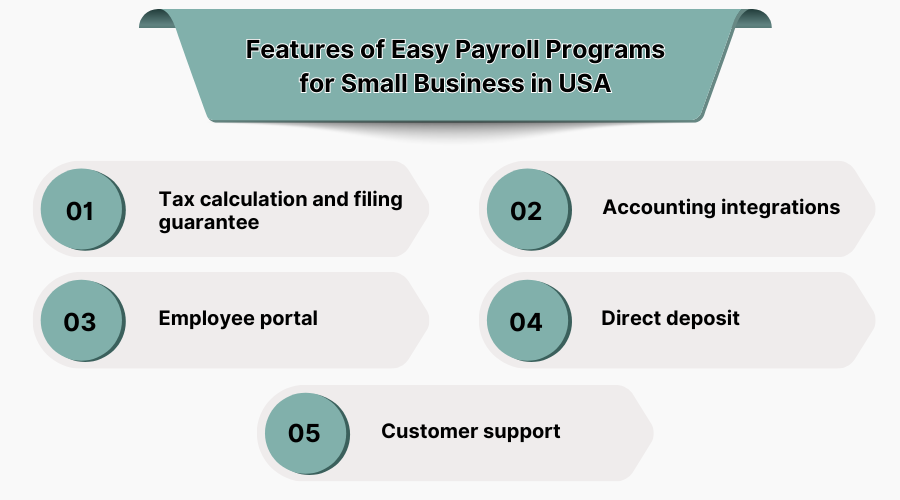
When choosing a good payroll program for a small business, it is crucial to look at the features that make job duties simpler, lower the risk of noncompliance, and make employees happier. Here are some of the most important features to look out for:
1. Tax Calculation and Filing Guarantee
Today's payroll systems compute federal, state, and local taxes and automatically remit those taxes electronically. Additionally, numerous organizations provide filing accuracy guarantees, which include penalties in the event that the software commits an error. This function allows you to relax during tax season, and it is especially helpful for small firms that don't have their own finance departments. It's a core part of most payroll software for small business with built-in compliance tracking.
2. Accounting Integrations
Top easy payroll programs for small business connect directly to platforms like QuickBooks, Zoho Books, and Xero. This allows seamless syncing of payroll data into your general ledger.
Such integrations reduce duplicate entries and help maintain consistency between payroll and accounting. Some software also supports mapping payroll expenses to specific cost centers or departments.
3. Employee Portal
Self-service portals let employees check their paychecks, modify their personal information, examine and keep track of their leave balances, and access their tax data. This feature reduces the number of routine HR queries. Advanced portals may also integrate with leave management software, benefits administration tools, and payroll outsourcing software, offering a one-stop hub for all employee information and requests.
4. Direct Deposit
Direct deposit is now a standard offering in paycheck software for small business, allowing employers to pay staff securely and on time, without printing paper checks. Many platforms support multi-bank routing, enabling employees to split pay across multiple accounts. Some systems even offer same-day or next-day deposit options depending on the payroll schedule.
5. Customer Support
Customer service is very important, especially if you are a small company without payroll experience. Look for vendors that have live chat, phone support, and videos that walk you through the fundamentals step-by-step. It is much easier to get going if the vendor has support in the U.S. or has an onboarding team. Reliable support is crucial if you're integrating payroll with talent management SaaS or complex benefit structures.
5. Five Best Small Payroll Software for Small Business in the USA
1. QuickBooks Online
QuickBooks Online is one of the most popular small business accounting and payroll software in the U.S. It has features for submitting taxes, running payroll automatically, and same day direct deposit. The platform works well with time-tracking and attendance management software in US, making it a complete choice for small firms.
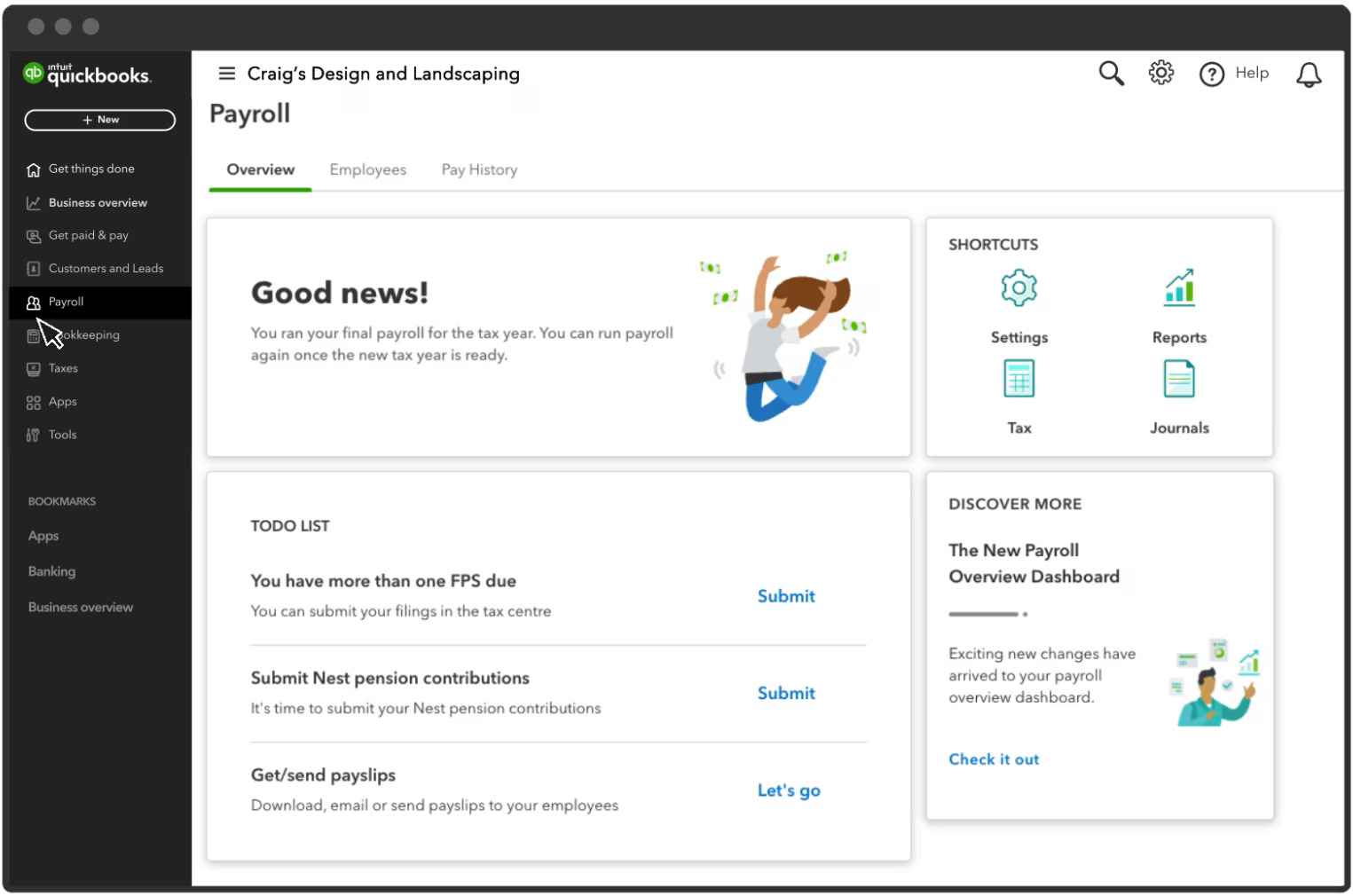
Features:
-
Expense tracking.
-
Cash flow monitoring.
-
Payroll processing (QuickBooks Payroll).
-
Inventory management (Plus plan).
-
Project profitability tracking (Plus plan).
Pros:
-
Complete solution for accounting, payroll, and other tasks
-
Strong integration with popular business apps and payment gateways
Cons:
-
It can be costlier
-
Payroll features are an add-on cost
Pricing: Visit the website for customised pricing
2. FreshBooks
FreshBooks is a wonderful choice for freelancers and small businesses since it is straightforward to use. It has basic payroll tools and can automatically bill clients, send invoices, and keep track of time. Though it is not a comprehensive payroll system, for startups and small businesses, it is a good choice of investment. FreshBooks also works well with workforce management tools to help streamline financial operations.
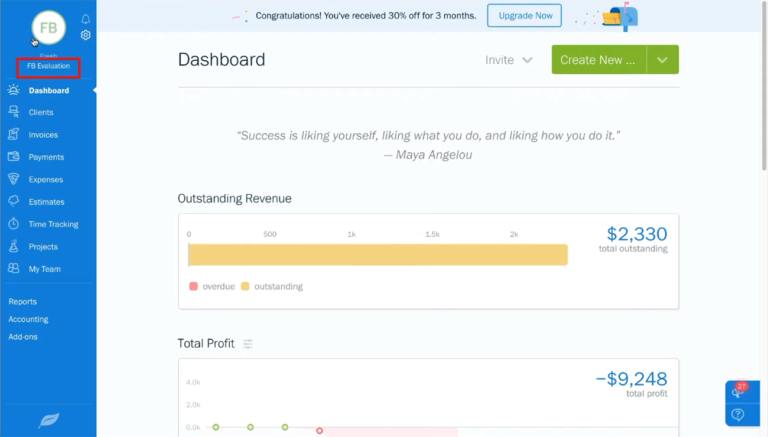
Features:
-
Streamlined invoicing and client billing.
-
Time tracking for projects and tasks.
-
Expense tracking with receipt capture.
-
Financial reporting and tax summaries.
-
Processing payroll with the Gusto-powered FreshBooks Payroll add-on.
Pros:
-
Easy to use, especially for freelancers and service-based organizations.
-
Strong emphasis on invoicing and getting paid faster.
Cons:
-
Payroll is an add-on
-
Some users report issues with bank integrations.
Pricing: The pricing starts at $8.40USD/month
3. Wave
Wave is a free accounting program that includes payroll capabilities at an additional cost. It is best for very small organizations or startups that want to save money while keeping their functionality intact. Payroll includes direct deposit, W-2s, 1099s, and filing taxes in a limited number of states, but also does not have all of the features that its more expensive counterparts provide. However, it is easy to use, making it a fair option for customers looking for inexpensive payroll software for small businesses.
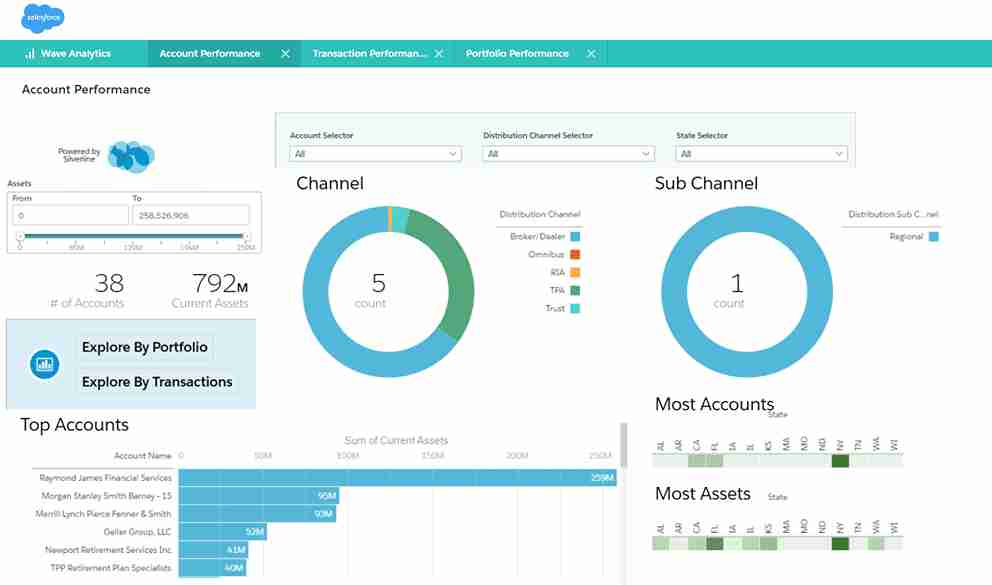
Features:
-
Free core accounting and invoicing features.
-
Expense tracking and financial reporting.
-
Payroll processing available as a paid add-on.
-
Bank connection for automatic transaction updates.
-
Online payment processing.
Pros:
-
Free basic accounting and invoicing features
-
User-friendly interface.
Cons:
-
Payroll is a paid add-on and only available in select regions.
-
Lacks advanced features like inventory management and project-based accounting.
Pricing: Free basic plan. Pro plan starts at $16USD/month, billed monthly
4. Xero
Xero is a cloud-based accounting solution with strong payroll integrations. It excels in multi-user collaboration and offers features like real-time reporting, automatic bank feeds, and project tracking. Xero supports add-ons for leave management software and inventory tools, making it adaptable for growing companies. Its mobile app and secure infrastructure appeal to startups and remote-first teams.
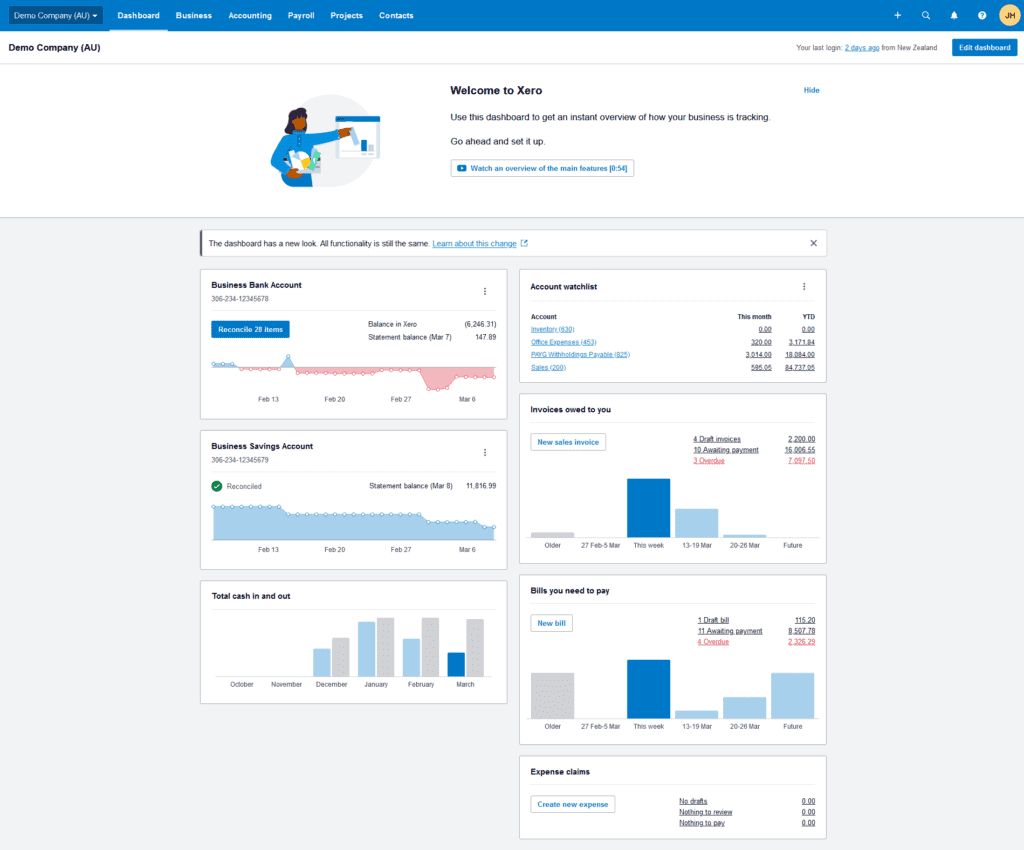
Features:
-
Unlimited invoicing and billing on higher plans.
-
Bank reconciliation.
-
Payroll processing integration.
-
Expense and project tracking as add-ons.
-
Multi-currency support (Premium plan).
Pros:
-
Affordable plans, especially for basic accounting needs.
-
Unlimited users and clients across all plans.
Cons:
-
Lowest tier plan has significant limitations on invoices and bills.
-
Multi-currency features require the highest-tier plan.
Pricing: The pricing starts at USD 2.90 per month
5. Zoho Books
Zoho offers a full suite of business tools under the Zoho People and Zoho Payroll ecosystem. It is designed for small and mid-sized businesses that want both HR and financial tools under one platform. Features include automated payroll runs, tax calculations, and employee self-service options. Zoho integrates with other Zoho apps like CRM and Books, and works well alongside talent management SaaS platforms.
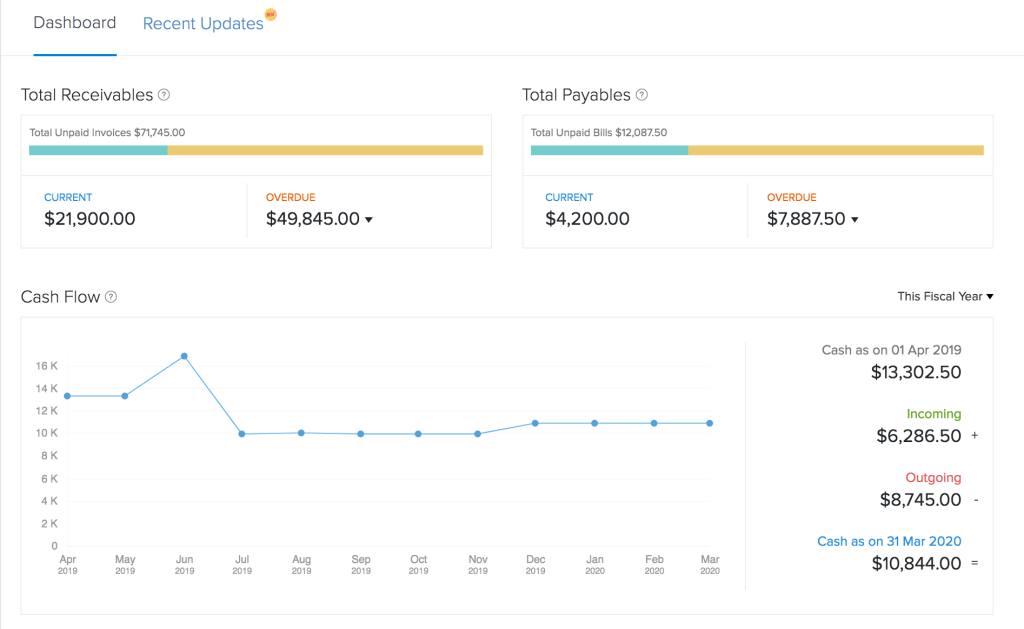
Features:
-
Free plan with basic invoicing, expense tracking, and bank reconciliation.
-
Customizable invoices and automated reminders.
-
Payroll management via Zoho Payroll integration.
-
Inventory management included in higher plans.
-
Over 50 built-in reports for granular financial reporting.
Pros:
-
Offers a strong free plan with many essential features.
-
Provides six different pricing plans catering to diverse needs.
Cons:
-
Free plan has limited support options.
-
Advanced inventory features and online sales channel integration are expensive add-ons.
Pricing: The pricing starts at ₹749 Price/Org/Month Billed Annually
6. Conclusion
Selecting the best payroll software for small business means balancing functionality, ease of use, compliance, and cost. Whether you're running a startup or a growing business, a reliable payroll program can save time, ensure accuracy, and protect your business from costly penalties. Make sure your chosen software also supports your broader HR needs whether that’s managing attendance, handling benefits, or streamlining hiring with onboarding software. By investing in modern, easy payroll programs for small business that work well with your existing tools—from accounting to time tracking—you can simplify operations and create a smoother experience for both HR teams and employees alike.
7. Latest Market Trends in Payroll Software for Small Business
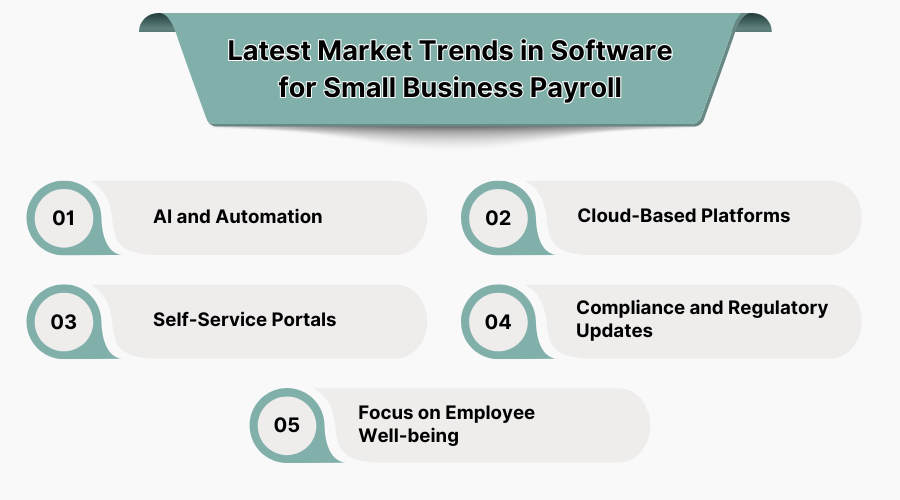
As small businesses modernize their operations, payroll technology is evolving rapidly to support flexible teams, improve accuracy, and ensure compliance. According to the market insights given by Straits Research, the global market for business software and services was worth USD 658.44 billion in 2024. It is expected to expand at a rate of 10.9% per year, reaching USD 730.21 billion in 2025 and USD 1670.71 billion by 2033. Here are the key trends shaping today’s software for small business payroll:
1. AI and Automation
AI-powered payroll systems can now detect anomalies, auto-fill tax forms, and suggest corrections before payroll is finalized. These tools drastically reduce manual errors and processing time. When integrated with time management software, AI can also forecast labor costs and help business owners plan better for overtime and seasonal workforce changes. Automation also aids in onboarding new hires faster and more accurately.
2. Cloud-Based Platforms
Cloud-based payroll tools offer accessibility from any location, making them ideal for businesses with hybrid or remote teams. Real-time syncing ensures that data is always up to date. These platforms often integrate with other cloud tools like onboarding software, accounting apps, or scheduling systems, giving small business owners a unified workspace without investing in costly infrastructure.
3. Self-Service Portals
4. Compliance and Regulatory Updates
Payroll software now includes automatic alerts for local, state, and federal regulation changes. This helps businesses stay compliant without manually tracking tax law updates.
Many payroll programs for small business now offer automated W-2, 1099, and ACA form generation to ensure accurate year-end reporting. This is critical for companies operating across multiple states or industries.
5. Focus on Employee Well-being
Payroll platforms are increasingly integrating financial wellness tools such as early wage access, savings programs, and benefits tracking. These tools help reduce employee stress and improve retention. When combined with benefits administration tools and talent management SaaS, payroll systems support a more holistic approach to employee satisfaction. Small businesses can now offer enterprise payroll-level experiences without breaking the bank.