
Best Email Management Software in
Are you looking for Email Management Software for your Business in ? SaaS Adviser brings you the best Email Management Software to ease your worries. In order to make your work smooth and swift, SaaS Adviser has compiled a list of the best software available. Compare the Best software features, pricing, free demo, and trial to select the best Email Management Software for your organization.
 Researched and Written by Akash Patel
Top 3 Featured Softwares


List of Top Email Management Software
Get Free Consultation


Brevo

Grow with our Email Marketing Platform & CRM suite
Brevo, formerly known as Sendinblue, is a cloud-based marketing and customer relationship management (CRM) platform designed to streamline business communications and drive gro...
View Profile

Apollo.Io is a practical sales intelligence and engagement platform designed to help companies generate leads, automate outreach, and decorate sales performance. It allows entry to...
View Profile

InboxAlly
The Most Powerful Email Deliverability Tool.
InboxAlly is an email deliverability tool built to help organizations—such as marketers, agencies, and email list owners—ensure their emails reach recipients’ primary inb...
View Profile

Google Workspace
The better way to work
Google Workspace is an intuitive platform that helps teams of all sizes to connect and collaborate with each other and improve their efficiency levels in real-time. It provides an ...
View Profile

Moosend is an all-in-one email marketing automation software designed to help businesses create, manage, and optimize their email campaigns efficiently. It provides a user-friendly...
View Profile

iContact is a powerful email marketing software designed to help businesses create, automate, and optimize email campaigns. It provides user-friendly tools for designing em...
View Profile
Campaigner software is an email marketing platform that uses a visual drag-and-drop builder to generate targeted email campaigns. It enables you to create dynamic content depending...
View Profile

Omnisend is a comprehensive marketing automation platform specifically designed for e-commerce businesses to enhance their customer engagement and drive sales through person...
View Profile

Beefree
The go-to HTML email builder that converts
Beefree is a user-friendly, cloud-based platform designed for creating responsive email and landing page designs without the need for coding. Its drag-and-drop editor simpl...
View Profile

Fastmail
Email and calendar made better
Fastmail is a secure and privacy-oriented email service designed for individuals, professionals, and businesses seeking a dependable communication platform. Established in ...
View Profile

SaneBox
Email Management for Any Inbox
Implement SaneBox into your workday, and never waste time on email again! SaneBox simplifies the email process by using powerful algorithms that learn your email behavior to or...
View Profile

SMTP2GO is a cloud-based email delivery service that ensures reliable, secure, and fast email sending for businesses, marketers, and developers. It acts as an SMTP relay, helping u...
View Profile

Bouncer
Powerful, Secure, and Caring email verification platform
Bouncer is an email verification and deliverability tool designed to help businesses maintain a clean and reliable email list. It ensures that emails are sent only to valid recipie...
View Profile

GetResponse will help you boost your marketing campaign returns like never before. With 500+ customizable templates and 1,000+ free iStock images, you can create content that your ...
View Profile

Freshmarketer is a powerful marketing tool that helps businesses keep up with their ever-changing needs. With Freshmarketer, businesses can run a variety of experiments on their si...
View Profile

Wrike is a powerful cloud-based project management and collaboration software designed to streamline workflows, improve team productivity, and enhance visibility across project...
View Profile

With MailChimp, you can create targeted email or ad campaigns and connect with your audience. MailChimp specializes in making sure that your emails reach the right people at the ri...
View Profile

What is Freshdesk? Freshdesk is a cloud-based helpdesk and customer support solution created by Freshworks that enables businesses to manage customer inquiries, complaints, and ...
View Profile

Xendy
Create and send newsletters in an instant.
Xendy is a user-friendly email marketing platform designed to help businesses create, manage, and optimize their email campaigns efficiently. It offers a seamless experien...
View Profile

ActiveCampaign is an all-in-one marketing automation, email marketing, and Customer Relationship Management automation platform that is suitable for businesses of any size. With it...
View Profile

Table of Content
What is Email Management Software?
Email management software is an online tool used to receive, process, store, or reply to emails. It can be defined for personal communication or business use. These tools have features including automation, filtering, tagging, collaboration, AI assistance, and data analysis, and integration with other systems like ticketing platforms or CRMs. Freelancers to big companies can have a revolution in the way they prioritize work and how communication flows in completing tasks through email management software.
1. Related Articles of Email Management Software:
2. What are the Cases or Reasons to Use Free Email Management Software?
Free Email Management Software is ideal in the following scenarios:
1. Cost Effectiveness
Small teams and startups benefit from no-cost tools like Thunderbird or Missive’s free plan. Using free email management software allows businesses to optimize communication without straining their budgets. It’s an affordable entry point into the world of professional email management tools without sacrificing basic functionality.
2. Basic Feature Set
If your needs are minimal (e.g., sorting, labels), free email management software programs can suffice. These tools often include essential email organization tool features like AI filters, folders, and tagging. For users with straightforward inbox management goals, basic email manager software is more than adequate.
3. Ease of Use
Free email management softwares are with less features therefore more easy to use. Novices or non-technical users get benefitted from simplified email handling software with user-friendly interfaces. Such platforms are often ideal for individuals seeking quick deployment of an email management system with minimal learning curve.
4. Learning and Experimentation
Free email management softwares are a great way to test workflows and determine your needs before investing in premium email manager software. Users can explore automation, tagging, and collaboration features, as well as test campaigns using email testing software, to identify what’s valuable for their use case. These trials will help the business make an informed decision before going all out with the email management service.
3. Considering When Choosing Best Email Management Software:
When choosing the best email management software, these considerations can help narrow down your options:
1. Individual vs. Team Use
While teams require email handling software that enables collaboration, such as Missive or Help Scout, individuals may favor lightweight tools like SaneBox or Thunderbird. Selecting an email management system with shared inboxes and team chat is crucial if your team must manage multiple inboxes. Individual professionals may only need simple email management programs with AI filters and basic automation.
2. Specific Use Case
Support, sales, and internal comms all require different features. Define your use case before deciding. A customer support team will benefit more from customer email management tools with ticketing and SLA tracking. For sales-driven workflows, look for email management platforms that offer CRM integrations and analytics. If your goal is to nurture prospects and close deals, choose an email manager that integrates with lead management software in USA.
3. Existing Email Provider
Some tools integrate natively with Gmail or Outlook, while others may require migration. Make sure your chosen email software for business supports seamless syncing with your current inbox. Choosing a compatible email organization tool can reduce setup time and prevent workflow disruptions.
4. Features Needed
Do you need automation? AI? Analytics? Your feature requirements will shape your final choice. For high email volumes, pick email management software that supports auto-tagging, smart sorting, and AI drafting. Teams that require real-time reporting will benefit from email management tools offering performance dashboards and analytics. For growing teams, an all in one marketing platform can reduce tool-switching and improve operational efficiency.
5. Budget
Free Email Management Software can suffice for small users, but scaling teams should plan for subscription costs. Entry-level plans of many email management solutions offer solid functionality, but premium tiers unlock automation and integrations. Always evaluate the return on investment when upgrading your email management service to a paid model.
4. What are Latest Market Trends in Email Management Software:
The email management software space continues to evolve rapidly. Here are the major trends shaping the landscape in 2025:
1. Hyper Personalization
Emails are becoming increasingly tailored to individual behavior. AI-driven systems within email management platforms now enable deeply personalized templates and content suggestions. This trend pushes email management solutions to learn from past interactions and automatically adjust communication tone and timing for each user, enhancing engagement and efficiency. Hyper-personalization is now integral to the Best Email Management Software, offering richer customer experiences and higher response rates.
2. AI-driven Automation
Platforms leverage AI assistants to help draft responses, summarize long threads of emails, and automate follow-up tasks with very minimal human input. Tools like Gmail’s AI Side Panel Assistant are leading this transformation. Google DeepMind is also developing an AI-powered email system that can automatically sort and respond to routine messages in the user’s style. This is proof of how email manager software modernizes into a virtual teammate—streamlining tasks and cutting down on the workload. By the close of 2025, recent industry statistics reveal that 85% of firms are predicted to implement AI-driven tools for email marketing, attaining an annual market increase of 25%.
3. Predictive Analytics
Modern email management solutions predict customer behavior and suggest proactive actions to be taken based on insight driven by data. This enables the companies to manage resources and plan response strategies well in advance of trends such as surges in email volumes or churn risk that are anticipated. Predictive analytics is therefore a critical component of the best email management tools to lead more intelligent and target-based decision-making.
4. Growing Privacy Concerns
Email management systems are putting built-in compliance and data protection at the top of their lists because of strict data rules like GDPR and CCPA. Mail management software that cares about privacy now comes with encryption features and privacy-by-design models. The shift ensures businesses remain compliant while building trust with customers, reinforcing the value of secure email management service offerings.
5. Authentication Protocols
More and more email services are using authentication standards like SPF, DKIM, and DMARC to improve the reputation of senders and stop spoofing. Google's simplified enterprise encryption model for Gmail is one example of Email Encryption Software that makes it easier to communicate securely. Strengthened authentication enhances both deliverability and trust—a must-have for any Email Management Software aiming for enterprise and legal compliance.
5. Why Email Management Software is Important for Businesses?
While such communication between businesses is still done through email, however, inboxes clutter at a fast rate with no effective system in place to clean them up. Responses tend to take a long time, and important messages in the process might go unseen. Email management software helps you manage, prioritize, send, track, and organize emails, whether you're an individual trying to achieve "inbox zero" or a large organization handling thousands of customer support inquiries. Whether you’re a freelancer or a big corporation, the usage of email software for business is a way of easing communication, cutting on response times, and getting control of your inbox. For businesses, effective email management software means quick response to queries, consumer satisfaction, data safety, and seamless collaboration across departments. All these businesses in the highly competitive U.S. market should use an efficient Email Management System.
6. Key Features of Email Management Software:
When evaluating the best email management software, look for features that improve productivity and help manage growing email volumes:
1. Omnichannel Ticketing System
This unified interface enables agents to access and reply to customer questions effectively through all support channels. In order for agents to obtain crucial information and customize every contact, omnichannel software should also have customer profiles that track the consumer across channels. Email management software often integrates seamlessly with leading CRM USA platforms, enabling businesses to unify customer communications and sales data.
2. AI Assistance for Agents
AI can enhance communication by summarizing tickets, understanding the emotions and intent of consumers, and changing the agent’s tone to more formal or friendly. For instance, the Zendesk agent copilot acts as a smart assistant by suggesting contextually relevant responses and actions based on customer interactions, often integrated with email verification software to ensure accurate and deliverable email communication.
3. Automated Workflows
When managing emails on huge volume, plenty of repetitive processes take place. Customer service agents, admins, and managers are aware about this. An automated ticketing system helps your team tag, prioritize, and route email requests while reducing the manual labor setting the rules. Automated workflows have gotten much better with new advances in AI. Linking email tools to marketing automation software helps firms set up smarter workflows that boost both support and sales engagement.
4. Tracking and Reporting
It is important to have strong reporting tools analyzing the effectiveness of your email operations. For example, email support teams need issue tracking software to measure customer service metrics. Additionally, email management tools integrated with workforce management solutions provide insights into important team performance metrics, such as schedule adherence.
7. Benefits of Email Management Software in USA:
The U.S. workforce is highly digital, and companies are constantly looking to optimize their workflows. Here’s how email management programs help:
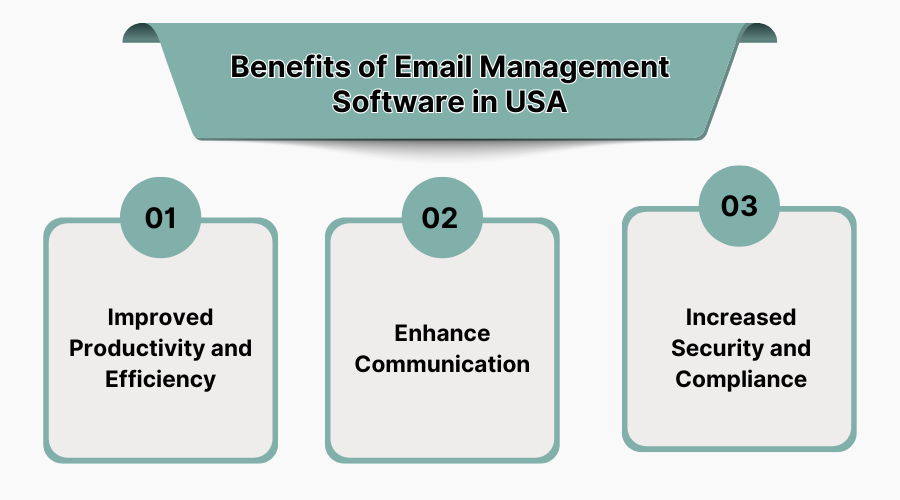
1. Improved Productivity and Efficiency
- Organization and Prioritization
Email organization tool helps you prioritize and categorize your emails, that reduces your chances of overlooking important messages. Features like labels and folders help you create a system that works for you. This improved organization of emails does not only save time but lowers stress, building a sense of control over your workload. With the added support of email compliance software, businesses can also ensure secure handling and regulatory adherence while keeping communication organized.
- Automation
Have you experienced spending more time on searching for an email than responding to it? This is where automation of advanced email managers comes in. Automating repetitive duties and organizing emails will allow you to concentrate better on your main responsibility. It increases productivity and results in good results both at the personal level as well as at the professional level.
- Reduced Time Spent on Emails
Constant email notifications are one of the main distractions. With the support of email management programs, prioritize your inbox and set up notifications. Keep the focused workflow by filtering out less important emails for later. Through intelligent filtering and reply suggestions, teams reduce 50% of the time spending on managing emails.
2. Enhance Communication
- Better Response Times
Email management solutions make sure that customer emails are never missed, which speeds up and improves responses. These email management softwares cut down on the time spent on manual sorting by automating routing and making workflows more efficient. A fast, dependable email management service will assist in keeping customers satisfied and also their retention. Optimizing the timing of follow-up and improving customer engagement requires advanced email tracking tools.
- Consistent Communication
Templates, internal notes, and collaboration features ensure that communication remains professional and consistent. The right email management software maintains message quality and tone across departments and agents. Using structured email handling software, businesses can ensure brand messaging stays uniform at scale.
- Clearer Communication
Threaded conversations, tags, and highlights make it easier to follow email history and resolve queries. A well-organized email management platform helps team members track conversations without confusion. Clear communication is a major benefit of using professional email manager software for support and internal collaboration.
3. Increased Security and Compliance
- Protect Sensitive Data
Many email management softwares have encryption, access controls, and compliance with regulations such as HIPAA and GDPR among others. Firms that handle a lot of sensitive data reduce their risk by implementing advanced email management systems. Mail management software with robust security features helps protect employee and customer data from breaches.
- Reduce Phishing Risks
AI-based spam and phishing detection filters removes dangerous emails, securing your business. Modern email management solutions have built-in threat detection that lowers the chance of attacks through email. Email organization tools also mark suspicious behaviour, which helps staff find threats before they do any harm.
- Faster Customer Service
With real-time visibility and ticketing, customer email management becomes more responsive and structured. Email management programs enable service teams to prioritize and resolve tickets with greater speed. This speed and structure make the Best Email Management Software a critical part of any customer support strategy. Pairing your email management platform with the best transactional email software ensures timely delivery of order confirmations, password resets, and other critical updates.
8. Conclusion:
With the right Email Management Software, you can keep yourself organized, be more productive, and provide excellent customer service whether you’re a freelancer or a business in the growing stage. There’s something for every need and budget, from free tools like Thunderbird to business-ready ones like Zendesk. The U.S. market is moving toward automation, personalization, and compliance, which means that the need for powerful email organization tools and email management solutions is only going to increase. Use this guide to assess your needs and make an informed decision on the Best Email Management Software for your goals.
9. List of Top Email Management Software in 2025:
These top-rated Email Management Softwares for 2025 have powerful features that make it easier to communicate, improve productivity, and handle inbox overload quickly, whether you're a freelancer or part of a large support team.
1. Best Email Management Tools for Individuals and Small Businesses
1. SaneBox
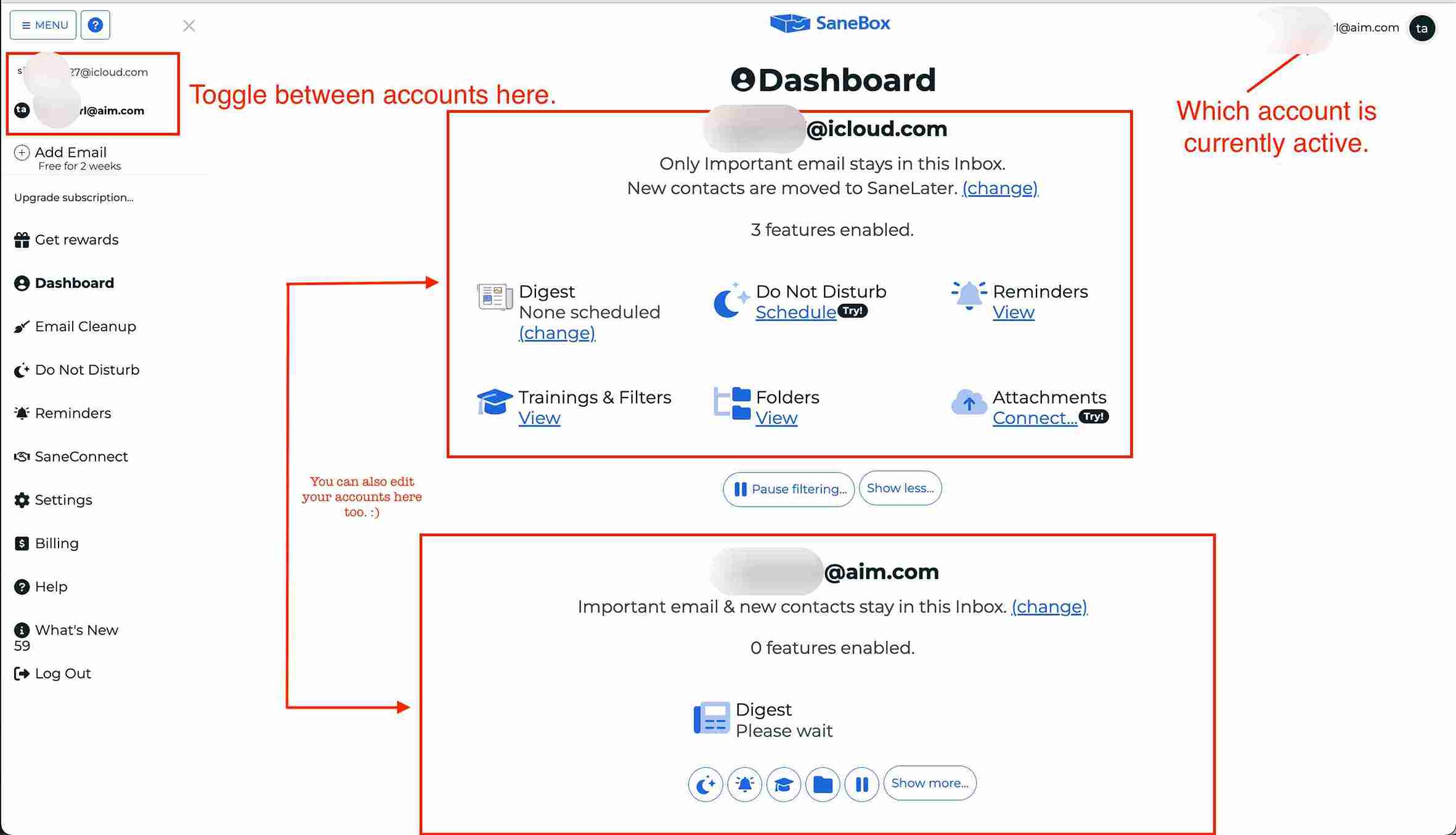
SaneBox is a simple yet powerful email manager software that utilizes AI to automatically sort unimportant emails out of your inbox. Sanebox learns about your email habits and automatically filters less important emails into a separate folder like “SaneLater”.
Features
- SaneLater
- SaneBlackhole
- Email Deep Clean
- SaneNews
- Reminders
Pros
- Customizable Features
- Easy Integration with various email clients
Cons
- Feature Limitations
- Not AI-powered to write and read emails
Pricing: Snack plan costs $3.49 monthly and $2.42 annually. Lunch plan costs $5.99 monthly and $4.08 annually. Dinner plan costs $16.99 monthly and $11.58 annually.
2. Thunderbird
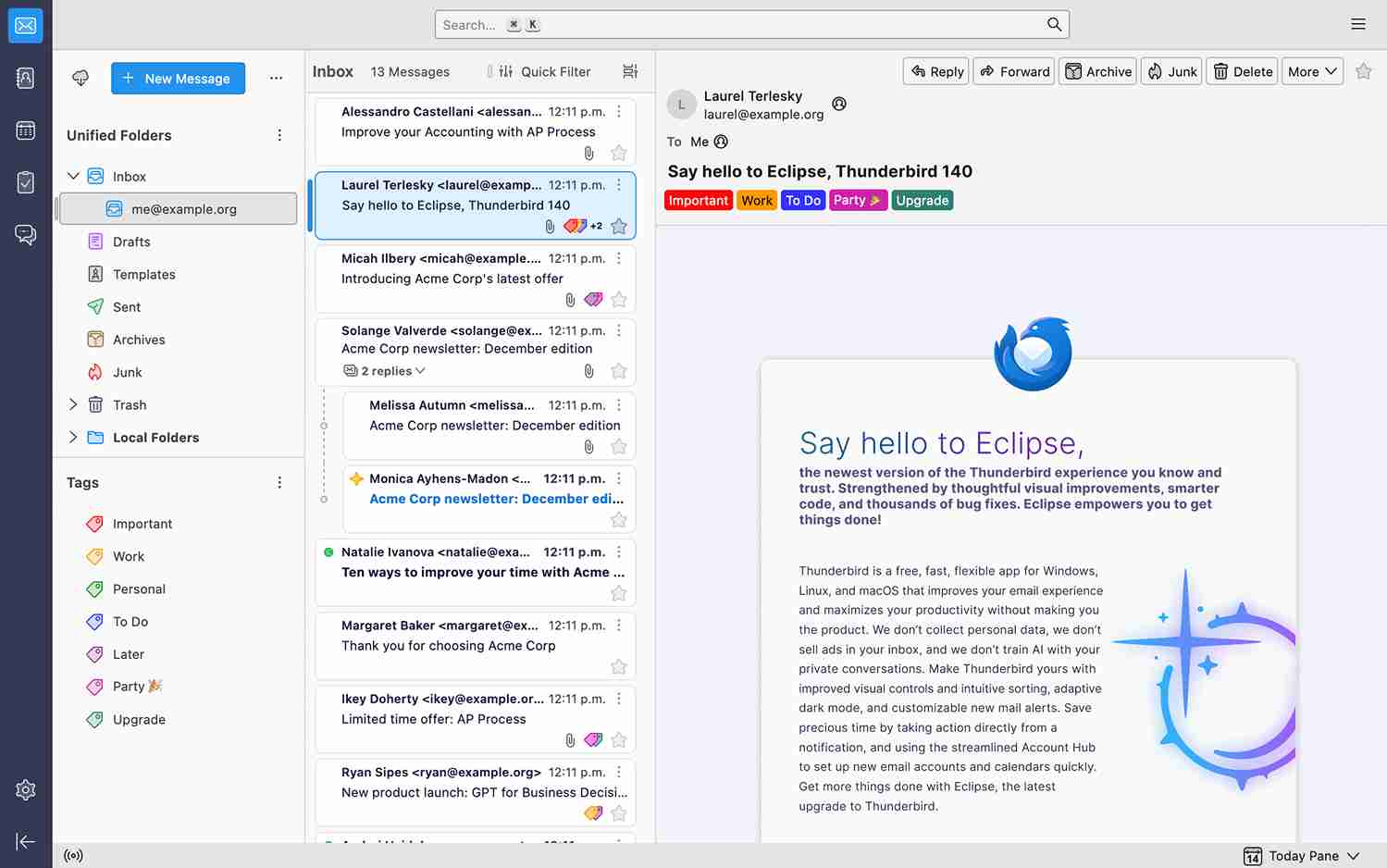
Mozilla Thunderbird belongs to freeware open-source mail management software with advanced customizability for techie users. Thunderbird is a desktop solution that provides user management of emails and related information all in one place rather than accessing from numerous sites or web browser.
Features
- Email Management
- Personal Information Management
- RSS Feed Reader
- Security and Privacy
- Chat client for IRC, XMPP, and Matrix protocols
Pros
- Cross-Platform Compactibility
- Extensive Add-on Ecosystem
Cons
- Complex settings and functions for beginners
- Slow performance with large data volumes
Pricing: Thunderbird is free to use and download.
3. Missive
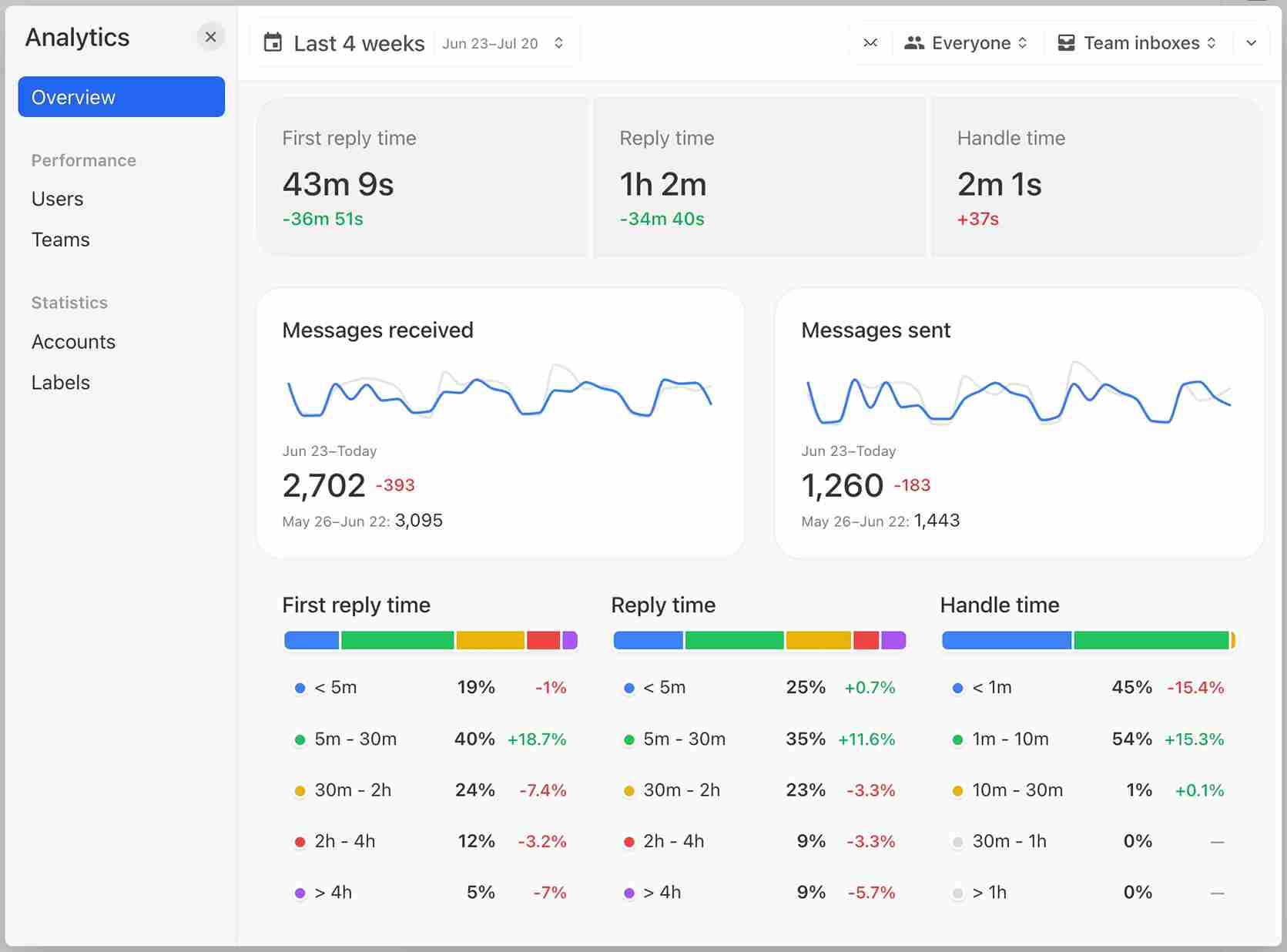
Missive is an email management service for teams where email continues to be the dominant conversation channel. It provides features that allow both individuals and teams to maximize productivity as well as coordination without having to break their existing workflows.
Features
- Email and Communication
- Inbox Collaboration
- Security and Privacy
- Workflow and Automation
- Tasks Management
Pros
- Unified Communication
- Automation and Customization
Cons
- Steep learning curve required
- Limited Voice/Channel Support
Pricing: Free plan is available. Starter plan costs $18 monthly and $14 annually. Productive plan costs $30 monthly and $24 annually. Business plan costs $45 monthly and $36 annually.
2. Best Email Management Software for Teams and Businesses
1. Zendesk
Zendesk is a comprehensive email management system built for customer support teams. Whether it is email, messaging, or voice, Zendesk allows you to manage all customer interactions at one place.
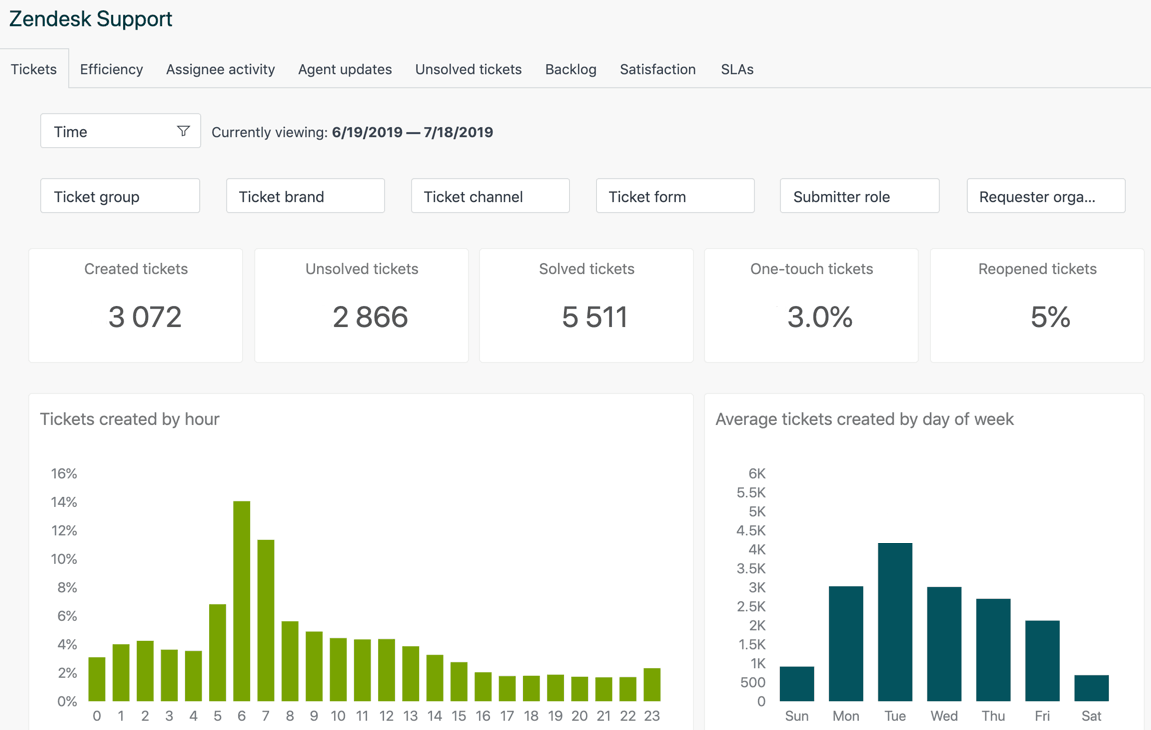
Features
- AI Agents
- Copilot
- Messaging and live chat
- Workforce management
- Data privacy and protection
Pros
- Comprehensive ticketing system
- Multi-channel support
Cons
- High cost at advanced tiers
- Potential downtime during peak usage
Pricing: Free trial is available. Support team plan costs $25 monthly and $19 annually. Suite team plan costs $69 monthly and $55 annually. Suite professional plan costs $149 monthly and $115 annually. Suite enterprise plan requires you to talk with sales team.
2. Hiver
Hiver is an AI email management platform for customer support teams to manage their customer conversations primarily through email, but also by adding voice and live chat channels. This software will work to streamline your workflow process while increasing collaboration and raising the bar on customer support right inside your current email inbox.
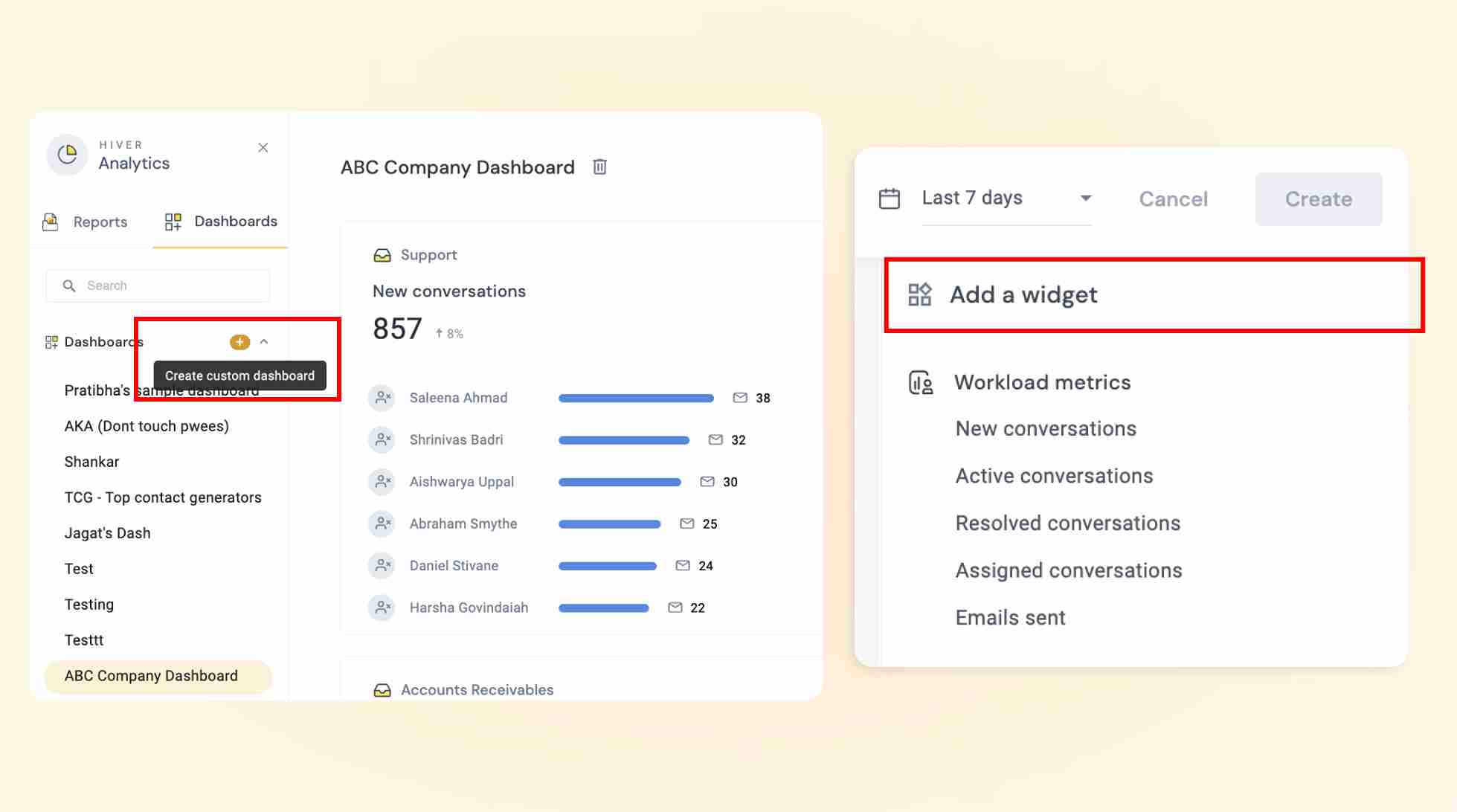
Features
- Email Management
- Multi-channel support
- Analytics
- Automations
- Integrations
Pros
- Gmail Integration
- Enhanced Email Organization
Cons
- Potential for inconsistent email delivery
- Advanced customization limitations
Pricing: Free plan is available. Lite plan costs $24 monthly and $19 annually. Growth plan costs $34 monthly and $29 annually. Pro plan costs $59 monthly and $49 annually. Elite plan requires you to contact sales team.
3. Help Scout
Help Scout is an email management solution for the growing businesses. It offers tools through which users can manage different channels-like email, live chat, or self-service options. Such email managers easily connect with marketing campaign software so that customer support and outbound campaigns can be carried out seamlessly.
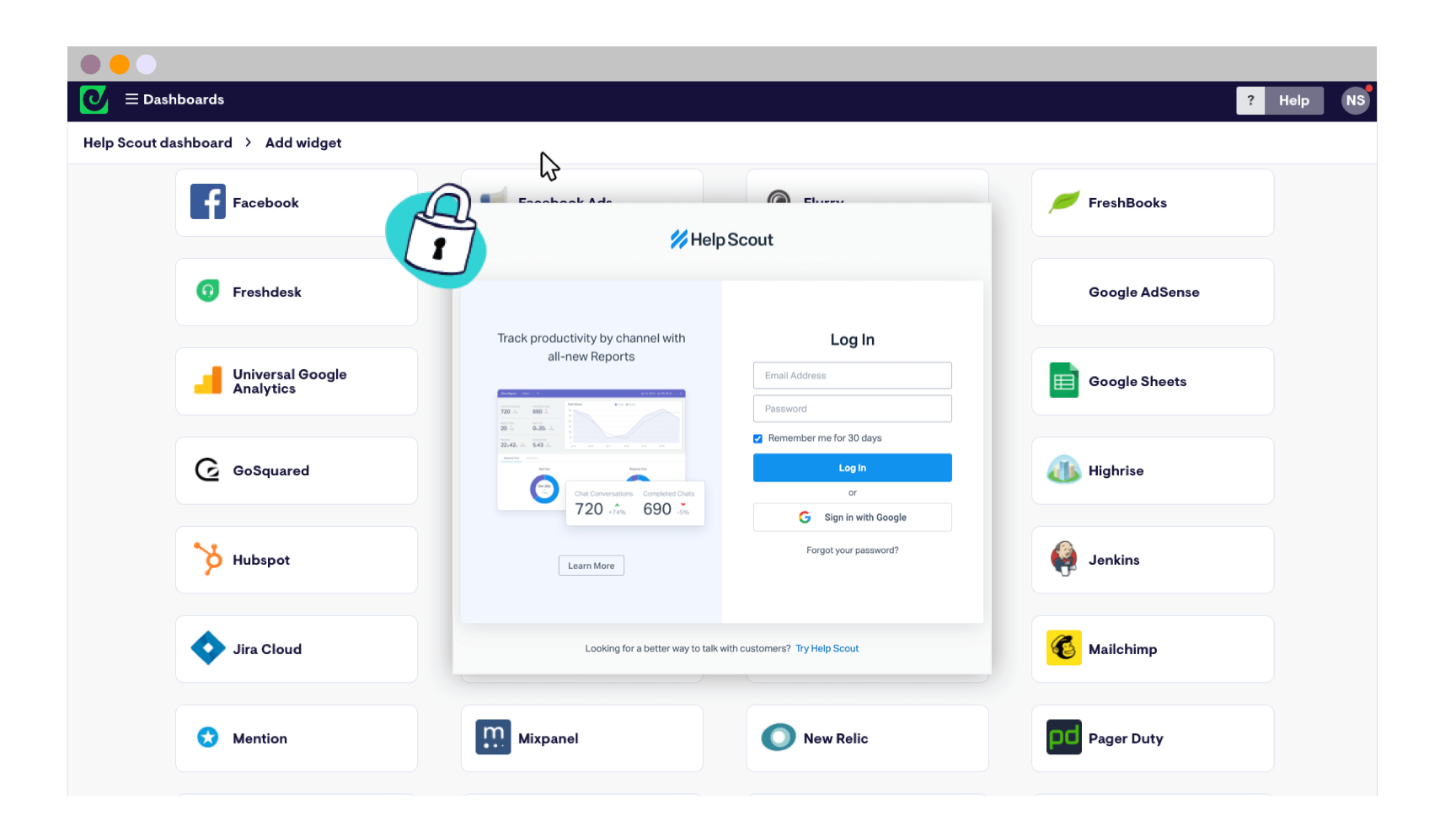
Features
- Inbox
- AI chatbot
- Messages
- Insights and Analytics
- Apps and Integrations
Pros
- User-friendly Interface
- Integration with CRM, e-commerce, and marketing tools
Cons
- Limited mobile app functionality
- No real-time chat for collaboration
Pricing: Free plan is available. Standard plan costs $30 monthly and $25 annually. Plus plan costs $90 monthly and $75 annually.