Best AI Online HR Software for Business
AI Online HR Software helps businesses and organizations streamline their operations using advanced AI-powered technology. It automates complex tasks, improves accuracy, and provides data-driven insights to enhance productivity and decision-making. With features like automation, real-time analytics, workflow management, and seamless integrations, AI Online HR Software enables teams to reduce manual work, save time, and improve overall efficiency. On SoftwareAdviser.ai, you can explore, compare, and choose the best AI Online HR Software solutions that fit your business needs and help you scale faster with the power of AI.
 Researched and Written by Akash Patel
Top 3 Featured Softwares

List of 20 Top Online HR Software For 2024
Get Free Consultation


What is Spine HR and Payroll?Spine HR and Payroll is an HR control and payroll automation software program that facilitates organizations' control of attendance, depart, performanc...
View Profile

What is Workable?Workable is an all-in-one recruitment software that helps businesses streamline the hiring process from start to finish. It provides tools for posting jobs, tr...
View Profile

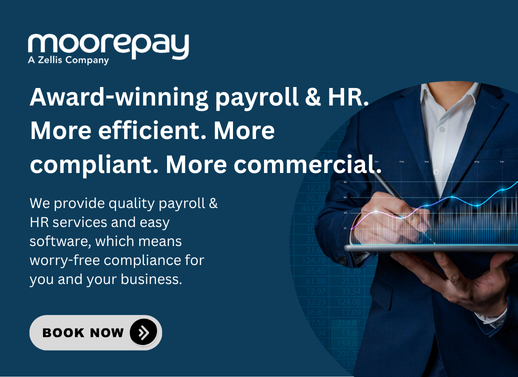
Moorepay

Award-winning payroll & HR
Founded in 1966, Moorepay is a leading supplier of payroll and HR solutions to businesses large and small. We are experts in what we do, committed to delivering an honest, reli...
View Profile

BreatheHR
The all-in-one HR solution loved by 16,000+ UK SMEs.
What is BreatheHR?BreatheHR is a cloud-based HR software tailored for small and medium-sized businesses (SMBs) to simplify and streamline people management. It provides a centr...
View Profile

Workforce
HR, Scheduling, and Payroll
Workforce.com is a workforce management software technology company that helps improve time & labor for shift and hourly workforces. With over 6,000 customers in some 80 countries ...
View Profile
Hibob HRIS
MODERN HR FOR MODERN BUSINESS
What is HiBob?HiBob, commonly referred to as Bob, is a modern cloud-based Human Resources Information System (HRIS) built to streamline and elevate HR processes for organizatio...
View Profile

Oyster
Hire Anywhere, Thrive Everywhere
What is Oyster?Oyster is a global employment platform and Employer of Record (EOR) service that simplifies the process of hiring, paying, and managing remote employees and cont...
View Profile
What is AFAS Software? AFAS Software is a Netherlands-based ERP (Enterprise Resource Planning) platform that helps organizations manage their essential business operations withi...
View Profile
Employment Hero
Leap into the future of work
What is Employment Hero?Employment Hero is a comprehensive cloud-based HR and payroll software solution developed in Australia, tailored for small to medium-sized businesses. I...
View Profile
ADP (Automatic Data Processing) is a global provider of cloud-based human capital management (HCM) solutions. It offers software and services to handle payroll, HR, talent manageme...
View Profile

Humanly Chat
Streamline Your Hiring Workflow: AI-Powered & Candidate-Centric
Check How Humanly Chat can help to automate Indian Business. SaaSAdviser provide their list of features, pricing, Free demo and Comparison with the best alternative
View Profile

Connecteam
Powerful Hubs, Flexible Pricing
What is Connecteam?Connecteam is a mobile-first employee management software designed to simplify and centralize daily operations for deskless and remote teams. It offers tools...
View Profile

Deel is a cloud-based global payroll and compliance platform designed to help businesses hire, manage, and pay remote employees and contractors across 150+ countries. By provid...
View Profile

Employes
Payroll & HR package. All in one place.
What is Employes?Employes is a comprehensive cloud-based HR and employee management software built to simplify and automate daily workforce operations for businesses of...
View Profile

Tellent
Make better people decisions
Tellent is a cloud-based people-management and HR platform that unifies recruiting, employee data management, performance reviews, and engagement workflows into a single system. It...
View Profile

Paylocity
Get in Sync with Access Management
Paylocity is a cloud-based payroll and human capital management (HCM) software designed to help businesses streamline payroll, workforce management, and HR processes. The p...
View Profile

Leapsome is a dynamic employee development and performance management platform designed to enhance workplace productivity, engagement, and growth. It provides businesses with a uni...
View Profile

BambooHR is a cloud-based Human Resources (HR) software designed to help small and medium-sized businesses (SMBs) streamline HR processes. It provides tools for managing employee i...
View Profile

Prevue HR
By Prevue HR Systems
What is Prevue HR? Prevue HR is a cloud-based totally completely human aid management tool designed to help organizations with understanding acquisition, worker onboarding, perf...
View Profile

Access PeopleHR
Scalable HR software for people-led organisations
The Access Group is one of the largest UK-headquartered business management software providers. It provides solutions that empower more than 160,000 small and mid-sized organisatio...
View Profile
Table of Content
In today’s HR environment, you have to walk a tightrope between compliance and optimum operational efficiency, and the technology you choose is important. Artificial intelligence in HR can help convert human resources from a typical administrative function into a highly predictive, automated powerhouse, a transformation all US organisations face as they deal with complex multi-state labour regulations, evolving remote work dynamics, and rising pressure to retain top personnel. This buyer’s guide is designed to assist US-based decision-makers to cut through the marketing noise, evaluate core machine learning capabilities, and select a scalable solution that unites payroll, benefits, and talent acquisition, all while complying with strict and evolving federal and state privacy regulations.
1. What is AI Online HR Software, and does your US Business Actually Need it?
AI online HR tools are cloud-based platforms that combine AI technologies (such as machine learning algorithms and natural language processing) to support daily HR operations. Instead of being burdened with managing paperwork or manually keeping an exhaustive spreadsheet, these solutions can automate many of the complex functions that HR processes require, such as resume processing, calculating multi-state payroll taxes, and answering frequently asked questions (FAQs) from employees using an intelligent AI chatbot software. For a US firm, it switches your HR team from reactive administrative work to a predictive strategy, employing data-driven insights to highlight employee burnout risks or spot hiring bottlenecks before they hurt your bottom line.
If your US firm really requires it depends on your current friction points, but for most expanding companies, the switch is becoming a requirement rather than a luxury. In the US, it involves handling a severely fractured regulatory environment, with complex federal, state, and municipal labour regulations (think FLSA overtime, FMLA tracking, and paid leave in a state). If your team is wasting hours doing manual compliance audits or losing top-tier talent because your hiring process takes weeks, AI HR software gives the automated guardrails and speed you need to compete. If your company is small and has only one state location, has a very close, stable team and little turnover, using conventional HR software that does not include an expensive premium AI option is likely fine now and may be for some time in the future.
2. What Features should you look for in AI Online HR Software?
- Automated Recruiting and Resume Parsing: AI is used to scan resumes automatically, compare candidate skill sets to specific job requirements, and create an impartial ranking of the best available talent in the United States.
- Predictive Workforce Analytics: This tool uses existing employee behavioral data along with engagement information, such as performance appraisals and employee surveys, to identify possible turnover risks among employees, as well as identify those employees with potential for leadership positions before the occurrence of bottlenecks.
- Intelligent Multi-State Compliance Guardrails: Automatically monitors and modifies automated business system processes to create compliant and responsive systems for compliance with rapidly changing various state, federal, and local laws governing employee rights within the United States.
- AI-Driven Employee Self-Service: Utilizes advanced chatbot technology through Natural Language Processing (NLP) to provide 24/7/365 access for employees' routine requests regarding company benefits, employee payroll, and business policy.
- Smart Payroll and Shift Optimization: Provides automated AI payroll processing, calculates the appropriate employee tax deductions, and allows predictive scheduling of employees based on anticipated overtime costs.
3. How much does AI Online HR Software Typically Cost for a US-based Company?
When budgeting for a cloud-based HR software, US organisations often meet a PEPM (Per Employee Per Month) price plan, generally coupled with a one-time implementation cost. A typical HRIS with artificial intelligence capabilities will cost between $4 and $25+ per employee, per month, but the overall investment will be very much determined by the complexity of your workforce and the modules you turn on.
|
Business Tier |
Average Monthly Cost |
Key Included Features |
|
Small Business (1-50 employees) |
$4 - $10 per employee |
Employee onboarding software, basic automated payroll processing, and an employee self-service portal. |
|
Mid-Market (51-500 employees) |
$11 - $20 per employee |
Advanced AI recruiting tools, performance tracking, and multi-state HR compliance automation. |
|
Enterprise (500+ employees) |
$21 - $35+ per employee |
Deep predictive workforce analytics, global payroll, and a fully customized talent management system. |
- Advanced Recruitment: Adding standalone AI recruiting technologies to screen big numbers of resumes can add an additional $50 to $200 per recruiter per month.
- Sophisticated Payroll: Processing automated payroll in various jurisdictions with sophisticated tax filings often costs a separate flat fee per pay run (usually $40-$100 per month) plus a minor per-head charge.
- Predictive Add-ons: The option to turn on advanced modules for predictive workforce analytics (e.g., to predict turnover or flight risks) is often viewed as a premium tier upgrade.
4. Which AI Online HR Software Integrates Best with Existing US Payroll and Benefits Systems?
1. Best for End-to-end Automation
If you want an all-in-one platform that deeply syncs payroll, benefits, and IT apps, A leader in the field. It employs a “unified data graph,” so a change anywhere is immediately reflected everywhere else.
Payroll & Benefits Integration: Best. It can operate its own native US AI payroll software and benefits, or connect smoothly with external services through its huge app ecosystem. When an employee onboarding cycle is activated, it automatically calculates multi-state tax withholdings and feeds benefit deductions directly to the active payroll run.
Automates complicated “if/then” HR and finance procedures, manages global compliance guardrails, and dynamically delivers workforce insights based on live wage and benefits data.
2. ADP Workforce Now is best for large, multi-state enterprise systems
ADP is a heritage behemoth with strong native AI integrations throughout its ecosystem. It is the #1 choice for mid-market to enterprise US organisations with complicated, deeply ingrained payroll arrangements.
Payroll & Benefits Integration: Peerless native capability. Since ADP is likely your current payroll system, its AI HR software modules sync perfectly. Its marketplace has hundreds of pre-built links to external health insurance and 401(k) providers. Features ADP Assist, an AI layer based on its enormous dataset of 40+ million workers. It automatically flags payroll irregularities (such as unusual overtime or tax variance) before a pay run is finalised, and leverages generative AI to rapidly address employee benefits enquiries.
3. Paylocity and Paycor: Best AI Insights for Mid-Market
Paylocity and Paycor are both great solutions for mid-sized US organisations searching for a single platform that directly optimises labour costs using AI.
Payroll & Benefits Integration: Both have tightly-integrated, native payroll and benefits admin architectures. They’re good at automatically tracking changing state tax regulations and modifying benefit deductions in real-time. Paylocity strongly incorporates AI into day-to-day things (think automatic talent matching and shift scheduling), whereas Paycor taps into its AI-powered leadership insights to analyse your payroll data and actively indicate whether departments are at high burnout or turnover risks.
5. What are the Top US Companies Providing AI Online HR Software?
1. Sage HR
Sage HR is a cloud-based, highly scalable platform that streamlines fundamental human resource administration for small to mid-sized organisations in the US. It’s perfect for advanced scheduling, shift planning, and automatic time-tracking, with modular add-ons that scale with your staff. The platform incorporates AI that helps optimise shift patterns, forecast schedule problems, and expedite routine expense approvals. Its seamless tech architecture guarantees localised employee data syncs cleanly with external financial networks. “It enables growing organisations to move quickly away from manual spreadsheets, modernising the logistics of everyday workers.
- Pros: Pricing is quite modular, and you can pay for what you need. Great interfaces for interactive shift scheduling and time off tracking. The mobile app experience is quite easy for distant field workers.
- Cons: Advanced analytics and customisable reports are only available on higher-tier plans, and it doesn’t offer deeply integrated native multi-state payroll, instead requiring the usage of other software plugins.
2. Employes
Employes provides an automated HR and payroll management solution that streamlines operational workflows for small business owners. Work with your current payroll and HR process. You’ll be able to utilize our system within minutes by performing payroll calculations, generating tax filings, and managing employee data – all from one dashboard! Not only does our system automate payroll processing, but our Smart Guardrails will automatically search for any common discrepancies or anomalies prior to payroll submission to help reduce your financial exposure. If you are a company that values speed and transparency above complex corporate analytics, Employes is the solution you've been searching for! With our easy-to-use interface, almost no onboarding training is needed for either administrators or employees.
- Pros: Simple, uncluttered user interface. Quick set-up time, automated payroll tax processing, and very inexpensive for micro businesses.
- Cons: No advanced predictive workforce analytics or AI recruiting tools. Limited customization options for enterprise-type workflow.
3. AFAS software
AFAS Software offers an all-in-one ERP and HR software suite to automate complex business administration, workflows, and personnel management in one package. It leverages robust business analytics and machine learning to assess workforce trends, automate mundane document creation, and streamline complex procurement processes. Its great system flexibility makes it perfect for US companies to develop very high customised and automated operational processes across different departments, which is a huge selling point for a European company originally.” The system becomes a single source of truth, which reduces the need for multiple third-party apps significantly. For large organisations requiring a rigid structure and total aggregation of business data.
- Pros: Enterprise-level business analytics, deep automation across departments, breaks data silos, and combines HR, ERP, and accounting. Workflows are configurable ad infinitum.
- Cons: Includes a steep learning curve for the ordinary user. High cost of deployment and a resource-intensive setup process that might be daunting for smaller teams.
4. Hibob HRIS
Hibob (or simply “Bob”) is a modern, culture-first HRIS built for mid-market, fast-growing firms with remote or multi-state US workforces. One of the platform’s main operational metrics is employee engagement. It combines traditional HR tools with a social-media-like interface to improve workplace connectivity. Its AI powers advanced sentiment analysis on employee surveys, automation of complex global onboarding processes, and predictive talent insights. Hibob excels at customising pay programs, performance assessments, and translating complex workforce data into visual representations. This is a terrific choice for tech-savvy organisations that wish to enhance retention in tight labour markets.
- Prons: Beautiful, modern user interface that results in a far better rate of employee adoption; powerful predictive analytics to track turnover risk and retention; remarkable adaptability for global and multistate workforces.
- Cons: Premium pricing approach is on the high end of the mid-market scale; native payroll execution is not baked in and requires interfaces with other suppliers.
6. How do you measure ROI after adopting AI Online HR Software?
There is more than one way to measure the return on investment (ROI) of an AI-based HR platform, but the most obvious method of measuring the ROI of an AI-based HR system is through hard metrics (the actual dollars saved) and soft metrics (how much time you've saved and how much risk the time cost has minimised). Both types of metrics will help you demonstrate your ROI, but they will do so in different ways.
The fastest way to recoup your investment with implement an AI-based Human Resources System is to eliminate redundant (repeated) administrative tasks through the implementation of Human Resource Information Systems (HRIS) utilizing AI within your Organisation. An effective HRIS that leverages AI can provide your Company with tools and resources to assist in tracking return on investment, through identifying ease of use associated to several defined Activity Metrics such as:
How much time does it take the Talent Acquisition team to complete the hiring process? If your Organisation utilizes AI processing and predictive analytics in its recruiting efforts, and your average time to hire is 45 days, if you were to reduce your average time to hire by 30 days, you will have substantially reduced your cost to hire; the lost productivity associated to a vacant position; both substantially.
Once an applicant is contracted, how long does it take them to reach a level of productivity? If your HR Team utilizes an automated employee onboarding system, each of the components related to compliance, as well as equipment purchase, provisioning, and training schedules, typically reduces the time to ramp additional new employees into the productive workforce.
7. What Compliance and Data Privacy Standards should AI Online HR Software meet in the US?
1. Legal Compliance of Algorithmic Decisions Related to Employment
AI programs create bias during their creation. Once a company uses an AI product to support hiring, performance assessment, or predictions of retention, the employer is liable for the results of using that program. The US EEOC works tirelessly to prevent algorithmic bias.
Title VII of the Civil Rights Act: Algorithms used by platforms need to undergo strict auditing so that there is no "disparate impact," meaning that AI recruiting tools cannot accidentally eliminate candidates because of race, sex, religion, or national origin.
Americans with Disabilities Act (ADA): Automated “knockout” questions and video tools cannot act in a discriminatory manner against people who have speech impediments, physical disabilities, or gaps in their work history due to being ill.
FCRA (Fair Credit Reporting Act): If an AI program creates aggregated data for a background check, it must ensure that it has been taken with absolute accuracy (as determined by a human) before an employment decision is made.
2. Important Data Protection Frameworks
Human resources systems hold the most sensitive data in a company: Social Security numbers, bank routing numbers, addresses, and health choices. The software used to deliver them needs to exceed maximum benchmarks for protection.
SOC 2 Type II Certification: This is the highest standard for cloud-based vendors and is achieved through an independent audit of the vendor's controls.
8. What are the Most Common Mistakes US Buyers make when Choosing AI Online HR Software?
- Allowing Impressive Demos Drive Your Choice To Buy: Buyers base their decisions to purchase on highly curated presentations from vendors, rather than testing the AI themselves on their actual converted employee data from various states.
- Assuming System Integration is a Post: Transaction Technical detail companies expect (or at least hope) that “API compatible” means a seamless, live connection to the vendor’s software; however, many companies will find, after importing from a third party, that they will need to manually clean and sync their employee data from their payroll engine to the new AI software.
- Omitting Localized and Automated Decision-Making Regulation: Buyers will assume that a vendor has met all necessary compliance requirements, such as AEDT audit requirements for New York City, and the CPPA's right to opt out of automated decision-making in California.
- Underestimating the Productivity Drain from Employee AI Opt-Outs: HR Teams are frequently caught by surprise by a wave of manual processing of US candidates or employees who legally opt out of AI-generated screening through video / automated evaluation due to the immense backlog.
- Failing to Protect Privileged Corporate and Employee Data: Common security oversights include not including necessary contract provisions to prohibit the vendor from using the employer's sensitive and confidential semi-structured data from their payroll and personnel records to train their public AI products.
- Over-Customizing the System to Mirror our Old System: While most companies start with the desire to build a new and improved AI / HR system, many will end up replicating their old systems with unnecessary customizations.
9. Conclusion
If you’re a growth-oriented US business that’s looking to grow your operations while also meeting the demands of multi-state labour laws, choosing an AI-based online HR software is critical for making a strategic change. So, how can the appropriate platform turn standard HR activities into a definable competitive advantage? Automating administrative processes, reducing payroll errors, and most importantly, harnessing predictive talent analysis capabilities are all possible by utilising the proper platform, thereby transforming these regular HR activities into a measurable competitive edge for your business. When ready to assess systems, conduct actual vendor comparisons, and purchase your systems, keep in mind that an online technology procurement site like softwareadviser.ai makes it much easier to access many of the leading vendors so that you can identify the right technology for your business, from both a cultural and technical perspective.