
I remember talking to a friend who started a boutique bike company about ten years ago. He spent nearly eighteen months just looking for a shop that would take his order. He had to fly across the country, shake hands, drink bad coffee in cold warehouses, and pray that his blueprints didn't get lost in a filing cabinet. It was exhausting. If you wanted to make something real back then, you had to own the dirt it was built on or know someone who did. You were at the mercy of the gatekeepers.
Honestly, that world is dying. We are seeing a shift that feels a lot like when we stopped buying physical servers and started using the cloud. You do not need to own a server to run a website anymore. You just rent space on AWS or Google Cloud. Now, the same thing is happening to the world of steel and sparks. If you need to build a prototype today, you can find sheet metal fabrication services with the same ease as ordering a pizza. You upload a CAD file, click a few buttons, and wait for the delivery truck to arrive at your door.
It sounds sounds simple, but the implications for how we build things are massive. It changes the very math of starting a business. It removes the "capital" from capital-intensive industries. It allows a designer in a coffee shop to compete with a legacy manufacturer that has been around for fifty years.
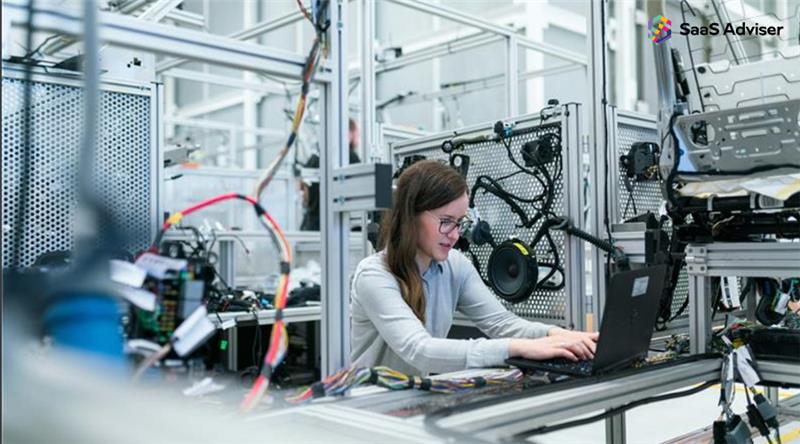
Why Does a Factory Feel Like an App Now?
Here is the thing about old-school manufacturing. It was heavy. I am not just talking about the weight of the machines, but the logic itself. You had to worry about minimum order quantities that would break a small budget. You had to think about lead times that stretched into months. For a startup, that was often a death sentence. You could run out of cash before you even saw your first finished part.
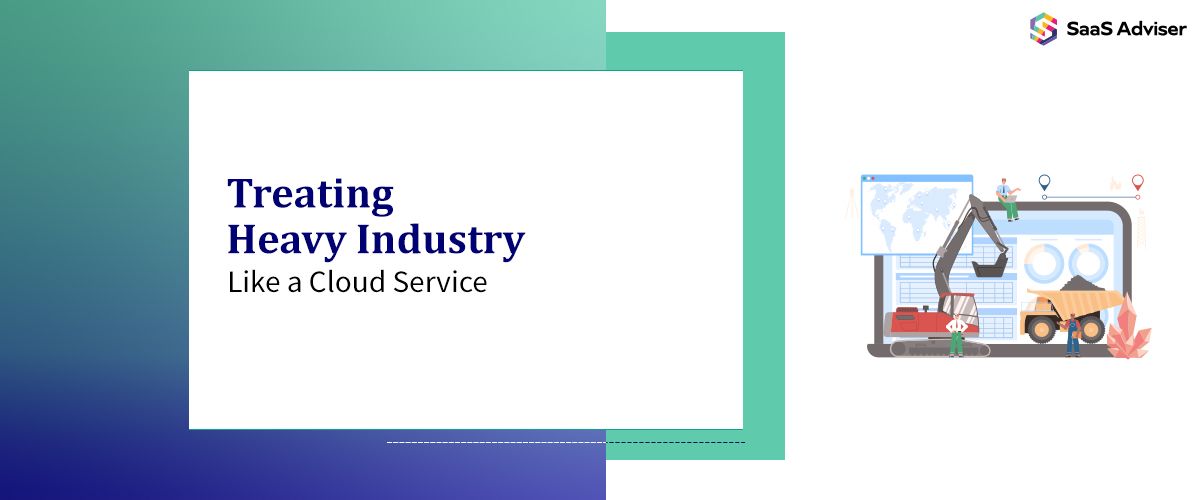
But today, software has eaten the factory floor. When you treat heavy industry like a cloud service, you are essentially using an API for hardware. You are turning a physical process into a digital stream. The factory owner on the other end has software that automatically nests your parts on a sheet of metal to save waste. They have robots that know exactly how to bend that metal based on the file you sent. There is no longer a need for a frantic phone call to explain a curve or a corner.
The friction is just gone. You know what? It makes the whole process feel less like a gamble and more like a creative exercise. You can fail fast. You can iterate. You can realize your design is slightly off, fix it in an hour, and order a new version by lunch. That kind of speed used to be reserved for software developers. Now, people working with physical atoms get to play by the same rules.
The End of the Middleman Headache
We used to have these long, messy chains of communication. You would talk to a sales rep, who talked to a project manager, who finally talked to the guy running the laser cutter. Somewhere in that chain, things always went wrong. A decimal point would move. A material would be swapped because someone thought they knew better.
When manufacturing becomes a service, the data is the source of truth. The file you upload is the same file the machine reads. This eliminates the human error that used to haunt the shop floor. It also means that the "little guy" gets the same level of precision as a massive corporation. The machines do not care if you are a Fortune 500 company or a student in a garage. They just execute the code.
Let me explain why this matters for the economy at large. It lowers the barrier to entry so significantly that the "maker" movement is turning into a "manufacturer" movement. We are seeing a surge of microbrands that produce high-quality physical goods without ever owning a single wrench. They focus on design and marketing. They leave the heavy lifting to the experts who have the big, expensive machines. It is a beautiful division of labour.
Is This the Death of the Craftsman?
Some people worry that this digital shift takes the soul out of making things. They miss the smell of oil and the sound of a busy shop. I get that. There is something truly beautiful about a master craftsman working a piece of metal by hand. There is a history there that we should respect.
But here is a different way to look at it. This technology actually frees people to be more creative. Instead of spending months figuring out how to source a specific bracket, an engineer can spend that time making the product better for the user. We are not losing craftsmanship; we are just changing the tools. A laptop is now just as important to a metalworker as a welding torch.
The cloud model also makes the industry more resilient. If one factory goes down due to a power outage or a local issue, the digital network can often reroute the work to another facility in the same network. It is a distributed system, just like the internet. We are moving away from single points of failure.
Why Speed is the Only Metric That Matters
In the old days, the goal was always "cost per unit." You bought 10,000 pieces because it made each one cheaper. But that led to warehouses full of junk that nobody wanted. It was wasteful, it was expensive to store, and it was slow. If the market changed, you were stuck with a mountain of obsolete metal.
Now, the metric that matters most is "time to market." If you can get your product to a customer three months faster than your competitor, you win. It does not matter if each part costs an extra dollar if you can start selling today. This on-demand approach lets you test the market with 50 units. If they sell, you order 500. If they don't, you change the design and try again without going bankrupt.
This is the "lean startup" methodology finally applied to heavy industry. It is about reducing waste (both material and time). It turns out that being agile is way more valuable than being big. In a world that moves this fast, the big and slow are being eaten by the small and fast.
The Invisible Infrastructure of the Future
Sometimes I think about how much of our lives depends on things we never see. You do not think about the undersea cables when you send an email. You do not think about the power grid when you flip a switch. You just expect it to work because the infrastructure is solid.
Manufacturing is becoming that kind of invisible infrastructure. It is moving into the background of our consciousness. For the next generation of inventors, the idea of "finding a factory" will seem as weird as "finding a phone booth" seems to us today. They will just assume that if they can design it, it can be made.
There is a certain magic in that. It democratizes the ability to create physical things. It means the best ideas can win, even if they do not come from someone with a million dollars in the bank. It levels the playing field in a way that we have never seen in human history.
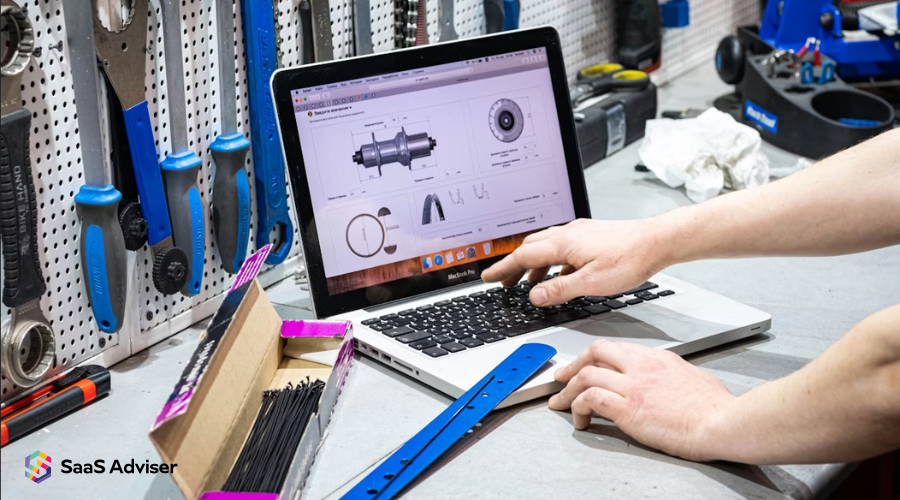
The Shift From Hardware to Software Logic
Think about how you updated an app on your phone. The developer pushes a button, and the new version exists everywhere. We are getting closer to that reality with physical products. When your factory is a service, "updating" your product is just a matter of uploading a new file. You do not have to retool a whole assembly line manually. You just changed the instructions.
This allows for mass customisation. Imagine a world where every car or every bicycle is slightly different because the cost of changing the design is zero. We spent a century trying to make everything the same to save money. We are about to spend the next century making everything unique because the machines are finally smart enough to handle it.
Resilience in a Changing Climate
There is another angle here that we don't talk about enough. Environmental impact. Traditional manufacturing is incredibly wasteful. You make too much, you ship it halfway around the world, and half of it ends up in a landfill.
When you treat industry as a cloud service, you can produce things closer to where they are needed. You only produce what is ordered. This "just in time" manufacturing on a global scale could drastically reduce the carbon footprint of the things we buy. We are moving bits across the ocean instead of heavy shipping containers. That is a massive win for the planet, even if it happens quietly in the background.
What hHappens Next?
We are still in the early stages of this transformation. Right now, we are mostly doing this with parts and components. But soon, we will see entire assembly lines offered as a service. You won't just order a part; you will order a finished, packaged product that drop ships directly to your customer. The "factory" will be a black box that you interact with via a screen.
The line between software and hardware is blurring. If you can code it, you can build it. That is a wild thought, isn't it? It makes the world feel a bit smaller and a lot more full of possibilities. We are moving from a world of "no, because" to a world of "yes, if."
Whether you are building a new medical device or just a better way to hang a shelf, the tools are finally catching up to our imagination. The factory is no longer a place you have to go. It is a service you call upon. And honestly, it is about time. We have spent too long being held back by the weight of our machines. It is time to let the software take the lead and see what we can actually achieve when the barriers are gone.
Imagine a kid in a rural town who has a brilliant idea for a new type of wind turbine. Twenty years ago, that idea would have stayed in a sketchbook. Today, that kid can use the same professional-grade fabrication services as a major aerospace firm. They can get their parts delivered in a week. They can test, fail, and succeed without ever leaving their hometown. That is the real power of the cloud. It is not about the technology; it is about the opportunity. It is about making sure that the next great invention doesn't die in a filing cabinet just because someone couldn't find a shop to build it.
Embracing the Ddigital Forge.
We are entering the era of the digital forge. It is a place where the heat and the hammer are controlled by lines of code. It might feel a bit cold to those used to the old ways, but the fire is still there. It is just burning inside the processors and the laser cutters.
The warmth now comes from the speed of creation. It comes from the excitement of seeing a digital model become a physical reality in a matter of days. For any creator, that is the ultimate high. And now, thanks to the cloudification of heavy industry, that feeling is available to everyone.
So, what are you going to build? The tools are ready. The machines are waiting for your instructions. The only thing left is the idea. And in this new world, that is the only thing that should have ever mattered in the first place.
It means accessing industrial production tools through digital platforms rather than owning the machinery yourself. Much like cloud computing, you pay for what you use and scale as needed without heavy upfront investment in hardware.
It levels the playing field by removing the need for massive capital. Small teams can access high-end fabrication, professional-quality materials, and rapid prototyping that were previously only available to large corporations.
While the individual part price might be higher than in mass production, the total cost of business is often lower. You save money on storage, reduce waste from unsold inventory, and get to market much faster.
Yes. Modern digital manufacturing services use the same industrial-grade CNC machines, 3D printers, and laser cutters as traditional shops. The difference is in the software interface and the streamlined logistics.