

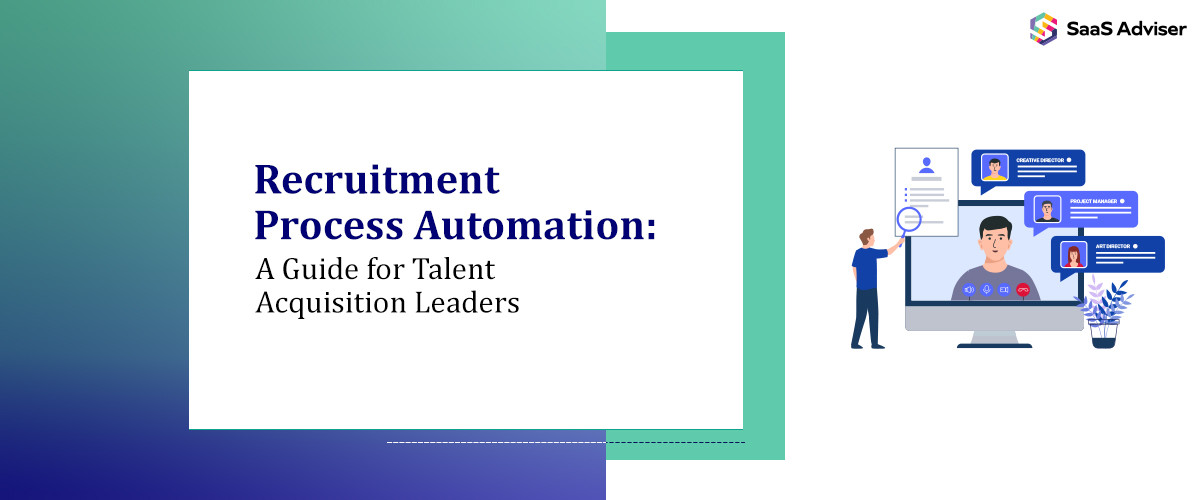
In today's competitive talent market, companies are increasing rapidly, smartly, and more efficiently. Traditional recruitment methods are often reduced, which leads to missed opportunities and overwhelming employment. Set the recruitment process automation. This transformative approach gives leaders to procurement managers the opportunity to focus on the initiative to streamline workflows, reduce manual tasks, and retain strategic work. In this blog, we will find out what the recruitment automation is, the benefits it provides, and the future of AI in recruiting implementation strategies.

Looking for Recruitment automation software? Check out Saas Advisor’s list of Best recruitment automation software
What is Recruitment Process Automation?
It refers to the use of technology to streamline and automatically perform repetitive work such as screening, candidate purchases, interview planning, and automated communication, for example through a voice AI agent. By integrating automated recruiting into the recruitment workflow, organizations can increase efficiency, stability, and the overall candidates significantly. This approach does not eliminate human participation enables the administrative burden and enables recruits to focus on high-value strategic tasks such as interviews, relationship construction, and better informed recruitment decisions.
Tools like AI screening software play a crucial role in this process, helping recruiters quickly identify top candidates while minimizing manual effort and human bias.
Advanced AI interview software like AiPersy can automatically conduct structured candidate interviews and evaluate responses in parallel, helping recruiters generate shortlists much faster.
Benefits of Recruitment Automation
Embracing automation in recruitment offers several key advantages:
1) Faster Hiring Cycles
Reduce the hiring time by eliminating obstacles in the recruitment process automation. Automating steps such as screening and interview planning allows recruiters to work quickly and crucially. This efficiency ensures that top candidates are engaged and hired before they consider other opportunities.
2) Improved Candidate Experience
Automatic updates and well-organized communication, candidates are informed and attached during the recruitment journey. With recruitment process automation, the candidates receive timely reactions, consistent messages, and a smooth overall experience. It not only builds confidence but also strengthens your employer brand.
3) Higher Quality Hires
Advanced tools analyze large data sets to match candidates more accurately with job roles. Through recruitment automation, organizations can identify best talent based on skills, experience, and cultural fit. It hires better long-term and reduces turnover. Many systems now also include exclusion screening features, which automatically flag candidates or vendors who appear on federal or state exclusion lists. This ensures compliance with regulations, protects your organization from penalties, and maintains the integrity of your hiring process.
4) Reduced Costs
Less reliance on manual labor and faster fills mean decreased hiring expenses. Using recruitment automation helps companies reduce costs bound to long-term cycles. It also reduces the dependence on external recruitment agencies, which causes significant savings over time. In addition, efficient use of internal resources makes a greater return on investment in talent collection efforts.
5) Better Compliance and Reporting
Recruiting process automation ensures consistent documentation and reporting, helping meet legal and internal standards. Automated tracking reduces the chances of oversight or bias, while detailed logs make it easier to conduct audits and analyze hiring trends. This ultimately supports more transparent and accountable recruitment practices.
Are you in search for AI recruiting Software? Must check out Saas Adviser’s list of AI recruiting software
How to Automate the Recruitment Process Step-by-Step
Here’s a roadmap to guide talent acquisition automation:
1) Audit Your Current Recruitment Workflow
Identify the time-consuming and repetitive tasks for automation. Start by identifying each step of your recruitment process to highlight the possible steps, such as manual CV screening or repeated candidate follow-up. To understand where delays and bottlenecks occur, the effective recruitment process is the first step toward automation. Experienced C suite recruiters often use similar auditing methods to streamline executive hiring workflows and ensure a more efficient, data-driven recruitment strategy.
2) Define Goals and Metrics
Enter a clear key performance indicator (KPI) to measure the success of the automation effort. Whether the focus is on accelerating employment, improving quality, or increasing diversity, well-defined goals supervisor's choices and implementation of the right automation tools.
3) Choose the Right Tools
Evaluate recruitment automation platforms that match your goals and scalability needs. Think of factors such as your existing system, user experience, and easy integration with specific features that solve your recruitment challenges. Choosing the right tool provides a basis for a successful automation strategy that improves the entire recruitment process.
4) Integrate with Existing Systems
Provide simple data flow between ATS, CRM, and other HR technologies. Proper integration data eliminates the silos, reduces manual data introduction and creates an integrated recruitment work flow that improves the efficiency and accuracy of the process of hiring.
5) Train Your Team
Hire recruiters with skills to effectively manage and customize automated systems. Providing extensive training ensures that your team's recruitment automation can use the full capacity of the equipment, which can lead to the consequences of steady adoption and better work.
6) Monitor and Optimize
Continuously review results and adjust automation workflows to achieve the best outcomes. Regular monitoring helps identify areas for improvement, ensuring your recruitment process automation remains effective and aligned with evolving hiring goals.
Looking for recruiting software? Then check out SaaS Advisor’s top recruitment software SaaS solutions.
Top Tools for Recruiting Automation
The top tools for recruiting automation are:
1. HireEZ
It is an AI-operated outgoing recruitment platform designed to help companies sustain sources and top talent. It uses advanced algorithms to scan millions of profiles and build targeted talent pipelines efficiently. HireEZ Integrations, including Skima AI, allow teams to add an AI intelligence layer that enhances sourcing insights without disrupting existing workflows
Key Features
- AI candidate sourcing across 750M+ profiles
- Email automation and outreach sequencing
- Market intelligence and talent analytics
- Integration with major ATS platforms
- Team collaboration and pipeline sharing
Pros
- Powerful sourcing capabilities
- Real-time labor market insights
Cons
- Steep learning curve for new users
- Pricing may be high for small businesses
Price: Subscription starts at $169/month/user. Check the official website for more accurate pricing.
2. HireVue
It provides video interviews and evaluation equipment powered by AI, which enables automatic screening on scale. It enhances the recruitment workflow by providing structured, on-demand interviews that accelerate decision-making and reduce bias.
Key Features
- On-demand video interviews
- AI-driven candidate assessments
- Real-time evaluation metrics
- ATS integration
- Structured interview guides
Pros
- Enhances screening efficiency
- Reduces unconscious bias
Cons
- Candidates may feel uncomfortable with video AI
- Initial setup can be time-intensive
Price: Check the website for accurate pricing.
3. Paradox
It is known for Olivia, its AI-operated chatbot that automatically interacts and holds logistics for the candidate. This candidate simplifies tasks such as common questions, planning of interviews, and screening of applicants, making it a valuable tool for high-volume recruitment.
Key Features
- Conversational AI for candidate engagement
- Automated interview scheduling
- Integration with HR systems and calendars
- Mobile-friendly experience
- Real-time FAQs and candidate screening
Pros
- Great for high-volume hiring
- Reduces recruiter workload
Cons
- Limited customization in some workflows
- Pricing may not be transparent
Price: Check the website for accurate pricing.
4. Textio
It is a promotional writing platform that helps recruiters create inclusive, attractive job posts. By analyzing language patterns and providing truth suggestions, it supports the teams in improving the efficiency and impact of their recruitment workflow.
Key Features
- Real-time writing suggestions
- Bias detection and inclusive language tools
- Performance scoring
- Integration with job boards and ATS
- Analytics for job post engagement
Pros
- Improves diversity hiring
- Enhances employer brand tone
Cons
- Limited to job description and communication content
- May not suit companies with niche hiring needs
Price: Check the website for pricing.
5. SignalHire
It is a talent sourcing and contact-finding tool that enables direct outreach to passive candidates. It aggregates contact data from multiple platforms, allowing recruiters to quickly connect with potential hires and expand their talent pipeline.
Key Features
- Access to contact info across social networks
- Chrome extension for sourcing
- Candidate tracking
- API and ATS integration
- Real-time profile updates
Pros
- Strong candidate database
- Easy to use sourcing extension
Cons
- Contact accuracy can vary
- Limited advanced filtering options
Price: Free version available; premium plans from $167/month.

Expert Advice:
Be aware of integrating recruitment machines that complement your existing system - make sure you maximize the return without interrupting the current workflow.
AI and Automation in Recruitment: The Future is Now
Recruitment automation is developing rapidly with the emergence of AI. Machine learning algorithms now handle tasks such as predictive analysis, sentiment analysis, and even cultural fit assessment. Recruitment automation will increasingly involve tools that not only automate recruitment processes but also help predict future hiring needs and talent gaps.
But the human touch remains essential. While AI can screen and score, only people can truly assess emotional intelligence, team fit, and cultural alignment. The future lies in talent acquisition automation that augments, rather than replaces, human recruiters.
In 2025, the recruitment automation software market is estimated to be around $1.19 billion WASD and by 2033, by 2033 to exceed $ 2.31 billion 2033, expanding at a CAGR of 9.9% from 2025 to 2033 to CAGR.
Conclusion
Recruitment process automation is no longer a luxury - this is a requirement. Leaders aim to remain competitive for talent acquisition, and using automated recruitment tools and strategies can lead to sharp, smart, and more inclusive hiring. As AI technology goes on, the integration of recruitment automation into the main strategy will give your organization a position for long-term success.
Suggested Read:
1) Recruiting Automation Software: 7 Helpful Examples to Grow Your Team
2) The Future of Hiring: Success with Recruiting Automation Software
3) Role Of Cloud Based Recruiting Software in Remote Hiring
4) Why Cloud Recruiting Software is the Future of Recruitment Agencies
5) Top 6 Recruiting Software Solutions Transforming Hiring Practices In The US
6) The Role Of Cloud-Based Recruiting Software in Remote Hiring for US Businesses

.jpg "Innovative Software Solutions for the Modern Food Industry")