
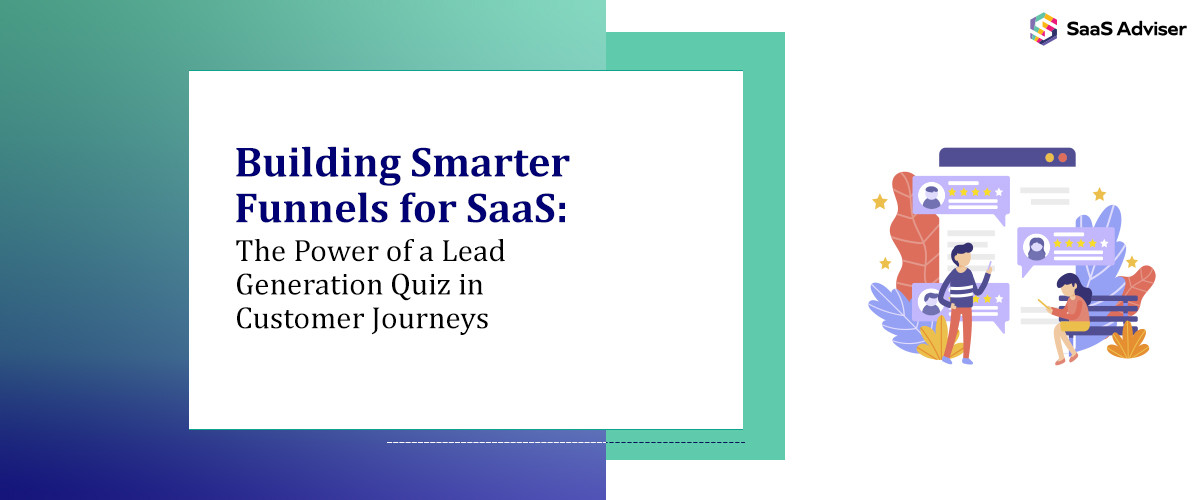
Funnels are fragile. You can spend weeks trying out headlines, rewriting hero sections, and sprucing calls-to-action, most effective to observe conversion costs stall. Traffic goes up, demo requests stay flat. Shorter forms don’t fix it. New landing pages don’t fix it. The issue isn’t always the copy or design — it’s the missing conversation. Prospects arrive with questions, but the fu nnel only offers static forms. That’s where interactive quizzes change the game.
Instead of demanding data first, a quiz gives value immediately. Visitors answer a few tailored questions, and in return, they receive guidance: a recommended plan, an estimated ROI, or a migration roadmap. It’s a small shift with a big impact—a lead generation quiz makes the exchange natural, engaging, and frictionless.
Why Quizzes Outperform Static Forms
Forms ask. Quizzes trade. That distinction matters.
A traditional form says: Give us your details, and maybe we’ll contact you. A quiz says: Tell us about yourself, and here’s something useful right away. People are far more likely to share information when they know the return is instant — clarity, a plan, even a personalized pricing range.
And it doesn’t take 20 questions. Four to seven focused clicks are enough to keep momentum alive. For SaaS, this is especially powerful. Different stakeholders want different things:
-
Founders look for speed and efficiency.
-
Managers want predictability and reporting.
-
Engineers focus on flexibility and integrations.
A quiz acknowledges these differences and routes each prospect accordingly. One-size-fits-all CTAs can’t do that.
Plugging Leaks in the Funnel with Quizzes
Every SaaS funnel leaks. Usually in three places: awareness, evaluation, and purchase. A quiz can support each stage.
Top of Funnel: Awareness
Visitors land with vague pain points. “Our team wastes time.” “We need better reporting.” A quiz reframes those vague needs into concrete scenarios. They leave with a plan name, and you leave with structured context to nurture properly.
Middle of Funnel: Evaluation
Prospects compare vendors endlessly. Pricing pages blur together.A quiz clarifies trade-offs — speed, cost, compliance — and positions your SaaS as the only inclined to very own the ones trade-offs. That honesty builds consider and hastens decision-making.
Bottom of Funnel: Purchase
Buyers want clarity. A quiz can collect a few critical details (team size, compliance needs, budget expectations) and output pricing ranges or next steps. Gate the deeper resources (like a full migration blueprint), not the basic insight. That balance respects time and encourages action.
Matching Quiz Strategy to SaaS Growth Models
Not every SaaS go-to-market motion looks the same. The quiz design should align.
Product-Led Growth (PLG)
-
Goal: push users to the “aha” moment fast.
-
Quiz Example: “Find your 3-minute setup path.” Four quick steps based on role, leading directly into product defaults.
Sales-Led or Hybrid
-
Goal: qualify leads gently, then tailor the sales motion.
-
Quiz Example: “Is this the right fit for your timeline?” Questions about team size, usage, and horizon. Outputs: a prep audit guide or direct invite to a quick-start call.
Freemium / Trial SaaS
-
Goal: prevent trial drift.
-
Quiz Example: triggered in-app on day one. “What do you want to explore first?” Answers route users to a guided tour and send a recap email with tailored tips.
Writing Quizzes That Feel Helpful, Not Forced
Think of quizzes as a conversation. Each step earns the next click.
-
Start with a hook: “Plan your rollout in 60 seconds.”
-
Keep it brisk: 4–7 screens, mostly single-choice questions.
-
Branch lightly: only when the choice meaningfully changes outcomes.
-
Reward quickly: results should be visual, specific, and short.
-
Ask for contact only when the result is worth saving: e.g., a PDF download or calculator export.
The tone matters. If it feels like an interrogation, users drop. If it feels like guidance, they stay.
Placement: Where Quizzes Convert Best
Placement can make or break engagement.
-
Hero section teaser: “Not sure where to start? Answer 4 quick questions.”
-
Repeat mid-page: catching scanners who skip the top.
-
Avoid blocking modals: friction kills momentum.
-
Align post-click paths: if a quiz suggests “Team Plan,” the CTA should lead directly to the team plan landing page, not a generic signup.
Data to Collect — and What to Skip
Collect only what drives meaningful decisions. Examples:
-
Firmographics: team size, data ranges.
-
Intent: priorities like speed, cost savings, control.
-
Constraints: compliance, integration needs.
Skip vanity data. Don’t hoard what you won’t act on. Tag responses in your CRM and use those signals for routing and nurture.
Metrics That Actually Matter
You don’t need an elaborate BI dashboard. Track a handful of practical numbers:
-
Start rate: if low, rewrite the teaser.
-
Completion rate: if drop-offs cluster, simplify that question.
-
Result-to-CTA rate: if weak, sharpen recommendations.
-
Downstream impact: compare demo show-ups, trial activations, or expansion rates between quiz leads and non-quiz leads.
Real-World Quiz Patterns Worth Copying
-
Pricing pre-qualifier: show ranges by team size before connecting with sales.
-
Migration pathfinder: “See your fastest route from Tool A to us.”
-
ROI sanity check: ask for two inputs, return a rough savings estimate, then invite them to a proof call.
-
Compliance readiness: assess regulatory risk in seconds, then direct to an audit guide.
These patterns work because they deliver useful clarity fast.
Common Pitfalls to Avoid
-
Don’t turn the first screen into a contact form.
-
Don’t promise a “custom plan” but deliver vague fluff.
-
Don’t overload the quiz with graphics or slow scripts.
-
Don’t mismatch quiz outcomes with what the pricing page shows.
-
Don’t collect sensitive data you don’t actually need.
How to Launch in a Single Week
A quiz doesn’t have to be a massive project.
-
Day 1: pick one leak in the funnel to target.
-
Day 2: draft questions and one branching logic.
-
Day 3: design simple, mobile-first cards.
-
Day 4: place teaser on a high-traffic page.
-
Day 5: set up basic tracking.
-
Days 6–7: let it run, collect early data, tweak.
That’s it. No redesign needed, no six-month roadmap.
Extended Examples and Deeper Insights
Case Study: SaaS CRM Startup
A CRM startup struggled with low demo-to-close ratios. Adding a quiz — “What’s slowing down your pipeline?” — reframed vague pain points into named issues (reporting, integrations, forecasting). Prospects received an immediate resource pack. Within three months, demo requests from quiz-takers closed 40% faster.
Case Study: Project Management SaaS
For a project management tool, a quiz titled “Find your best workflow in 3 steps” segmented users into Agile teams, traditional PMs, and hybrid managers. Each segment saw different onboarding tours. Result: trial-to-paid conversions increased by 28%.
Case Study: Security SaaS
Security SaaS is high-stakes. Instead of endless whitepapers, they launched a quiz: “Assess your compliance risk in 90 seconds.” Users answered five compliance-related questions and got an instant risk score. Sales reps followed up with context, not cold calls. Trust went up, sales cycle length went down.
Case Study: Marketing Automation Platform
A marketing SaaS used a quiz called “What’s your automation maturity score?” It asked about current workflows, integrations, and team structure. Each respondent received a tailored roadmap. Over six months, the quiz generated leads that converted 32% higher than traditional gated eBooks.
Integrating Quizzes with CRM and Marketing Workflows
A quiz on its own is useful, but integration is where the magic happens.
-
CRM tags: responses automatically tag prospects as “enterprise,” “startup,” or “mid-market.” Sales teams get immediate context.
-
Email automation: quiz outcomes can trigger sequences. Example: a team marked “needs compliance help” gets a compliance-focused nurture series.
-
Retargeting audiences: export quiz completions into ad platforms. Run campaigns that match their declared needs.
-
Product analytics: match quiz responses with in-app behavior to check consistency.
This way, the quiz isn’t just a lead magnet — it’s the backbone of segmentation.
Psychological Drivers Behind Quizzes
Why do quizzes work so well? Four key reasons:
-
Micro-commitments: each answer is a small “yes” that builds toward the final CTA.
-
Reciprocity: users give information because they immediately receive value back.
-
Personal relevance: tailored results feel like guidance, not generic advice.
-
Sense of control: instead of being “pushed,” prospects feel they’re steering their own journey.
These factors explain why completion rates for quizzes often double or triple those of static forms.
The Future of Lead Generation Quizzes in SaaS
Quizzes aren`t a gimmick. They mirror a broader fashion in the direction of interactive content material and personalised experiences. Buyers are bored with static PDFs and countless touch forms.. What they want is clarity — fast, credible, and specific.
The next evolution is smarter quizzes powered by AI:
-
Dynamic branching: questions adjust based on prior responses.
-
Benchmarking: results compare the user to industry peers.
-
Predictive routing: quizzes feed ML models to suggest the best product path instantly.
SaaS leaders who embrace this early will stand out. Interactive, personalized onboarding won’t just be “nice to have.” It will be the standard.
The Bottom Line
Funnels fail when visitors can’t see themselves in the story or don’t know the next step. A quiz solves both problems. It feels like guidance, not gating. It gives cleaner signals to your sales and success teams, while creating a better experience for prospects.
You don’t need a complete redesign or endless AB testing. Start small: one funnel leak, one quiz, one clear outcome. Then iterate. That’s how smarter SaaS funnels get built — not through theory, but through practical steps that compound over time.