
.jpg "Cloud 2030: 7 Trends You Can’t Ignore")
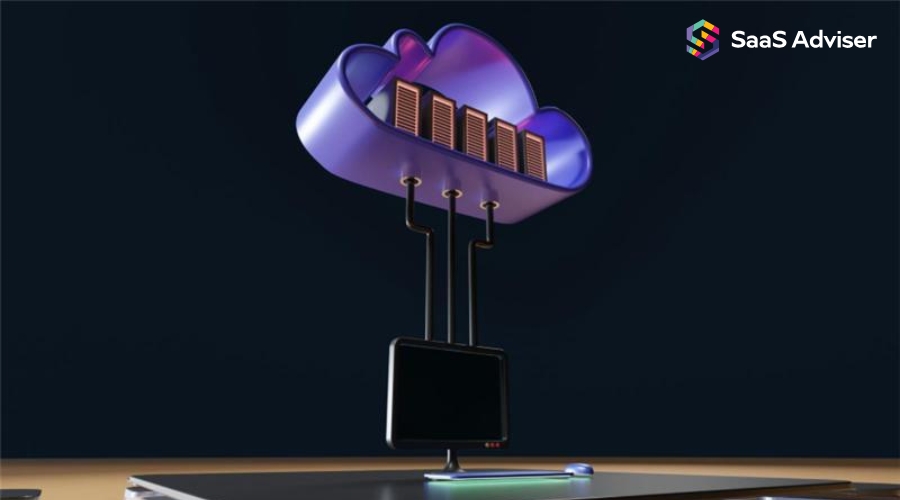
The cloud isn't just evolving—it’s reshaping the entire digital economy. As we approach 2030, cloud computing will move beyond its role as a flexible hosting model. It’s becoming the operating system for how businesses innovate, compete, and grow. From invisible infrastructure to intelligent orchestration, the cloud of the next decade will look radically different from today’s setup.
What should organizations, developers, and cloud strategists be paying attention to now to stay ahead?
Let’s dive into 7 cloud trends that will define the landscape by 2030—and why ignoring them could mean falling behind.
1. Cloud Becomes the Core Operating Model—Not Just Infrastructure
The cloud of 2030 won’t be a separate layer that supports business operations—it will be the business. Every digital process, customer interaction, and data-driven decision will run through cloud-native architectures by default. This shift goes far beyond cost optimization. It’s about speed, resilience, and adaptability at scale.
We’re already seeing this play out in composable businesses: organizations that treat services as modular, API-first components. These businesses aren’t just using the cloud—they’re built on it. In the coming years, expect this to become the norm across every industry, even in regulated sectors like finance and healthcare.
The shift also means cloud strategy becomes synonymous with enterprise strategy. IT will no longer “move to the cloud.” It will operate from the cloud—end-to-end. For many businesses, this shift also means partnering with a cloud software development company to build systems that are natively cloud-integrated and future-proofed for rapid innovation.
2. Multi-Cloud Gets Smarter (and Less Political)
By 2030, multi-cloud won’t just be a risk-mitigation tactic or vendor-neutral checkbox. It will be an intelligent architecture layer that actively balances performance, data locality, security, and cost across providers—automatically.
Tools that enable cross-cloud orchestration, unified observability, and policy-as-code are already maturing. But in the next few years, we’ll see the rise of autonomous cloud brokers—AI systems that make real-time deployment decisions across AWS, Azure, Google Cloud, and specialized providers, based on live telemetry and business intent.
Multi-cloud will no longer be about compromise. It will be about control and optimization at the edge of complexity.
3. Sustainability Will Become a Core Metric for Cloud Workloads
Cloud providers have long touted energy efficiency as a benefit, but by 2030, sustainability will evolve from a secondary consideration to a first-class architectural constraint. Organizations will measure and optimize workloads not just for cost and latency, but for carbon impact.
Expect carbon-aware workload scheduling—where cloud platforms route processes based on regional renewable energy availability—to become mainstream. Providers will be expected to disclose real-time carbon metrics at the service level, much like uptime SLAs.
The companies that lead on cloud sustainability will also lead on brand trust and investor confidence. Enterprises will no longer be asked “Are you green?” but “Can your cloud prove it?”
As these early shifts unfold, companies should keep a close eye on several enabling priorities that cut across all trends:
- Modernizing legacy applications to run natively in cloud-native and AI-first environments
- Investing in skills development to align IT teams with evolving architectures
- Evaluating long-term cloud vendor strategies with openness and portability in mind
- Embedding FinOps and sustainability metrics into cloud governance
- Rethinking security models to address distributed, AI-powered workloads
4. Cloud-Native Security Will Be Continuous, Contextual, and Autonomous
Security in the cloud is shifting from static configurations and perimeter defense to dynamic, identity-aware, AI-assisted enforcement. By 2030, security will not be a set of rules applied after deployment—it will be embedded in every layer of the cloud-native stack.
Zero Trust architecture will be the baseline, not the goal. AI-powered systems will continuously monitor context—user behavior, system anomalies, real-time threat intel—and adapt policies on the fly. Think of it as “self-healing security”: when misconfigurations or attacks occur, the system auto-responds without waiting for a human ticket.
Cloud-native security vendors will compete on automation depth and context richness, not just coverage. Security won’t be a blocker—it will be a feature of agility.
5. Edge-to-Cloud Continuity Becomes Essential
By 2030, the boundaries between edge and cloud will dissolve. Applications will span from central hyperscale regions to edge zones on factory floors, retail stores, and smart cities—operating as one logical environment.
This means that developers won’t just write for “the cloud”—they’ll write for distributed cloud fabrics. Platforms like Azure Arc, AWS Outposts, and Google Distributed Cloud are early examples of this trend, but they’re just the beginning.
What changes? Latency-sensitive applications like autonomous vehicles, AR/VR, or next-gen manufacturing will operate locally with real-time guarantees—while still syncing seamlessly with cloud services for training, analytics, and governance.
The new normal: build once, run anywhere—even on the edge of 5G or satellite networks.
6. Industry-Specific Cloud Platforms Will Replace One-Size-Fits-All
Generic cloud offerings won’t cut it in 2030. Instead, we’ll see vertical-specific platforms emerge with pre-integrated tools, compliance templates, and AI services tailored to niche business models.
This is already happening. AWS for Automotive, Google Cloud for Retail, and Microsoft Cloud for Healthcare are early signs of a deeper transformation. But in the coming years, expect even more specialized stacks—Cloud for Biotech Startups, Cloud for LegalTech, Cloud for Renewable Grid Management.
These platforms won’t just bundle APIs—they’ll offer composable solutions aligned to industry regulations, workflows, and KPIs. For enterprises, this means faster time-to-market and less need to reinvent the wheel. For cloud providers, it means deeper customer lock-in—but also greater value.
7. Cloud-Native AI Agents Will Reshape Workflows
By 2030, the cloud won’t just be where AI models run. It will be where intelligent, autonomous agents live—and where they coordinate entire enterprise workflows without human micromanagement.
These AI agents will operate in cloud-native environments, powered by foundation models and optimized for serverless or container-based deployment. They’ll manage everything from financial reporting and IT incident resolution to dynamic supply chain adjustments—acting in real time, across APIs and systems. To get started, learning how to use AI agents involves identifying key business processes they can automate, connecting them to relevant data sources, and defining the rules or objectives for their actions to ensure accurate, real-time results.
What makes this more than just automation is autonomy. These agents will reason, adapt, and act based on context. That means cloud infrastructure will evolve to support agent-centric needs: persistent memory, secure decision logs, auditability, and high-throughput model orchestration.
We’re moving toward a world where developers don’t just write programs—they configure ecosystems of agents. And cloud will be their native habitat.
Wrapping Up
Cloud in 2030 won’t be about lift-and-shift or managing VMs more efficiently. It will be about how businesses are fundamentally run, how software is built, and how decisions are made.
Whether it’s through vertical clouds, autonomous agents, or sustainable operations, these seven trends reveal one thing: the future cloud is intelligent, distributed, and deeply embedded into the DNA of every company.
Enterprises that embrace these changes early—by rethinking architecture, partnerships, and cloud governance—will be the ones shaping the next decade of digital transformation. Those who wait will be adapting to a world built by others.