
Best Learning Experience Platform Software in
Are you looking for Learning Experience Platform Software for your Business in ? SaaS Adviser brings you the best Learning Experience Platform Software to ease your worries. In order to make your work smooth and swift, SaaS Adviser has compiled a list of the best software available. Compare the Best software features, pricing, free demo, and trial to select the best Learning Experience Platform Software for your organization.
 Researched and Written by Akash Patel
Top 3 Featured Softwares


List of Top Learning Experience Platform Software
Get Free Consultation


DeveLoop
By SproutlogixCheck How DeveLoop can help to automate Indian Business. SaaSAdviser provide their list of features, pricing, Free demo and Comparison with the best alternative
View Profile

Raptivity

By Raptivity
Raptivity 2020 brings in some never-seen-before, vibrant and sleek interactions to your emails. Interaction templates are never seen before in eLearning. They are suited to moder...
View Profile

Continu
By Continu
You can also use our built-in search to discover and use existing content. Continu is a platform that helps you create engaging and professional-looking learning materials. It al...
View Profile

Fuel50
By Fuel50Check How Fuel50 can help to automate Indian Business. SaaSAdviser provide their list of features, pricing, Free demo and Comparison with the best alternative
View Profile

TalentCards uses microlearning to improve memory retention for people who would otherwise skip training. Microlearning is a method proven to boost memory retention. TalentCards i...
View Profile

LemonadeLXP
By LemonadeLXP
This means that you can get up and running faster, with better content, and without the headaches that come with other learning management systems. LemonadeLXP is a learning mana...
View Profile
Schoox is a learning management system that helps with talent development. It provides employees with a branded learning environment that they can access for free to improve thei...
View Profile

What is AcademyOcean?AcademyOcean is a smart Learning Management System (LMS) designed to deliver personalized learning experiences for businesses, educators, and customer training...
View Profile

Alemira
By sit.orgCheck How Alemira can help to automate Indian Business. SaaSAdviser provide their list of features, pricing, Free demo and Comparison with the best alternative
View Profile

Qooper
By QooperCheck How Qooper can help to automate Indian Business. SaaSAdviser provide their list of features, pricing, Free demo and Comparison with the best alternative
View Profile

Qooper is a mentoring software that helps you create more effective mentoring programs. It has a range of apps for iPhone and Android that are feature rich and designed to build ...
View Profile
Thrive is a comprehensive project management software that is great for taking care of extra workload, meeting deadlines, and performance reviews. Additionally, for freelancers and...
View Profile

Centralpoint
By Centralpoint
Centralpoint is a technology that can be installed on-premises, which empowers you to take back control over multiple systems. It will scan, index, ingest, and enrich metadata ag...
View Profile

Whiteboard Fox is an excellent collaboration tool that provides an interactive learning environment and encourages students and colleagues to cooperate on projects. It enables tu...
View Profile

Explain Everything is a versatile software that can be used for a variety of purposes, including online collaboration, video conferencing, and educational instruction. It is easy...
View Profile

Spoke
By Spoke
Introducing Spoke.app, the game-changing product for meeting culture in 2020! With Spoke, gathering together with colleagues to collaborate and discuss ideas is easier -- and mor...
View Profile

Minerva
By Minerva
Minerva is an interactive "how-to" guide that shows users where to click and what to do next in order to spend less time googling and more time doing. Minerva's mission is to mak...
View Profile

Userlane is a digital adoption platform that helps people understand software easily with the help of interactive walkthroughs. As an employee onboarding and training platform, U...
View Profile
Courseplay
By Courseplay
What is Courseplay?Courseplay is a powerful enterprise-focused learning management software that helps organizations train and develop their workforce through personalized digital ...
View Profile
Self-Directed Learning Engine
By SkillDirectorCheck How Self-Directed Learning Engine can help to automate Indian Business. SaaSAdviser provide their list of features, pricing, Free demo and Comparison with the best alternativ...
View Profile

Table of Content
What is a Learning Experience Platform?
An LXP is a modern learning solution designed for creating personalized, engaging, and flexible learning journeys for employees. Where the bulk of course delivery rests with traditional learning management system providers and is mostly directed from the top down, an LXP allows the user to take the reins of their learning experience, putting forth curated content as well as learning pathways based on skills, peer-to-peer learning, and recommendations supplied by AI.
Think of it as a smart, live hub where workers search, share, and check learning content that’s right for them and linked to business goals. No matter if it's video lessons, articles, podcasts, or custom training modules, an LXP software puts everything in one simple platform.
This Learning Experience Platforms Software buyer’s guide shall address all your questions about the benefits, challenges, leading solutions, and future in order to make a confident and knowledge-based purchase for your organization.
1. Conclusion
The right Learning Experience Platform can reshape how your team learns, grows, and stays engaged. From personalized paths to social learning and seamless integrations, today’s LXPs offer more than just training—they power growth.
Where to start? SaaS Adviser. Compare features, pricing, and authentic user reviews all in one place to find the best learning experience platform for your organization. Make smarter buying decisions, begin with SaaS Adviser today.
2. Future Trends in Learning Experience Platform
Organizations in the United States are modernizing their learning environments, shifting from traditional to digital-first, and, as a result, the evolution of Learning Experience Platforms (LXPs) is fast. Here’s what’s on the horizon regarding the major trends in Learning Experience Platform Software and how they’ll affect your workforce.
1. AI Powered Personalization
AI is becoming the brain behind smarter learning systems. Today’s Learning Experience Software uses artificial intelligence to create hyper-personalized learning paths, analyzing a user’s behavior, performance, and goals to recommend the right content at the right time. As per the report, the global AI in the education market is anticipated to grow from USD 3.84 billion in 2023 to USD 16.65 billion by 2030 due to automation and personalized learning.
2. Immersive Learning with AR/VR
AR and VR are turning traditional training into immersive experiences. From virtual labs to real-life simulations, this tech makes learning more engaging, especially in technical, healthcare, or safety training.
3. Microlearning
The trend for microlearning is increasing, and short, focused lessons are digestible and convenient for the time-pressed professional. These microlearning components are delivered by LXPs so that business professionals can learn on even the tightest schedules.
4. Social Learning Features
Modern learners want interaction, not isolation. LXPs now include tools like forums, peer feedback, and leaderboards that make learning social and collaborative—boosting engagement and retention.
5. Skills Based Learning
Today’s workforce wants growth that leads to real skills. LXPs are increasingly aligning learning paths with industry-demanded competencies, helping employees—and employers—focus on what matters most.
6. Integration with Other Systems
Your LXP Platform should work with the tools you already use. Newer platforms easily integrate with training management systems, HR software, and content libraries—so everything stays connected and scalable.
3. Who can Use Learning Experience Platform?
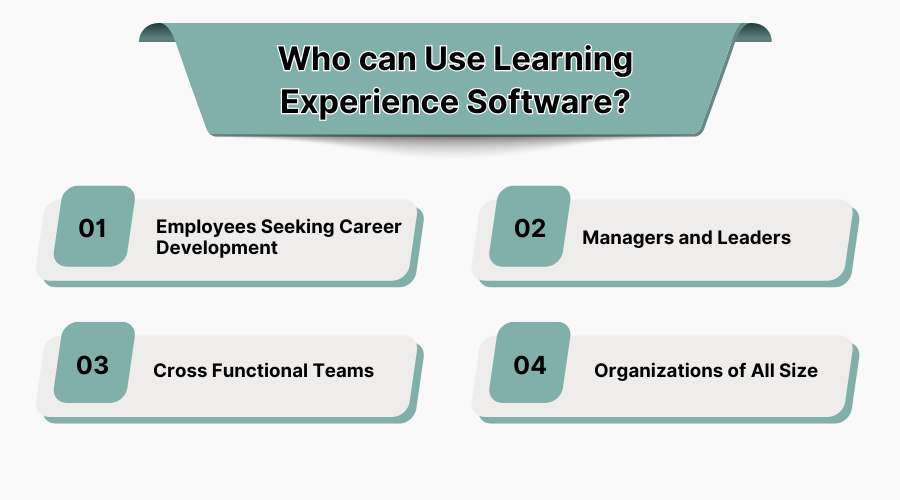
One of the best parts about Learning Experience Software is its flexibility-it's built for everyone involved in the learning journey, no matter their role or company size.
-
Employees Seeking Career Development
Employees who want to develop their abilities and move forward in their careers will find a Learning Experience Software very useful. It allows you to follow your own learning path, recommends suitable courses and gives you access to a lot of content that helps with both technical and soft skills. It's more than training—it's a self-directed growth tool built to keep learners engaged and motivated.
-
Managers and Leaders
Managers and team leaders can use a Learning Experience System to guide team development, assign relevant learning materials, and track progress in real time. It supports performance goals, onboarding, leadership training, and even succession planning— making it a valuable employee engagement solution.
-
Cross Functional Teams
Whether it’s marketing learning from product, or sales learning from support, cross-functional teams benefit from shared content libraries and collaborative features. LXPs make it easy to access knowledge across departments, breaking silos and promoting team-wide growth.
-
Organizations of All Size
From fast-growing startups to big enterprises, any business can gain from using a Learning Experience Software. It is scalable, customizable, and flexible— allowing businesses to offer meaningful training without overloading their systems or their people.
4. Key Features of Learning Experience Platform
Below are the key features to look for when comparing platforms:
-
Personalized Learning Paths
One of the key features of a top learning experience platform is the ability to personalize the learning journey. It assesses the role, experience, interests, and learning history of each user to build the path, instead of pushing the same course to everyone. This, in turn, helps the employees focus on the skills that matter most for the career and the organizational needs, thus driving higher engagement and better results.
-
Content Curation
LXPs act as smart content hubs, curating material from various internal and external sources. Whether it's pulling in company training manuals, YouTube videos, LinkedIn Learning courses, or blog articles, an LXP Platform organizes this into a streamlined, searchable library. This curated content experience ensures employees spend less time searching and more time learning.
-
Social Learning
Today’s workforce has come to value collaboration and peer-driven growth, and that is exactly where social learning excels. An advanced learning experience platform will embrace features associated with social networking, such as discussion forums, sharing of content, likes, comments, and even user-generated content. This social layer would help drive learning through employee interaction, identification of team knowledge, and building a more connected learning culture. It turns your LXP into something more than just a training tool – into a live knowledge network.
-
Gamification
Gamification makes learning fun and, surprisingly, effective. Badges, points, quizzes, and leaderboards make the LXPs for professional development fun and productive by adding that gamified spin to learning. Such functionalities enhance engagement and completion rates of courses by unlocking inherent motivation drivers, particularly in teams that respond well to goals and competition.
-
AI Powered Recommendations
AI is the heart of today's learning experience system. By instantaneously screening and analyzing each user’s learning behavior, preferences, and progress, AI recommends the next best course or resource. Therefore, real-time recommendations ensure that employees keep working with recommended content aligned to their growth goals without having to hunt for it.
-
Integration Capabilities
No tool should operate in a silo. A well-designed LXP Platform integrates seamlessly with your existing training management system, HR software, and communication tools like Slack or Microsoft Teams. This not only simplifies implementation but also makes tracking progress, managing learning data, and assigning training more efficient—saving both time and resources.
5. Best Learning Experience Platform in USA
Here we have covered some of the best learning experience platforms (LXP Platforms) available in the USA.
1. 360Learning
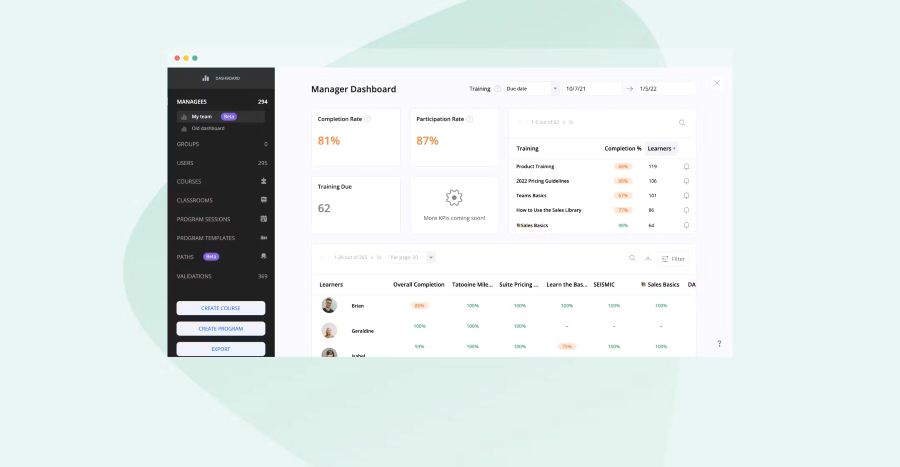
360Learning is a collaborative Learning Experience Platform Software that combines LMS features with modern LXP functionality. Designed for fast-paced organizations, it empowers teams to create, share, and improve learning content collaboratively. Its strength lies in enabling subject-matter experts to design courses without needing instructional design experience, making it especially effective for internal knowledge sharing. It also supports mobile learning, peer-to-peer engagement, and automated workflows.
Key Features:
-
Collaborative course creation
-
Built-in feedback loops
-
Mobile-first design
-
Integration with HR tools
-
Analytics dashboards
Pros:
-
Highly effective for peer learning
-
Easy-to-use course builder
Cons:
-
Limited out-of-the-box content
-
Can require onboarding time for new admins
Pricing: Starts at around $8 per user/month (custom pricing available for enterprises)
2. LinkedIn Learning
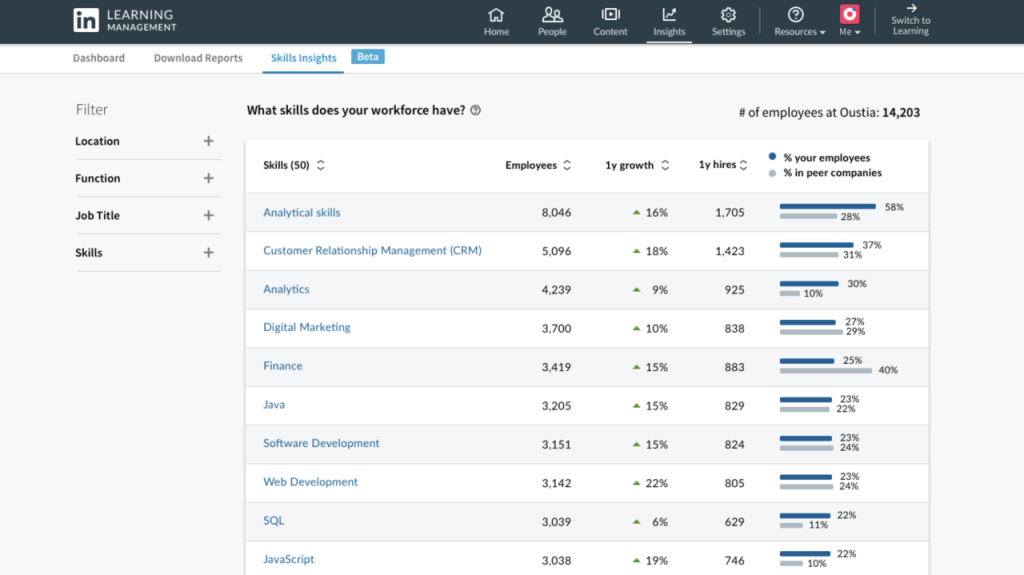
LinkedIn Learning is a professional-grade Learning Experience Software integrated with the LinkedIn platform. It provides access to a vast content library focused on business, technology, and creative skills. Ideal for upskilling and reskilling, it also integrates learning recommendations based on users’ roles and career paths. Organizations can use it to supplement internal content while tracking usage through robust analytics. It’s perfect for companies looking to offer curated, high-quality courses from industry experts.
Key Features:
-
Over 16,000 expert-led courses
-
Personalized course recommendations
-
Integration with LMS and LXP systems
-
Skill insights and reporting tools
-
Mobile learning access
Pros:
-
Rich content library from trusted sources
-
Easy integration with LinkedIn profiles
Cons:
-
Limited customization of content
-
Higher cost for smaller teams
Pricing: Visit Websitr for Detailed pricing.
3. Degreed
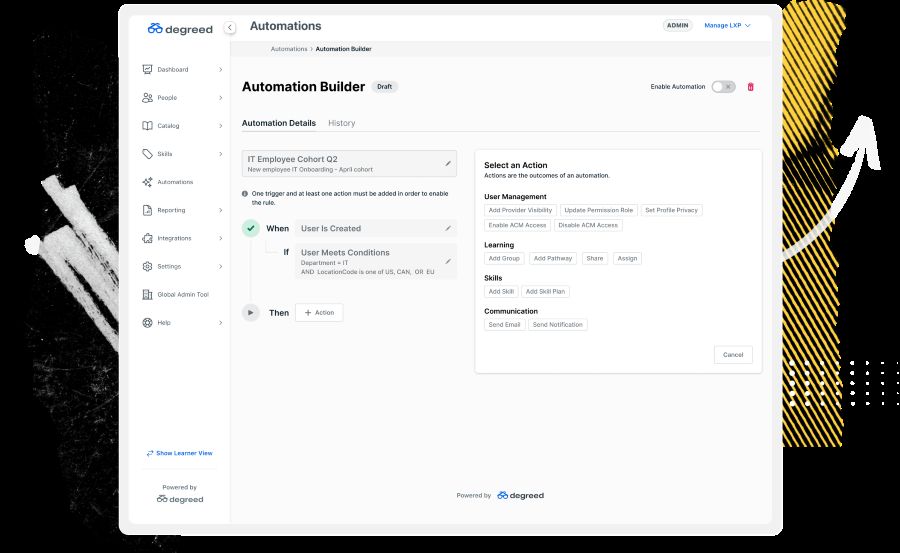
Degreed is a comprehensive learning experience system intended for skills development and continuous learning; it aggregates both internal and external content sources to enable learning from a wide array of resources. Majoring in upskilling and measurable learning outcomes, Degreed helps organizations map their learning processes directly to business objectives. Among other things, it supports AI-based recommendations and personalized learning, thus making for a strong implementation across enterprise customers.
Key Features:
-
Unified learner experience
-
Skill analytics and assessments
-
Third-party content integration
-
Personalized learning paths
-
Mobile and desktop access
Pros:
-
Robust skill tracking capabilities
-
Wide variety of content integrations
Cons:
-
Can be complex to implement initially
-
Premium pricing for full feature access
Pricing: Custom pricing based on user volume and feature set
4. Continu
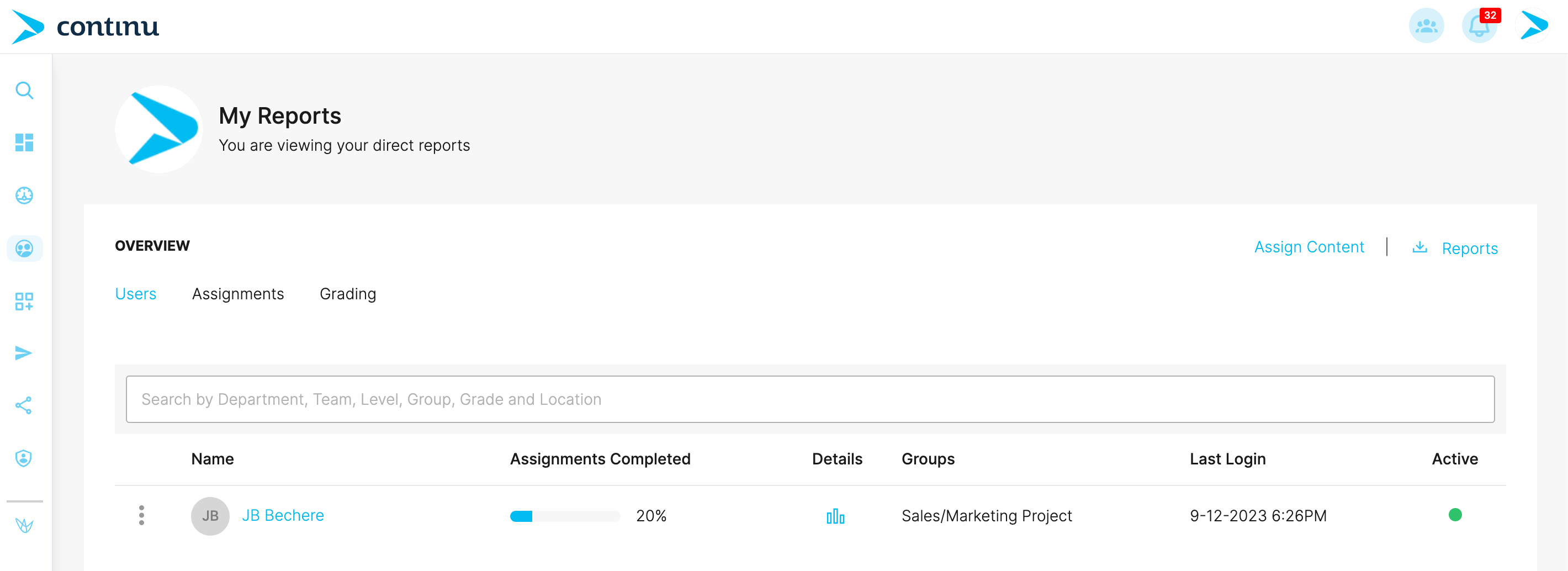
Continu is a modern, flexible LXP Platform for internal and external training that offers a sleek interface with support for blended learning, onboarding compliance, and sales enablement. A major shining star for Continu is its ability ot integrate very easily into all of the tools that your team already uses such as Zoom, Slack, and Salesforce. It also puts the focus on content automation and robust user analytics that would make it a great choice for a fast-growing company.
Key Features:
-
Blended learning capabilities
-
Smart content automation
-
Deep integration support
-
Onboarding and compliance modules
-
Real-time reporting
Pros:
-
User-friendly UI and navigation
-
Excellent for remote training setups
Cons:
-
Limited third-party course marketplace
-
Some features gated behind higher-tier plans
Pricing: Custom quote based on organization size
5. Adsorb
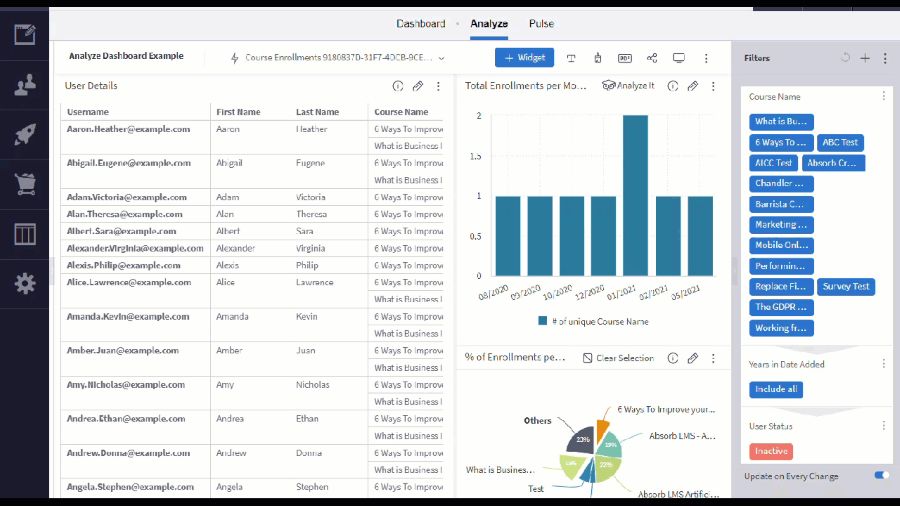
Absorb is a feature-rich Learning Experience Platform Software built to scale with growing businesses. It supports both employee and customer education with powerful automation, eCommerce functionality, and multilingual support. Its intuitive design and strong admin capabilities make it popular among enterprises looking for a centralized training management system. It balances formal LMS structure with LXP features like content curation and AI-based recommendations.
Key Features:
-
Smart Administration tools
-
eCommerce support
-
Learner and admin dashboards
-
AI-powered content suggestions
-
Multi-language support
Pros:
-
Scalable for global organizations
-
Great for blended learning formats
Cons:
-
May feel more LMS-heavy than LXP
-
Customization may require vendor support
Pricing: Contact Adsorb.
6. Key Points to Consider When Choosing Learning Experience Platform
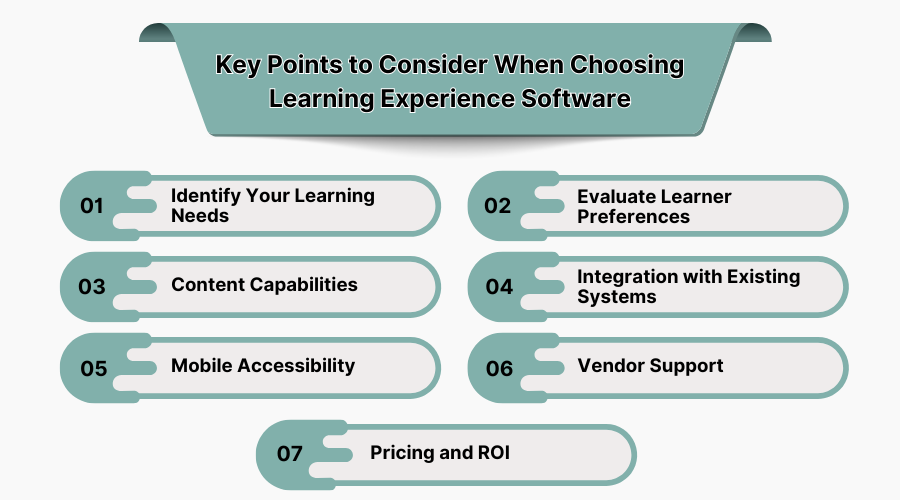
Choosing a Learning Experience Platform is a major step in this drive to develop a learning culture to be successful. This platform should align well with your business goals and make a simple integration with your tools while keeping employees engaged. Here is more on what to keep in mind as the keу factors for choosing a Learning Experience Platform in the USA:
1. Identify Your Learning Needs
Start with your “why.” Do you need to upskill employees? Improve onboarding? Support leadership development? Clearly defining your training goals helps you narrow down the best Learning Experience Platform for your needs. A focused approach ensures the platform you choose actually solves your learning challenges.
2. Evaluate Learner Preferences
Your workforce is diverse, and so are their learning styles. Some may prefer watching videos or interactive modules, while others lean towards reading articles or attending live sessions. The best LXP Platforms accommodate these differences by offering multiple content formats and personalized learning paths. This customization keeps learners engaged, motivated, and more likely to complete their courses.
3. Content Capabilities
Content is king when it comes to learning. Let’s find an LXP Platform that covers plenty of content types videos, podcasts, written articles, quizzes, and so on. and see if it’s easy to upload your own materials or access a third-party course library. Platforms with AI-driven content recommendations can help keep the learning experience fresh and aligned with employee interests and business needs.
4. Integration with Existing Systems
Do not operate in isolation. Ideally, your learning platform should be able to communicate well with already existing business tools or systems you consistently use — HR software, a payroll system, CRM, Slack, or Microsoft Teams. The better the integration, the lesser the manual work for your admins, and the smoother the experience for your learners in terms of adopting and using it.
5. Mobile Accessibility
Employees today expect to be able to learn at their own convenience, whether on a laptop, tablet, or smartphone. A Learning Experience Platform in the USA must offer a design that is compatible with mobile or an app exclusively for learners to access the content from any place at any time. Communication facilities are much helpful in remote and hybrid work models for updating oneself during commutes, lunch breaks, or after usual office hours.
6. Vendor Support
While it is never easy to introduce new software, vendor support must be reliable, which requires one to look out for a vendor that has extensive onboarding, training, and continuous customer service’s availability of responsive support teams that helps address issues quickly, keep your platform running, and realize the full value of your investment over time.
7. Pricing and ROI
Finally, consider the cost—not just the price tag, but the return on investment. Look at how the platform will improve performance, reduce training time, and impact employee satisfaction. The best Learning Experience Platform isn’t always the cheapest—it’s the one that delivers the most value for your business over time.
7. Benefits of Learning Experience Platform
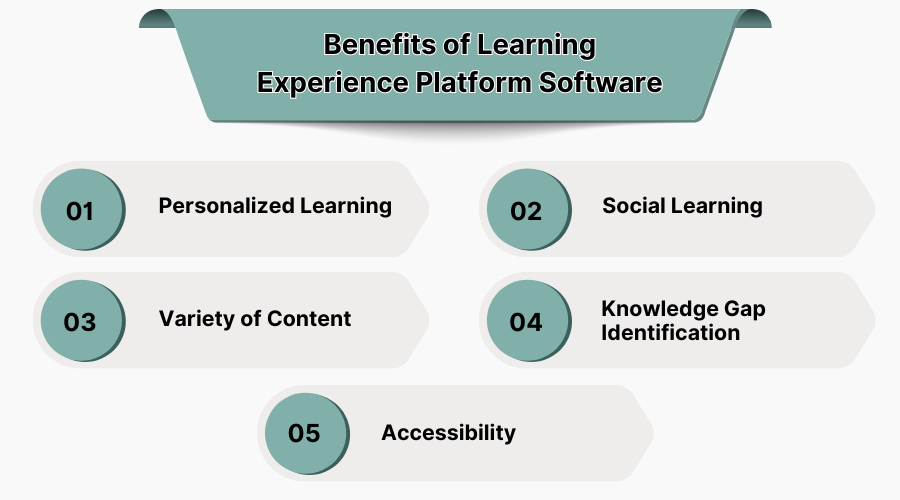
Whether you’re looking to increase employee growth, engagement, or modernize training programs or all three, you’ll want to invest in a learning experience platform (LXP). Here are the advantages of Learning Experience Platform in USA that are especially important for businesses interested in maintaining the edge in a competitive market.
-
Personalized Learning
An LXP goes beyond the one-size-fits-all approach. It uses AI and user data to deliver personalized learning paths tailored to each employee's role, skills, and goals. Whether someone wants to grow into a leadership role or learn a new technical skill, the platform recommends content that fits their needs. This tailored approach boosts motivation and makes learning far more effective compared to a traditional corporate learning management system.
-
Social Learning
Modern learning is cooperative. By social learning in an LXP, users can share content, comment, rate, and even produce learning materials for others. Such a peer-driven mode enhances the engagement as well as weeds in a strong learning culture within your organization itself. Hence, the employees get a way to learn from each other’s experiences and views which develops better teamwork and sustains better knowledge.
-
Variety of Content
Content formats could range from videos and podcasts to articles, webinars, and interactive modules hosted on Learning Experience Platforms, supporting a broad range of formats. This is flexible enough to address the various learning styles of recipients and most importantly, makes things interesting. Largely, if a team is inclined toward video or text or hands-on training, for example, the LXP is where everyone finds engagement and information.
-
Knowledge Gap Identification
A learning experience platform helps track employee progress, behavior, and assessment data so that you can identify knowledge gaps. Such information enables the learning manager and HR teams to focus the most-needed training efforts in those areas, improving both individual performance and team outcomes. For U.S.-based businesses wanting to remain agile and growth-oriented, this targeted development represents a key advantage.
-
Accessibility
A major advantage of a Learning Experience Platform in USA is that it is accessible to many people. If your team is working from home, at the office or a mix of both, employees have access to content whenever and wherever they need it. Being available all the time helps people keep learning and fits well with how people work today.