
Best Lab Management System & Software in
Are you looking for Lab Management System & Software for your Business in ? SaaS Adviser brings you the best Lab Management System & Software to ease your worries. In order to make your work smooth and swift, SaaS Adviser has compiled a list of the best software available. Compare the Best software features, pricing, free demo, and trial to select the best Lab Management System & Software for your organization.
.jpg "Shubham") Researched and Written by Shubham
Researched and Written by Shubham
Top 3 Featured Softwares


List of Top Lab Management System & Software
Get Free Consultation


CAMS ERP

Software , ERP , Cloud
The Best Standalone Indirect taxation solution is one of the Best branches of CAMS-Exact software solution. We have been providing these solutions since 2 decades, which led to...
View Profile

HospiLogix
Hospital Information System
NextGen E Solutions was founded in 2005. the goal to create homegrown affordable IT solutions for healthcare. NextGen eSolution has developed and implemented healthcare solutio...
View Profile

Caresoft Hospital Information System
Web Based Hospital Information SystemCaresoft Hospital Information System, a global healthcare IT company that makes software products for health care like hospitals, nursing homes, clinics, medical colleges, and ...
View Profile

Miracle HIS
Hospital Information System by Akhil Systems Pvt Ltd
Miracle Hospital management Software is managing the working of a hospital in a paperless environment. ASPL is the leading provider of innovative health information systems and...
View Profile

Amrita Health Information System
Best Hospital Management Software
Amrita HIS is a J2EE and cloud-based product suite, Java Enterprise Edition based easily integrated, one-stop solution for the healthcare industry. Amrita HIS is the proven HIS sui...
View Profile

Sara Pathology Management
Sara Hospital Management Software Software BY Sara TechnologiesSara Technologies brings technology to the doors of the health industry through their hospital management software that comes to make the record-keeping process of all the pati...
View Profile

ProMed
By ProMed
ProMed hospital management software is a highly scalable tool that can introduce systemization and digitization into your hospital workflow. The software is very suitable for multi...
View Profile

MocDoc HIMS
Complete End to End System for Managing HospitalsWhat is MocDoc HIMS?MocDoc HIMS is a complete Hospital Information Management System designed to streamline medical institution operations digitally. It helps hospitals, clinic...
View Profile

TheLifeHMS
New Generation most comprehensive HMS
Hand-picked modules with relevance to the business, and then seamlessly integrate and use them in silos or in combination, with no compromise on user experience. We supply ready-to...
View Profile

LABC LIMS
Software BY Plus91 Technologies Pvt Ltd
LabC is a complete laboratory Information Management System (LIMS) that supports different workflow processes, promotes multi-center / collection center collaboration, ensures regu...
View Profile

LAB Manager
Complete Lab Manager Software
LAB Manager provides complete reporting of pathology labs, radiology, ultrasound, MRI, and CT scans, etc. It comes with an in build library of a large number of tests with their re...
View Profile

Anysolabs
Software BY ANYSOLABS
AnysoLabs is a fully Web-based platform software in Anysolabs Laboratory Management software. Anysolabs are modules that are providing intelligence to identify and control for user...
View Profile

LabReporter XL
Software BY Diksha Online Software Private Limited.LabReporter XL is the ultimate and unique Pathology Reporting Software for creating smart and accurate reports of pathology, X-ray, ultrasound, and ECG along with the Patient Regis...
View Profile

Confience
Your Lab, Your Data, Simplified

Autoscribe Informatics LIMS
Our fully configurable LIMS systems allow you to manage your lab more effectively
CPSI EHR Software
cloud-based radiology information system and medical billing services solution, provider.

Table of Content
Find The Best Lab Management System & Software
Managing a laboratory requires more than just high-grade equipment; it requires a reliable lab management system that can facilitate data compliance, organization, and even offer streamlining capabilities. If it is a clinical, research, diagnostic, or academic laboratory, management software around automation and accuracy is critical for eliminating manual errors.
Modern LMS tools offer powerful features like sample tracking and integration with lab instruments or EMR systems. From startups to large institutions, labs across the globe are turning to digital solutions for better productivity and decision making.
1. Conclusion
Choosing appropriate lab software systems can have a profound impact on efficiency, accuracy, and compliance within a lab. In case your laboratory operations require sophisticated data management, automated processes, or consolidated reporting, appropriate management software can yield impressive results.
To make the decision-making process more manageable, visit SaaS Advisor, the go-to tool comparison social network, where you can find the best lab management software solutions that fit comfortably within your financial expectations.
2. Latest Market Trends in Best Lab Management Software
Integration With IoT And Smart Devices
Modern lab management solutions are integrating with IoT enabled lab instruments and smart sensors. This facilitates automation in monitoring equipment, environmental conditions, and experiments. As a result, workflows become more automated and data accuracy improves.
Cloud-Based Solutions
Lab management platforms that are native to the cloud are increasing in number as these provide remote access, collaboration in real time, automatic updates, and scalable infrastructure. Labs are able to reduce IT spending while benefiting from easier deployment over multiple locations.
Advanced Data Analytics And Reporting
A growing number of LMS platforms come equipped not only with advanced reporting capabilities, but with analytics tools as well. Labs can now automate the tracking of KPIs, trend discovery, and performance optimization. Researchers and managers are increasingly able to make prompt decisions due to the availability of customized dashboards and intelligent reports.
AI and Machine Learning
AI and machine learning are enhancing lab efficiency through lowered manual workloads. These technologies are being applied for predictive maintenance, smart data categorization, anomaly detection, and recommending experiments. You can read our artificial intelligence blog for more information.
Compliance And Quality Management
With increasing regulatory compliance comes the inclusion of compliance tracking, audit logs, electronic signature, and quality control modules in LMS platforms. These features allow labs to automatically comply with GLP, HIPAA, CLIA, ISO, and FDA standards.
User-Friendly Interfaces And Customization
Modern devices tend to maintain a clean surgical interface with high levels of customizable workflows to match different types of research. This allows for easy assimilation reducing the learning curve and enabling labs to configure the system to their specific protocols.
Mobile Access And Applications
A considerable number of labs are now switching to mobile-friendly LMS platforms or dedicated apps which enable staff to access information, track samples and perform tasks using mobile phones and tablets. This feature helps improve flexibility and enhance field collaboration.
Sustainability And Green Lab Practices
Modern lab management software has now integrated the ability to track energy consumption, manage chemical waste and digitalize records in order to aid sustainability initiatives. This feature is in response to the growing demand for eco-friendly lab operations.
3. Related Articles of Best Lab Management System & Software
4. What Is a Lab Management System?
A lab management system is a software solution designed to manage the daily operations of a laboratory. It assists in the automation and streamlining of tasks such as sample tracking, test scheduling, report generation, inventory management, and compliance documentation. In clinical, research, or academic settings, an LMS serves to consolidate information and promote overall efficiency of workflow.
An advanced Learning Management System interfaces with laboratory instruments and other regulatory systems and databases. This greatly enhances the transfer of information between different systems.
The global laboratory information management system market, valued at US$1.9 billion in 2023, is estimated to rise at a robust CAGR of 12.9%, reaching US$2.1 billion in 2024 and an impressive US$3.8 billion by 2029.
5. Criteria For Selecting The Right Lab Management Software
Choosing the right lab management Software is crucial for optimizing your lab's workflow, ensuring data accuracy, and maintaining regulatory compliance. Here are the key criteria to consider:
-
User Friendly Interface: Look for intuitive dashboards and workflows that require minimal training.
-
Scalability: The solution should be appropriate for any size of small or large operations.
-
Data Security & Compliance: Security measures as well as compliance with HIPAA and GDPR or any other regulations must be followed in the industry where the software will be applied.
-
Sample & Inventory Tracking: Tracking samples, reagents and equipment should be reliably marked and tracked by the system.
-
Integration Capabilities: Instruments in the lab, EMRs, billing, and reporting systems should be incorporated without limitations.
-
Customizable Workflows: Systems should be able to easily mold your area of work or disciplines into automated workflows.
-
Reporting & Analytics: The reporting features should assist in reporting on all activities related to performance and productivity in the lab.
-
Customer Support & Training: When troubleshooting and implementing solutions, support and training help ease the documentation and reliable support.
6. What Is The Importance of Lab Management System & Software?
In contemporary laboratories, the use of lab management software is necessary for operating a laboratory in a precise and compliant manner. It helps with automating daily activities such as sample tracking and data entry. Such automation makes it faster to complete tasks while minimizing the chances of human error compromising the data.
It also allows for enhanced communication between offices in different regions leading to effective inventory management and accurate reporting. Lab management systems aid regulatory compliance such as HIPAA and ISO by having report audit trails and secure data storage.
Lab management software is useful in industrial, clinical, educational and research laboratories as it improves productivity, data control and integrity as well as ease of management of daily lab activities.
7. Benefits of The Best Lab Management System
Improved Data Management
A database management system integrates all laboratory data, enabling easy storage, retrieval, and management of inventory files, test results, patient data, and much more. There is no longer a need for paper logs or disorganized files stored in spreadsheets, leading to quicker access to information and better organization. For this, you can use data management software.
Increased Accuracy
Minimization of human error is accomplished through automation of data entry, report generation, and calculations. LMS software guarantees that every step, from sample intake to result delivery, is captured accurately, increasing the credibility of lab results and ensuring quality standards are met.
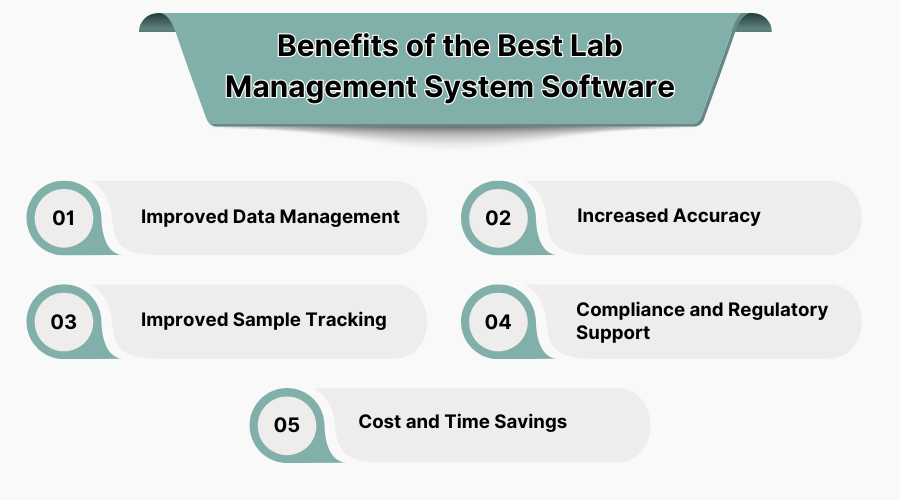
Improved Sample Tracking
You are able to monitor the movement of every sample from collection to testing, to reporting with real-time tracking sample features. Effective handling is enhanced through barcode scanning and digital recording that minimize the chance of misplacement while maintaining chain-of-custody.
Compliance And Regulatory Support
Industry standards like HIPAA, CLIA, ISO, and FDA regulations require compliance which is enhanced by the use of lab software. These tools enable simpler inspections thanks to provided audit trails, access controls, documentation, and security towards data. You can use compliance management software for the same.
Cost And Time Savings
Automation improves the manual intensive processes of workflows and tests turnaround times, saving labs both time and money. Administrative tasks that are repetitive in nature are largely automated allowing staff to spend more time in analysis and testing.
8. Challenges in Best Lab Management Software
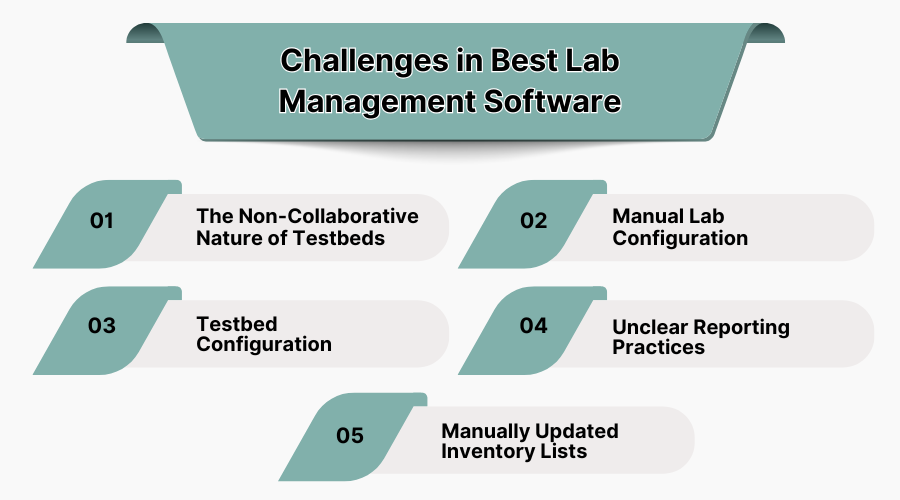
The Non-Collaborative Nature of Testbeds
Most labs still function in silos with limited inter-team communication or collaboration. In the absence of integrated systems for data transfer, staff can face delays, redundancies or miscommunication during the analysis or testing phases.
Manual Lab Configuration
A portion of labs continue to setup their workflows and lab equipment manually with the help of the advanced software. With manual processes in high throughput testing or complex testing, there is always an increase in errors and time consumed.
Testbed Configuration
Setting up testbeds for simulations or already planned experiments can be a simple task, but can also be very tedious. When there are no built in templates or automation, each new setup requires time, which can subsequently affect productivity.
Unclear Reporting Practices
For some Learning Management Systems, reporting is overly simplistic or lacking in sufficient details. If reports are generated without appropriate detail, clarity and consistency then the effectiveness of decision-making is affected along with compliance audits.
Manually Updated Inventory Lists
Manual monitoring of inventories of reagents, equipment, and supplies poses a higher challenge of stockout or inventory mismatch. The software lacks streamlined integration of real-time inventory updates making supplies management inefficient.
9. Features of The Best Lab Management System & Software
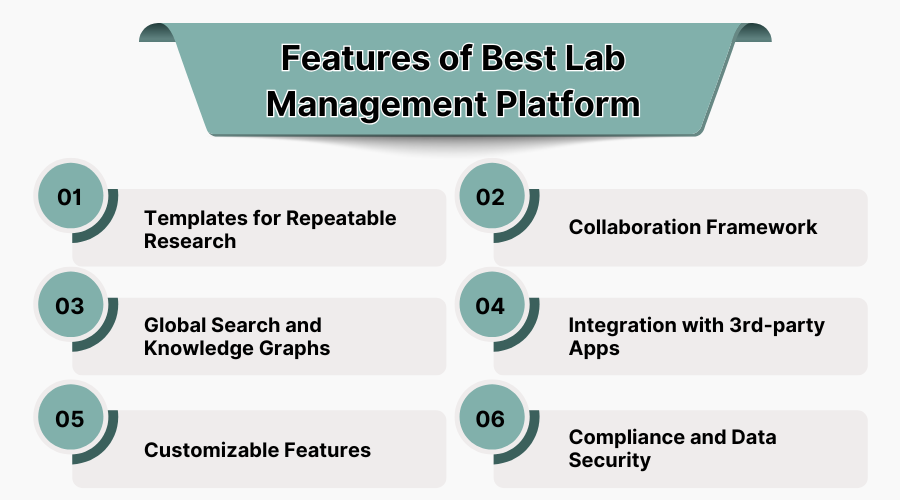
Templates For Repeatable Research
Preeminent lab management software has out-of-the-box or customizable templates that streamline repeatable experiments and workflows. This feature not only guarantees uniformity among trials, but also saves time while minimizing the possibility of procedural errors during normal research activities.
Collaboration Framework
An advanced organizational collaboration serves to ease communication between researchers, laboratory technicians, and other departments. Sharing tasks, data, and comments enables the entire team to stay on pace with other members even in remote/multi-location laboratories.
Global Search And Knowledge Graphs
The global search functions, in combination with the visual knowledge graphs, enhance the ability to search for experiments, samples, results, and related materials documents. This advance aids lab productivity and institutional knowledge retention over time.
Integration With 3rd-party Apps
The best platforms will incorporate lab devices and productivity applications such as Google Workspace, Microsoft Office, and e-signature interfaces to come up with the best ecosystem for laboratory operation.
Customizable Features
Different labs have different demands; the LMS platform customizes fields, workflows, reports, dashboards, and even user roles. Such a degree of flexibility guarantees the system operates in synergy with your laboratory’s defined policies and configuration.
Compliance And Data Security
Comprehensive security frameworks offer protection of sensitive information as they include role-based access control, encryption of information, and auditing. Compliance tools aid in the effortless achievement of HIPAA, CLIA, GLP, and even ISO standards for regulatory laboratories. You can use cybersecurity software for the same.
10. Five Best Lab Management System & Software In USA
1. Labguru – Best All-in-One Lab Management System
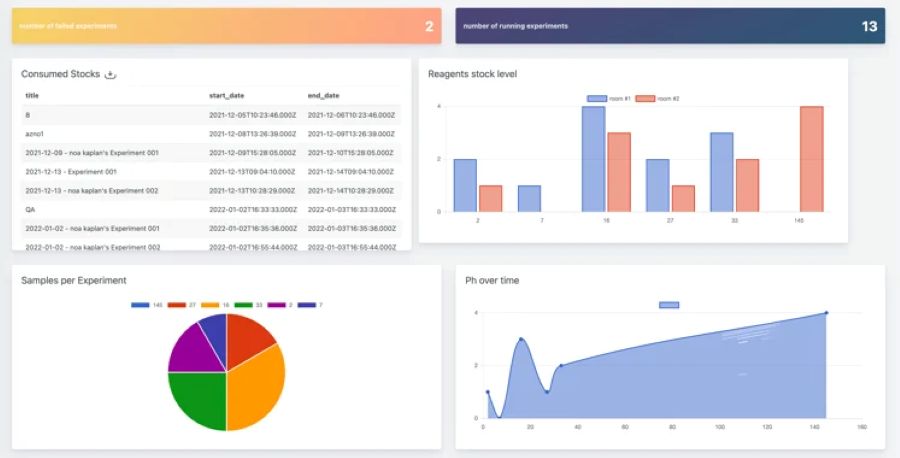
Labguru is a comprehensive lab information management system designed to handle everything from inventory control and protocol management to research documentation and compliance tracking. It’s used by biotech and academic research labs across the U.S.
Features:
-
Inventory, sample, and equipment tracking
-
Protocol management with built-in templates
-
Task assignment and lab member scheduling
-
Compliance tools for GLP, FDA, and ISO
Pros:
-
Highly customizable workflows for different lab types
-
Centralized data storage and team collaboration features
-
Supports compliance and audit-readiness
-
Cloud-based with frequent updates and support
-
Scalable for small labs to large enterprises
Cons:
-
Interface can be complex for first-time users
-
Customization setup may require IT support
-
Mobile access is functional but limited
-
Limited offline functionality
-
Higher pricing for advanced features
Pricing:
Starts at $25–$75 per user/month, depending on the plan and lab size.
2. Dropbox – Best for Document Storage and Sharing
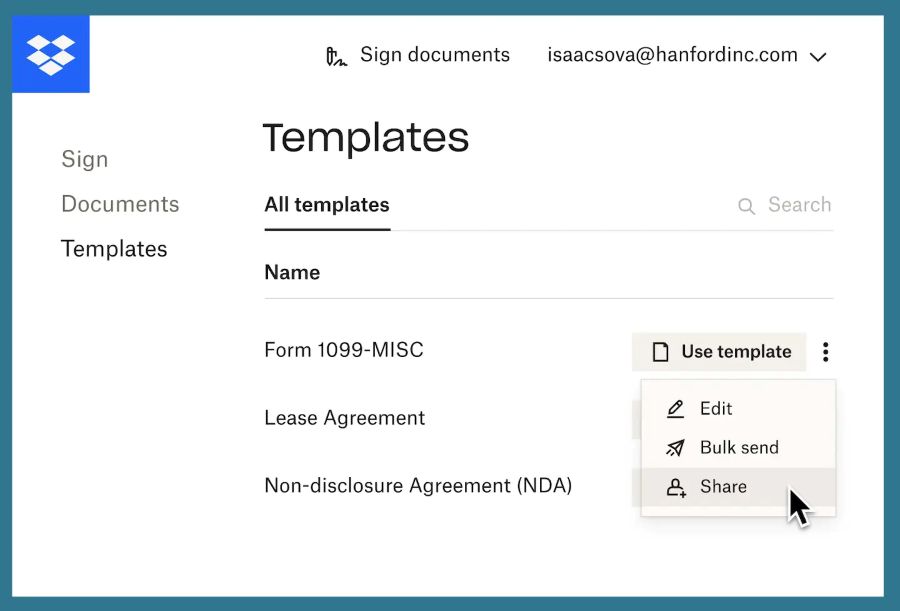
While not a traditional lab management system, Dropbox is widely used in labs for storing and sharing research files and datasets. It's ideal for teams looking for a simple and secure cloud storage solution.
Features:
-
Cloud-based file storage with secure sharing
-
Real-time collaboration via file comments and notes
-
Version history and file recovery options
-
Integration with Microsoft Office and Google Docs
-
Mobile access for files on-the-go
Pros:
-
Extremely easy to set up and use
-
Syncs across all devices instantly
-
Secure sharing with link permissions
Cons:
-
No dedicated lab workflow or inventory tools
-
Lacks scientific data structure or lab-specific fields
-
File version control may get complex with teams
Pricing:
Starts at $11.99/user/month (Plus Plan), with business plans available.
3. Quip – Best for Collaborative Lab Communication
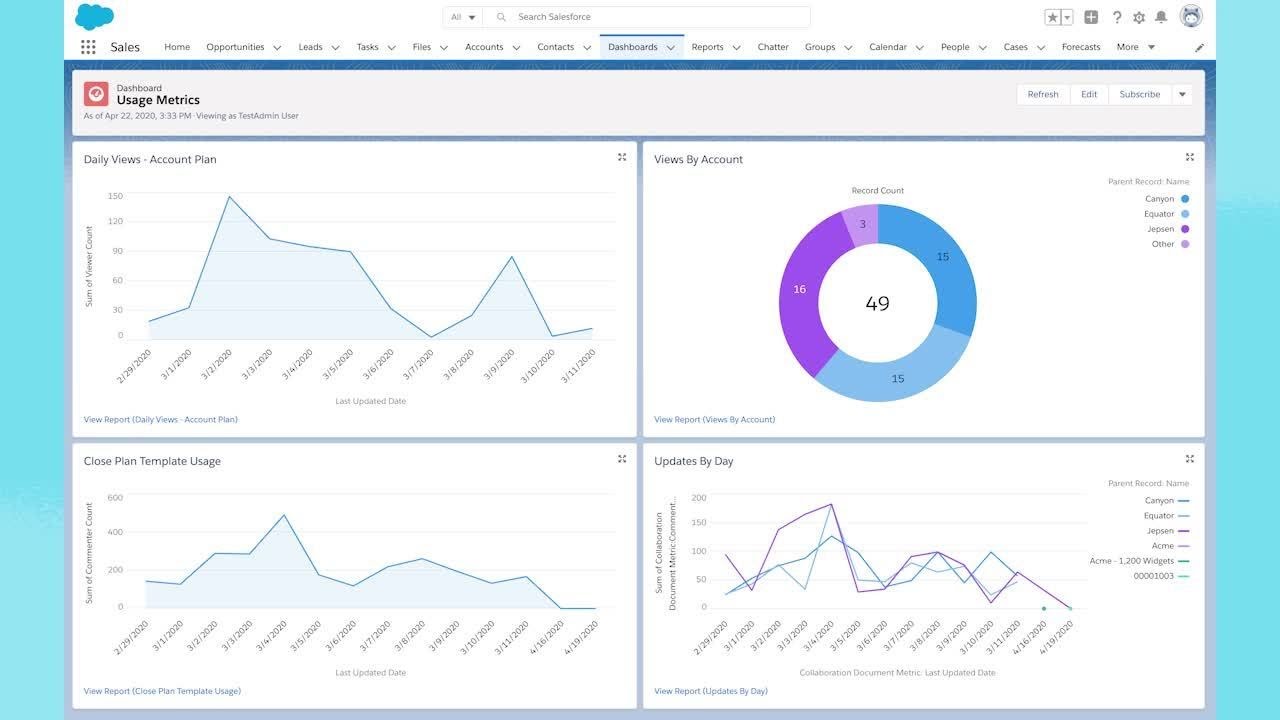
Quip is a cloud-based collaboration tool developed by Salesforce, often used in labs for documenting processes, discussions, and results in a live, shared space. It's ideal for real-time team collaboration and project tracking.
Features:
-
Real-time document and spreadsheet editing
-
Built-in team chat and comment threads
-
Checklists, timelines, and task assignments
-
Salesforce integration for CRM-linked workflows
-
Document version history and change tracking
Pros:
-
Combines documents, chat, and tasks in one place
-
Promotes transparency in lab communication
-
Works well across desktop and mobile
Cons:
-
Not built specifically for scientific workflows
-
Lacks inventory and sample tracking capabilities
-
No built-in compliance support
Pricing:
Starts at $10/user/month, included in Salesforce Starter Suite.
4. LabRoots – Best for Scientific Networking and Virtual Events
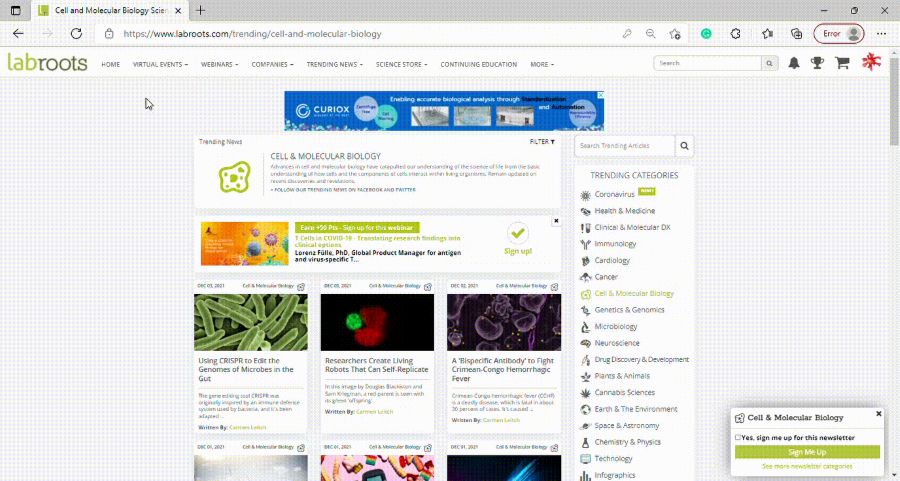
LabRoots is a professional platform for life science and clinical diagnostics professionals, offering educational content and lab-related news. While not a traditional LMS, it’s used to stay updated and connected with the global scientific community.
Features:
-
Access to webinars, conferences, and e-learning modules
-
Topic-specific newsfeeds for lab disciplines
-
Community forums and expert Q&As
-
Job board and scientific event calendar
-
Virtual poster presentations and symposiums
Pros:
-
Great resource for ongoing scientific learning
-
Supports continuing education credits (CEs)
-
Helps labs stay current with trends and technologies
Cons:
-
Not a tool for managing internal lab workflows
-
No lab-specific inventory or sample tools
-
Primarily external-facing and event-based
Pricing:
Free to join; webinars and events may have additional costs.
5. Authorea – Best for Collaborative Scientific Writing
Authorea is an online writing platform tailored for researchers and academics. It’s ideal for labs that regularly produce scientific papers, preprints, and reports, offering a clean interface with citation tools and LaTeX support.
Features:
-
Collaborative real-time writing and editing
-
Built-in LaTeX, Markdown, and rich-text support
-
Reference management and inline citations
-
Submission tools for scientific journals
-
Version control and private/public sharing options
Pros:
-
Designed specifically for scientific documents and publishing
-
Allows multiple authors to contribute in real time
-
Easy formatting for equations and citations
Cons:
-
Not suitable for full lab workflow or inventory management
-
Offline editing is limited or unavailable
-
Fewer project management features compared to ELNs
Pricing:
Free basic plan; premium plans start at $10/month per user.