
Best Hospital Management Software in
Are you looking for Hospital Management Software for your Business in ? SaaS Adviser brings you the best Hospital Management Software to ease your worries. In order to make your work smooth and swift, SaaS Adviser has compiled a list of the best software available. Compare the Best software features, pricing, free demo, and trial to select the best Hospital Management Software for your organization.
 Researched and Written by Akash Patel
Top 3 Featured Softwares


List of Top Hospital Management Software
Get Free Consultation


Giva eHelpDesk

By Giva eHelpDesk
eHelpDesk HMS is a comprehensive software that includes a help desk, IT service, customer service, dashboard, ITSM, and issue tracking features. All of these features are designe...
View Profile

Health360
By Health360
Health360 software is a platform used to manage hospital workflows. The software offers tools to book appointments and customers can upload e-prescriptions approved by their physic...
View Profile

athenaCollector
By athenaCollector
AthenaCollector is a software platform that helps you manage your practice and get paid faster. With its rules engine, you can manage claims and access revenue, cycle tasks, and pa...
View Profile

Medinous HMS
By Medinous HMS
Medinous HMS is a web-enabled hospital management system that helps you make decisions for patient care. The software offers an EMR with structured diagnosis templates to create a ...
View Profile
Doccure is an online medical appointment scheduling software that makes it easier for hospitals and independent doctors to interact with patients and keep track of their medical ...
View Profile

TiaNuMR
By TiaNuMR
The TiaNuMR software by TiaTech is a platform that automates business workflows. It is customizable for care providers with electronic patient health records (EHR) and has an in-...
View Profile

Interlace Health
By Interlace Health
Interlace Health's software is fully integrated with EHRs to populate the registration form. Patients can pre-register from home, promoting staff adoption and patient communicati...
View Profile

oeHealth
By oeHealth
oeHealth is a web-based suite of electronic medical records (EMR), electronic health records (EHR), hospital management software, and hospital information solutions (HIS) develop...
View Profile

Dr in Cloud
By Dr in Cloud
Dr. Cloud's Practice Management solution is a Hospital Management Software that helps manage appointments, online bookings, and EMRs for patients. With e-signature capabilities, pa...
View Profile

PurpleDocs
By PurpleDocs
PurpleDocs provides solutions that give providers access to vital patient health history, so they can make informed clinical decisions, provide efficient care, and improve health...
View Profile

What is PointClickCare?PointClickCare is a cloud-based healthcare software platform built to support long-term and post-acute care providers. It delivers an all-in-one solution...
View Profile

MDVision
By MDVision
MDVision is a medical practice management and electronic medical record (EMR) solution that helps organizations improve their operational capabilities. It offers a simple platform ...
View Profile

PrimeCare
By PrimeCare
PrimeCare's smart HMS features offer full integration of the reception area and the back office. This hospital management software includes useful features that help digitize almos...
View Profile

ProMed
By ProMed
ProMed hospital management software is a highly scalable tool that can introduce systemization and digitization into your hospital workflow. The software is very suitable for multi...
View Profile

AdvancedBilling
By AdvancedBilling
AdvancedBilling software is a platform used to automate billing for Medical sectors. It can manage scheduling & front office tools to collect payments with one-click display of p...
View Profile
Ur Vitals
By Ur Vitals
Ur Vitals is a Patient Medical Record Management app that can be deployed in your brand name. This is ideal for Hospitals, Diagnostic Centers and Pathology labs. Ur Vitals is a H...
View Profile

What is Pappyjoe?Pappyjoe is a complete health facility management software. It is mainly designed for dental practices and other independent healthcare clinics. It provides a plat...
View Profile

Mahmee
By Mahmee
Mahmee software is a HIPPA secure care management forum that was developed with the aim of following a baby's and mom's health records on the same page. It covers pregnancy, the la...
View Profile

Electra HMS
By Electra HMS
Electra HIS software is an integrated Hospital Management System used to manage all aspects of the hospital administration, including the digital electronic health record, revenue ...
View Profile

Med2X HMIS
By Med2X HMIS
MED2X HMIS is a hospital management solution that offers smart tools and features to effectively control a clinic's several basic to advanced operations. It offers a comprehensive ...
View Profile

Table of Content
Find the Best Hospital Management Software in the USA
Healthcare providers are using more technology than before in patient care, accuracy, and efficiency. A robust hospital management software automates daily operational functions like appointment scheduling, billing, medical records, and staff management by unifying all departments into one system.
Multi-specialty hospitals, diagnostic centers, and clinics are capable of streamlining services with the right hospital management system software, which guarantees compliance and alleviates the administrative load.
In this guide, we will explain in detail how hospital administration software can change the workflows in the healthcare industry. What functions does it have? Which platforms are the best for offering the cost-effective hospital management software solution tailored to your organization’s needs?
1. Top 5 Best Tools for Hospital Management Software in the USA
1. Aarogya HMS – Best Hospital Management Software for Government and Private Institutions
Aarogya HMS is a comprehensive hospital management information system used by both private and government healthcare institutions in India. It provides granular solutions for OPD, IPD, diagnostics, pharmacy, administration modules, and more while adhering to NABH compliance and digitization goals. Its customizable workflows enable easy expansion across departments.
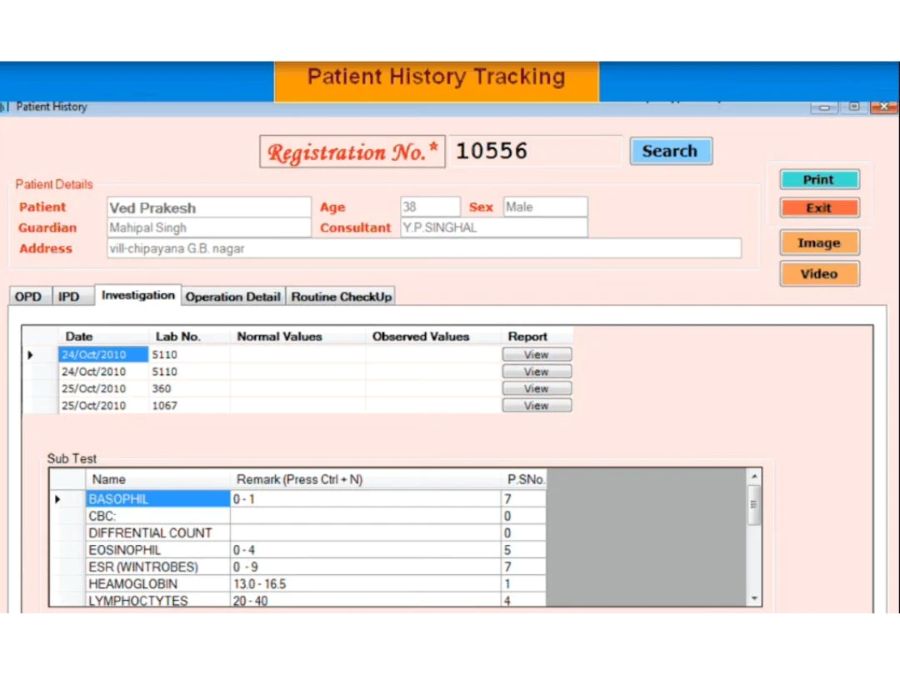
Features:
-
End-to-end OPD, IPD, pharmacy, and lab integration.
-
NABH-compliant workflows and reporting modules.
-
Built-in appointment scheduling and billing system.
-
Multi-location and multi-user role-based access control.
Pros:
-
Suitable for both small clinics and multi-specialty hospitals.
-
Local support and multi-language capabilities.
-
Strong reporting and government-ready compliance features.
Cons:
-
The user interface may feel outdated to some users.
-
Implementation requires training for full-scale deployment.
Price:
Pricing starts from $100 per year.
2. SoftClinic – Best Software for Clinics and Multispecialty Hospitals
SoftClinic has earned its place among the best hospital and clinic management software with its on-cloud and off-cloud capabilities. It is best suited for small to mid-sized hospitals and diagnostics labs with its vast structured comprehensive reporting and EMR tools, and real-time access to data. Its multilingual features with specialty templates are crafted to meet the requirements of various clinics.
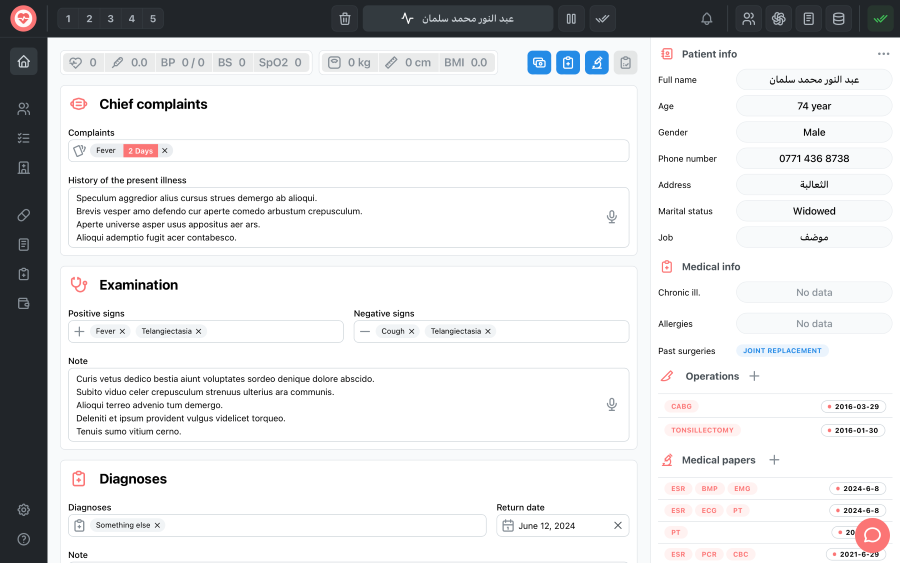
Features:
-
Comprehensive EMR with e-prescriptions and patient history.
-
OPD/IPD, pharmacy, and lab module integration.
-
Offline functionality with real-time sync capabilities.
-
Available in multiple Indian languages.
Pros:
-
Excellent for doctors practicing across specialties.
-
Lightweight and easy to implement in rural hospitals.
-
Affordable and highly customizable.
Cons:
-
Lacks in-built telehealth or video consultation modules.
-
UI design may feel less modern to urban hospitals.
Price:
Pricing starts from $150 per user.
3. MocDoc HMS – Best Cloud-Based HMS for Paperless Operations
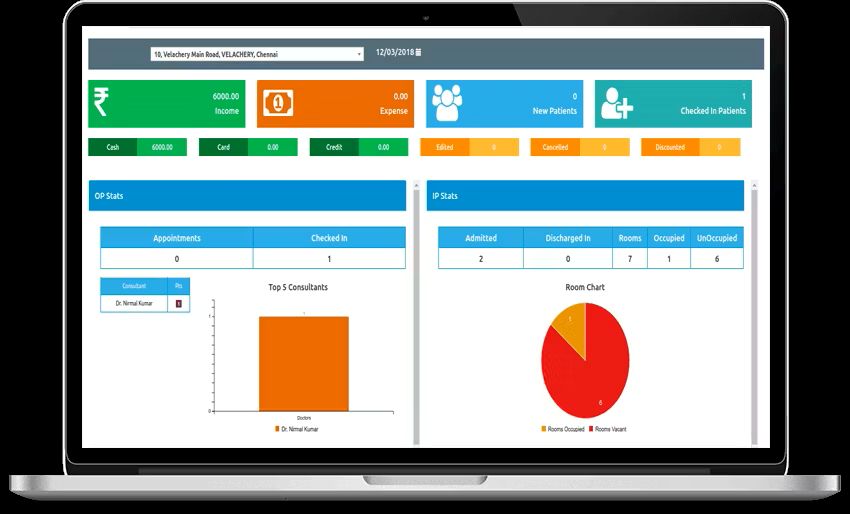
MocDoc HMS hospital management software is focused on the cloud. It offers record keeping, administrative task automation, and other departmental access functionality in real time. Its graphical user interfaces are user-friendly. It comes with patient care, pharmacy, labs, radiology, and other relevant modules. It is ideal for hospitals with its secure and scalable infrastructure to support paperless systems.
Features:
-
Cloud-based access with patient portal integration.
-
Digital billing, pharmacy, and inventory management.
-
Dashboard for doctors, nurses, and admin roles.
-
Custom templates for prescriptions, discharge summaries, and reports.
Pros:
-
Sleek, modern interface ideal for urban hospitals.
-
Fast deployment and user-friendly configuration.
-
Secure and scalable cloud infrastructure.
Cons:
-
Internet dependency may limit usage in offline settings.
-
Advanced modules may increase costs for smaller clinics.
Price:
Customized plans depending on the hospital size.
4. Caresoft Hospital Information System – Best for Mid-to-Large Hospitals
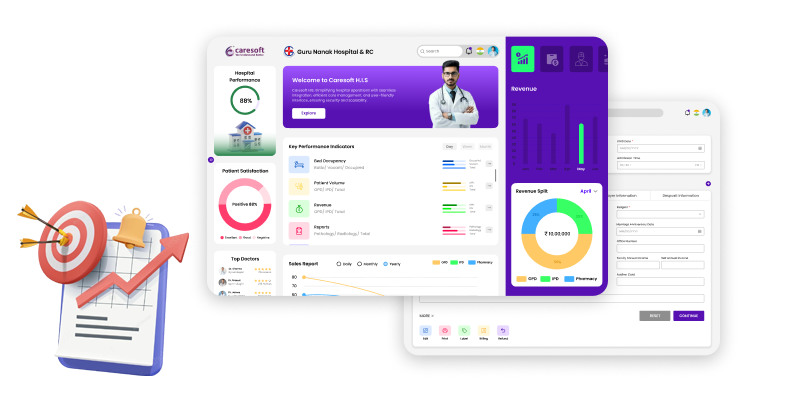
As a fully integrated hospital information system, Caresoft covers all operational, clinical, and administrative workflows. For process-oriented and highly structured hospitals, Caresoft offers compliance with regulations, inventory control, and staff scheduling, among others. Its sophisticated reporting features are ideal for large hospitals needing audit-ready records.
Features:
-
OPD/IPD, operation theatre, radiology, and finance modules.
-
Advanced MIS and audit reporting tools.
-
Biometric and RFID integration capabilities.
-
HR, billing, and supply chain features built-in.
Pros:
-
Strong focus on process automation and accountability.
-
Detailed reports for audits, inspections, and compliance.
-
Ideal for medium to large multi-specialty hospitals.
Cons:
-
Requires proper staff training for efficient use.
-
Slightly higher cost than simpler HMS options.
Price:
Customized plans as per your requirement.
5. eHospital – Best Open Source HMS for Customization
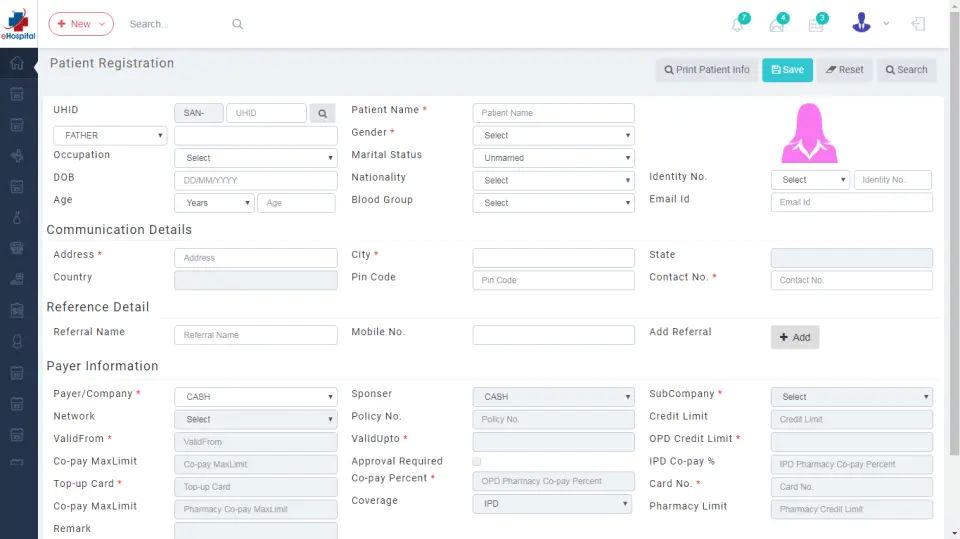
eHospital, developed by Adroit Infosystems, is an open-source hospital management solution best suited for hospitals with a need for flexibility and customization. From patient registration to pharmacy and radiology, it supports multiple modules and caters to institutions that want the software to be hosted on-premise or in the cloud.
Features:
-
OPD/IPD, lab, pharmacy, and radiology integration.
-
Discharge summary, prescription, and billing modules.
-
Multi-hospital and multi-user environment support.
-
Patient portal, SMS/email notifications, and audit logs.
Pros:
-
Open-source nature allows high-level customization.
-
Suitable for institutions with in-house IT teams.
-
One-time license options are available for cost savings.
Cons:
-
Requires self-hosting knowledge or external support.
-
Not as plug-and-play as fully managed solutions.
Price:
Personalized plans as per your requirement.
2. Market Trends in Hospital Management Software
.jpg)
-
Artificial Intelligence (AI)
The Global Hospital Management Software Market was valued at approximately $25 billion in 2023 and is predicted to grow at a compound annual growth rate of 10.5% from 2024 to 2030.
AI is Artificial Intelligence, which has aided in ameliorating dread prevalent deep-rooted hospital administration-related concerns using predictive analytics for somatic complaints amelioration (decision making and diagnosis), automating billing and schedulization (administrative task), alongside recommended, related caregiving advice. AI aids in apprehending operational flow within the hospital and improves accuracy in diagnosis, treatment, and personalizing to the individual needs of patients. You can read our artificial intelligence blog for more information.
-
Telemedicine
Telemedicine, an innovation aimed at healthcare professional and patient interaction improvement. Telemedicine is now incorporated into hospital administration software, which allows for remote consultations and monitoring. Mounting pandemic levels of accessible portals to healthcare make Telemedicine a great choice for lessening congestion within hospitals and reducing engagement with helping patients and enabling. Providing immediate interaction between healthcare professionals improves efficiency.
-
Cloud Computing
Cloud applications are quickly capturing attention in the modern world, including medicine and hospital management systems, and are being put forward as a solution for challenges of need for flexibility, scale, and lower costs. Placing patient records and administrative data in the cloud allows for secure real-time access from multiple locations, ensures secureness, enforces lowering of IT infrastructure spending, and enhances recovery from determining failure need.
-
Big Data Analytics
A powerful aide was integrated into the hospital administration, augmenting access to AI - big data analytics (patent and operational data surveillance). AI-powered big data analytics give the capacity to scrutinize through massive amounts of stored data scrutinized by AI. This enables AI to enable pattern recognition and improved clinical reasoning. It assists in resource allocation optimization and finding costs that ought to be less.
3. Factors to Consider When Purchasing Hospital Management Software
-
Extent of Automation
Assess the degree to which your hospital's processes can be automated (e.g., patient check-in, report generation, billing). The greater the degree of automation software offers, the more time and resources your staff will save across daily workflows.
-
Ease-of-Use
Beyond general ease-of-navigation, software should allow untrained personnel to use it with no additional technical training. Complex systems tend to lower productivity and increase user resistance. Opt for one that is simple, proactive, and hospital-centric.
-
Cloud vs. On-Premise
Assess if your hospital’s infrastructure supports a cloud-based solution or an on-premise one. While cloud solutions provide flexibility and access from remote locations, on-premise software is preferred by institutions with strict IT policies due to better control over data security.
-
Integrations
Ensure that the software allows integration with third-party diagnostic labs, telemedicine, HR, and accounting software. Desirable integration functionalities guarantee smooth data transfer, eliminate duplication, and improve interdepartmental efficiency.
-
Cost
Avoid focusing solely on the price tag. Consider the total cost of ownership, including licensing, customization, hardware, training, ongoing support, and all others. Select the one that provides a reasonable expense balance with the range of features required for your hospital’s operations.
4. Choosing the Right Best Hospital Management Software
.jpg)
-
Needs Assessment
Consider the numerous aspects like appointment scheduling, billing, and inventory management specific to your healthcare facility. Addressing operational needs to mitigate problems and achieve long-term goals helps in the facilitation of proper selection of hospital management software.
-
Scalability
Identifying the scope, service requirements, and potential growth of the organization of the system will ensure its effectiveness. The software selected needs to be adaptable over the years to accommodate new users and departments without losing effectiveness as the hospital expands.
-
Integration Capabilities
The software should integrate effortlessly with existing systems such as laboratory software, pharmacy modules, or any insurance technology to facilitate better integration. Consolidated frameworks of the hospital improve data sharing, eliminate duplicate entries, and ensure unification.
-
User-Friendliness
There is an absolute necessity for user adoption to meet the needs of the staff and lessen the complexities involved in the system. Prevention of manual errors while concentrating on the patients and lowering comprehensive training is made possible through well-designed, user-friendly software tools.
-
Support and Training
Seek out training and customer support providers who provide adequate support during off hours and additional training. Find vendors who offer uninterrupted support along with detailed onboarding, ensuring smooth adoption across all personnel using the hospital administration software.
5. What are the Features of a Hospital Management Software?
-
Appointment Management
Using this function patients can book, cancel, and reschedule appointment online or with the help of the hospital staff. It optimizes schedules, minimizes wait times, improves patient flow, and guarantees maximum utilization of doctor availability leading to improved hospital operations and patient satisfaction. You can use appointment scheduling software for the same.
-
Patient Management
Patient management includes registration, records update, maintaining their medical history, and log of visits. It allows quick retrieval of records which helps improve interdepartmental collaboration and overall continuity of care in outpatient, inpatient and emergency services. You can use a patient management system for the same.
-
Inventory Management
Through automated inventory management, hospitals can control medical supply inventory, monitor drug usage, stock levels, and reorder settings. This feature helps to prevent stockout and wastage and assures that essential items are available when needed. You can use inventory management software for it.
-
Facility Management
Facility management controls scheduling for operation theaters, bed occupancy, sanitation, equipment maintenance, and other maintenance activities. This module controls the optimal utilization and maintenance of hospital assets and services to patients and comfort.
-
Accounting
This module manages billing and accounts payable invoicing and expense tracking and reporting. It streamlines the financial management process of the hospital by automating transactions, maintaining transparency, and providing their financial information in real time to the administrator and auditor.
-
Staff Management
This specific feature handles the employees’ scheduling, roles, payroll, leave balances, and performance evaluation. It enhances the effectiveness of HR processes and assists in ensuring that the hospital is optimally staffed with well-defined shifts and clear organizational structures to avoid disruptions in service delivery.
6. What is Hospital Management Software?
Hospital Management Software (HMS) or Hospital Software is a solution used to monitor a hospital or a health clinics clinical, administrative, as well as financial activities. It allows the interaction of a seamless integration of various functions like patient registration, billing, pharmacy, appointment scheduling, and radiology.
A holistic HCM system will improve the communication between healthcare personnel, automate active workflows, and centralize patient information. They also provide improvement in the industry standard compliance level, in addition to the patient participation grade and the quality of decisions made on data assessment.
Modern hospital administration software does everything from enhancing the accuracy of a physician's diagnosis to the retention of hospital documents. This ensures better care can be provided to patients. It enables hospitals to operate more efficiently than ever.
7. What are the Benefits of Hospital Management Software?
.jpg)
-
Improved Clinical Decision-Making
Health practitioners are able to make clinical decisions in real time due to having complete access to the patient’s history. They can obtain critical medical information from different departments during the patients’ treatment and can make informed decisions without delay, hence improving patient outcomes.
-
Easy Data Management
With the aid of hospital management software, patient and operational data is stored and organized extensively without using paper. The maintenance of records is done in an effective manner because retrieval becomes simple. Redundancy is minimized alongside paperwork, which makes compliance to documentation more efficient.
-
Enhanced Technological Competence
The inclusion of automated systems in the hospital allows for the modernization of operations through the reduction of manual work. Mobile access, cloud storage, and real-time updates keep the institutions competitive while allowing for more accessible and connected services to the patients and staff.
-
Improved Data Security
The hospital’s management system helps in maintaining the confidentiality of sensitive information related to the patients through encryption and using secure backups. These measures, alongside role-based access, aid in protecting the data from unauthorized disclosure, breach, or health data protection regulation noncompliance.
-
Improved Revenue Management
Financial management in the hospital is simplified through automated billing, processing of insurance claims, and tracking the finances. All of these changes aid in the promotion of cash flow by minimizing billing errors, monitoring payments in real time, and reducing delays in financial administration.
8. Conclusion
Choosing a hospital management software solution can improve workflows, enhance patient care, and streamline administration. For expert comparisons, real-user reviews, and recommendations customized for your clinic or multi-specialty healthcare facility, visit SaaS Adviser for the most dependable software solutions.