
Best Financial Risk Management Software in
Are you looking for Financial Risk Management Software for your Business in ? SaaS Adviser brings you the best Financial Risk Management Software to ease your worries. In order to make your work smooth and swift, SaaS Adviser has compiled a list of the best software available. Compare the Best software features, pricing, free demo, and trial to select the best Financial Risk Management Software for your organization.
 Researched and Written by Nikita Rao
Top 3 Featured Softwares


List of Top Financial Risk Management Software

Get Free Consultation


Findur

By OpenLink Software
Check How Findur can help to automate Indian Business. SaaSAdviser provide their list of features, pricing, Free demo and Comparison with the best alternative
View Profile

Fyers Web
FYERS WebFYERS is a Bengaluru-primarily based fin-tech startup providing a stable and reliable platform to change successfully in Indian stock markets. FYERS is a member of NSE, BSE, MC...
View Profile

Bilendo
By Bilendo
Check How Bilendo can help to automate Indian Business. SaaSAdviser provide their list of features, pricing, Free demo and Comparison with the best alternative
View Profile

Positive Corrective Action
By HR Efficient
Check How Positive Corrective Action can help to automate Indian Business. SaaSAdviser provide their list of features, pricing, Free demo and Comparison with the best alternative
View Profile

GPS Analytics
By GPS Analytics
Check How GPS Analytics can help to automate Indian Business. SaaSAdviser provide their list of features, pricing, Free demo and Comparison with the best alternative
View Profile

Fastcheck
By APRENET SOFTWARE
Check How Fastcheck can help to automate Indian Business. SaaSAdviser provide their list of features, pricing, Free demo and Comparison with the best alternative
View Profile

Carta is an equity management software that helps users efficiently and conveniently manage their companies' valuations, cap tables, investments, and equity plans. The software act...
View Profile

Traderscockpit
Making Profitable trading/investing a RealityTradersCockpit is India's best-based Financial Markets Analysis Solutions Provider that helps traders/investors with the aid of imparting them exceptional feasible software too...
View Profile

Slavic 401k
See the Future Clearly
Slavic401k is a pioneer in retirement services, and a leading supplier of 401(k) plans to more than 12,000 firms and 250,000 employees in the United States. with a growing asset ba...
View Profile

Embat
By Embat Technologies
Check How Embat can help to automate Indian Business. SaaSAdviser provide their list of features, pricing, Free demo and Comparison with the best alternative
View Profile
.png "Kalansh One")
Kalansh One
Kalansh is a full-featured banking and finance solution created to improve and streamline financial processes.Kalansh is a full-featured banking and finance solution created to improve and streamline financial processes. Pigmy agents can quickly and accurately collect cash from consumers u...
View Profile

StockEdge
BECOME A BETTER INVESTOR & TRADERStockEdge is a completely unique platform, that is a hundred% centered on inventory market research and analytics. It empowers traders and investors to do self-studies by offer...
View Profile

GrabDefence
By Grab
Check How GrabDefence can help to automate Indian Business. SaaSAdviser provide their list of features, pricing, Free demo and Comparison with the best alternative
View Profile

Quantumrock
By Quantumrock
Check How Quantumrock can help to automate Indian Business. SaaSAdviser provide their list of features, pricing, Free demo and Comparison with the best alternative
View Profile

Cardtr
Cards that impress
Create compelling experiences with solutions your customers will love and continuously choose to use.
View Profile

Consolo
Provides fully customizable hospice management and billing tool for hospices
What is Consolo?Consolo is an advanced project management solution engineered to optimize workflows and drive team productivity. With features such as real-time collaboration, task...
View Profile

Trade iQ
Smart AML SolutionTrade iQ is a specialized trade compliance software solution designed to assist financial institutions in managing the risks associated with trade-based money laundering (TBML) and...
View Profile

DevSkiller
By DevSkiller
Check How DevSkiller can help to automate Indian Business. SaaSAdviser provide their list of features, pricing, Free demo and Comparison with the best alternative
View Profile

AssureHire
Minimize onboarding delays and mitigate risks with FCRA-compliant background checks.
AssureHire is a background screening solution designed to streamline and enhance the hiring process by providing comprehensive background checks. As part of Mitratech's suite o...
View Profile

Fraxion
Procure-to-pay software for proactive spend management
Fraxion is a leading procure-to-pay software solution designed to empower mid-sized companies with proactive spend management. By automating purchasing, expense, and accounts p...
View Profile

Table of Content
What Are Financial Risk Management Tools?
Financial risk management tools are sophisticated platforms or software systems that detect, evaluate, track, and reduce possible risks that may affect a company in terms of its financial stability. These can be market volatility, credit crunches, liquidity crunches, or operational breakdowns.
An effective financial risk management system combines data analytics, predictive models, and automation of information to enable finance teams to act in line with the insight-actionable information system helps businesses to remain proactive, not reactive.
1. How Do Financial Risk Management Tools Work?
Put simply, these tools operate by gathering and examining financial data and identifying the risks before they become serious. They apply machine learning, predictive analytics, and real-time dashboards to track the level of exposure in different departments.
An example is the use of a financial risk management tool, which may alert you to unusual changes in market data, indicating volatility, enabling your finance department to make changes right away. Likewise, it can be used to make sure that regulatory risks can be tracked as well by integrating with the employee compliance management software.
2. Types of Financial Risk Management Tools
Various businesses can have various types of financial risks, such as market volatility, credit defaults, liquidity crunch, or failure in internal processes. In order to deal with these effectively, firms make use of specialized financial risk management tools that are specific to risks. Now we are going to discuss the major types and their role in a robust financial risk management system.
1. Market Risk Tools
Market risk tools assist companies in determining and reducing risks associated with fluctuating variables in the market that include currency fluctuations, changes in interest rates, and changes in stock prices. These are essential to investment companies, asset managers, and corporations that are globally exposed.
They are real-time analytics, predictive modeling, and historical trend analysis to determine the potential effect of external market conditions on your portfolio or revenue.
Example: A quantitative trading system to model the performance of an investment portfolio in unstable economic environments to proactively hedge the portfolio.
2. Credit Risk Tools
The credit risk tools are mostly employed by banks, lenders, and financial service providers to evaluate and manage the creditworthiness of borrowers. They use current transactional and behavioral data to compute the probabilities of default (PD), exposure at default (EAD), and loss given default (LGD).
When combined with financial risk management software, they can be used to reduce non-performing loans and make lending decisions that are supported by data.
Example: A bank that has adopted AI-based credit rating services to screen the loan applications submitted by small businesses more efficiently and precisely.
3. Liquidity Risk Tools
The liquidity risk tools will keep organizations in a state of sufficient cash or liquid funds to fulfill the short-term obligations without interfering with the running of an organization. All happen to be commonly combined with financial planning and financial analysis programs to project cash flow and determine funding holes in times of economic strain.
These tools assist businesses in projecting what-if situations in case the market freezes or there is a sudden influx of capital.
Example: An example of a treasury that uses liquidity dashboards to track daily cash positions and to optimize short-term borrowing.
4. Operational Risk Tools
Operational risk instruments track and control operational risks that are caused by internal malfunctions like system failure, human mistakes, or computer viruses. Such solutions can be frequently combined with risk management system software in order to give a single perspective of risk exposure in organizations.
They are provided with such characteristics as tracking of incidents, workflow automation, and compliance reporting to face internal disruptions more robustly.
Example: When a global company seeks to automate incident reporting and implement corrective actions promptly in case a process has failed, the operational risk platform will be used.
5. Quantitative and Analytical Tools
Quantitative and analytical solutions apply statistical models, data science, and machine learning to large financial data to forecast possible risk results. They are needed in organizations that rely on elaborate modeling and accurate forecasting of risk.
Through the integration of financial risk management tools, they are useful in measuring the risks, assessing validity, and making informed strategic decisions.
Example: A hedge fund is trying predictive analytics powered by AI to find links between what happens in the market and what happens in the portfolio.
3. What are the Key Features of Financial Risk Management Tools?
1. Analytical Features
- Data Analysis and Modeling: Combine financial and market data to identify potential vulnerabilities.
- Predictive Analytics: Use AI to anticipate market shifts or operational disruptions.
- Stress Testing and Scenario Analysis: Simulate worst-case situations to test financial resilience.
- Risk Scoring: The scores are used to quantify and compare exposures to risks using numerical scores.
2. Monitoring and Reporting Features
- Real-Time Monitoring and Alerts: Immediate updates of breaches of risk threshold.
- Interactive Dashboards: Visibility of metrics and KPIs.
- Automated Reporting: It saves manpower and is accurate.
- Audit Trails and Documentation: Records compliance audit and internal audit review.
3. Integration and Technical Features
- System Integration: ERP, CRM, and financial close and consolidation software.
- Collaboration and Workflow Management: Allows the teams to react promptly to perils.
- Scalability: Supports business growth and altered volumes of data.
- Security: It employs encryption and authentication to secure sensitive data.
4. Regulatory and Compliance Features
- Compliance Management: Interconnects with employee compliance management software to track regulations.
- Fraud Detection: It employs pattern recognition to detect unusual financial transactions.
4. What are the Benefits of Financial Risk Management Tools?
With the application of financial risk management tools, organizations benefit in ways that extend far beyond the protection that comes with uncertainty; it brings clarity, control, and confidence. These solutions will turn risk into a strategic advantage by integrating automation, analytics, and compliance management to make the risk a potential threat. Securing the following benefits is among the benefits that businesses can achieve due to an effective financial risk management system.
1. Enhanced Decision-Making and Strategic Planning
- Data-Driven Insights:
Radical financial risk management software transforms complicated financial data into intelligence. It makes it easier to develop informed strategies to reduce uncertainty through the use of patterns and predicting any potential risk to the decision-maker.
- Proactive Risk Mitigation:
Businesses are able to thwart threats through the detection of security threats and responding to these threats ahead of time through automated warning systems and predictive algorithms. This shall be an initiative act of safeguarding the financial resources and position in the market.
- Better Resource Allocation:
These tools provide the finance departments with the knowledge of how best to allocate the resources, whether by diversification of investments, maximization of liquidity or a high degree of exposure to the risky areas.
- Improved Strategic Planning:
A proper financial risk management structure can be characterized by creating a balance between financial goals and risk tolerance that could help organizations to balance development and stability and long-term sustainability.
2. Operational Efficiency and Cost Savings
- Automation:
Automation does away with manual systems of data collection, reconciliation, and reporting and allows teams time to analyze strategies.
- Cost Reduction:
With the elimination of errors and financial losses, companies will be able to save a substantial amount of money on the work and prevent fines on the regulation.
- Streamlined Workflows:
Integration with financial planning and analysis software will make it possible to exchange data among various departments smoothly, without any delays in decision-making.
- Real-Time Monitoring:
Real-time monitoring of major financial indicators gives real-time access to the performance and threats, enhancing responsiveness and response time.
3. Enhanced Compliance and Governance
- Regulatory Adherence:
Built-in guiding structures and links with employee compliance management packages ensure that business solutions are in compliance with the industry requirements without the need to do it manually.
- Improved Reporting:
Automated reporting, as well as audit trail documentation, enhances transparency and makes financial reporting easier.
- Stronger Internal Controls:
The financial risk management tools improve internal checks and balances, and all financial operations are ensured to be monitored and checked to be accurate.
- Audit Readiness:
Audits are less time-consuming, less effort-consuming, and more accurate due to correct and elaborate records and computerized logs, thus minimizing the inconveniences caused by the regulatory audits.
4. Increased Stakeholder Confidence and Competitive Advantage
- Better Reputation:
Risk management organizations gain better reputations for being reliable and having excellent governance.
- Attracting Investors:
Investors and partners would have greater confidence in those businesses that have strong financial risk management solutions and long-term stability.
- Competitive Edge:
Proactive risk mitigation can speed business adaptation to the changes in the market, thereby surpassing the speed of other businesses that use old systems.
- Improved Resilience:
While risk anticipation and vulnerability to possible disruption enhance the resilience of companies to financial shock, they also ensure business continuity.
5. Top Financial Risk Management Tools in the US (2025)
Nowadays, financial technology is more advanced than ever before, and it offers a wide range of financial risk management options to help enterprises forecast, assess, and avoid potential risks. These platforms have been creative, consistent, and compatible, whether in terms of compliance, credit exposure, or liquidity gap.
1. Mitratech
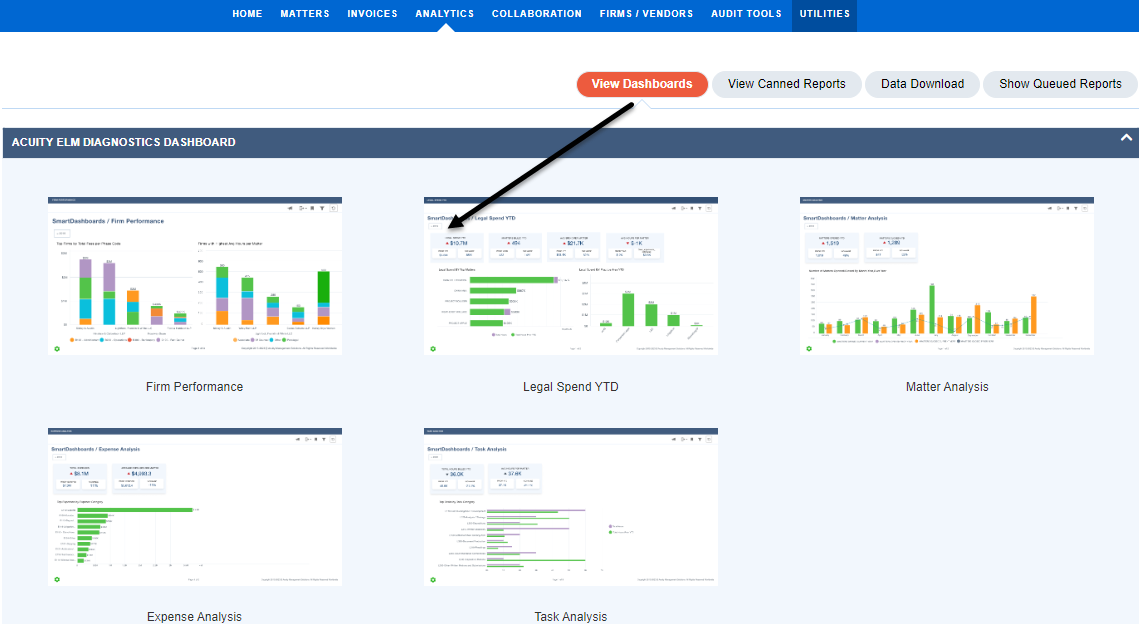
Mitratech is one of the most popular financial risk management software that is tailored to enterprise-level governance, risk, and compliance (GRC) practices. Mitratech is known to have powerful automation and scalability so that organizations can centralize the risk data, streamline the audit trails, and ensure complete regulatory compliance.
Features:
- Risk and compliance automation
- Policy and audit management
- Centralized data repository
- Real-time analytics
- Integration with existing ERP systems
Pros:
- Strong compliance focus
- Excellent audit trail
- Highly customizable
Cons:
- A little bit complicated for small companies.
- Premium pricing
Pricing: Visit the website for detailed pricing.
2. Extensis Portfolio
Extensis Portfolio is unique in that it handles the operational and market risks by means of intuitive visualization of data and asset tracking. It is designed to support firms with varied financial portfolios and requires an easier method to evaluate the exposure and performance of assets.

Features:
- Real-time risk assessment
- Asset tracking and reporting
- Advanced data visualization
- Integration with financial dashboards
- Predictive analytics module
Pros:
- Easy-to-use interface
- Robust analytics engine
- Great customer support
Cons:
- Limited third-party integrations
- Steeper learning curve for new users
Pricing: Visit the website for detailed pricing.
3. Doola
Doola is a financial institution risk management software (modern and cloud-based) aimed at startups and small to medium-sized businesses (SMBs). It specializes in liquidity management, operational risk monitoring, and compliance preparedness in a simple-to-use platform.
Features:
- Cash flow monitoring
- Risk forecasting tools
- Compliance documentation
- Workflow automation
- Real-time financial health reports
Pros:
- Affordable and intuitive
- Great for small businesses
- Excellent automation
Cons:
- Limited scalability for large enterprises
- Fewer advanced analytics
Pricing: The plan starts at $297/yr.
4. Your Money Line
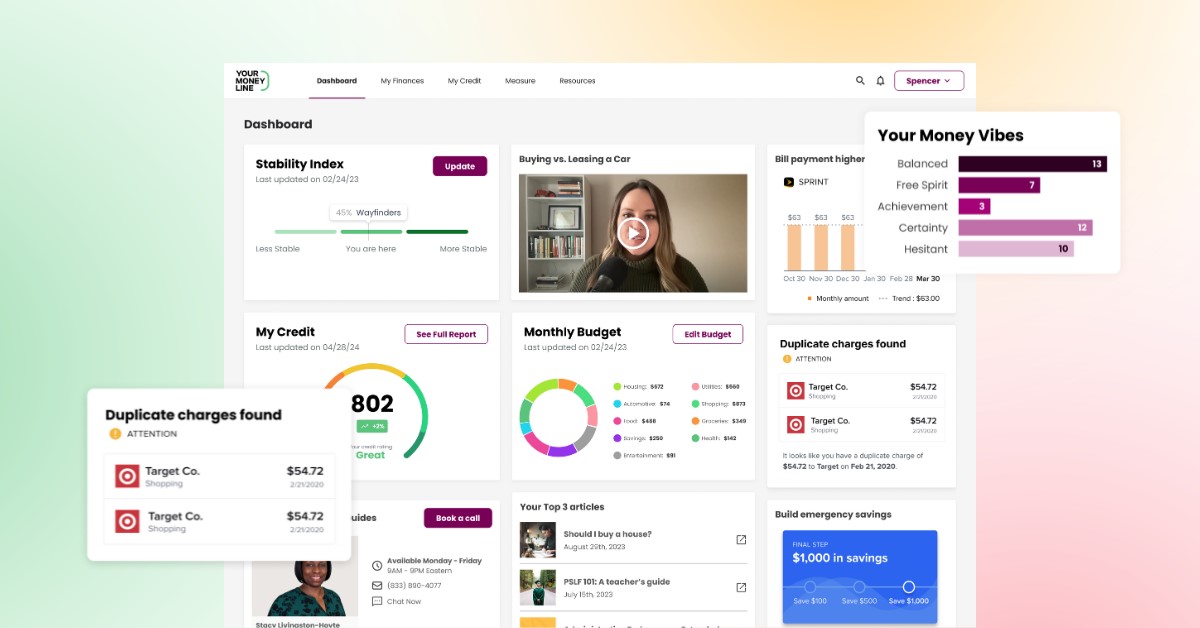
Your Money Line does not follow the traditional way of blending financial well-being and risk management. It not only monitors financial risks, but it also gives employees the means to take control of their financial well-being, and the gap between workforce stability and organizational stability.
Features:
- Employee financial health analysis
- Predictive risk models
- Automated compliance alerts
- Integration with the best financial services CRM software
- Personalized financial insights
Pros:
- Great for HR and finance alignment
- Promotes employee engagement
- Strong compliance module
Cons:
- Limited enterprise-grade analytics
- Requires onboarding support
Pricing: Custom plans (quote-based).
5. Robert Walters
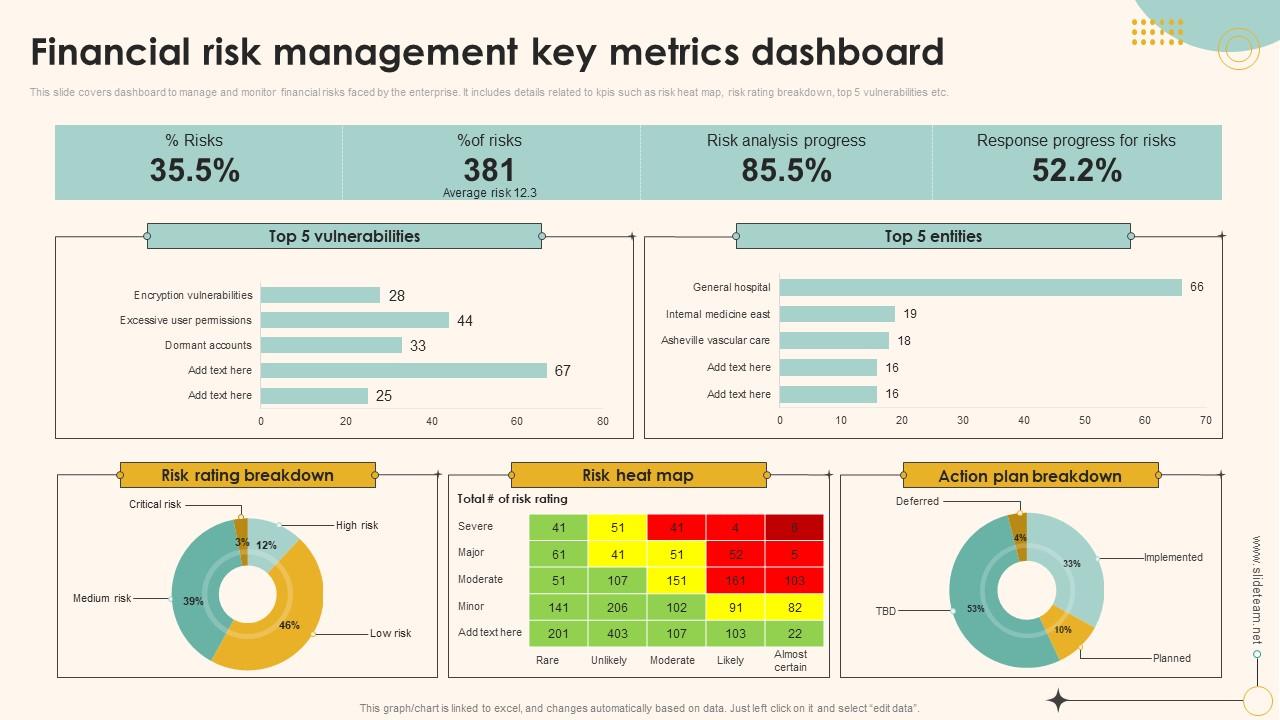
Robert Walters provides an elaborate financial risk management solution that focuses on strategic risk forecasting, compliance management, and governance. Developed to serve financial institutions and large organizations, it employs data-driven insights to evaluate the market, credit, and operational risks.
Features:
- End-to-end financial risk tracking
- Scenario analysis tools
- Governance and compliance dashboards
- Integration with the best financial well-being tool providers 2025
- Secure cloud-based infrastructure
Pros:
- Enterprise-grade reporting
- High-level customization
- Excellent compliance support
Cons:
- High setup cost
- Advanced configuration needed
Pricing: Custom enterprise pricing (quote-based).
6. What Are the Challenges of Financial Risk Management Tools?
Although financial risk management tools have strong features to watch and manage financial exposure, in most cases, their application is associated with significant difficulties. Be it expensive establishment expenses or integration challenges and data complications, companies should be ready for both the technical and human side of the adoption of a well-built Financial Risk Management System. The following are the main challenges that are usually encountered by businesses during the execution of financial risk management software.
1. Implementation and Integration
- High Cost and Resource Intensiveness:
The implementation of the enterprise-level financial risk management solutions can be resource-intensive and demand huge investments in software, training, and infrastructure. The problem with small and mid-sized companies is that they do not have the means to budget on such sophisticated platforms without neglecting other financial priorities.
- Difficulty Integrating with Legacy Systems:
Several organizations continue to use old-fashioned systems that cannot integrate with the modern risk management system software. The data silos, manual workarounds, and inefficiencies may arise due to the integration issues and erode the value of the new tools.
- Technical Complexity:
A financial risk management tool is potentially a technical undertaking in terms of configuration, customization, and ongoing maintenance. Lack of skilled IT support or vendor support may lead to an organization experiencing delays, data synchronization, and workflow breakups.
2. Data and Models
- Data Quality and Integrity:
High-quality financial risk analysis requires good-quality, reliable, and complete data. The inability to identify risk assessment and poor results may be a result of poor-quality data: missing, duplicated, and outdated information.
- Dependence on Historical Data:
The majority of financial risk management programs are based on historical market and operations data to predict. Nevertheless, past data can restrict the capacity of a company to detect emerging or new risks in the fast-evolving market conditions.
- Model Risk:
In the case of the inappropriateness of the assumptions or parameters of the model, the decision-makers can underestimate the actual risks, and this entails both financial and regulatory losses.
3. Organizational and Human Factors
- Lack of Clear Objectives:
A financial risk management solution without clear objectives will be used in a haphazard manner and may not achieve enough results. Firms must have clear measures of success, which help them to align the use of tools with the overall company goals.
- Resistance to Change and Low User Adoption:
The workers might be reluctant to use new tools, particularly when they are comfortable with their current working processes. The level of user adoption may be low without adequate training, communication, and the support of the leadership to reduce the overall impact of the software.
- Poor Communication:
Lack of dialogue with other departments, finance, compliance, and IT can hamper coordination and restrict the exchange of risk knowledge. An effective financial risk management system must have a unified communication structure.
- Loss of Institutional Knowledge:
Overdependence on automation or third-party tools may result in a loss of internal experience and analytical capabilities, which are essential to the interpretation and strategy adjustment.
4. Security
- Data Security Risks:
Due to the sensitivity of financial information, securing data is one of the greatest obstacles associated with the use of financial risk management tools. Violation of compliance, access rights, and breaches may cause vehement financial and reputational losses. Advanced encryption, access control policies, and integration with employee compliance management software are some of the measures that businesses need to adopt to alleviate these risks and have greater governance and control.
7. Why Are Financial Risk Management Tools Important for Businesses?
Financial risk management tools serve as a strategic veil; in a volatile global marketplace, they enable firms to make decisions in an informed manner and avoid noncompliance and losses. They combine analytics, automation, and foresight and ensure that your financial health is robust and sustainable.
The increase in demand for these tools is an indicator of their significance in industries. It is estimated that the Global Financial Risk Management Software Market will be worth USD 4.5 billion in 2023 and will grow by a CAGR of 7.4% between the year 2025 and the year 2032, with USD 4.83 billion being the estimated value in the year 2024 and USD 8.56 billion in the year 2032.
8. Conclusion
The selection of the appropriate financial risk management software implies the balancing of the price, scalability, integration, and compliance features. They assist organizations to predict threats, protect assets, and make better decisions in a volatile economy with respect to startups and international business. It is! It could be about assessing financial risk management applications, such as Mitratech, or a more current technology, such as Doola; investing in adequate technology today guarantees financial security tomorrow.