
Best Financial Analysis Software in
Are you looking for Financial Analysis Software for your Business in ? SaaS Adviser brings you the best Financial Analysis Software to ease your worries. In order to make your work smooth and swift, SaaS Adviser has compiled a list of the best software available. Compare the Best software features, pricing, free demo, and trial to select the best Financial Analysis Software for your organization.
 Researched and Written by Akash Patel
Top 3 Featured Softwares


List of Top Financial Analysis Software

Get Free Consultation


Huddlexr
The Best Virtual Meeting Platforms and softwareThe Best Virtual Meeting Platforms for a small business or large business. Now you can easily engage and connect your remote audience with most effective engagement tools at Huddle...
View Profile

Spendkey Limited
Spend Analytics SoftwareSpendkey is a provider of Spend Analytics Solutions
View Profile

Augmania

Get a closer take a look at the technical specs and device requirements for Augmania. Find out if it is well suited with your operating gadget and other software program.
Augmania is a storytelling device that allows marketers to build interactive AR campaigns and finally memorable studies to percentage with their target market. Augmania combine...
View Profile

AFL Compliance Platform
Web AppAFL Compliance Platform :SaaS for Australian financial licenseesEnd to End financial compliance managementIn built ZOOM for meetings
View Profile

Cardtr
Cards that impress
Create compelling experiences with solutions your customers will love and continuously choose to use.
View Profile

farmbrite
Focus on your passion not your paperwork.
All-in-one farm software designed to help modern farmers and ranchers know more, grow more and sell more, all from one easy to use place.
View Profile

Conservis
ADVANCING THE BUSINESS OF FARMING.
The leading farm management software system, providing powerful data tools & unparalleled customer support.
View Profile

InvGate Service Management
Automation and no-code workflow builder
InvGate provides the most flexible, no-code Service Management and Asset Management solutions for mid-size/enterprise organizations looking to scale and automate Service Management...
View Profile

Drivetrain
Strategic Finance Platform. Powerful and Simple.Finance teams need a FP&A tool that is both powerful and scalable while making it simple and efficient for more people to do more high-value activities to deliver strategic imp...
View Profile

LendingWise
By LendingWise
LendingWise is a customer relationship management (CRM) software that enables lenders and brokers to manage their entire loan life cycle in an efficient manner. The software comes ...
View Profile

Finflux is a lending software that offers all-in-one solutions for loan management, loan origination, marketplace integration, financial accounting, alternative data-based credit s...
View Profile

Neofin
By Neofin
Neofin is a SaaS for lending automation that does not require coding. It covers all stages of the borrower's journey, from loan origination to servicing and management. Its modular...
View Profile

Land Gorilla's Construction Loan Manager is the most complete construction loan software available. It manages and streamlines every aspect of your loan process, from pre-closing d...
View Profile

Insellerate is a mortgage customer relationship management (CRM) software that helps lenders to close more loans. It works as an engagement platform by leveraging pre-built content...
View Profile

Nomis lending
By Nomis lending
Nomis Solutions is the leading provider of Loan Origination Software (LOS). Our software is used by mortgage lenders to price loans and manage profitability. In this dynamic and co...
View Profile

absVision is a loan origination and management software that supports many types of loans and interest calculations, including simple interest, fixed, blended and step rates, Rule ...
View Profile

Finance Master
By Finance Master
Finance Master is the best cloud-based business management solution for finance and NBFC businesses. It doesn't matter the size of your business, Finance Master fits in the best to...
View Profile
AllCloud
By AllCloud
AllCloud is a modern lending infrastructure that is used to fuel the future of financial services. It offers a pre-built system that automates data management and reporting for com...
View Profile

Wally
By Wally
Wally is a finance management application that helps users learn, manage, and improve their finances. The app provides flexible budget periods that help users control their monthly...
View Profile

DevSkiller
By DevSkiller
Check How DevSkiller can help to automate Indian Business. SaaSAdviser provide their list of features, pricing, Free demo and Comparison with the best alternative
View Profile

Table of Content
What is Financial Analysis Software?
Digital tools designed to collect, process and analyze financial data for more intensive business insights are referred to as financial analysis software. These tools help companies manage risk, predict revenue, assess financial results, and create detailed financial reports. Using financial analysis software can increase the accuracy and decision-making to a large extent, regardless of company size.
Budgeting, scenario modeling, real-time dashboards, and integrated reporting systems are typical features of financial analysis software programs. These platforms facilitate departmental collaboration and provide centralized data management.
1. Conclusion
The way your company plans, forecasts, and oversees financial operations can be completely changed by selecting the best financial analysis software. The correct solution gives your team the resources they need to develop strategically, from improved data accuracy to improved compliance and cooperation. Whether you are a small business looking for QuickBooks or an enterprise considering Oracle Essbase or NetSuite, there is a financial analysis platform that is appropriate for your needs. You'll be in a good position to make an informed investment in your financial future if you concentrate on important features, assess your business needs, and take into account the most recent developments in financial analysis tools.
2. 5 Best Software for Financial Analysis in USA
While there are numerous software for financial analysis in the market, we are here going to explore 5 best software for financial analysis in USA.
1. NetSuite
NetSuite by Oracle is a financial analysis software that comprehensive suite of tools for financial management to businesses. The financial management solutions from NetSuite expedite the financial close, guarantee compliance, shorten forecasting and budgeting cycles, and streamline daily transactions.
Features
-
Governance, Risk, and Compliance
-
Financial Consolidation
-
Revenue Recognition
-
Planning and Budgeting
-
Subscription Billing
Pros
-
Comprehensive Financial Management
-
Global capabilities such as multiple languages, currencies, and subsidiaries for international operations
Cons
-
Customization Challenges
-
Complexity in implementing and customizing Netsuite
Pricing: Contact for pricing
2. QuickBooks
A well-known financial analysis software made for small and medium-sized enterprises is QuickBooks by Intuit. Businesses can create financial reports, track revenue and expenses, and manage their finances with the help of the software.
Features
-
Data Migration
-
GST & VAT Tracking
-
Project Profitability
-
Insights and Reports
-
Multi-currency support
Pros
-
User-friendly Interface
-
Affordable for small businesses
Cons
-
Limited Scalability for Large Businesses
-
Limited industry-specific features
Pricing: Visit website for detailed pricing
3. Oracle Essbase
Oracle Essbase is a high-performance financial analysis platform that enables users to create complex financial models and innovative visualizations. Essbase helps professionals to develop and manage analytics applications which forecast business performance levels with ease and fast.
Features
-
What-if analysis
-
Advanced analytical calculation and query engine
-
Complex hierarchy modeling
-
Integration with Autonomous Database
-
Multidimensional database
Pros
-
High-speed calculations & robust calculation engine
-
Accessibility and Reporting across multiple data sources
Cons
-
Initial setup complexity
-
Limited forecasting features
Pricing: Visit website for detailed pricing
4. Jedox
Jedox is a cloud-based financial analysis platform that gives professionals in your company trustworthy data, insights, and direction. It is well-known for having an easy-to-use interface that is comparable to Excel and for having powerful features that are appropriate for businesses.
Features
-
Management Reporting
-
Financial Consolidation
-
Budgeting and Forecasting
-
Cash Flow Planning
-
AI for FP&A
Pros
-
Excel Integration
-
Flexibility and Customization
Cons
-
Steep Learning Curve for User Interface
-
Limited Training Resources
Pricing: Get a Quote for pricing
5. Sage Intacct
Sage Intacct is a financial analysis platform that offers cloud-based capabilities and is designed for small and mid-sized businesses. The software helps businesses manage their core financials, customers, bank reconciliation, forecasting and budgeting, project accounting, and financial reporting. In addition to general ledger and forecasting capabilities, Sage Intacct can integrate with bank cheque printing software to streamline vendor payments and check issuance processes.
Features
-
General Ledger
-
Multi-Entity Management
-
Interactive Dashboards and Reporting
-
Open API Integration
-
Cloud-based Access
Pros
-
User-Friendly Interface
-
Industry-specific solutions
Cons
-
Steep learning curve required
-
Payment Processing Complexity
Pricing: Request custom pricing
3. Latest Trends in Financial Analysis tools

The field of financial analysis is changing quickly due to cloud-based innovation, automation, AI, and ESG requirements. A closer look at the major trends influencing financial analysis tools in 2025 is provided below:
-
AI-Driven Solutions
Financial analysis software is undergoing a revolution with artificial intelligence, which also improves fraud detection, automates data processing, and improves the prediction of trend. Large companies such as JP Morgan and Blackrock are integrating AI into their platforms that are tools that analyze unstructured data, reveal real-time insights, and accelerate decision-making of investments.
-
Hyperautomation
End-to-end Financial Workflows Are Becoming More Efficient thanks to Hyperautomation, which integrates RPA, AI and Machine Learning. This increases accuracy and releases the financial teams to focus on strategy up to 70% on tasks such as expenditure management, compliance checks, and invoice processing.
-
ESG Integration
Financial analysis systems quickly incorporates the environmental, social and governance (ESG) criteria. Various sources of ESG information, such as satellite pictures and news sentiment analysis, are now analyzed and collected by AI-enabled tools in order to reduce risks and promote sustainability.
-
Cloud-Based Solutions
Cloud-native platforms are rapidly becoming essential for financial planning analysis software, mainly due to their immediate accessibility, scalability, real-time updates, and low capital costs. They facilitate hybrid work and international financial collaboration by integrating easily with ERPs and CRMs. In order to track cloud spending in addition to operating expenses and guarantee full visibility into total IT costs, businesses are also integrating cloud cost management software with financial analysis platforms.
-
Data Analytics
These days, advanced analytics and visualization play an important role in financial analysis. Through the use of ML and NLP, Tools are integrating augmented analytics enabling non-technical users to highlight insights through interactive charts and user-friendly dashboards.
-
Real-time Data and Dashboards
Real-time data and dashboards have moved from a “nice-to-have” to an essential component of financial analysis software. Live dashboards have become inevitable, providing real-time financial health insights. Live dashboards incorporated into an financial analysis platform, which continuously extracts information from your system, including accounting software, CRM and ERP, and offers decision makers the recent data on the organization's financial health. Businesses use them to keep an eye on liquidity, spot irregularities, and quickly adjust their plans—all critical features in ever-changing market conditions.
-
Scenario Planning
Financial Analysis solutions now include built-in scenario planning for stress tests, economic downturns, and regulatory changes. Integrated AI modeling helps teams visualize outcomes under varied conditions and prepare strategic responses.
-
Blockchain Integration
Blockchain is gaining traction in finance for secure, transparent transaction recording. At the same time, "agentic AI"—autonomous agents that can act independently without human intervention—is emerging in financial platforms, enabling transaction monitoring, risk alerts, and compliance notifications.
4. Importance of Best Financial Analysis Software
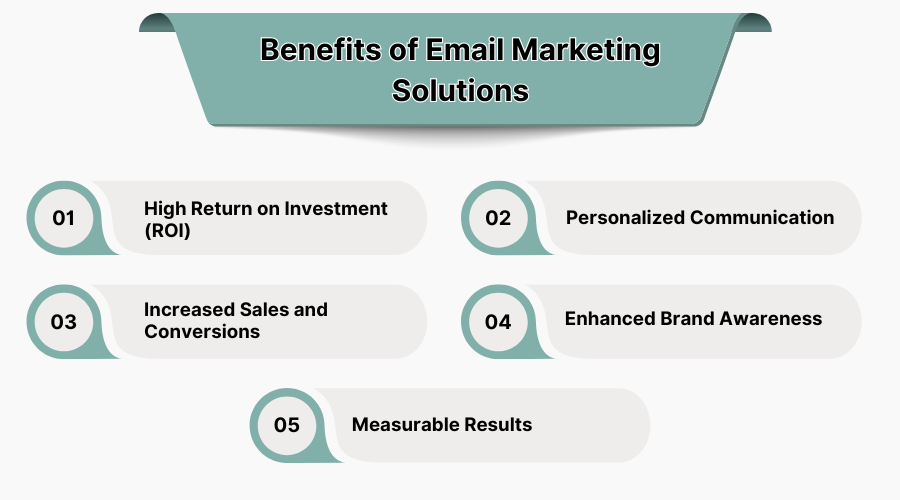
The use of the best financial analysis software has evolved from a strategic advantage to a necessity in a business environment that is becoming more and more competitive and data-centric. Businesses can obtain important insights, cut down on operational inefficiencies, and stay in compliance with regulations by investing in strong financial analysis software programs. The main justifications for why selecting a thorough financial analysis system is essential to company success are listed below:
-
Improved Decision-Making
Real-time financial data is available through the best financial analysis software, so that finance professionals and executives can make quick and more accurate decisions. The decision-makers are better equipped to assess business opportunities and risks when they have timely insight into revenue streams, cost centers, and profitability calculations. Each option becomes more strategic when your team uses sophisticated software for financial analysis.
-
Enhanced Efficiency
Automation is a key benefit of modern financial analysis software. Teams can concentrate on higher-value strategic activities by doing away with manual, repetitive tasks like variance analysis, report generation, and data consolidation. Time and resources are saved throughout the company when operational efficiency is increased with a specialized financial analysis platform.
-
Reduced Errors
In manual financial reporting, inaccuracies can cost companies money, time and even compliance. By using real-time synchronization with statistics sources, automated validations, and standardized formulas, financial analysis solutions drastically lessen these dangers. Reducing errors through automation will increase the credibility of your analytics and financial reporting.
-
Better Forecasting and Planning
Companies can change from reactive to proactive financial management using strong financial planning analysis software. Finance teams can predict revenue, expenses, and growth capacity with confidence by using predictive models and analyzing historical data. This progressive strategy guarantees financial preparedness in both stable and unstable market conditions.
-
Enhanced Compliance
Compliance to regional, national and global financial regulations is required. Built-in compliance capabilities such as audit trails, approval workflows, and regulatory reporting templates can be found in the best financial report analysis software. Improved compliance fosters organizational integrity and lowers legal exposure.
-
Scalability
As your organization expands, the demands on financial systems grow. Scalable financial analysis software programs support increased data volumes, more users, and more complex financial structures without sacrificing performance. A scalable financial analysis solution future-proofs your financial infrastructure.
-
Improved Collaboration
Modern financial analysis platforms facilitate cross-department collaboration by offering centralized data access and shared reporting functions. With a single source of financial truth, finance teams, department heads, and executives can collaborate together. Better teamwork has a quick execution and more consistent strategic planning.
-
Time Savings
One of the most important resources for any business is time. Financial analysis software enables teams to spend less time on administrative duties and more time on strategic initiatives by automating critical financial processes. Finance teams can provide more insightful analysis and improve business performance by saving time.
5. Benefits of Financial Analysis Softwares
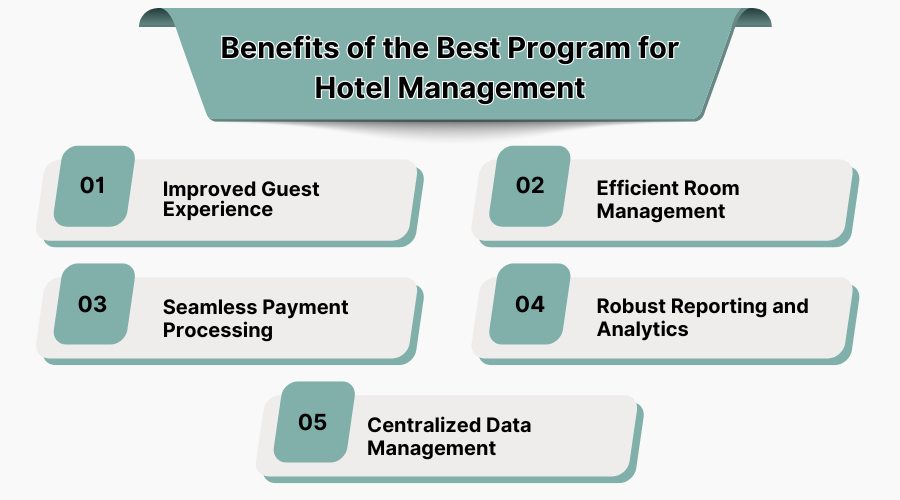
Investing in powerful financial analysis softwares offers numerous strategic and operational advantages. Below are the key benefits of using software for financial analysis:
-
Enhanced Accuracy and Efficiency
The ability of financial analysis software to automate complicated calculations and reduce human error is one of the principle benefits. The manual spreadsheet takes not only time, but also the possibility of errors that can lead to poor decisions. In order to ensure data integrity, financial analysis tools use integrated validation rules, standardized procedures, and automated workflows. Your financial team can give extra time to strategic analysis and less time to administrative tasks if efficiency increases. Modern financial analysis software can act as or integrate with financial close software to accelerate end-of-month reporting cycles and ensure accurate consolidation of financial statements.
-
Improved Decision-Making
Real-time visibility into your financial performance is given by the best financial analysis software, which allows businesses to make faster and more informed decisions. Dynamic dashboards provide executives access to real-time data so that they can move the business forward towards growth. Your company can change from reactive to proactive decision-making with the right financial analysis platform.
-
Risk Management
Risk detection and alerting systems built into contemporary financial planning analysis software can spot outliers, inconsistencies, or financial anomalies before they become more serious. This proactive approach helps companies to handle risk effectively. By integrating financial analysis solutions, companies can prepare for financial instability and reduce the risk of financial uncertainties. This tool provides sophisticated credit scoring functions, liquidity monitoring, and stress testing when combined with special financial risk management software, and helps companies protect their financial health.
-
Centralised Financial Data
Managing data that is dispersed across several systems is one of the biggest problems facing finance teams. A strong financial analysis system improves transparency and collaboration by combining all financial data into a single platform. In addition to making data management easier, this centralization promotes departmental alignment.
-
Scalability and Flexibility
The financial operations of your company becomes more complicated as it expands. With scalable financial analysis software, you can develop the system's growing data volume, more users and regulatory requirements without redesign. By using the best financial analysis software, the software guarantees that your financial infrastructure expands with you, whether you are a MNC managing subsidiaries or a startup that is growing.
6. Key Features of Financial Planning Analysis Software
Modern financial planning analysis software goes far beyond basic accounting. The key features listed below define the top financial analysis software and make it an invaluable tool for finance teams:
-
Planning and Budgeting
The core of any strong financial analysis software program has extensive planning and budgeting functions. These tools enable dynamic adjustments of financial plans in response to changing market conditions, allocates resources effectively, and track spending. Financial analysis solutions allow companies to remain flexible and economical with their strong planning capabilities.
-
Forecasting
Predicting future financial results requires accurate forecasting. Software for financial analysis helps businesses generate accurate revenue, expenses and cash flow forecasts using historical data and predictive analysis. Long-term business planning and more intelligent strategic alternatives are possible with this foresight.
-
Scenario Modeling
Scenario modeling features in effective financial analysis tools enable finance teams to model and evaluate the effects of a variety of "what-if" scenarios, including supply chain disruptions, regulatory changes, and market downturns. Scenario modeling is essential for a responsive and risk-conscious financial analysis system.
-
Data Integration
A strong financial analysis platform makes it simple to integrate your existing systems, such as accounting software, CRM, ERP, and HR platforms.Integration with tools such as ERP, HRMS or Financial CRM software ensures data consistency across departments and improves real-time customer profitability analysis. This guarantees that the data is accurate, recent, and in single place for analysis. Software for financial analysis integrated with other tools increases output and fosters departmental cooperation.
-
Reporting and Analytics
Robust reporting and analytics features allow finance professionals to track KPIs and extract valuable information. These functions are foundational in any financial report analysis software. Advanced analytics ensure responsibility and openness across every aspect of financial operations.
-
Real-time Decision-Making
In this competitive world, it is important to have ability to make smart decisions. The best financial analysis software provides access to real-time metrics, enabling timely responses to financial events. Real-time decision-making is a hallmark of high-performance financial analysis software programs.
-
User-Friendly Interface
Adoption of financial tools depends greatly on usability. The user-friendly interface of contemporary financial planning analysis software guarantees that both non-technical users and finance specialists can take advantage of its features. Ease of use has a direct impact on improved teamwork and effective financial processes.
-
Cash Flow Analysis
Maintaining liquidity is essential to business continuity. Financial analysis software provides deep visibility into cash flow movements, helping organizations optimize working capital. A robust financial analysis solution supports better treasury and liquidity management.
-
Pro Forma Financial Statements
Creating forward-looking financial documents is key for investment planning and scenario testing. Financial analysis systems generate pro forma statements based on current data and future assumptions. Pro forma capabilities enable businesses to plan confidently and prepare for investor discussions.
-
Tax Reporting
Automating tax calculations and compliance reporting saves time and minimizes potential risks. The right financial report analysis software simplifies your tax obligations with built-in compliance features. This ensures businesses meet all regulatory requirements and avoid penalties.
7. Criteria For Choosing The Best Financial Analysis Software Programs
When picking software for financial analysis, consider these factors:
-
Functionality: Ensure the program includes crucial functionalities like data visualization, forecasting, and financial budgeting.
-
Integration: Verify the compatibility with existing accounting, CRM, or ERP systems.
-
Scalability: The program should develop with your company and adjust the increasing complexity of your data.
-
Ease of Use: Adoption is accelerated and training expenses are decreased with an intuitive interface.
-
Security: Keep an eye on advanced data encryption and compliance with financial rules.
-
Customer Support: Better user experience and less downtime are guaranteed by trustworthy support.
-
Pricing Model: Choose a solution that provides value for money without compromising features.