
Best CRM Software in
Are you looking for CRM Software for your Business in ? SaaS Adviser brings you the best CRM Software to ease your worries. In order to make your work smooth and swift, SaaS Adviser has compiled a list of the best software available. Compare the Best software features, pricing, free demo, and trial to select the best CRM Software for your organization.
 Researched and Written by Akash Patel
Top 3 Featured Softwares


List of Top CRM Software
 (1).jpg "Category Image")
Get Free Consultation


CloudCC CRM

By CloudCC CRM
CloudCC CRM software is designed to optimize business workload by offering tools to personalize customer experience and capture details across the entire life-cycle of your custo...
View Profile
EngageBay Sales CRM
By EngageBay Sales CRM
EngageBay is a CRM solution that helps businesses organize email contacts, monitor deals, grow sales, and build customer relationships. It allows users to design engaging emails an...
View Profile
Sage CRM
By Sage CRM
Sage CRM is a cloud-based customer relationship management solution that helps small and medium enterprises maximise their customer experience. It comes with integrated modules for...
View Profile
TeamGram
By TeamGram
The TeamGram software is a CRM tool that is easy to use and helps close deals. The software offers the ability to convert opportunities and sales quotes with internal communicati...
View Profile

AllClients
By AllClients
The AllClients software is a web-based CRM software that automates workflows by offering tools to manage contact information, notes, to-do lists, appointments, and more. This sof...
View Profile

Salesboom CRM is the number one value-based CRM cloud software in the world for managing your business. The software integrates with Quickbooks, Shopify, Twilio, Freshbooks, Xero...
View Profile

LeadSquared is a SaaS platform that provides sales and marketing automation solutions from end-to-end. With LeadSquared, you can manage all your products, teams, and processes on o...
View Profile
Wakeupsales is a CRM software that can help streamline sales activities, manage projects, generate leads and close deals. It also offers real-time ticket customer support during th...
View Profile
BuddyCRM is a sales management tool designed for sales teams of 5 or more reps. It's an online CRM solution that makes it easy to manage existing clients, leads, and prospects' d...
View Profile
Cronberry
The #1 Marketing Automation And Lead Management software
What is Cronberry?Cronberry is a cloud-based totally advertising automation and lead control platform designed to assist businesses streamline their income funnel, auto...
View Profile

Agentcis
By Agentcis
See efficiency in action as all your data and business processes are integrated into one platform. Experience easy data transfer with spreadsheet templates to import Client, Part...
View Profile
Pike13 is a mobile-first solution for small service business owners who are trying to manage their clients in a paper world. Pike13 scheduling software makes it easy for clients to...
View Profile

FinCRM
By FinCRM
FinCRM software is a platform used to manage data and automate business revenues. The software offers a cloud-based document storage system to store your important documents and ...
View Profile

The Layer
By The Layer
The Layer provides a secure cloud-based platform designed to help Telecoms & IT businesses drive revenue and increase retention. The platform is accessible from anywhere and prov...
View Profile
RealtyJugger is a CRM tool developed for real estate agents and brokers. It helps you generate leads, track prospects, and schedule follow-up meetings and calls. With RealtyJuggl...
View Profile

BeatRoute
By BeatRoute
BeatRoute uses AI to improve outcomes from last-mile customer interactions, such as customer order maximization. AI-enabled order suggestions for sales reps on Android/iOS app &...
View Profile
SalesNOW
By SalesNOW
SalesNOW software is a platform that helps manage productive sales teams in minutes. The software offers tools to find contacts and accounts with custom fields, advanced searches...
View Profile

webCRM is a software that helps with improved CRM. Enterprises can use the software for nurturing customer relationships besides increasing revenues. It also analyses the perform...
View Profile
DinamikCRM
By DinamikCRM
DinamikCRM software is a platform used to manage sales and customer experiences. With this software, you can manage your prospect and contact information, create appointment and ...
View Profile

Cool Life CRM
By Cool Life CRM
Cool Life CRM software is a 360° Marketing Solution that helps businesses gain insights in real-time. The software offers tools to track information and retrieve documentation q...
View Profile

Table of Content
What is CRM Software?
CRM Software is the dynamic digital answer to interactions with customers, both present and potential. CRM Platform is very important as it centralizes all the information about customers, thus helping a firm better control its leads as well as improving communication and workflow automation. From marketing campaigns to sales, CRM platform combines all customers' interfaces and the end product into an integrated hub. From marketing automation to leading tracking, sales forecasts and detailed analysis, Modern CRM Software helps to have meaningful conditions by offering an integrated platform to software companies. Companies are using a CRM system online for fast sales, marketing and support functions. It is here that companies have the opportunity to compare customer relationship management software and see tailored solutions to their specific needs. In small enterprises or corporate homes, the right investment in CRM Tools shall revolve the customer management strategy to better engagement of customers and, subsequently, to enhanced profitability.
1. What is CRM Software Used for?
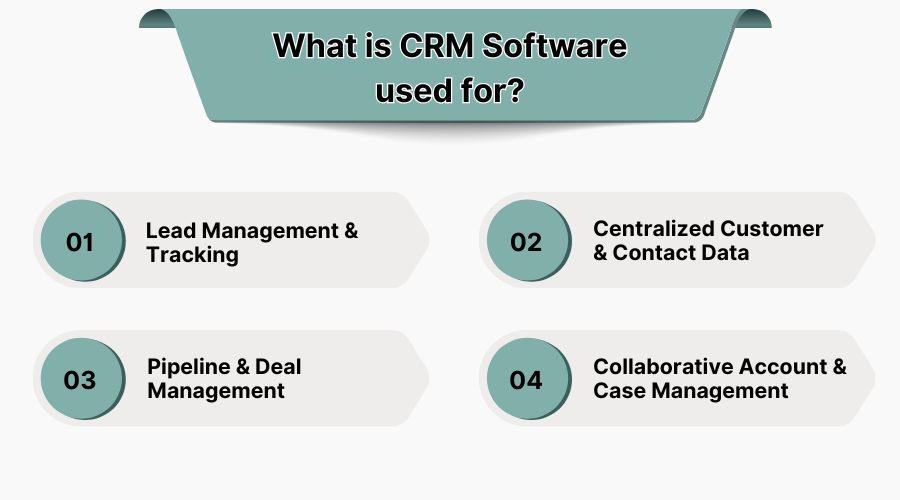
Companies use CRM software for multiple functions that span departments and customer touchpoints. Here are some key uses:
1. Lead Management & Tracking
Lead Management & Tracking becomes more efficient with advanced lead management software in the USA which helps capture, nurture, and convert leads effectively. Tracking leads starts from where they are acquired to conversion. A CRM system will automatically score leads for you, assign them to sales representatives, and keep tabs on the interactions that follow thereafter in the pipeline.
2. Centralized Customer & Contact Data
Customer profiles and contact histories are kept in one location—this helps in making communication better and reducing any possible redundancies. With real-time accessible data, this would make sure there is better coordination, plus the fact that the response will be quicker.
3. Pipeline & Deal Management
Sales pipelines help track the advancement of deals and visualize revenue forecasting. Drag-and-drop boards with CRM platforms offer probability tracking and providing real-time updates, which allows for better prioritizing actions to close deals.
4. Collaborative Account & Case Management
Being able to have multiple people working on managing cases, allocating tasks related to case resolution, and keeping track of whether tasks are resolved or not within a CRM app, so that queries are handled and also kept for future reference on that customer, proper across-department teamwork is enabled.
2. What CRM Software is the Best for E-commerce Platforms?
E-commerce CRM has a real need for Online Store Integration with features like real-time analytics, customer segmentation, and seamless integration with online stores. Here are Key features to consider :
1. Real-Time Customer Insights
They track browsing behavior and purchase history plus engagement metrics. All this is used to create personalized product recommendations and marketing to the customers; this ultimately leads to higher conversion rates.
2. Marketing Automation
Tying into what’s in stock and orders makes sure numbers are right and things move well. This cuts down on mistakes with orders and makes shoppers happier. Companies looking at different customer relationship tools need to put first easy online selling links.
3. Inventory and Order Tracking Integration
A link to the inventory and order management systems will upload the stocks and make the deliveries more accurate and also reduce the time taken. This will reduce the errors in orders and make the clients happier. Companies that check different types of customer relationship management software must choose easy online sales connections.
3. Conclusion
CRM software plays an important role in modern business operations by enabling better customer engagement, streamlined workflow and increased sales performance. With several CRM tools available in the market, the operation of perfect CRM comparison helps identify the most appropriate solution. Whether you want to lead more efficiently or offer personal service, it is necessary to invest in the right CRM system for permanent development. Companies should compare CRM programs regularly and adapt to new trends to maintain a competitive advantage. A well-used CRM platform is not just a software tool. It is a strategic feature that increases customer satisfaction, loyalty and revenue.
4. Related Article CRM Software
- CRM Features B2C Companies Use to Build Stronger Loyalty
- Best CRM System for Recruitment: Features, Benefits & Tools
- What to Look For in a Sales CRM For Your SaaS Startup (Insights From Founders)
- Choosing the Right CRM Integration Tool for Sales Teams
- Integrating AI with CRM: Future-Ready Solutions for USA Enterprises
- From Local to Global: Best CRM Software for US Companies
- The Rise of AI in CRM: Transforming Customer Relationships in USA
- Cost-Benefit Analysis of CRM Software for USA Companies
- Why Do You Need CRM Software for Real Estate Business?
- What is the CRM Experience, and How Does It Contribute to Better CX?
- Transform Your Real Estate Business with CRM Software
- Top 10 Customized CRM Solutions for 2024
- The Role of CRM Software in Effective Lead Prospecting
- What Features To Look For In CRM Software?
5. Criteria for Selecting the Right CRM Software
Choosing the right CRM system requires a strategic method that fits your business goals. The solution you have chosen needs to strengthen your groups, streamline workflows, and provide long-term scalability. Below are critical elements to consider:
1. Ease of Use
A simple and easy interface guarantees quicker adoption by different departments. If a system is very complex, then the employees will not use it and hence undermine the benefits. Look for CRM tools that offer help in the introduction, show information on dashboards, and have easy features. Training and customer support should also be made available to help in implementation.
2. Customization Options
Every business has unique needs; therefore, the CRM system has to be flexible enough to fit different workflows and various requirements within different industries. More abilities to add custom fields, modules, and automation workflows will increase the level to which the system can align with the business operations. Companies that compare CRM systems should give priority to the platforms that offer high levels of customization.
3. Integration Capabilities
A good CRM should be able to integrate without any problems with the existing marketing automation software, email platforms, accounting tools, and help desks. This not only streamlines the processes but also helps make the data consistent. Companies should look at how easy the CRM software is to hook up to other platforms so that data flow is efficient.
4. Cost and ROI
Cost is one factor that plays a big role in CRM. The use of implementation cost along with training support and upgrade costs, besides the license fee. The evaluation of costs and ROI is becoming more efficient with billing system software that streamlines financial operation and increases profitability. Making a CRM software comparison helps to see the value versus the investment.
5. Scalability
Choose a CRM platform that can evolve with the growth of your business, beginning with the basic features that a startup company may need. Eventually, as the firm develops and more advanced automation, analytics, and integration are required, increasing enterprises might need those features. In this regard, the phased investments would align with the growth of the business as well.
6. Benefits of CRM Software
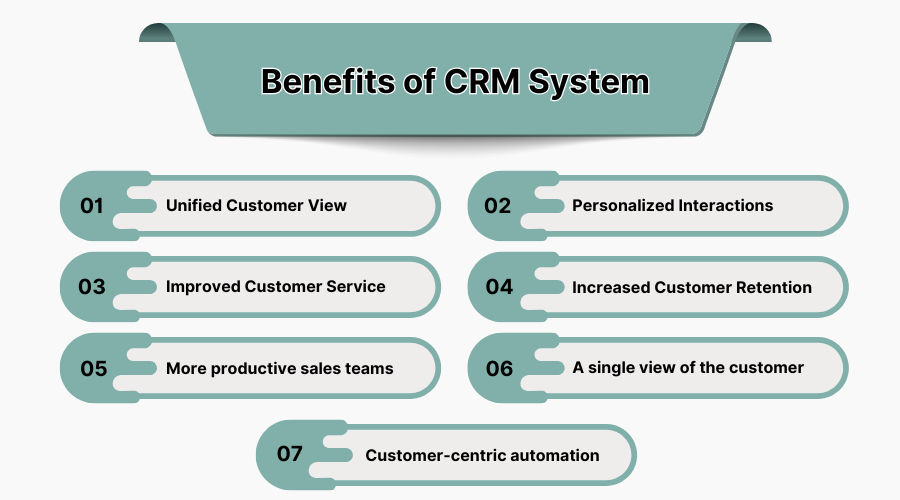
A CRM platform gives companies a powerful way to control consumer relationships and streamline sales tactics. It allows groups to get admission to real-time purchaser statistics, tune interactions, and automate repetitive obligations for more performance.
1. Unified Customer View
A CRM platform puts together data from many different points of contact and makes a single profile for each customer. This includes what and how they bought, logs of all communication, their preferences, and interactions. A view that is so complete helps teams to understand who the customers are and to respond in a proactive way to their needs.
2. Personalized Interactions
The detailed insight into any customer's behavior helps the team to adapt to the marketing and support strategies. This is because CRM tools allow for division and targeted messages, which further promote engagement and conversion frequency. In the long term, this customer promotes loyalty.
3. Improved Customer Service
Having benefited customer service agents with centralized data access, it helps to manage faster response and accurate solutions. Better customer service can be obtained through the best marketing automation software for small businesses, enabling personal communication and fast response time. The CRM software uses an automation feature to track and resolve support requests more efficiently, thus leading to higher customer satisfaction scores.
4. Increased Customer Retention
Timely follow-up, loyalty programs, and content-oriented personalization help in retaining relationship strength with the customers. The predictive analytics throws the at-risk customers up on the board so that the business can re-engage with them before the churn. Retention strategies become more proactive as well as measurable.
5. More Productive Sales Teams
This would thereby enable the sales representatives to be more focused on closing leads rather than the activities being performed by them manually, providing them with task reminders and sales forecasting which would eventually lead towards an increase in efficiency. And then, teams compare CRM Programs around them, focusing on the availability of real-time updates and the degree of automation to empower sales productivity.
6. A Single View of the Customer
A unified record of customer interactions allows more coherent marketing and sales strategies. Every hand that is a part of the team touches the same piece of information, which means that there is more coordination and consistency across departments. This breaks data silos.
7. Customer-Centric Automation
It saves time to use the automation of email sequences, task assignments, and reporting. The CRM system automates customer journeys while preserving the human touch. This helps keep valued customers at every step.
7. Features of CRM Software Comparison in USA
Conducting a CRM tools comparison is vital when choosing the appropriate tool in the market of the USA. Business requirements in the USA are for comprehensive, scalable, and easy-to-use solutions. The following features are typically key in any CRM comparison:
1. Contact management
This is what begins any CRM program. It helps you input, watch, talk, and history in one spot. Seek smart contact sort, labels, and file-building options. In small business contact management, companies can build stronger relationships and increase customer retention. Linking with social sites and business folders provides better data detail.
2. Lead Management
Capturing and scoring leads and then nurturing them through the sales funnel is important. The CRM system should also be able to automatically route leads as well as track pipeline stages and do so with real-time updates. Custom criteria should define the quality of the lead as well as responsibilities.
3. Opportunity Tracking
Sales representatives can easily monitor deal progress and expected revenue through robust features of opportunity management. In the decision-making process, visualization tools like Kanban boards and dashboards help greatly. Tracking performance against KPIs—these are features that help teams.
4. Email Integration
Email as a very important channel of communication. Online CRM Software Platforms that work with email services, such as Gmail and Outlook, ensure better tracking of engagement. Templates, bulk emailing, and analytics features will help improve campaign outcomes.
5. Managing Documents
Files such as agreements, offers, and payments can be kept and sent right from the CRM software. Check for versions, safe sharing, and trails, make sure rules are followed and everything is clear. Tools for e-signature that connect right into it make approvals simpler.
6. Workflow Automation
Workflows that are set up save time and cut mistakes made by hand. From giving out jobs to making reports, it helps run things well. Companies that look at different CRM software need to check how much help with automation comes with it and how easy it is to set up.
8. Latest Market Trends in Compare Customer Relationship Management Software
CRM software landscape continues to develop with changed new technologies and customer’s expectations. When comparing CRM systems or detecting new implementations, businesses should be updated on the latest trends.
1. Cloud-Based Solutions
Adoption of cloud provides flexibility, remote access and cost-effectiveness. Companies of all sizes now prefer cloud-based CRM platforms due to the low costs of infrastructure and easy scalability. Cloud-based sales tracking solutions provide easy access to sales data anywhere and anywhere.
2. Omnichannel Customer Engagement
Customers also interact on e -mail, chatting and social media as well as phones. A modern CRM system ensures easy connection by integrating all communication channels. This supports tracking and faster issue resolution.
3. Customer Data Platforms
The platforms bring together data from multiple sources to create accurate, real-time customer profiles. CRM tools with CDP capabilities make for hyper-personalization. Businesses can analyze behavior trends and forecast demand.
4. Social CRM
This feature links CRM to social media platforms, capturing mentions, comments, and feedback. It allows real-time engagement plus monitoring reputations. A CRM system with social listening has tools for a holistic customer view.
5. Low-Code/No-Code CRMs
These provide tools for non-technical users to personalize workflows and features without any code. It decreases the reliance on IT teams plus brings speed to innovation. Companies that compare CRM tools must evaluate the presence of drag-and-drop builders.
6. Mobile CRM
A CRM platform with dedicated mobile apps that work offline is meant for sales reps and support teams. Traits like voice-to-text and mobile dashboards can throw weight behind the field.
7. Emerging Trends
CRM with voice, AR demos, and Blockchain for secure deals is the new set of tools for managing customers. Companies that want to choose a CRM system should know about these for readiness to use such solutions in the future.
8. AI and Automation
Artificial Intelligence Revolutionizes CRM. Predictive analytics, chatbots, and automated data entry have a major effect on the CRM environment. AI‑in‑CRM segment is on fire, rising from $8.09 billion in 2024 to $11 billion in 2025, with a whopping CAGR of - 36%. This results in smart decision-making processes based on customer behavior with recommendations for the next best action. Automation also helps create and distribute a personal customer on multiple channels.
9. How Does a CRM Software Work?
CRM software is what collects stores and manages all information related to customers from any touchpoint. This data is then processed to provide actionable insights and to make sure that an automated workflow is triggered. In this new setup, sales teams will be able to track lead journeys, and marketing teams will be able to segment customers and send personalized campaigns.The online crm tool unites collaboration by ensuring all departments have shared access to the same information. Third-party tool integrations such as email platforms, calendars, and analytical software highlight a seamless environment. Reminders and task assignments are made automatically so that nothing is missed. Basically, a CRM platform aids in making better customer interactions, improves service delivery, and promotes revenue growth.
10. How to Choose the Best CRM Software Comparison?
The best CRM tools comparison approach involves a mix of strategic evaluation and practical analysis. Consider if you require sales-focused CRM software, a marketing-based solution, or an all-in-one system. First, list core features such as contact management, analytics, integrations, and mobile access. Perform CRM solutions comparison by assessing the shortlisted platforms based on usability, scalability, and pricing.Priority should be given to platforms that offer robust support, training resources, and regular updates. The success of CRM adoption is going to depend more on ease of implementation and the adaptability of teams. When you compare CRM systems, focus on long-term value and return on investment.
11. See How CRM Software Can Grow Your Business
Implementing CRM software will change the way you do things with your customer relationships. It will automate every activity, help in team building, and give some intelligence that will help increase efficiency.As you grow, the use of CRM grows with you. Everything from increasing the sales force to starting a new marketing campaign can be an added implementation of the strategy. A reliable business management solution helps to streamline operations, promote productivity and improve general efficiency. The companies that regularly compare CRM systems come to know about the opportunities to streamline their workflow and improve customer satisfaction.
12. Five Best CRM Software in USA
From possible leads to action on workflow, the top CRM software solutions enable firms to make their operations more effective and increase customer content. Below are the most important CRM equipment known for its performance, functions and user-friendly interfaces in the USA.
1. HubSpot
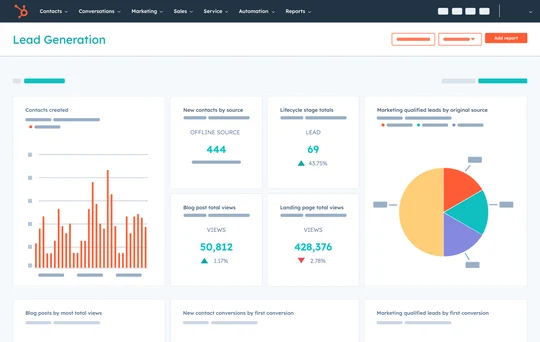
HubSpot is very simple to use, with strong marketing tools. It helps with sales and marketing, along with customer service and content for small businesses. It has a lot of features for free, with plans you can pay for as you grow.
Top Features:
-
Contact and lead management.
-
Built-in email marketing tools.
-
Live chat and chatbot integration.
-
Deal tracking with sales pipelines.
-
Reporting dashboards and task automation.
Pros:
-
Free plan with essential features.
-
Easy to use with quick setup and clean UI.
Cons:
-
Limited customization in lower-tier plans.
-
Advanced reporting requires higher-tier plans.
Pricing : Starts at US$9/month/seat.
2. SalesForce
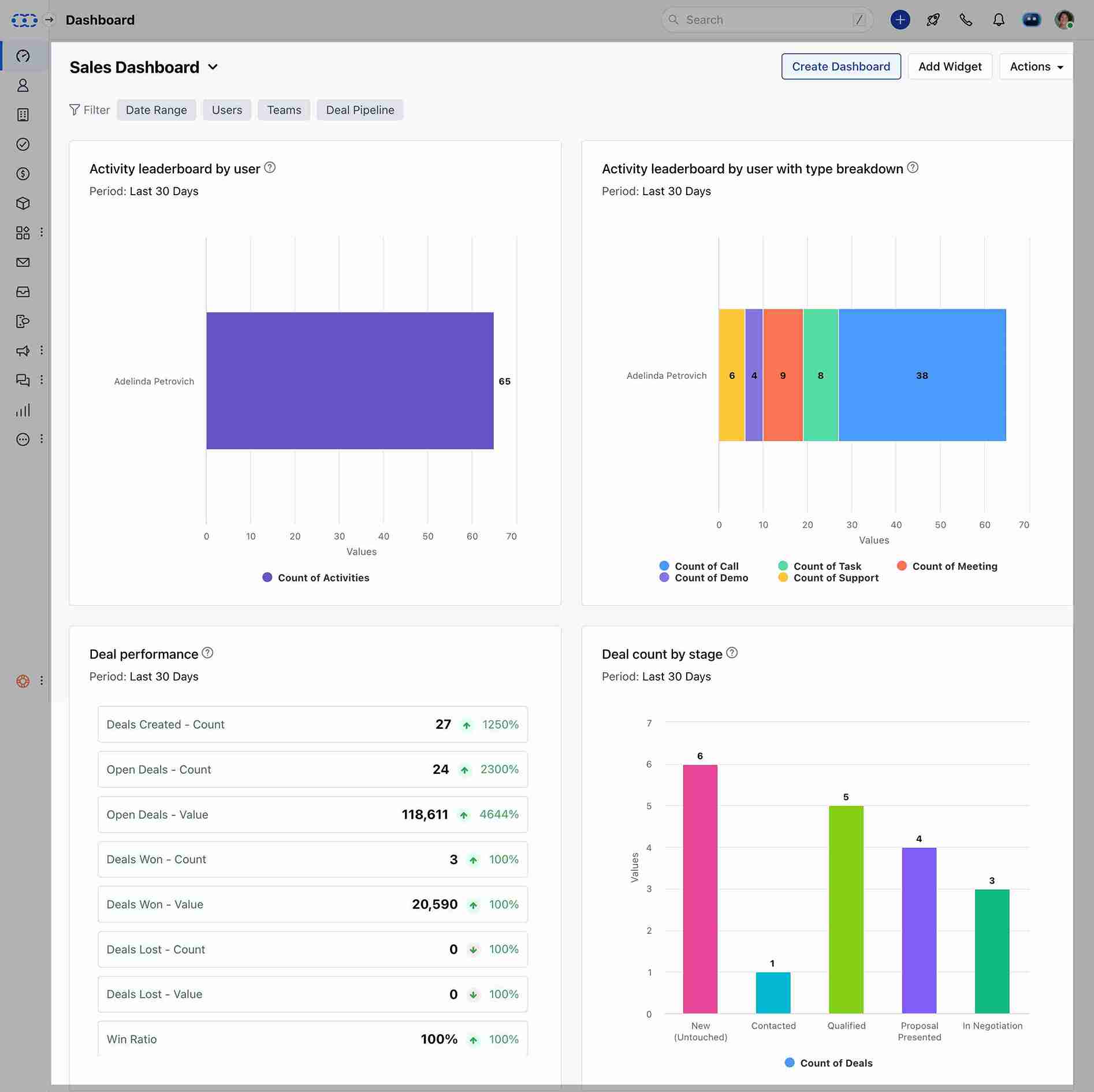
Salesforce is one of the leading enterprise-grade CRM solutions that has been designed for scalability and deep customization at every level. The tools available for sales and marketing are quite comprehensive, and they also offer features for analytics and customer service from AI-driven insights that are to be found in AI. Global companies choose this solution because of its flexibility and the strong integration that it offers with other available systems.
Top Features:
-
Advanced contact and opportunity management.
-
AI-powered insights via Einstein Analytics.
-
Customizable workflows and automation.
-
Omnichannel customer service tools.
-
AppExchange marketplace for integrations.
Pros:
-
Scalable for any business size with extensive features.
-
Highly customizable with strong third-party app ecosystem.
Cons:
-
Complex setup; may require professional implementation.
-
Expensive for small businesses.
Pricing: Visit the website and get a quote for custom pricing.
3. PipeDrive
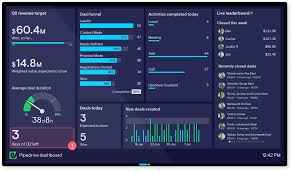
Pipedrive is a sales-centric CRM solution intended for small to medium businesses, equipped with an intuitive system for managing pipelines, thus helping sales teams keep an eye on deals as well as automating their repetitive tasks.
Top Features:
-
Visual sales pipeline management.
-
Deal rotting and activity reminders.
-
Sales automation and email tracking.
-
Reporting dashboards and custom fields.
-
Integration with Google Workspace and Microsoft tools.
Pros:
-
Extremely easy to use and navigate.
-
Affordable and ideal for small teams.
Cons:
-
Limited marketing automation.
-
Lacks deep customization for enterprises.
Pricing: Starts at US$14 per seat per month, billed annually.
4. Zoho CRM
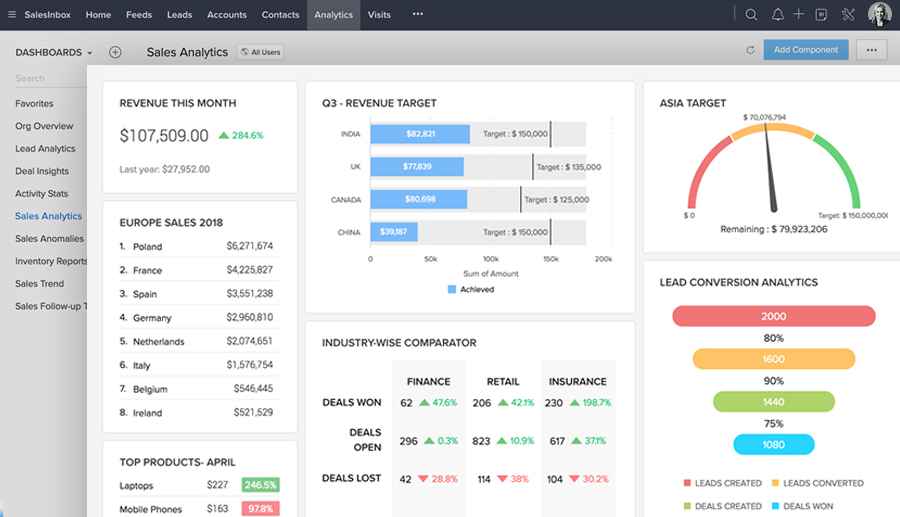
Zoho CRM presents a low-cost, internet-based approach to sales, marketing, and customer service management, comprising flexible communication solutions, AI-based analysis, and process automation, plus being very in demand among startup businesses and SMBs for being both cost-effective and flexible.
Top Features:
-
Multichannel communication (email, phone, chat, social).
-
Sales automation and AI analytics with Zia.
-
Custom modules and workflow automation.
-
Real-time reporting and KPIs.
-
Integration with 45+ Zoho apps.
Pros:
-
Affordable with a wide range of features.
-
Great for small to medium businesses.
Cons:
-
Interface can feel cluttered.
-
Customer support response times can vary.
Pricing : Starts at USD$ 92 User/Month.
5. Microsoft Dynamics 365
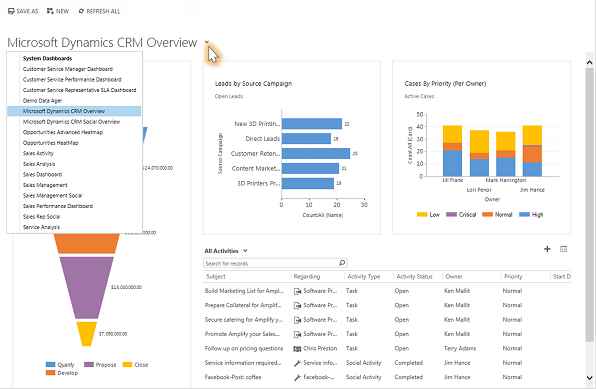
Microsoft Dynamics 365 is an all-in-one business administration platform that integrates the operation of CRM and ERP functions, improves customer relationships, and integrates drives growth. With severe automation, real-time analysis and cloud-based flexibility, it provides companies the ability to make smart, data-driven decisions.
Top Features:
-
Unified CRM and ERP capabilities.
-
Real-time customer insights with AI.
-
Lead scoring and sales forecasting.
-
Deep integration with Microsoft apps (Outlook, Teams, Excel).
-
Role-based workflows and automation.
Pros:
-
Comprehensive platform for large-scale businesses.
-
Seamless integration within the Microsoft ecosystem.
Cons:
-
Complex interface with a steep learning curve.
-
High initial setup and subscription costs.
Pricing: Visit the website and get a quote for custom pricing.