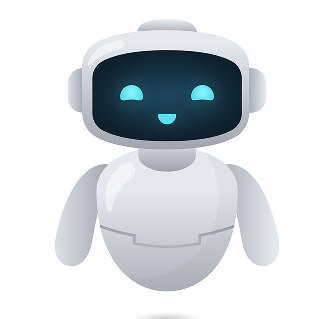
Best AI Recruiting Software for Business
AI Recruiting Software helps businesses and organizations streamline their operations using advanced AI-powered technology. It automates complex tasks, improves accuracy, and provides data-driven insights to enhance productivity and decision-making. With features like automation, real-time analytics, workflow management, and seamless integrations, AI Recruiting Software enables teams to reduce manual work, save time, and improve overall efficiency. On SoftwareAdviser.ai, you can explore, compare, and choose the best AI Recruiting Software solutions that fit your business needs and help you scale faster with the power of AI.
 Researched and Written by Akash Patel
Top 3 Featured Softwares

List of 20 Best Recruiting Software for your business | Get A Demo, Pricing & Reviews
Get Free Consultation


SaneForce Payroll Software is a part of SANeForce HR & Payroll Solution. All things your business needs for a smooth hassle-free pay run. SANeForce payroll includes e...
View Profile

Product-driven IT organizations may find and hire excellent talent with the aid of StaffGrabbers. Our company has offices in Boston and San Francisco, and we collaborate with busin...
View Profile

Never again will you spend money or effort on conventional hiring techniques. You may get rid of expensive placement costs by using Fingerhut Recruiting. With our specialized hourl...
View Profile
We are a recruitment and workforce solutions staffing firm driven to achieve the best level of customer satisfaction to inspire development in our customers' companies. We are moti...
View Profile
vSource

VSource Talent Home - VSource
What is vSource?vSource is an AI-powered talent sourcing platform designed to streamline and enhance the recruitment process for talent acquisition teams and recruiters. By...
View Profile
NxtWave
Fastest Way to HireJob-Ready Developers at Zero Cost
NxtWave is an innovative edtech platform designed to bridge the gap between academic knowledge and industry skills, specifically in the tech domain. It offers industry-relevant...
View Profile

epay Systems
Your Workforce Is Our Business
EPAY Systems, a PrismHR Company, is a leading SaaS provider of human capital management technology and services designed to help medium to large businesses better manage t...
View Profile

Premiervirtual
Your Event Your Logo Your Branding
The Premier Virtual platform allows agencies to transform their hiring into a unbroken virtual method. Our all-in-one virtual recruitment suite will give you the power to host...
View Profile

What is Freshteam?Freshteam is a smart, all-in-one HR software designed primarily for growing businesses. It helps organizations manage their entire employee lifecycle, from at...
View Profile

factoHR is a cloud-based Human Resource Management System (HRMS) designed to streamline and automate HR, payroll, and workforce management processes. It provides businesses wit...
View Profile

recruitRyte is an innovative artificial intelligence (AI) sourcing solution designed to revolutionize and optimize the hiring processes of companies.
View Profile
SpringRecruit
By SpringRecruit
The SpringRecruit software is a platform that allows you to visualize your recruitment processes with a better career page. You can send tests to candidates at different stages of ...
View Profile

APS Payroll is a cloud-based payroll and human capital management (HCM) software designed to help businesses streamline payroll processing, tax compliance, HR functions, and workfo...
View Profile

At Giig, we're building a Recruitment Platform for Independent Recruiters and Small Recruitment businesses:
View Profile

Workplus HCM is a cutting-edge, cloud-based HR software designed for businesses in Dubai, UAE and wider Middle East. Our all-in-one solution stre...
View Profile

Robert Walters
Let's take a closer look at your future
What is Robert Walters?Robert Walters is a leading global recruitment consultancy established in 1985, renowned for connecting skilled professionals with top-tier employers acr...
View Profile
Sterlingcheck
Leverage data + tech + experience to Hire Smarter and Onboard Faster.
Sterling, now a First Advantage company, offers comprehensive background and identity verification services designed to support organizations in making informed hiring decis...
View Profile

Worksuite
Onboard, Classify, Manage and Pay Your Contingent Workforce
Worksite is a cloud-based total team of workers management and project collaboration software designed to assist corporations in successfully manipulating freelancers, contractors,...
View Profile

AgileHRO
Grow Global with the leading Global EOR and Payroll Expert
Agile HRO is a comprehensive global employment platform designed to assist businesses in managing their international workforce seamlessly. It offers a suite of services inc...
View Profile

Lano
Building the future
of global payroll
Lano is more than just a global payroll and compliance platform. Our team is working tirelessly to transform global payroll and HR management to help businesses succeed. Lano's...
View Profile
Table of Content
In today’s highly competitive labor market in the US, finding top talent goes far beyond simply scanning resumes; it requires quickness, accuracy, and a great candidate experience. This buying guide will assist those responsible for recruiting and hiring talent in the United States through the dense, confusing world of AI-powered recruiting software and tools. If you’re looking to automate your high-volume prescreening process, reduce the impact of unconscious bias during interviews, improve how your organization schedules interviews, or all of them at once, there is a right AI solution that can turn your hiring bottleneck into an advantage over competitors. We will provide an overview of important features, compliance with EEOC regulations, and ROI metrics to help you select the right solution for your team.
1. How AI Recruiting Software Works?
Recruiting software, such as AI recruiting, can replace traditional or human recruiting processes with automated, scaled/backed by data recruiting that transforms data into actionable insights rather than replacing the HR/human recruiting process. Use AI recruiting as an intelligent co-pilot to improve the hiring process of talent acquisition teams.
1. Finding Talent: The use of predictive algorithms, this recruiting software can review large databases, extensive professional networks, and your existing pool of applicants. A key component of the algorithm is to identify "passive candidates"; people who have not applied for a position but have a desire to apply or have the exact skills based on their demonstrated track record and behavioral characteristics.
2. Contextual-Aware Talent Assessments: The AI recruiting software uses natural language processing technology to review/resume cover letters, for example, like an actual human. They will analyze resumes and rate them using a contextual or skills- based hiring approach rather than using strictly title-based assessments. In addition, if the resume contains skills and background experience that meet the selection criteria agreed upon by the Collaborative hiring teams, they get ranked against established meritocratic-based criteria.
3. Autonomous Talent Engagement & Scheduling: Using an AI chatbot software and autonomous agents powered by generative AI technology will enable recruiters to automate and assist with all interactions with candidates prior to them being interviewed. Chatbots use both pre-qualifying surveys and respond to candidates' frequently asked questions (FAQs). In addition, they will merge and sync multiple people's calendars to reduce dropout rates for candidates.
4. Data Driven Selection Support: Using machine learning algorithms, advanced recruiting software can review historical data limitations in the hiring and candidate data process to predict what candidates are most likely to succeed and be long-term employees of your organization.
2. What should you know before Buying AI Recruiting Software?
When acquiring an AI recruitment service, AI enterprise HR software purchasers need to be made aware that the responsibility for compliance with all applicable regulations related to automated employment decisions is entirely that of the employer and not the vendor who offers the software. As such, enterprise purchasers need to perform an extensive review of both the algorithms used by vendors of the software to determine whether they employ obsolete keyword scraping techniques or have transitioned to more modern skills-based matching methodologies; additionally, the purchaser also needs to determine whether the vendor’s algorithms include “Human-in-the-loop” intervention points to mitigate against algorithm drift.
Further, enterprise purchasers must have a thorough understanding of the vendor’s technology data architecture - specifically how the vendor collects and keeps candidate profile data, the vendor's data retention policies, and whether they comply with applicable laws surrounding corporate governance to reduce the risk associated with potential long-term liability. The most important obstacle in the U.S. market is compliance with local laws and the litigation risk associated with those laws. More specifically, employers must comply with legislation enacted at the state and local levels that includes mandates to perform independent, annual third-party bias audits measuring selection rates and impact ratios in accordance with protected demographic groups. State laws such as NYC Local Law 144, Illinois HB 3773, and California FEHA regulations all require employers to conduct these audits and report the results publicly.
Companies must not only comply with federal and state employment laws but, with the advent of artificial intelligence (AI)-based automated screening tools, will now face liability for “disparate impact” discrimination in hiring under Title VII of the Civil Rights Act of 1964. Accordingly, U.S. employers should go beyond high-level marketing claims when assessing AI-powered recruiting platforms for candidates and seek platforms that provide full disclosure regarding the algorithms used to automate the selection process (i.e., “explainable AI”), and that facilitate candidates’ requesting manual, alternative selection procedures by automatically providing candidates with consent notices.
3. What Specific Recruiting Challenges are you aiming to address with AI Recruiting Software?
AI recruitment technologies aim to remove barriers to the success of talent acquisition teams in their efforts to proceed through operational, regulatory, and strategic constraints and to assist enterprise customers with mitigating legal and compliance risks associated with using automated hiring systems. The implementation of AI-based automation in standardised competency models across industries gives enterprise customers the ability to address the six critical issues in recruiting in the U.S. labour force today.
The first challenge facing employers is ensuring compliance with local, state, and federal laws governing automated employment decision tools (AEDTs) through the use of AI-based services. There are currently many laws passed at both the local and state levels, such as those in Connecticut, Illinois, and Colorado, requiring employers to comply with transparency regulations established under NYC's Local Law 144 before using automated tools to make decisions about employment. Employers using AI must ensure that their services meet these mandates by providing candidates with appropriate disclosures of their use of an AEDT in plain language, and by providing candidates with opt-out options prior to impacting their employment outcome through the use of an AEDT.
Employers have historically relied upon a very narrow definition of what constitutes qualified talent by focusing solely on historical job titles, the educational pedigree from elite universities, or strict keyword matching when conducting candidate searches. These approaches have greatly limited the candidate pool. To address the shortage of candidates with the requisite skills in today's economy, organizations will utilize AI to determine implicit capabilities from a combination of thousands of different applicable competencies and transferable skills that would have been otherwise eliminated through traditional means of sourcing from legacy systems.
Eliminating the "Black Box" liability via explainable AI in talent sourcing/hiring. The early generation of machine learning models creates severe litigation risks for companies because they lack any explanation as to why their decision-making process is transparent. By utilizing explainable AI HR professionals can derive a justified audit trail to validate their ranking, rating or rejection of job applicants. This provides documentation that is easy to produce in the event of an internal review and, further, demonstrates that any output generated using an HR Technology platform can easily be justified through compliance with their formal requirements or to external legal counsel.
Systematization of compliance to mitigate negative impact on AI resume screening under Title VII and enhance EEOC scrutiny. Due to potential liability from the utilization of resume scanning algorithms that unintentionally screen out individuals in protected classifications using biased proxy measures, employers are increasingly adopting and employing purpose-built automated impact-ratio measurement capabilities for their AI-driven tools. By utilizing such AI tools, talent professionals can better proactively monitor their respective datasets and ascertain whether an AI tool’s output creates disparate impact resulting from its applicant screening activity.
Transitioning from Fragmented sourcing processes to Holistic Talent Intelligence platforms. Recruiters typically have to spend hundreds of hours switching between multiple separate job boards, internal Applicant Tracking Systems (ATSs), and various professional networking sites for candidate sourcing. To alleviate this, many organizations are utilizing centralized talent intelligence platforms to integrate all associated external economic factors, historical applicant information, and current employee data into one source of truth. As a result, data-related issues will be more effectively addressed.
4. What Features are Essential for your Organization’s AI Recruiting Software Process?
Automated Employment Decision Tool (AEDT) compliance requirements dictate that independent audits of Artificial Intelligence (AI) capabilities must occur before "going live" with any AI application used for employment purposes. This requires the platform to include built-in, third-party auditable metrics to demonstrate ongoing calculations of selection impact ratios to avoid disparate impact litigation associated with AI-based (resume) screening.Using AI-based matching methods and intelligence enables hiring managers in the U.S. to "field" candidates based on skills rather than rigidly (i.e., keyword scanning) evaluating applicant submissions. According to a study conducted by CareerBuilder, 35% of employers surveyed stated that they want to verify the accuracy of long-term quality of hire metrics when using AI technologies to match applicants with potential employers.
To ensure compliance with U.S. federal EEO laws, as well as protect employers from federal Employment Opportunity Commission (EEOC) litigation, organizations should deploy explicitly defined "explainable" AI technologies (or "glass-box") that provide processes for providing clear and consistent audit trails (i.e., selection impact ratios and ranking methodologies) associated with every candidate ranking and automated decision. While automated agent(s) can independently source high-volume candidate outreach and scheduling, any final determination/evaluation decision must remain human-centric (i.e., true human-in-the-loop hiring software enables the recruiter to retain ultimate veto authority and eliminates the potential for algorithmic drifts that create a poor candidate experience).
5. How does AI Recruiting Software ensure Compliance with US Labor Laws and Regulations?
With U.S. labor laws at the forefront of AI recruiting software’s design, algorithmic transparency and protective guardrails are included in the hiring pipeline to create a barrier between employers and federal EEOC litigation. To help maintain an employer’s insulation from federal EEOC litigation, modern talent intelligence platforms leverage explainable AI in the talent acquisition area to provide clear, auditable justifications for each candidate’s recommendation.
This approach eliminates the legal liability of “black box” algorithms, while still allowing the human recruiters using human-in-the-loop hiring software to maintain ultimate veto authority over any autonomous suggestions. Additionally, today’s advanced platforms use a skills-based AI matching platform instead of a rigid historical pedigree filter, concentrating strictly on the objectively meritorious competencies of each candidate being evaluated to systematically reduce the chance of AI resume screening discriminating against protected demographic categories in violation of Title VII.
These platforms are configured to operate as compliant Automated Employment Decision Tools (AEDT) in order to adapt to the quickly changing state-level regulatory environment; top-tier software has built-in modules specifically for AI bias audit compliance that automatically track the selection rate and adverse impact ratio by race, ethnicity and sex. Autonomous Candidate Sourcing Agents independently crawl professional networks to scale early stage talent acquisition, while the system proactively records all engagement, issues mandatory consent notices for applicant data privacy and generates the standardised data tables necessary for annual third party public disclosures to ensure compliance.
6. What are the top AI Recruiting Software Solutions available in the US Market?
HR professionals have access to many types of technology that facilitate hiring. The two primary types of technology are traditional applicant tracking systems (ATS) and new point solution technologies.
1. Zoho Recruit
Zoho Recruit is an extremely customizable, cloud-based ATS and recruiting CRM designed for corporate Human Resource Departments or recruiting firms. It serves as an expansive talent intelligence platform that uses its proprietary artificial intelligence ("Zia") to automate high-volume administrative tasks, extract resume information, and assess applicant compatibility.
Features:
- Candidate Matching Engine: Automatically reads job descriptions, utilizes the current system to access and analyze the entire database of resumes containing details about the potential candidates, and assigns each candidate a contextual percentage-based compatibility score based on the information and job description being analyzed.
- Intelligent Resume Parser: Uses cutting-edge natural language processing (NLP) technology to break down complex resume structures into standardized, structured data fields.
Pros & Cons:
- Flexible, customizable workflows designed to model the various steps in the hiring pipeline, good connection to other apps in the Zoho software suite, can be used as an effective solution at an affordable price for small and mid-size companies.
- Configuration has a very high learning curve, and those users without a good level of technical knowledge may find it difficult to use the reporting dashboards as they become cluttered or complex.
2. Humanly Chat
Humanly offers a compliant-focused AI conversation platform to aid in hiring efforts by reaching out to people already in the applicant pool and connecting them with potential employers through text, web chat, SMS, and video chat. The platform's primary purpose is to provide elite human-in-the-loop hiring software to optimize the beginning stages of sourcing candidates, screening candidates, and managing interview appointment scheduling with candidates.
Features:
- Autonomous Agent: The program can run 24/7 with web, SMS, and video chat agent support to provide responses to applicant inquiries, administer pre-screening questions, and book applicant interviews automatically.
- Structured Interview Analytics: You can use the platform's generative AI capabilities to listen to a live interview being conducted by your staff and create an objective summary scorecard for each candidate based on their responses during the interview process.
Pros & Cons:
Delivers a great experience for candidates, resulting in fewer candidate withdrawals; extensive review for legal compliance purposes to minimize the negative effects of using AI resume screening as a means of making employment decisions.
The cost of using a premium custom enterprise product can be expensive; this product functions like an additional layer of software to the traditional end-to-end ATS only.
3. VidCruiter
VidCruiter offers complete Interview Management Systems (IMS) to help companies scale and incorporate structure, equity, and remote work into their hiring processes. The goal of the platform is to provide a more structured, fair, and auditable method of interviewing through the use of automated videos and testing.
Features:
- Ethical AI Assessments: VidCruiter’s ethical AI filters out biases by providing assistive tools to automate conducting transcriptions of interviews, as well as detecting fraud in real time using secure systems of video recording and uploading and managing the standards of grading interviewees.
Pros & Cons:
- Assistance in providing structured audit-compliant scoring through the use of only standardized procedures and checklists.
- No transparent pricing without custom quoting that is often lengthy. Deeply customized administrative business processes may take extended periods of time for completion of the corporate onboarding process.
4. Manatal
Manatal is an advanced cloud-based recruitment solution specially designed for small to mid-sized businesses (SMBs) and fast-growing recruiting companies that are trying to attract talent. Manatal uses a unique skills-based AI (artificial intelligence) matching process that relies heavily on using social media to find and assess candidates and has a very user-friendly user experience.
Features:
- AI-Based Recommendation Engine: Continuously compares active job postings to find candidates within their candidate ecosystem so they can suggest candidates that may have been overlooked.
- Social Sourcing Enrichment: Automatically searches publicly available sites (LinkedIn, Facebook, GitHub) for professional profiles to turn standard candidate resumes into detailed candidate profiles (talent intelligence).
Pros & Cons:
- Extremely simple, easy-to-use drag-and-drop interface makes it nearly impossible not to know how to use Manatal with absolutely no (or almost no) recruiting experience or training; entry-level pricing options are very affordable.
- Manatal does not offer any built-in advanced testing capabilities (i.e., limited options to do an embedded candidate video interview or skill test). Manatal's ability to customize enterprise-level reporting is limited.
5. Workable
Workable is an all-in-one Hiring platform for Growing Mid-Market Companies throughout North America and has become the recruiting powerhouse for Thousands of companies that use Workable's internal candidate database and automated candidate sourcing.
Features:
- AI Profile Generation: Instantly source from a built-in database of over 400 million profiles and automatically fill the pipeline with passive candidates as soon as a new job is posted.
- Explainable AI: Transparent Assessment Analytics, and Automated Screeners provide a clear and credible basis for short-listing candidates based on Objective Academic Metrics
Pros & Cons:
- Seamless multiboard job syndication across 100+ unique website portals in less than one click; highly collaborative group hiring scorecards across departments.
- The fixed size of the Automated Screening options may make them feel too rigid for complex, Executive headhunting; relatively advanced plan upgrades are necessary to customize the analytics.
7. What is the Implementation Process for AI Recruiting Software, and what Support is provided during Onboarding?
Talent intelligence integration with technical data architecture involves engineering to connect the software to the organization's existing applicant tracking system (ATS) and human capital management (HCM) systems so that all are operating from one unified talent intelligence platform. This process includes preparing a plan for how user data will flow securely throughout the various technology stacks and configuring multiple autonomous candidate sourcing agents for the secure parsing of historical applicants, while not interrupting current hiring pipelines.
Algorithmic calibration and skills-based matching configuration involve the collaboration of data scientists and AI HR software leaders to set the system up as a skills-based AI matching platform based on objectively measured and transferable competencies, rather than by creating historical models that may favor specific demographic groups and potentially create a disparate impact with AI resume screening in the future.
Compliance configuration for AEDT and bias auditing ensures that the platform is created as a legally compliant automated employment decision tool (AEDT) in order to be in compliance with strict regulations across the United States. Onboarding specialists create the data logging workflows that will be needed to comply with the required annual AI bias audit, and also include applicant disclosure forms and manual opt-out options in the candidate portal.
Recruiter Training and Explainable AI Guardrails talent acquisition teams receive specialized onboarding training to utilize and understand the transparency dashboards of the platform. Through utilizing Explainable AI in talent acquisition, recruiters are able to verify the precise, mathematical reasons why candidates received a specific rank. The Internal team members will also be able to confidently support their hiring decision when being audited for compliance with laws administered by the Equal Employment Opportunity Commission.
8. What is the Total Cost of ownership for AI Recruiting Software, including Licensing, Training, and Maintenance?
In order to appropriately evaluate the TCO (Total Cost of Ownership) of enterprise-level AI recruiting tools systems in the United States, you must evaluate beyond the initial SaaS subscription fee. Software license fees for software organizations (mid-market to enterprise) typically use a tiered seat-based pricing model (or consumption-based pricing model) based on the total number of employees/drive attendance to the event. A Licensed Software System can cost anywhere from $30,000 to more than $150,000 U.S. annually. However, your actual long-term investment will depend upon how well you are able to financially allocate your ongoing infrastructure changes needed to implement AI recruiting technology into your overall tech stack.
Examples of infrastructure changes include: developing data engineering pipeline connections to your legacy ATS, developing custom API integrations between your recruiting software system and other lines of business applications, and developing autonomous candidate sourcing agents to continuously scan for qualified candidates both on external networks and within their own company's talent pools. Human Capital Expenditures incurred during the onboarding/training phase cannot be negotiated and are paramount in reducing corporate liability. In the U.S., businesses must also invest in a comprehensive workforce enablement program to train their Talent Acquisition (TA) teams on how to manage the human-in-the-loop style hiring software used for AI recruiting.
Recruiters must learn to read the transparency dashboards created using explainable AI and understand the underlying scoring metrics used to generate the output, as opposed to simply trusting what the machine generates. During this change management period, the technical alignment of a Skills-Based AI Matching platform due to the implementation/training associated with the change often has an estimated upfront cost to add a premium of $15,000 to $50,000 to implement a defensible oversight of TA. Another accelerating factor for the total cost of ownership (TCO) for AI Recruiting in the United States is the Long-Term
The greatest portion of TCO Colombia for AI recruiting is for ongoing Maintenance/Recurring Compliance costs. With a tighter legal framework, more than 50% of U.S. states now require some form of algorithmic oversight. Therefore, platforms must comply with the definition of being an Automated Employment Decisions Tool (AEDT), meaning they must maintain compliance with.
Employers have additional legal/financial obligations as they are required to contract out with an independent, third party to perform an annual AI Bias Audit on their platform in order to maintain AEDT compliance. Pricing ranges from $5,000 for simple screeners and upwards of $50,000 for comprehensive multi-system ecosystems. The ongoing cost of performing algorithmic adjustments to prevent model drift will be the iterative execution of algorithms and subsequent inference costs from cloud compute environments.
9. Conclusion
The competitive environment of U.S. hiring demands a careful balance between an ever-increasing and faster pace of automation and meeting the requirements of regulatory compliance. When purchasing an AI Recruiting platform, enterprise buyers should focus on evaluating vendors that provide a clear compliance framework, an objective basis for matching merit, and definitive human involvement, rather than just relying on the vendor's marketing materials for their source of information. By utilizing softwareadviser.ai, you can gain a more efficient way to find, review, and acquire vetted vendor procurement solutions, helping to ensure you protect your organization from potential legal exposure. Software adviser is a business-to-business website designed to give businesses the ability to make informed business decisions about the use of SaaS technologies for their workforce through comprehensive comparisons and trusted resources for purchasing risk-resilient SaaS solutions.