
With the growth of digital progress, cyber threats have never been more prominent in the modern world. From huge data breaches to ransom attacks on the operational capacity of organizations, threats can take many forms. This has thus brought the importance of vulnerability management to the organization’s defense systems. An easily readable guide that covers the basics of what vulnerability management is, its importance, processes and tools, and best practices, as well as what to expect in 2025.

Looking for Vulnerability Management Tools? Check out SaasAdviser’s List of Vulnerability Management Tools.
In this blog, we discovered large components and equipment for vulnerability management, broke down the main steps, and shared the best practices proven to help you manage security risk effectively.
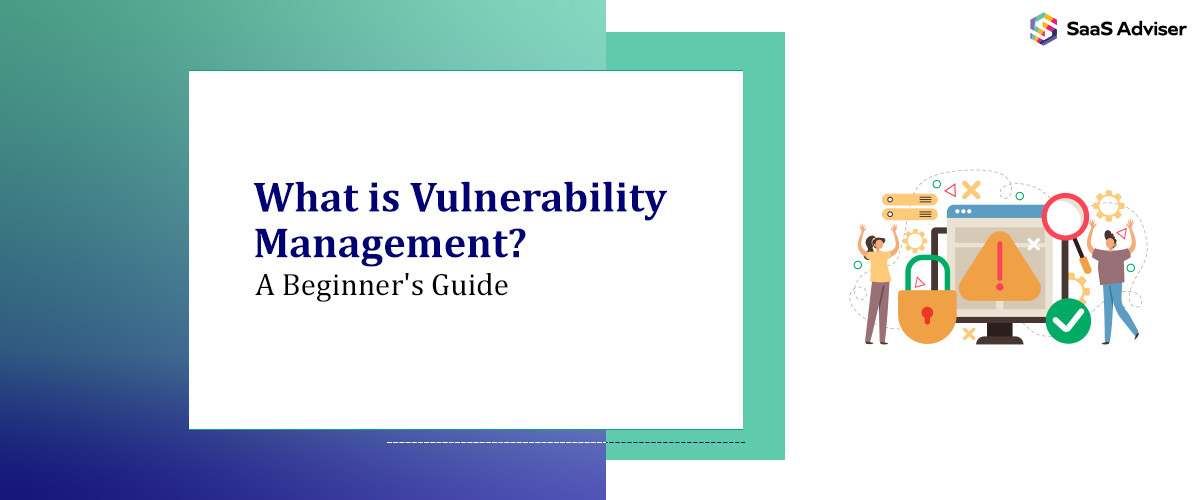
What is Vulnerability Management?
The ongoing procedure of locating, evaluating, ranking, and fixing vulnerabilities in IT assets, such as network equipment, servers, apps, and analytics, is known as vulnerability management. By addressing the security vulnerability before assailants make use of it, the organization's exposure to such challenges is intended to be reduced.
This method is cyclical and incorporates real-time scanning, submitting, and repairing as part of a systematic security policy, in contrast to brief vulnerability testing.

Did you know?
That incorporating threat and vulnerability management into DevOps (DevSecOps) can reduce security flaws by up to 50%.
Understanding the Fundamentals of Vulnerability Management
At its heart, Vulnerability Management is not only about resolving issues. It is about establishing a repeatable, scalable, and automated process to be able to prioritize vulnerabilities effectively. It covers the recognition of vulnerabilities via scanners, vulnerability assessment, risk assessment based on vulnerability analysis, and then application of patches or fixes through vulnerability remediation.
The first step is to scan everything in networks, applications, and devices to find weaknesses. After this, a check is done to decide how bad and risky each vulnerability is. Only then can a company apply patches, updates, or configuration changes and decrease its threats by building up its general security stance. Vulnerability in cybersecurity refers to any weakness in a system, application or network that can be utilized by the attackers to obtain unauthorized access or cause damage.
This whole process makes sure the vulnerability management system of th Vulnerability in cybersecurity e organization operates in a proactive way, not a reactive one.
Why is Vulnerability Management Crucial in Today's Digital World?
Increasing digitization and remote work have led organizations to deploy more assets in the cloud and hybrid environments. This, in turn, expands the cycle of vulnerability within the systems to the emerging cybersecurity threats.
The absence of a structured vulnerability management program escalates the possibility of a data breach, financial loss, and compliance violation for an organization. On the other hand, the adoption of a complete vulnerability management plan should enable businesses to quickly discover the actual existence of security and vulnerability gaps and take effective action.
The Core Stages of the Vulnerability Management Process
The vulnerability management process is an ongoing endeavor that evolves with your network's infrastructure rather than an intermittent trend. This involves the primary conduct listed below:
1. Vulnerability Identification: Uncovering the Weaknesses
In the first place, it means finding all digital assets within the organization and scanning them with the help of automated tools known as vulnerability scanners; these, in turn, will show you the weaknesses, such as outdated software, systems that need to be patched, or misconfigurations. This stage also conducts a security vulnerability assessment where scanners peruse the security standing of each asset.
2. Vulnerability Assessment: Prioritizing the Risks
Once you have determined the weaknesses, the next step is to check the severity level. This includes vulnerability analysis using a general vulnerability scoring system (CVSS) and other industry-standard scoring systems. All vulnerabilities do not pose a similar threat. Therefore, risk-based vulnerability management becomes important to ensure proper focus, such as handling the most critical risks first.
3. Vulnerability Remediation: Addressing the Issues
Focus moves to fixing, applying patches, updating, or reconfiguring systems or software based on prior identification of vulnerabilities within the systems. Where it is not possible to lead, molding strategies such as networking departments and access control are used. Effective vulnerability remediation ensures that weaknesses for attackers do not form gateways.
4. Vulnerability Reporting and Tracking: Maintaining Visibility
Transparency proves itself in Vulnerability Management. Reporting tools track the state of resolved or unresolved issues after remediation; therefore, they help in audits and regulatory compliance. It is in the Vulnerability Management platforms that play an important role in centralizing data to see and control better.
Did you know?
Using risk-based vulnerability management helps reduce alert fatigue by focusing only on high-impact issues.
Key Components and Tools in Vulnerability Management
The tools and platforms play a significant role in a strong vulnerability management lifecycle. Some essential components are:
1. Vulnerability Scanners: Automating the Identification Process
Nessus, Qualys, and OpenVAS scan the enterprise to find known vulnerabilities automatically executed by the environment. These play an important role in identifying both internal and external security vulnerabilities.
2. Penetration Testing: Simulating Real-World Attacks
Testing for penetration identifies hidden flaws by analogizing the truthful hacking process, whereas scans just highlight existing vulnerabilities. Thus, it validates the vulnerability management system.
3. Vulnerability Management Platforms: Centralizing Control
The Rapid7, Tenable.io, and Microsoft Defender platforms for threat and vulnerability management give a centralized dashboard to monitor all vulnerabilities plus support automating patches and compliance reports. A reliable platform acts as a command center for the entire vulnerability management process.
Best Practices for Effective Vulnerability Management
More than just technologies are needed to build a strong vulnerability management program; organizational discipline and strategic collaboration are also necessary. The strategies that follow can help you along the way:
1. Establish a Clear Vulnerability Management Policy
A documented vulnerability management policy defines what should be done for scope, roles, and the time allowed for fixing them. It makes sure everyone acts in the same way and is responsible.
2. Maintain an Accurate and Up-to-Date Asset Inventory
The reality of what you do not know, you cannot safeguard. Appropriate vulnerability in cybersecurity management is based on keeping an inventory of all digital assets, including portable gadgets and cloud services.
3. Prioritize Vulnerabilities Based on Risk
Use a risk-based vulnerability management strategy to concentrate your efforts on challenges with the biggest impact. To help you make actions, leverage threat evaluation.
4. Automate Where Possible
Automate repeated tasks such as scanning, patching and reporting. This not only increases efficiency but also reduces the possibility of human error.
5. Foster Collaboration Between Security and IT Teams
Safety teams should work closely with IT operations for successful patch practice. This synergy improves treatment time and general safety currency.
6. Continuously Monitor and Improve Your Vulnerability Management Program
Apply cycles of continuous improvement by evaluating parameters, taking comments into account, and keeping up with evolving threat trends. A continuously evolving strategy ensures the continued efficacy of your vulnerability management.
The Future of Vulnerability Management: Emerging Trends
As cyber threats develop, there should be strategies to defend against them. The future of vulnerability management lies in smart, sharp and more integrated approaches. Let's find out the most important trends that shape the future 2025 and beyond:
1. Integration with Threat Intelligence
Real-time threat intelligence integration with the modern vulnerability manager will add remediation context to make it more dynamic in addressing issues and supporting better decision-making in prioritization. A skilled vulnerability manager plays an important role in the supervision of vulnerability management programs, which ensures timely detection of security risk and improvement.
2. Cloud Vulnerability Management
With the upsurge of cloud computing, vulnerabilities have to be managed within dynamic, containerized environments. Vulnerability Management as a Service is a new solution that helps companies contract out the whole process of finding, checking, and fixing vulnerabilities using cloud platforms. By 2024, the price of the global market for vulnerability management was $14.94 billion, and by 2030 it is expected to reach us $ 24.08 billion by 2030.The market is expected to grow at a CAGR of approx. 8% during the forecasted period of 2025-2030. Tools for Cloud Vulnerability Management, such as Prisma Cloud, are now critical.
3. Automation and Orchestration
AI and ML are more and more used for automatic patching, predicting what will happen next, and finding threats. This also makes the vulnerability management lifecycle smoother. Manual vulnerability control is no longer scalable. Automation and orchestration streamlined the entire vulnerable control cycle - from detection to recreation. This not only reduces the response time but also reduces human errors and improves general efficiency.
4. Vulnerability Management in DevOps (DevSecOps)
The integration of Vulnerability Management into the development pipeline of software helps in the detection and rectification of issues at an earlier stage. DevSecOps ensures that the code is secure from the very beginning.
Conclusion
Vulnerability Management is key to the modern cybersecurity strategy. In 2025, as digital threats evolve, having strong program management in place is not optional—it is necessary. Understand the vulnerability management process, right tool adoption, and best practices implementation and organization can effectively reduce risk and improve posture for cyber defense.