
In the competitive SaaS market, scaling your engineering team often means looking beyond local borders. Offshore development offers a clear advantage in terms of cost-efficiency and access to a global talent pool, but it also introduces a significant security paradox. How do you give a developer halfway across the world full access to your proprietary codebase without also giving them a permanent key to your digital kingdom?
Traditional methods, like shipping laptops pre-loaded with security software or using a standard VPN, are increasingly falling short. Physical hardware can be lost, stolen, or tampered with, and VPNs often provide too much network-level access, allowing a single compromised endpoint to threaten your entire production environment. To bridge this gap, many forward-thinking founders are turning to Virtual Desktop Infrastructure (VDI) to create a secure, high-performance workspace that exists entirely in the cloud.
The Security Challenges of Global Engineering Teams
When you hire an offshore team, you aren't just managing people; you are managing data movement. The risks are varied and high-stakes:
- Source Code Leakage: If code is cloned onto a local machine in a different jurisdiction, your legal recourse is often limited.
- Endpoint Vulnerabilities: You cannot always verify the security hygiene of a developer's personal home network or the other software running on their machine.
- Compliance Hurdles: Maintaining SOC 2 or HIPAA compliance becomes a logistical nightmare when data is scattered across international endpoints.
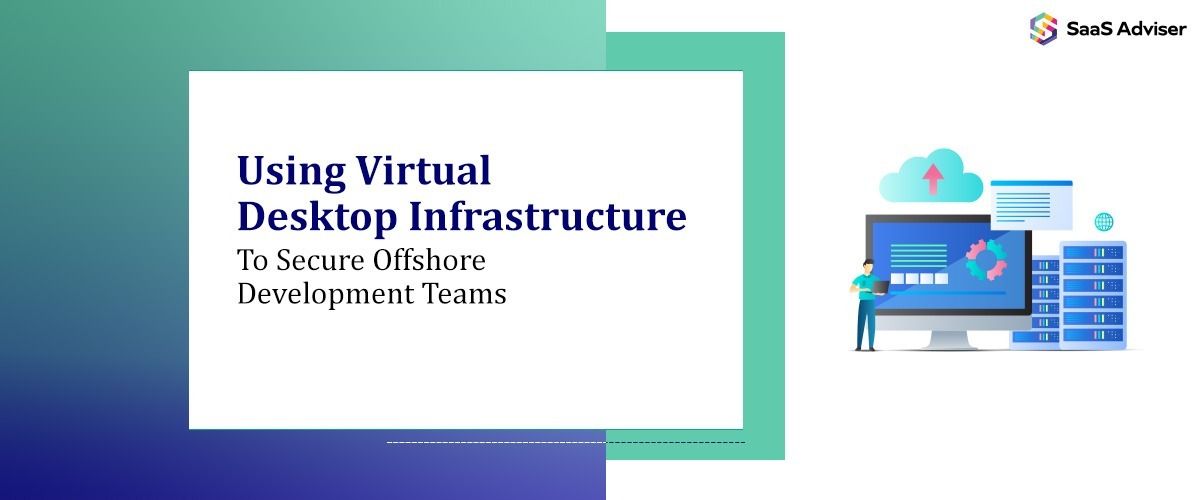
VDI solves these issues by shifting the "where" of the work. Instead of the code coming to the developer, the developer goes to the code. By hosting a virtual desktop in a centralized cloud environment, you ensure that no sensitive data ever actually touches the remote user’s physical hardware. They receive a pixel-stream of the desktop, but the source files, API keys, and database connections stay safely behind your firewall.
Centralizing Control with Virtual Workspaces
The beauty of VDI is the ability to standardize the development environment. Whether you have five developers in Eastern Europe or fifty in Southeast Asia, every one of them logs into an identical, pre-configured workstation. This eliminates the "it works on my machine" syndrome that plagues distributed teams and ensures that every security patch is applied globally at the same time.
Navigating these complex infrastructure choices is where a strategic partnership becomes vital. By engaging in tech consulting with WPG, SaaS companies can design custom VDI environments that balance high-level security with the low-latency performance that developers demand. This type of professional oversight ensures that your virtualization strategy isn't just a security layer, but a performance-enhancing tool that simplifies onboarding and offboarding for global contractors.
Eliminating Data Residue on Remote Endpoints
One of the most dangerous aspects of remote work is "data residue." When a developer downloads a repository or a set of logs to debug an issue, that data often stays on their local drive long after the task is finished. If that developer leaves the project or their laptop is compromised, that data is out in the wild.
In a VDI setup, you can implement non-persistent desktops. Every time a developer logs out, the virtual machine is wiped clean and reset to its original state. Any temporary files or logs are deleted automatically. This ensures a clean slate for every session and prevents the slow buildup of sensitive information on unmanaged devices. It essentially creates a "stateless" working environment where the only thing that persists is the code pushed to your secure version control system.
Performance vs. Security: The VDI Latency Myth
A common concern among CTOs is that VDI will be too laggy for intensive tasks like compiling code or running local test suites. While early virtualization technologies did struggle with latency, modern solutions built on cloud backends like Azure Virtual Desktop or AWS Workspaces have largely solved this.
By placing the virtual desktops in a cloud region physically close to the offshore team, you can achieve sub-100ms latency. Because the heavy lifting of the build process happens on powerful cloud servers rather than the developer’s local laptop, many engineers find that their build times actually decrease. You are giving them enterprise-grade hardware that they might not have access to locally, which boosts their productivity and job satisfaction simultaneously.
Simplified Compliance and Audit Readiness
If your SaaS handles sensitive financial or healthcare data, you know that auditors want to see exactly who accessed what and when. Tracking this across a fleet of remote, physical laptops is nearly impossible.
VDI provides a centralized "gold mine" of audit data. Since every session is hosted on your servers, you can log every login attempt, monitor file transfers, and even record sessions for high-security tasks. When it comes time for a SOC 2 audit, you don't have to scramble to collect evidence from fifty different machines. You simply pull the logs from your central VDI gateway, proving that your data never left the protected environment.
Cost Efficiency Beyond the Hourly Rate
Founders often look at the monthly cost of a VDI license and compare it to the "free" cost of a developer using their own laptop. However, this is a narrow view of the total cost of ownership (TCO). When you factor in the time saved on onboarding (which can be reduced from days to minutes), the reduced risk of a multi-million dollar data breach, and the ability to use "thin clients" or older hardware, VDI often pays for itself.
Furthermore, VDI allows for "bring your own device" (BYOD) policies without the traditional risks. You no longer have to worry about whether a developer is using a Mac, Windows, or Linux machine, or if their OS is up to date. As long as they can run a remote desktop client, they can work securely. This flexibility allows you to hire the best talent regardless of their local hardware availability.
Conclusion
Offshore development is an essential lever for SaaS growth, but it shouldn't be a gamble with your intellectual property. The traditional perimeter is gone, and the new perimeter is the user’s identity and their virtual workspace.
By implementing a robust Virtual Desktop Infrastructure, you gain the peace of mind that comes with knowing your code is safe, your developers are productive, and your compliance is airtight. You aren't just hiring remote help; you are extending your office’s secure environment across the globe. In the end, the most successful SaaS companies won't be the ones with the lowest costs, but the ones who can scale their talent without sacrificing their security.