
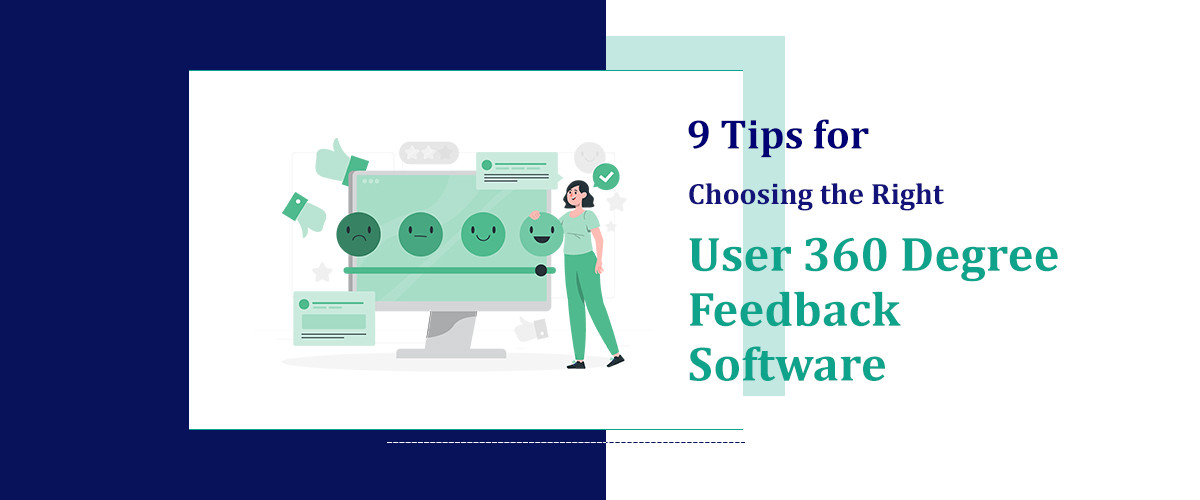
The workforce is driving the shift to more open and collaborative environments in this day and age, and 360 degree feedback software has shown to be an effective tool for supporting personal development. Using information from peers, supervisors, employees, and even outside sources, this HR classic offers a comprehensive picture of worker performance.
Making the right choice in 360 degree feedback software US may make all the difference in how successful your talent development initiatives are or don't. Selecting the platform that best suits the particular requirements of your company from among the many available possibilities is an essential endeavour.
These nine guidelines will act as your guide when selecting the ideal 360-degree feedback solution, regardless of your level of experience in HR or your role as a business leader in charge of your company's people development programmes.
Why Use 360 Degree Feedback Software?
A thorough understanding of a worker's performance may be obtained by using 360-degree feedback software on a US platform, which collects data from colleagues, subordinates, and occasionally consumers in addition to supervisors. This comprehensive strategy encourages growth on both a personal and professional level by promoting a culture of openness and constant improvement.
It may identify chances for growth and areas of strength that would go unnoticed, offering insightful feedback for career advancement and improving overall organisational effectiveness. Using a US-based platform also guarantees adherence to regional data privacy laws and regulations, adding another degree of protection and reliability.
Because 360-degree feedback software collects opinions from several people inside the company, it provides a more comprehensive picture of an employee's performance. Peers, subordinates, and in some situations even customers are included in this, in addition to supervisors. Through the integration of many viewpoints, this methodology fosters openness and perpetual enhancement in the work environment.
A primary advantage of employing a US-based platform for 360-degree feedback software is the focus on individual and professional development. Employees may seek to improve their performance and abilities by finding areas of strength and growth, which will advance their careers within the company.
How Does The 360 Degree Feedback Software Method Work?
The way the 360-degree feedback software system works is by collecting detailed performance feedback for a single person from several sources. Peers, subordinates, and occasionally even clients or customers are included in this, in addition to immediate supervisors or managers. An online survey is sent to the participants, asking them to rate the performance of the individual in relation to a number of behaviours or competencies pertinent to their position.
After that, the programme gathers all of these answers, often anonymizing them to promote candid criticism and produces an extensive report. This report identifies the person's strong points, places for development, and occasionally draws comparisons between their own and other people's opinions. This all-encompassing method of providing feedback seeks to offer a more complete picture of performance, promoting individual growth and improving team interactions.
360-degree feedback not only offers a more complete picture of a person's performance, but it may also be used to discover any biases and blind spots that conventional performance reviews could miss. This approach makes it possible to take into Accounting software a wider variety of inclusive and varied viewpoints, which results in a more thorough examination.
Here is 9 Tips For 360 Degree Feedback Software
1.Comply with the Culture and Organisational Goals
Introspection is usually the first step. Examine the organisational structure of your firm in great detail to find out what makes it work. Are you encouraging an innovative culture that demands ongoing learning and adaptation with taking notes? Perhaps you place a high priority on a robust leadership pipeline or stress customer-centricity?
These primary objectives and cultural elements should be smoothly integrated with your 360-degree tool. For example, some organisations may benefit more from having comprehensive performance management and goal-setting elements, while others may benefit more from real-time, continuous feedback methods.
2. Flexibility and Scalability
You need scalable and adaptable 360-degree feedback software development since the only thing that is constant in business is change. It shouldn't have to be a constant source of IT trouble in order to handle expansion, changing tactics, and shifting organisational structures. Software that supports both existing team sizes and future growth or contraction should be taken into consideration. Modules and customization options that you can adapt as your needs change become imperative as well.
3. Accessibility and User Experience
A tool is only as good as its uptake, and inaccessible software or a cumbersome user interface can frequently act as a roadblock to this. Seek for 360-degree platforms with user-first design, simple navigation, and intuitive layouts.
Furthermore, in order to remain flexible and connected in today's dynamic work settings, mobile access and multi-device compatibility are must. It should be possible for users to browse reviews and leave comments at any time, from anywhere.
4. Compliance and Data Security
Personally identifiable and sensitive data is included in 360-degree feedback. For this reason, it is essential that the software abides by the strictest data security guidelines in order to safeguard employee and corporate information.
This implies that in addition to having features like data encryption, role-based access restrictions, and frequent security audits, the software must also comply with industry compliance standards. Seek certifications such as ISO 27001, SOC 2, and GDPR to make sure your provider is committed to security.
5. System Integration with Current Systems
Instead than making things more complicated, your 360-degree feedback software should improve and supplement your current HR technology stack. Talk about the software integrations that possible suppliers provide with your payroll, learning management, and HRIS systems.
A more comprehensive understanding of the employee lifetime is ensured by seamless interfaces, where Talent management software USA plans are still linked to other essential HR tasks.
6. System Integration with Current Systems
Instead than making things more complicated, your 360-degree feedback software should improve and supplement your current HR technology stack. Talk about the software integrations that possible suppliers provide with your payroll, learning management, and HRIS systems.
A more comprehensive understanding of the employee lifetime is ensured by seamless interfaces, where talent development plans are still linked to other essential HR analytics software tasks.
7. Training and Support for Vendors
A learning curve is usually involved in the implementation of a new software solution. Making the most of your investment and streamlining the onboarding process are two benefits of working with a vendor that has a robust support infrastructure in place.
Inquire with possible suppliers on their onboarding procedures, training materials available, and post-implementation customer support provided. The long-term success of your programme will be greatly impacted by prompt, informed, and responsive support.
8. Recognise total ownership costs
The software comes with additional costs in addition to the one-time purchase or monthly subscription. It also covers possible improvements, continued support, and implementation. Comprehending the software's lifetime total cost of ownership (TCO) is crucial.
Additionally, think about the return on your investment. Will the software's increased productivity, insights, and enhanced worker performance outweigh its expense? A comprehensive cost-benefit analysis can help you make the best choice.
9. Get Testimonials and User Input
Looking back at previous and current experiences can sometimes be the most accurate indicator of future success. Interact with other people by reading reviews or testimonies from businesses that are comparable to yours.
Furthermore, don't be afraid to approach possible vendors for case studies or recommendations. Examples from the real world may paint a clear picture of how the programme works in the workplace and what kinds of outcomes you can expect.
How To Choose The Right Survey For 360 Feedback Software?
Selecting the appropriate 360-degree feedback survey requires taking into account a number of factors in order to guarantee that the information gathered is thorough, examining pertinent, and useful. Determine the fundamental knowledge and abilities needed for the positions in your company first. By doing this, you can be sure the survey complies with the demands of your business. Next, choose a survey that lets you customise the questions so you may give the feedback to particular groups of people. In order to promote participation and truthful answers, make sure the survey is easy to use.
Choosing software that ensures privacy and anonymity is essential if you want to get real feedback. Last but not least, think about a solution that offers comprehensive analytics and reporting capabilities, making it simple for you to spot patterns, competencies, and potential growth areas in your personnel.
It is crucial to assess the 360 Feedback Software's cost and price structure in addition to these crucial factors. A fixed cost per user may be charged by certain applications, whereas a tiered pricing structure dependent on the number of participants or features offered may be used by others. Choosing software that is both affordable and has all the functionality required for efficient feedback collecting and analysis is crucial.
The resources and assistance provided by the software vendor are another crucial factor to take into account. To ensure that the software is implemented and used inside your firm in an efficient manner, look for a provider that offers assistance and training.
Conclusion
Selecting the right 360-degree feedback software is a significant step toward harnessing the power of employee development. For businesses and organisations listed on SaaS Adviser or similar platforms, emphasising software features that cater to customization, ease of use, confidentiality, integration capabilities, and robust reporting functions can guide you toward making an informed choice. Remember, the ultimate goal of implementing such software is to foster a culture of continuous improvement, promote self-awareness, and drive developmental initiatives. By closely following these nine tips, you'll be better equipped to select a software solution that not only meets your current needs but is also scalable and flexible enough to evolve with your organisation's growth and changing dynamics.
User 360 Degree Feedback Software facilitates comprehensive feedback collection from multiple sources, offering insights from various perspectives on an individual's performance.
It enhances employee development, promotes transparency, improves communication, and fosters a culture of continuous improvement by providing holistic feedback.
Look for features like customizable feedback forms, anonymity options, reporting and analytics tools, integration capabilities, and user-friendly interfaces.
Yes, many platforms offer remote-friendly features like cloud-based accessibility, virtual review meetings, and mobile app support, making them ideal for distributed teams.
Prioritize software that aligns with your organization's objectives, offers scalability, fits your budget, and provides excellent customer support and training resources.