
Utility providers today operate in an environment of unprecedented change. Customers expect clarity, transparency, and flexibility in how they manage their services. Regulators demand greater accuracy, stronger compliance, and faster reporting. Emerging technologies, such as smart meters, IoT-enabled grids, and renewable energy solutions, are reshaping not just how utilities deliver their services but also how they must account for and charge for them.
This growing complexity raises an important question for many providers: Where should digital transformation begin?
The answer is often more straightforward than it appears. While full-scale modernisation across an entire organisation can feel daunting, the billing system is the natural first step. By upgrading billing into an innovative, customer-centric platform, utilities can unlock operational efficiency, rebuild trust, and prepare the organisation for broader digital initiatives.
Why Legacy Billing Holds Utilities Back
Modern solutions, such as advanced water utility billing systems, are specifically designed to replace outdated platforms that have become a barrier to progress. Yet many utilities still rely on legacy systems developed decades ago. These platforms were designed for a simpler era, when billing models were static and customer expectations were more modest.
Today, these legacy systems create more problems than they solve. They are:
-
Rigid – unable to adapt quickly to new tariffs, services, or regulatory requirements.
-
Expensive to maintain – requiring niche expertise and frequent manual interventions.
-
Difficult to integrate – preventing seamless data exchange with newer technologies such as smart grids and IoT devices.
The consequences of clinging to outdated billing systems are tangible and costly. They often lead to:
-
Confusing or inaccurate bills that erode customer trust and generate disputes.
-
Slow responses to market changes or regulatory updates.
-
Manual processes that increase operational costs and error rates.
-
Limited ability to introduce innovative pricing models or new services.
In practice, this creates friction both internally and externally. Employees waste valuable time troubleshooting preventable billing errors, while customers become frustrated by unclear or inconsistent invoices. For a sector already facing rising competition from alternative energy providers and evolving expectations from digital-savvy consumers, relying on legacy billing systems is more than a technical inconvenience—it is a strategic risk.
Consider a water utility struggling to roll out a new conservation-based pricing model. Its outdated billing system cannot calculate consumption in real-time or handle tiered pricing structures, which delays the project and frustrates regulators. This is a familiar story across the industry, illustrating why billing modernisation is no longer optional.
How Smart Billing Powers Digital Transformation
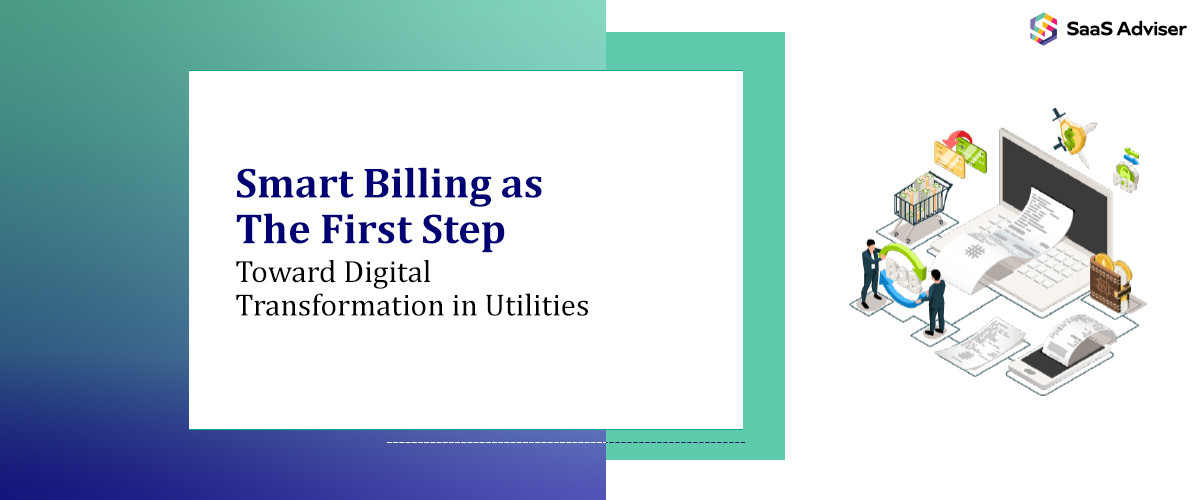
Rather than attempting a massive IT overhaul, utilities can take a focused, incremental approach that delivers immediate value. Upgrading the billing system is a manageable yet high-impact first step that establishes a digital foundation for future initiatives.
Innovative billing platforms bring automation, transparency, and agility into what was traditionally a back-office function. They leverage real-time data streams from smart meters, integrate with (customer relationship management) CRM systems, and automate complex pricing models.
More importantly, they shift billing from being purely transactional to becoming a strategic enabler of customer engagement and operational efficiency.
From Back-Office Tool to Strategic Asset
Billing has long been viewed as a routine process—necessary, but far from transformative. However, modern platforms turn billing into a strategic asset that directly impacts customer satisfaction, regulatory compliance, and profitability.
Utilities that adopt smart billing gain the ability to:
-
Automate invoicing with real-time data accuracy, eliminating delays and errors.
-
Seamlessly integrate with smart meters, IoT devices, and CRM systems.
-
Implement dynamic pricing models that reflect market conditions, renewable energy availability, or time-of-use rates.
-
Provide instant self-service options for customers, reducing call centre volumes.
This strategic shift allows billing to act as a touchpoint that reinforces customer trust rather than undermining it. When invoices are explicit, interactive, and easy to understand, customers feel more confident and engaged.
For example, an energy provider offering renewable energy subscriptions can utilize smart billing to display detailed consumption breakdowns, environmental impact reports, and personalized recommendations. Such features increase loyalty and differentiate the provider in a competitive market.
Building Customer Trust Through Transparency
One of the most significant advantages of smart billing is the transparency it provides. Traditional paper bills or static PDFs leave customers in the dark about how charges are calculated. In contrast, digital-first billing platforms present data in an interactive and user-friendly manner.
Customers can log into a portal or mobile app to see exactly how their consumption translates into costs. Proactive alerts notify them of unusual usage patterns—such as a water leak or an unexpected spike in electricity demand—helping them take corrective action before the next billing cycle.
This level of clarity reduces billing disputes, eases the burden on support teams, and strengthens the customer-provider relationship. When people trust their bills, they trust their provider. That trust becomes the foundation for long-term relationships, improved retention rates, and positive word-of-mouth in local communities.
How to Choose the Right Energy Billing System
Selecting the right billing platform is a crucial decision that can significantly impact the success or failure of a utility’s digital transformation. A modern Energy Billing System must go beyond simple invoice generation—it must support scalability, flexibility, and seamless integration with a growing ecosystem of technologies.
When evaluating options, utilities should ask:
-
Does it support multi-service environments? Many providers manage electricity, gas, water, or even broadband services.
-
Can it integrate with smart grids and IoT devices? Real-time data capture is essential for accurate billing.
-
Is it flexible enough to adapt to new tariffs or subscription models? The energy market is evolving rapidly, and billing must evolve with it.
-
Does it enable customer self-service and digital engagement? Modern customers expect easy access to billing history and payment options.
Platforms like MaxBill illustrate how modular, future-ready solutions can simplify this transition. They combine real-time data management with robust analytics, enabling utilities to improve both operational efficiency and the customer experience. By choosing a scalable and secure platform, utilities ensure they will not outgrow their billing system as they expand services or enter new markets.
The Business Value Beyond Billing
Upgrading billing is not just about improving customer experience—it delivers measurable business benefits across the organisation.
Companies that adopt innovative billing platforms gain a competitive edge by becoming more agile, cost-efficient, and future-ready. Automated billing processes reduce operational expenses, freeing staff to focus on strategic initiatives rather than repetitive administrative tasks. Real-time analytics enable leadership to make informed decisions based on accurate, current data, rather than relying on lagging reports.
As highlighted in Forbes, utilities embracing digital transformation “respond faster to disruption, deliver better customer experiences, and reduce long-term operational costs.” Billing innovation is central to achieving these outcomes because it touches every part of the value chain—from data collection and regulatory compliance to customer satisfaction and revenue optimisation.
Scaling Without Growing Pains
As utilities diversify—adding renewable energy packages, offering smart home solutions, or expanding into new territories—they need a billing system that scales effortlessly. Legacy platforms often require costly customisation and extensive downtime to accommodate growth.
Innovative billing systems are designed to be modular and scalable. They enable providers to introduce new services, billing models, and integrations without requiring the rebuilding of their IT infrastructure. This flexibility reduces time-to-market for new offerings and ensures smooth transitions during organisational change.
Consider an electricity provider expanding into electric vehicle charging services. With an intelligent billing platform, they can add EV charging as a new service category, apply dynamic pricing, and provide customers with unified billing for all services, eliminating the need for additional manual work.
Conclusion: Starting Digital Transformation the Smart Way
Digital transformation can feel overwhelming, but it doesn’t have to begin with complex, organisation-wide overhauls. For many utility providers, the most impactful and practical first step is upgrading the billing system.
Smart billing introduces automation, transparency, and scalability, creating immediate operational improvements while laying the groundwork for broader innovation. It rebuilds customer trust, reduces friction, and enables utilities to respond to market changes with greater agility.
By investing in flexible, digital-first billing solutions, utilities not only enhance their current processes but also position themselves for a future of innovative, sustainable, and customer-centric services.
Billing is no longer just about sending invoices—it’s about reshaping the way utilities connect with their customers in a digital era, creating stronger relationships and more resilient business models.