
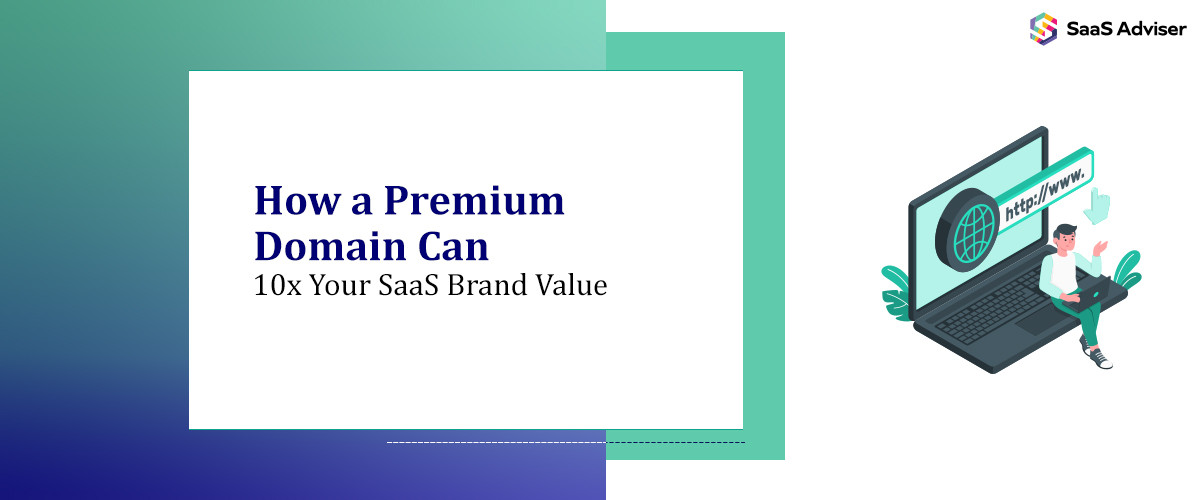
Your premium domain serves as more than just a web address. It is one of those valuable assets that can improve the credibility and growth of your SaaS brand for years to come.
In the SaaS industry, your domain is much more than a route for people to reach you. It usually makes a lasting impression, so it's vital to get it right. Before someone ever tries your product, they see your domain. That moment can spark trust or raise doubt.
The SaaS space is noisy. You're vying for attention, registrations, and allegiance. Your business's appearance, credibility, and brand are all enhanced by a good domain.
Choosing a premium domain isn't just about a name; you are choosing trustworthiness, transparency, and an improved chance for long-term growth.
What is a Premium Domain?
A premium domain is a web address that's short, clear, and easy to recall. Think one-word names, powerful brandables, or industry terms often ending in .com.
They're rare, which is part of the value. They can be trusted, cherished, and shared without the necessity of searching for their spelling in Google. Why? They are commonly owned by others, indicating that the buyer is buying from a marketplace or private seller.
Premium domains typically have:
-
One or two short, clear words
-
A trusted extension like .com, or widely recognized alternatives like .ai.
-
Easy pronunciation and spelling
-
Relevance to your product or industry
When you purchase a premium domain, you're getting a digital asset that works 24/7 for your brand. It's like owning digital real estate in the best part of town - visible, valuable, and built to grow.
The Brand Value Impact Areas of a Premium Domain
Premium domains aren't just about looking good on a business card. A relationship exists between the perception of your brand, how people engage with it, and what value you bring to them in the long run.
Let's explore the key areas where a premium domain name is essential.
-
First Impressions and Brand Authority
People make snap judgments in milliseconds. When they see a clean, professional domain like "Superhuman.com," they assume the company behind it is legit. That single assumption can create trust before your product even loads.
Now flip it. A clunky, hard-to-remember domain with a random extension immediately raises questions. Is this a real business? Can I trust them with my info? Is it safe to click?
Short and powerful domains, like those of leading SaaS brands from Hubspot, Asana, or Shopify, immediately convey a sense of established authority, even if your product is new. When they connect with your industry and brand identity, such as with the addition of a relevant extension like .ai, they build belief in your expertise.
That early credibility can be the difference between a cold visitor bouncing and a conversion, leading to a big impact on revenue in the long term.
-
Trust and Click-Through Rates
When people scroll through search results or ads, they make split-second decisions about what to click. And your domain name is right there, front and center.
Users are far more likely to click on domains they trust. It's not just about design or copy. The domain itself can make people feel safe. That's why .com is still the most clicked and remembered extension worldwide.
Premium domains also reduce bounce rates because users land on your site with more confidence. That means better conversions, more engaged users, and a smoother sales journey.
-
Word-of-Mouth and Virality
The easier it is to say, remember, and spell your domain, the more people will share it. That's huge for SaaS products that grow through referrals or communities.
Try saying "dropbox.com" out loud versus something like "getdropbox-beta.net." One feels like a product you'd recommend to a friend. The other feels like homework.
Premium domains lower the cost of organic growth. They help your brand stick in people's minds and come up in real conversations. That's priceless when you're trying to grow in a crowded space.
-
SEO and Organic Discovery
A strong domain name impacts both SEO and organic discovery in multiple ways, ensuring you’re more discoverable online and beating the competition for relevant search terms. When your domain is simple, obvious, and intuitive, more people will recall it and search it, improving key SEO metrics.
Additionally, websites with established, reputable domains tend to gain more backlinks. The reason for this is that bloggers, journalists, and content creators are likely to link to sources that feel credible. More links, more SEO results in higher free traffic.
-
Investment and Acquisition Value
If you're building a SaaS business with long-term goals, this might be the most overlooked benefit.
Premium domains add value to your company's balance sheet. Investors love them because they show vision and polish. Acquirers love them because it means less rebranding and stronger digital assets.
When you eventually raise money, sell, or go public, a premium domain can add real dollars to your valuation. It's not just branding, it's leverage.
SaaS Brands Winning With a Premium Domain
Pretty much every major SaaS company has made smart domain choices early on, and the payoff is easy to spot. A strong domain isn't a vanity move. It shapes how people perceive you, how they discuss you, and how confident they feel recommending your product to others.
Notion is a standout example. The team started with Notion.so, but even early users on Reddit flagged concerns about the less familiar extension. People were unsure whether it was official or if it would last. That kind of friction, even when small, can slow growth. The team clearly saw the value in making a switch. They made acquiring Notion.com a priority, and that move sent a message: we're playing to win. The result? Less doubt, more trust, and stronger brand visibility.
Zapier did it right from the beginning. The company locked down zapier early on, which helped them appear credible right from the start. Even if their product was still in its early stages of growth, the domain made them feel established. That's a competitive edge most startups miss.
Superhuman also took a bold approach. Their name was made known through the launch of superhuman.com, a website for their brand. But this space, it seemed, was as slick and unique as the app's claim to speed, elegance, and elite productivity.
Other great examples include:
-
Linear.app eventually secured linear.com, boosting trust as the product scaled.
-
Calendly.com helped them stand out in a crowded scheduling space, where clarity and memorability really matter.
-
Loom.com founder Shahed Khan revealed in a Twitter thread how the brand prioritized acquiring Loom.com, and that it was easily worth a six-figure sum to the growing brand.
These companies weren't just buying URLs. They were investing in how people experience their brands before they ever clicked a button or signed up for a trial.
Cost vs. Value: Why Premium Domains Are Worth It
Premium domains aren't cheap. But that's not the case because they are not common possessions. It's not just a name; your acquisition requires trust, clarity in language, and years of brand recognition in one word.
Let's break it down:
|
Premium Domain Cost |
What You’re Actually Getting |
|
$5,000 – $50,000 |
Common two-word .coms, brandable names, some short .ios |
|
$50,000 – $500,000+ |
One-word .coms, category-defining names, high-traffic words |
|
Priceless |
Your brand’s first impression and long-term value |
Now compare that to:
-
Customer Acquisition Cost (CAC): You might spend hundreds of dollars to earn each new user.
-
Lifetime Value (LTV): One high-value customer can bring thousands in revenue.
-
Rebranding Costs: A full rebrand can easily run into six figures when you factor in design, legal, marketing, and SEO resets.
A premium domain helps lower CAC by boosting trust and clicks. It increases LTV by keeping users engaged for longer periods. And it makes rebranding unnecessary, you're already set up with the name people remember.
Research from the Economist has found that an incredible 23% of overall company value comes from its brand, and for the biggest SaaS companies, like Loom and Zapier, their name and domain play an enormous role in their brand-building project. With Loom valued at $1Bn in 2023, that’s close to $230 million being generated by their brand — even if domain contributes just 1% of this, that’s a $2.3 million return on an investment of $150k for a premium domain.
The long-term payoff of a premium domain impacts perception, trust, growth, and, ultimately, revenue. For ambitious brands, you can’t compromise on domain.
Wrapping Up
In the initial stages of growth, creating an online presence with high-end domains may seem like a secondary concern. But it affects how your brand is perceived, heard, and seen. When your business relies on rapidity, credibility, and trust in the industry, a simple, clean-cut name is much more effective than any advertising campaign.
It can lower the cost of getting users, increase the chances they'll stick around, and help your brand spread through real conversations. It also shows investors and future partners that you're thinking big.
When you purchase a premium domain, you're not just buying letters. You're investing in the kind of brand presence that can enhance your company's visibility and long-term value.