
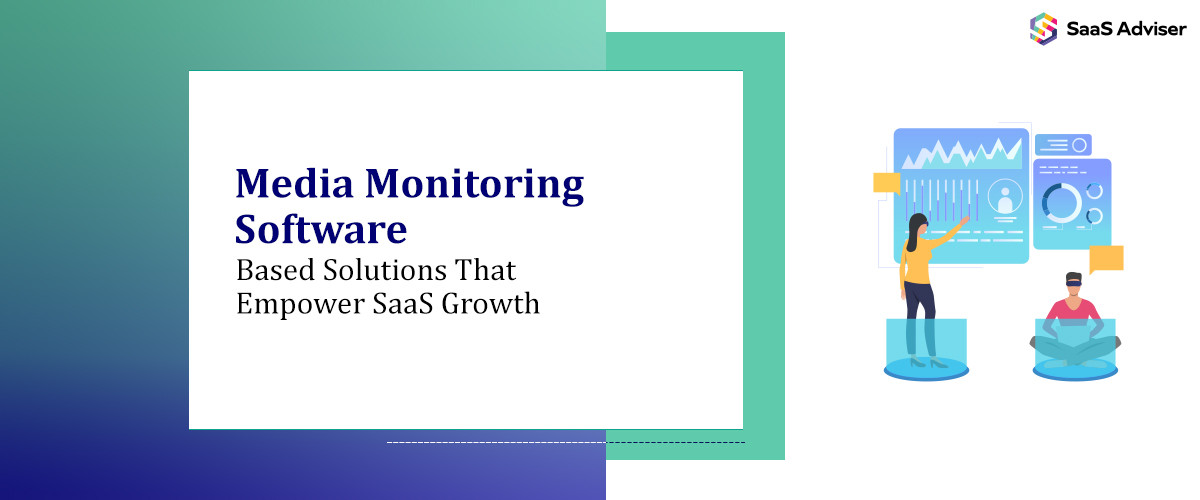
In the modern digital world that is characterized by a high pace of development, Software-as-a-Service (SaaS) companies need to go beyond providing outstanding products. They should also be able to know and control the perception of their brand in a wide media environment. This is where the Media Monitoring Software-Based Solutions enter the game. Such sophisticated systems enable SaaS companies to track, analyze and react to discussions and trends in real-time and remain ahead of the curve to fuel strategic growth.
Why Media Monitoring Matters for SaaS
Media Monitoring Services are not a luxury anymore, but a necessity to SaaS businesses that are willing to succeed in a competitive market. Some of the strategies used by SaaS companies in attracting and retaining customers include content marketing, collaborating with influencers, PR campaigns, and social interactions. But unless there are adequate tools to gauge the success of such efforts, a lot of this investment might not be tracked.
The Media Monitoring Solutions assist the SaaS providers in having a critical insight to:
- The way their brand is being discussed on the online and offline channel
- Real time customer sentiment and product feedback
- New trends and competitor actions
- Warning signs and possible PR problems
Knowing this, SaaS companies will be able to change their marketing strategies, communicate with customers better, and safeguard their brand image.
Features of a Robust Media Monitoring Platform
A comprehensive Media Monitoring Platform offers far more than simple keyword tracking. An all-inclusive Media Monitoring Platform does much more than just keyword tracking. These platforms are meant to aggregate, analyze, and visualize data across a broad source of information such as:
- Blogs and news websites
- Social media sites
- Video and podcasts
- Review sites and forums
- Press release distribution networks
These are some of the key capabilities that SaaS businesses must seek:
1. Real-Time Media Monitoring
In the SaaS world, speed matters. Media monitoring enables the business to be instantly notified of new mentions, positive or negative. This urgency is particularly crucial in the case of product launches, PR campaigns or crisis management. Teams are able to react to opportunities or threats in a timely manner with timely notifications.
2. Media Intelligence Services and Sentiment Analysis
Media intelligence Services also touch on the significant side of sentiment analysis. It enables SaaS companies to understand the mood of the chats involving their brand. Sentiment analysis enables prioritizing response and establishment of more efficient communication strategy when customers are thrilled about a new feature or vexed about a bug.
3. Competitor Benchmarking
Differentiation is usually important to SaaS growth. Media Monitoring Services can monitor the competitors and show the way they are seen in the media. This benchmarking information provides information on messaging gaps, user satisfaction, and possible innovation areas.
4. Custom Dashboards and Automated Reporting
Marketing teams and executives can take advantage of customizable dashboards with the KPIs, sentiment trends, and media coverage presented in a digestible form. Automated reporting is time-saving but also makes sure that all the departments are in line with the brand perception in the minds of the people.
Media Monitoring in the SaaS Growth
In the modern world of SaaS, where the competition is high and the tempo is rapid, data-driven insights are the key to the agile growth strategy. Media monitoring software is one of the most untapped but effective sources of intelligence. Through proactive monitoring of discussions on news, blogs, forums, and social media in real-time and incorporating adverse media checks, SaaS companies can unleash the most important growth levers that influence branding, customer experience, marketing, and investor confidence.
1. Better Brand Image
The perception of a brand may be altered fairly quickly, especially in the times of the Internet where one viral post or tweet can turn into an issue of reputation. The media monitoring solutions can also provide real-time sentiment analysis and instant alerts so that the SaaS teams have a chance to detect the first signs of negative sentiment, misinformation, or PR disasters.
Having caught such issues as they emerge, a business will be able to take immediate action clearing things up, talking directly with interested parties and ensuring potential harm to the brand does not go viral, becoming widespread. This will ultimately lead to the establishment of trust in the minds of the citizens and render the brand to look transparent and responsive, which are the two key pillars of SaaS brand loyalty.
2. Customer-Centric Development
SaaS is an iterative business. The most successful businesses do not only put up what they think that the customers want but they listen to what customers are saying. Customer Experience Software and media intelligence tools help uncover commonly used patterns such as complaints, feature demands, and user expectations..
By scaling the investigation of this customer feedback, product teams can make informed decisions toward feature roadmap, bug fixes, UX/UI optimizations, and even pricing. This active listening approach leads to a higher customer satisfaction level, a lower churn rate or even to a better product-market fit.
3. Educated Marketing Strategies
Marketing is everything about being at the right place, at the right time and with the right message. Access to real-time and historical data about media, SaaS marketing professionals will be capable of discovering more about the channels that are the most effective, messages that are the most attractive to customers and the active influencers.
Once the media are monitored, the competitors, the performance of a campaign, and the sentiments of the audience can likewise be tracked - by which teams can adjust the timing of a campaign, refine campaign messages and individualize contact. With the abundance of SaaS providers in the market, this intelligence will bring the marketers a good competitive edge and maximum ROI.
4. Improved Investor Relations
The perception of the brand in the market is not the only aspect that is drawing the attention of investors but the financials of a given company. Regular positive exposure in the media helps in increasing the confidence of investors and raises the worth of the company in the long run.
Through the process of media monitoring, SaaS companies will be in a position to generate an in-depth report that illustrates media reach, share of voice, sentimental patterns, and positioning in the industry. This makes stakeholders tangible proof of the fact that not only is the brand in question, but is being well taken and is a good pointer to strategic orientation and stability.
5. Competitive Benchmarking
The market of SaaS is highly competitive, and you need to be concerned not only about the presence of your company in the media but also about the presence of your competitor. By using media monitoring tools, an individual will be able to tell how his/her competitors are being talked about, what is said about them, and what they are doing.
This level of insight enables the SaaS leaders to compare performance of their brand with the industry benchmarks, identify market gaps, and identify innovation opportunities. Having already an idea of strengths and weaknesses of others, companies will be capable of enhancing their positions and stay one step forward of new trends.
Use Case: Reactive to Proactive
Consider a SaaS business that releases a much-hyped feature in its CRM software product, say an AI-powered customer segmentation tool. In a few minutes after the rollout, people go to Twitter, Reddit, LinkedIn, and niche product communities to share their experiences. There are those who rave about the potential of the new capability, and those who mention unforeseen bugs that make it difficult to use.
The conventional method would be to use internal support tickets or feedback reviews at a regular time to identify these responses, which may take days before the reaction is identified. However, when the company has a real-time media monitoring platform available, the company is able to act almost instantly.
As soon as the feature is launched, the platform starts scanning digital channels. It tracks all the relevant mentions in real-time, including passionate tweets, Reddit threads hidden in obscure subreddits. Using Natural Language Processing (NLP) built in, it quickly categorizes the sentiment as mixed, and even identifies keywords such as bug, crash and lag that are common throughout the conversation.
This information is transferred automatically to the product development team and they can issue a hot fix or patch within hours as opposed to days or even weeks by the time. Meanwhile, the customer support and community management teams make the customers who experience problems feel confident and open, which increases the responsiveness of the brand. It is not the end of the story though. The bugs are fixed fast and the marketing and communications teams apply the same media monitoring insights to find out the users who gave positive feedback and those who became neutral after the fix. They start a specific messaging campaign, where they demonstrate the improvements, provide testimonials, and remind people about the brand that strives to improve constantly.
In less than 24 hours, the trend of sentiment starts to change - it goes from mixed to overwhelmingly positive. The involvement rises, the risk of churn decreases, and the company gains recognition not only because of the product, but also because of its flexibility, openness, and customer-oriented culture.
Conclusion
Media Monitoring Software has become more than a passive listening tool, it is now a strategic weapon that can help SaaS companies grow smartly in a very competitive landscape. With the digital setting producing an unstopping stream of customer responses, competitor activities, and market forces, media monitoring has become a necessary degree of perception that cannot be disregarded anymore. The solutions allow brands to become nimble, customer-centric and data-driven not just in their role in marketing but in product development, investor relations and customer success takeaways. The SaaS providers can detect the threats early, take advantage of the emerging trends, and iterate their offering on real user feedback by using real-time media signals and social sentiment. What is more important is that the greatest companies do not only respond to the media environment but also shape it. SaaS brands can transform themselves into active storytellers by integrating powerful Media Monitoring Services and Media Intelligence Services into their operational stack, becoming the drivers of conversation and establish themselves as leaders in their industry and create sustainable growth strategies. Media monitoring is no longer a tool in the digital economy where perception can be as important as performance. Individuals that exploit its full potential will not only keep up with the times, but will also shape them.