
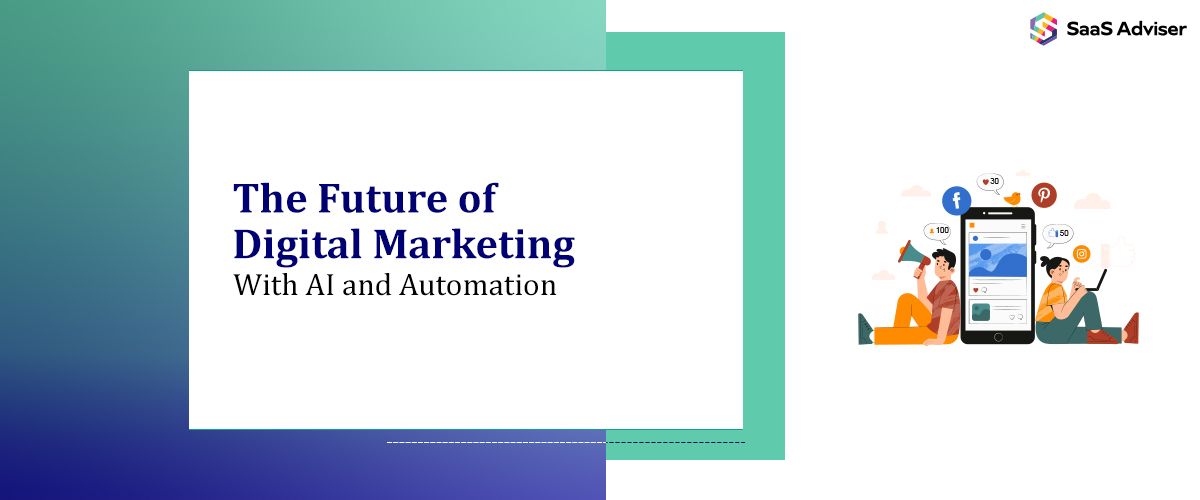
Artificial intelligence systems analyze boundless volumes of data, review automation tools for marketing campaigns, and assess automation tools for marketing campaigns, and evaluate algorithms for consumer and patronization predictions. Thorough and broad assessments of these entities fuels the sentiment that they are aliens. Nonetheless, these endorsements and assessments embody efficacy that businesses prioritize. Businesses no long rely on estimation, thus making these technologies more accessible with no additional costs. The current age of marketing is alignment with digital technologies highly automated and leveraged to market intuition-led marketing and automation tools.
Digit segmentation and targeting technologies enable instant assessments and actions triggered by user ratings and actions with no human overlap. The leap from estimation and intuition based marketing strategies built on human capability and effort to automation and digital alignment digital technologies highly automated and leveraged to market estimation based marketing strategies is technologically facilitating. The incorporation of digital automation tools alignment to marketing strategies.
The AI Revolution in Digital Marketing
The emergence of Artificial Intelligence has led to a reconfiguration of the digital marketing strategy matrix. Marketers used to depend on archived data and logic-driven estimations. Currently, the new software evaluates consumer conduct across millions of records, isolating and recording trends that a human evaluator would miss. Organizations are enabled to best serve customers in the present even when their needs are expressed in the future as a result of predictive capabilities. This predictive-power places organizations to strategically time and serve products during peak interest moments.
The evolution of marketing personalization has advanced to the stage where called personalization and marketing. AI tools assess past and ongoing purchases, affinity clusters, engagement and use metrics, and demographic data to develop, define, and cluster users, predicting which content, goods, and messages would strike gold. Such customization was impossible in the past but, it is the new normal weaving through every economic sector. Get Digital Marketing Training in Chennai.
Enhanced Customer Experience with AI
The most key factor of differentiation among competing brands is customer experience. Artificial intelligence facilitates enhanced customer experience improvements at each contact point. Al-powered chatbots and virtual assistants serve customers at all hours. They answer frequently asked questions and complete simple support tasks without customers needing to wait or without the constraints of business hours. Advanced conversational AI technologies analyze contextual and intentional conversational parameters so that responses seem conversational rather than read from a script. These technologies automated the resolution of simple questions while forwarding the complex questions to human customer agents complete with the history of the interaction.
Hyper-personalization means anticipating needs rather than just stating the explicit preferences. AI technology and Ai visibilty examines customer behavior to predict which products customers will want and searches for. Dynamic content aims to deliver personalized website experiences by changing page layouts, products, and messages streamed in real time. Personalized dynamic content dramatically improves the engagement of complex and customized pages, and customers remain satisfied and appreciated.
SEO in the Age of AI and Automation
The rapid progress of artificial intelligence has changed search engine optimization considerably. Today’s SEO involves far more complex considerations than keyword repetition and backlink gathering, focusing instead on discerning user intent, evaluating the caliber of content, and mastering technical components. Advanced AI SEO tools have begun to provide insights into formerly unattainable data, including search trends, competitor analysis, and critical ranking determinants. These insights are frequently powered by web scraping, which enables the collection of large-scale data from search engines and competitor websites.
Artificial intelligence is used by search engines to assess the quality of content, relevance of content, and overall user experience. Google’s RankBrain and subsequent algorithm changes determine which content fulfills user queries and determines the content’s value. Consequently, SEO must devise strategies centered on powerful, thorough content that addresses intent and satisfies the searcher’s needs rather than the simple targeting of keywords.
Local SEO: Dominating Your Geographic Market
For organizations that target particular field regions, local SEO is one of the most effective marketing techniques there is. With the increase of mobile devices and voice-activated search tools, local search queries have greatly multiplied. Consumers search for “near me” answers to questions and requests, and they expect quick results that are pertinent and geographically targeted.
The first step to local SEO is the claiming and the optimizing of Google Business Profile listings, accuracy of business information on all online directories, and the development of location-driven content that engages local audiences. Since reputation management directly impacts local ranking, every local SEO strategy must include attention to reviews and ratings.
To optimize local visibility, businesses can engage with local seo agency that have the skills and tools necessary to excel in local search results. Such agencies comprehend the intricacies of the elements that shape local rankings. These include the consistency of local citations, proximity signals, and the varying personalized search results shaped by user interactions.
Voice Search Optimization and Conversational SEO
The expansion of voice-enabled technology and digital aides has transformed consumer information retrieval methods. Compared to traditional text searches, voice searches are longer, more conversational, and more likely to contain questions. Optimizing content for voice search includes framing inquiries in the natural language of conversational searchers, as well as locating and targeting strategic content for snippet placement.
Conversational SEO is an approach where content addresses questions from searchers in a robust, informative, and concise manner. Structured data markup enables search engines to comprehend the contextual significance of content and relay certain content in voice responses. Sections of websites curated in the FAQ format, how-to documents, and content that outlines a problem and then provides a solution are notably strong candidates for voice search utilization.
More advanced AI assistants which offer voice searches as the first option and integrate advanced AI modules such as GPT language models, are providing search results while bypassing certain content hosted on websites. To have your content prioritized by AI assistants, content libraries must cover all relevant themes and subtopics, advanced citation networks must be developed, and your content must exhibit advanced visibility metrics to ensure straight forward comprehensibility, low loading times, and great disorganization.
AI-Powered Content Creation
One of the most debated uses of AI in marketing, and its most promising applications, is in the generation of content. AI models are capable of producing marketing materials—blog posts, social media posts, campaign emails—according to the required brand voice and style. “Lower order” tasks—conventional drafts, content variations, and routine communications—may not call for the exercises of human creativity or the attention of a full marketing team.
Marketing teams spend less time generating content and move toward strategic roles, often supported by a skilled digital marketing company leveraging AI-driven workflows.
Artificial intelligence works on the editing and assembly of videos, which in the past necessitated a time-consuming and resource-intensive production cycle. AI tools automate the assembly of disparate video segments, the insertion of captions, the adjustment of pace, and the use of voiceover AI, thereby reducing production time from days to hours.
Marketers can generate reasonably complex video marketing materials without hiring camera crews, studios, or real human actors thanks to tools like Invideo’s AI-Driven avatar generator. AI actors can be customized for a range of tasks within video marketing.
AI cannot replace the artistry that goes into producing videos or films, but video marketing aimed at social media, instructional videos, or promotional clips can be produced in large quantities. AI avatars geared toward social media marketing can be customized to meet the needs and preferences of specific audience groups.
Automation: Streamlining Marketing Processes

Aspects of operational structure of AI Marketing Solution include Automation. It provides infallible input to automation processes and hence does not require breaks Unsurpassing email automation marketing Transformations the technology excels at executing consistent. To oversee the nurture ladder of the leads automation marketing employs intelligent technology. Messaging becomes more dynamic as the system gauzes the behavior of the auto responder. Opens, clicks, and conversions. Follow up actions are conditioned as closing actions are passed to the auto responder. Personalized pathways to purchase are constructed devoid of any human input.
Liability automation in systems of social marketing provides less oversight in the routing of systems in social marketing. These ‘smart’ systems go as far as to gauge engagement levels in any given time coincidental to the predictable levels of outreach. These systems engenders posting at adjusted intervals and time to the ‘bloated’ hours of engagement in a social networking channel. The outcome is the predictable presence of the system and the brand at a lower cumulative effort.
Encouragement to spend is the main function of advertising. The Automation of advertising centers at the attributed complexity of the functional sty flexible spend resource allocation, audience, time, and channel. Audience self targeting undergoes shifts as systems arise characteristics of audience. Spending across ads within fuel diminishing patterns of spend across ads within channels and self adjusting spend.
Automation in marketing has its uses beyond marketing, as several other industries develop means to digitize and automate their outreach marketing. Even utilities process outsourcing is using AI for automated marketing to communicate to varied audiences the intricate op… See More.
The Future Outlook: AI, Automation, and Beyond
The progression of AI and automation within the confines of digital marketing suggest highly sophisticated cross customer contact points consolidation. Where cohesive marketing strategies of various cross silos of the marketing stack are built into siloed unified cohesive marketing strategies that AI then controls and clients experience and interact regardless of engagement points. The marketing stack and engagement points siloed structures will dissolve as optimization focuses on relation marketing rather than siloed performance marketing.
The increasing use of voice AI and voice AI enabled devices dictate that content and marketing strategies primal be built expecting clients to ask questions and expecting sophisticated AI systems to answer them. Thus marketing strategies should provide answers to marketing questions instead of just providing standard marketing messages.
Conclusion
The future of digital marketing belongs to those who embrace AI and automation not as replacements for human insight but as amplifiers of it. These technologies transform reactive campaigns into proactive, personalized strategies that anticipate customer needs and deliver experiences at previously impossible scale. The tools enabling this transformation—from comprehensive marketing platforms to specialized visual creation systems and process optimization solutions—are accessible now, waiting for bold organizations to seize their potential.
Success in this evolving landscape requires more than technology adoption. It demands strategic thinking about how AI and automation serve broader business goals, ethical frameworks ensuring responsible data use, and creative vision that technology enhances rather than constrains. The marketers who thrive will be those who master the interplay between algorithmic precision and human intuition, leveraging each for what it does best.