

Retaining monetary motivation is not always effective in the form of salaries only; rather, it is about keeping a person valued every day. For instance, if someone appreciates the work you do with a simple ‘thank you,’ this will immediately boost your energy and loyalty. That’s exactly what well-designed employee recognition programs can achieve. It makes the cheap gesture of appreciation or structured employee rewards a very strong bridge between people and their workplace.
 Looking for Employee Recognition Software? Check Out SaaS Advisor’s List of best Employee Recognition Software in USA.
 In this blog, we’ll explore what employee recognition really means, why it matters, what to consider before choosing the right program, and how to build a sustainable culture of recognition in your workplace.
What is Employee Recognition?
Employee recognition is about appreciating employees and rewarding them for their effort-accomplishment-positive impact at work. It involves letting people know their contributions are counted to set clear workplace direction and raises motivation levels.
Think of a time when anyone last appreciated your efforts. The probability is high that it made you feel great and encouraged to work even better. This is precisely what recognition does in the workplace.
Recognition can be as small as verbal, for example, when a manager says, “i appreciate you for solving that customer call so well.” On the other hand, it can be of a formal nature, for instance, endowing the workers with employee recognition awards for their exceptional performance. A very good example is an employee who had to stay late to rectify a critical issue. If a public appreciation of their effort for that moment of work recognition would boost their morale and also set the rest of the team oozing with enthusiasm.
Suggested Read:
Why Employee Recognition Matters?
Recognition is important because it ensures that people know that what they’re doing is being recognized and appreciated. Thus, employees feel inspired to keep on putting in efforts in their work. It’s not about the handout itself, but other small ‘thank you’ gestures, and art of appreciating creativity and work concepts.

Fun Fact:
Companies with a strong recognition culture see 31% lower voluntary turnover. That means fewer people leaving and stronger teams sticking together.
A good reward & recognition program increases team morale and reduces turnover since staff feels recognized, thus being more loyal and committed to the goals of the company. For instance, just a simple staff recognition shoutout during a team meeting would go a long way in building confidence in others to take up the challenge.
Key Considerations Before Selecting Employee Recognition Programs
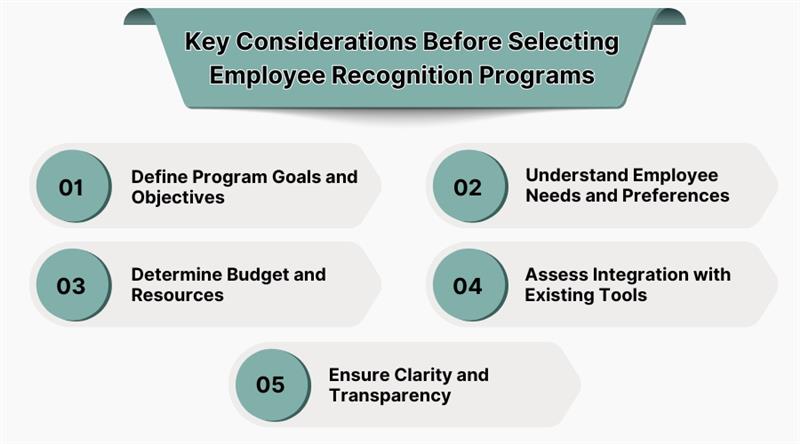
1. Define Program Goals and Objectives
Every successful rewards and recognition program starts with a clear purpose. What problem am I solving, you ask yourself. Maybe you wanted to reduce turnover, celebrate your top performers, or encourage teamwork. Clear goals make it much easier to design employee recognition programs that work rather than turn into an exercise in crossing items off a to-do list. For example: if your goal is innovation, your program will shine on an employee who brings creative work recognition ideas.
2. Understand Employee Needs and Preferences
Recognition isn’t “one size fits all.” Some people in the workforce like being loudly acclaimed in front of their peers, and some feel appreciate more through a personal thank you or a small note from the boss. Getting to know these distinctions is what makes building a program feel authentic. Running employee satisfaction surveys and gathering feedback will show what kind of staff recognition resonates most. This way, your team recognition efforts won’t just be symbolic; they’ll be personal and meaningful.
3. Determine Budget and Resources
It may be easy to assume that recognition has to be costly, but that’s not the case. An email of thoughtful nature, a handwritten note, or even a flexible work perk can sometimes speak just as powerfully as a bonus. However, setting a realistic budget is all about ensuring consistency. Decide how much you can dedicate to reward & recognition efforts across the year. It doesn’t have to be huge—what matters most is that your program is sustainable and not just a one-time effort.
4. Assess Integration with Existing Tools
The best programs don’t add work. They become part of the normal flow for your team every day. Seek solutions that work with tools you already have- HR platforms, Slack, or email. If recognition is simple to give and track, managers will do it more often and on a regular basis. Integration makes it easy so employees can perceive team recognition as part of work culture and not some side project.
5. Ensure Clarity and Transparency
Confusion and favoritism kill motivation faster than anything else. Employees must know how recognition is accorded to them, who can accord it to them, and what the criteria are. Transparent rewards and recognition systems build trust because, in most places, people want to believe that achievements are celebrated fairly. When employees see that the promotions, awards, or work recognition ideas are handled openly, they fınd more reasons to stay engaged and motivated to give their best.
Pro Tip:
Start small with pilot programs—like running monthly team recognition shoutouts—before rolling out company-wide. It helps test what works without overwhelming budgets or workflows.
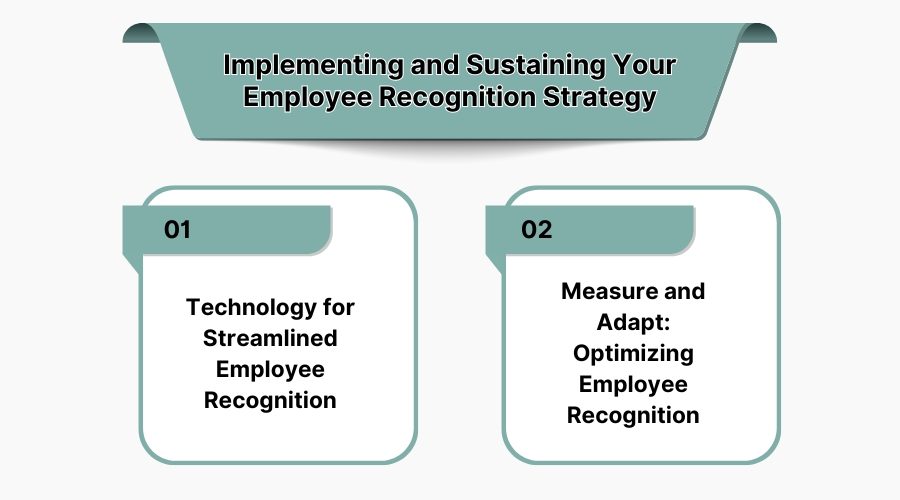
Implementing and Sustaining Your Employee Recognition Strategy
-
Technology for Streamlined Employee Recognition
Modern tools make sharing examples of positive recognition very easy-whether through peer-to-peer shout-outs, channels for instant appreciation, or digital badges. To build up a consistent culture of recognition across your organization, these integrations will help weave employee recognition strategies into everyday workflows.
Organizations that prioritize recognition see a 21% increase in productivity, as recognition reinforces the behaviors that drive focus and performance.
-
Measure and Adapt: Optimizing Employee Recognition
Winning recognition strategies evolve over time. That means tracking what resonates—and what doesn’t—and adjusting accordingly.
Workhuman also finds out that employees who receive 5 or more awards in a year are almost twice as likely to improve their performance year over year. Besides, it leads to better retention, engagement, and motivation across teams: all the things that supposedly spin out of control with an ‘entitled’ workforce.
Did You Know?
Deloitte says firms with strong recognition programs have 31% less turnover; they are 12 times more likely to have strong business outcomes.
Conclusion
Robust employee recognition programs are no longer a luxury but now emerge as a strategic necessity to create loyalty, decrease turnover, and enhance performance. From well-thought employee rewards to building a consistent culture of recognition, the right strategy will transform your workplace to that wherein people really feel valued. If the main considerations are understood and the right systems are put in place, the organization can maintain these efforts onto something more than quick wins. This is where its employees will continually show motivation.
Simple words of gratitude or small prizes can take different forms – from praising someone in front of a team, giving an inexpensive reward like a gift card, or sending a thank-you note for hard work.
Check if employees feel valued through quick surveys, notice if people stay longer in the company, and see how often recognition is being given.
Recognition may be associated with any of the performances, usually excellent work to helping the team, achieving targets, creativity, or even putting extra effort.


 A Comprehensive Guide.jpg "What is Data Loss Prevention (DLP)? A Comprehensive Guide")