

In manufacturing and facilities management, staying ahead of maintenance issues often feels like you're stuck in a never-ending game of whack-a-mole. Just when you fix one thing, another pops up. Now imagine if there were a smarter, more streamlined way to manage it all. That’s precisely where CMMS, short for Computerized Maintenance Management System, steps in. This isn’t just another piece of software gathering dust in your IT stack. CMMS is fast becoming a go-to solution for plants and factories looking to take control of their maintenance operations. But what is it really, and why are so many teams making the switch? Let’s see why.
CMMS is More Than a Tech Trend
CMMS is software built to help organizations track, manage, and optimize maintenance operations. It consolidates everything you need, from work orders and asset management to keeping a facility running as you need it to. So, what is a CMMS exactly? It is a plant's best friend for efficiency enhancement, downtime reduction, and cost control. What if a specially appointed maintenance brain processed all data and helped you make better maintenance decisions? That’s CMMS!
This kind of system could change how a plant or factory operates. Usually, downtime means lost productivity and money. However, the CMMS software offers many functionalities that do much more than you think. It is not clunky, and people can use it with minimal training.
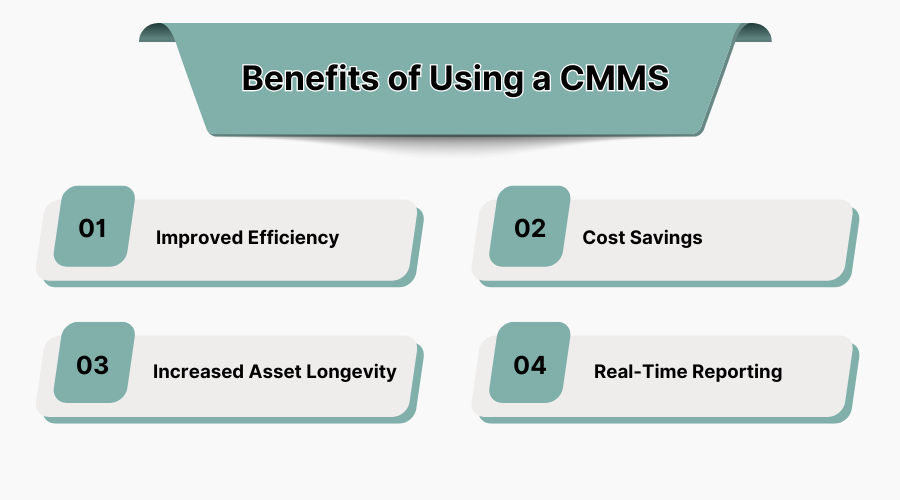
Benefits of Using a CMMS
Why should you implement a CMMS, then? From streamlining routine maintenance to reducing costly equipment failures, a CMMS brings clarity and control to chaotic workflows. It minimizes guesswork, keeps your team aligned, and turns maintenance into a strategic advantage rather than just damage control. Let’s look at these in detail.
-
Improved Efficiency
Imagine having to dig through piles of paperwork or recall details out of your head to keep track of the maintenance schedule. CMMS automatically schedules, creates work orders, and helps track progress. This delivers a ton of value for your team and speeds things up.
-
Cost Savings
Regular maintenance is more than ensuring that operations remain uninterrupted. It is also about avoiding expensive failures. A CMMS allows you to be proactive in maintenance so that you are not playing catch-up when equipment fails unexpectedly. Catching problems early will enable you to avoid surprise costs for emergency repairs.
-
Increased Asset Longevity
Assets in a plant ultimately wear down over time, just like any other piece of equipment. CMMS assists you in monitoring the lifecycle of every asset, right from installation to decommissioning. If you can keep repairing and maintaining it on time, it will likely run for many years.
-
Real-Time Reporting
Want to know what your maintenance team is doing daily? A CMMS allows for real-time reporting, showing you the status of work orders, resources, and performance. This helps you make smarter decisions that can optimize your plant's functioning.
How Some Features in a CMMS Give It Superpowers
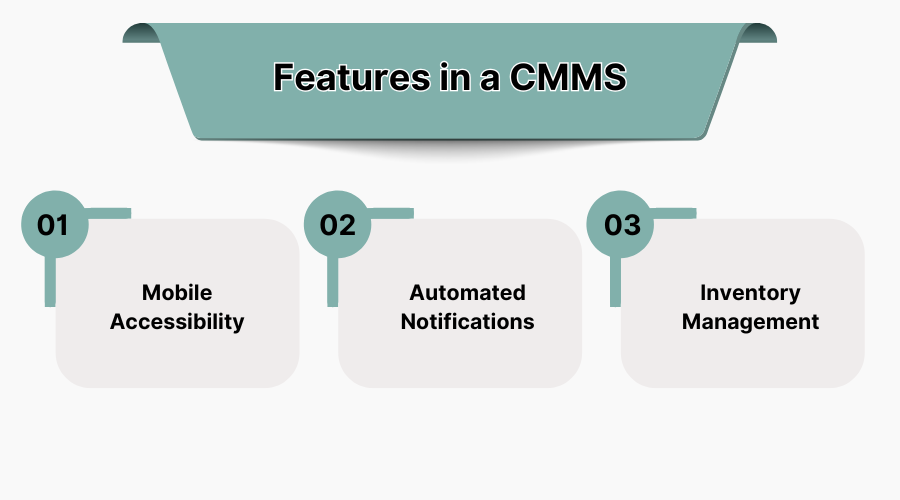
During CMMS software selection, ensure your chosen software meets your specific requirements. Several features can make or break the deal, and here are just a few examples:
-
Mobile Accessibility
In these fast-moving times, you should be able to access your maintenance management system from anywhere. By accessing CMMS on mobile devices, your team can enter updates, view work orders, and monitor assets while out in the field.
-
Automated Notifications
Getting blindsided is nobody's happy place. Automation alerts ensure your team knows when a task is due, when an asset requires attention, or when maintenance is planned. This proactive feature ensures that everyone is updated and prepared to make decisions.
-
Inventory Management
Lack of spare parts or other materials during maintenance could lead to delays and considerable downtime for your operations. CMMS can monitor inventory, reorder parts when supplies are low, and help to keep everything organized.
How a CMMS Affects Plant Maintenance Strategy
A CMMS will not just aid maintenance management; it will revolutionize your plant maintenance strategy. It helps you move from reactive to proactive by arming you with data and insights that support decision-making. There is no need to wait until something snaps; you can act before problems get out of control.
Positive change is not only operational. It also directly affects your bottom line. It helps businesses prevent unplanned downtime, lower repair costs, and enhance productivity. It also assures you that your team is working with the best tools for the task.
Making the Business Case for a CMMS
Convincing leadership to invest in a CMMS often boils down to showing value in hard numbers. A CMMS directly contributes to measurable ROI through reduced downtime, improved labor productivity, and fewer emergency repairs. For many plants, just a 10% drop in unexpected downtime can pay off the software investment in months, not years.
But the value isn't only financial. A centralized system for maintenance boosts communication, compliance, and accountability. Teams no longer fumble through spreadsheets or chase paper trails. They get real-time insight into what needs fixing, what’s overdue, and what’s working just fine.
CMMS and Regulatory Compliance
Most plants operate under strict safety and environmental regulations. A missed inspection or skipped maintenance task can turn into a compliance nightmare. CMMS helps avoid that. It automates recordkeeping, logs every action, and generates reports that prove due diligence.
Imagine being able to pull up a complete service history for any asset in seconds—something that’s a headache with manual systems. For audits, insurance claims, or OSHA checks, that level of documentation can be a lifesaver. It also helps standardize inspection routines, track compliance deadlines, and alert teams before a regulatory task is overdue, keeping your facility always one step ahead.
Empowering Your Team, Not Replacing Them
Some people worry CMMS will complicate their job or replace experienced technicians. That’s a myth. A CMMS doesn’t replace know-how; it supports it. Techs still make decisions—but now they’re backed by data, reminders, and historical context. And this benefits the work processes to a significant extent.
It also prevents knowledge from walking out the door when senior team members retire or switch roles. With everything logged in the system, younger techs don’t have to start from scratch.
Integration and Scalability
The modern CMMS isn't a siloed tool. Most platforms integrate with ERP systems, IoT sensors, inventory databases, and more. That means maintenance activities tie directly into the larger business ecosystem. You can analyze asset performance across plants, automate procurement when stock hits minimum thresholds, and trigger alerts based on sensor input.
And as your operations scale, so does the CMMS. Whether you’re managing five machines or five thousand, cloud-based CMMS platforms grow with you, without ballooning costs or complexity. Plus, they offer customizable dashboards, API access, and third-party app support—ensuring your system adapts to your workflows, not the other way around.
CMMS vs. EAM: What’s the Difference?
It’s easy to confuse CMMS with Enterprise Asset Management (EAM) systems. While they overlap, a CMMS is more focused on maintenance tasks like scheduling, tracking, and reporting. An EAM, on the other hand, covers the broader asset lifecycle, including procurement, depreciation, and disposal.
For most plants, a CMMS hits the sweet spot. It provides all the depth needed for effective maintenance management without the overhead of a full-blown EAM solution.
Conclusion
As the manufacturing world becomes increasingly fast-paced, maintenance is more important than ever! A CMMS is not merely a tool but an asset that can turn your plant's fortunes around. The proven benefits of CMMS software, like lower overheads, better asset life, and dynamic reporting, can make your plant efficient.
Therefore, whether you have a mini plant or a mega factory, a CMMS can be a game changer. Of course, plant maintenance is not about fixing something when it breaks—it is about keeping everything functioning nicely.

.jpg "Essential Ideas for Launching a Software Startup")