
.jpg)
Any powerful payroll software has the ability to navigate the employee compensation nuances. In the capacity of a business leader, deciding on the optimal pay schedule is not a decision that is going to affect your bottom line and administrative workload alone, but also employee satisfaction and financial well-being. One of the most frequent payroll dilemmas is the one related to the question of bi weekly vs semi monthly pay.

Looking for Payroll Software? Check out SaaS Advisor’s List of the Best Payroll Software in USA for Your Business.
Superficially, both of the pay frequencies present two paychecks every month, but a closer look at the specifics of the payment system in a bi weekly vs semi monthly pay system in USA shows that there are significant differences between the frequency, timing, and administrative complexity of the two systems. A payroll strategy begins with your decision on a pay schedule.
What is Bi weekly Pay?
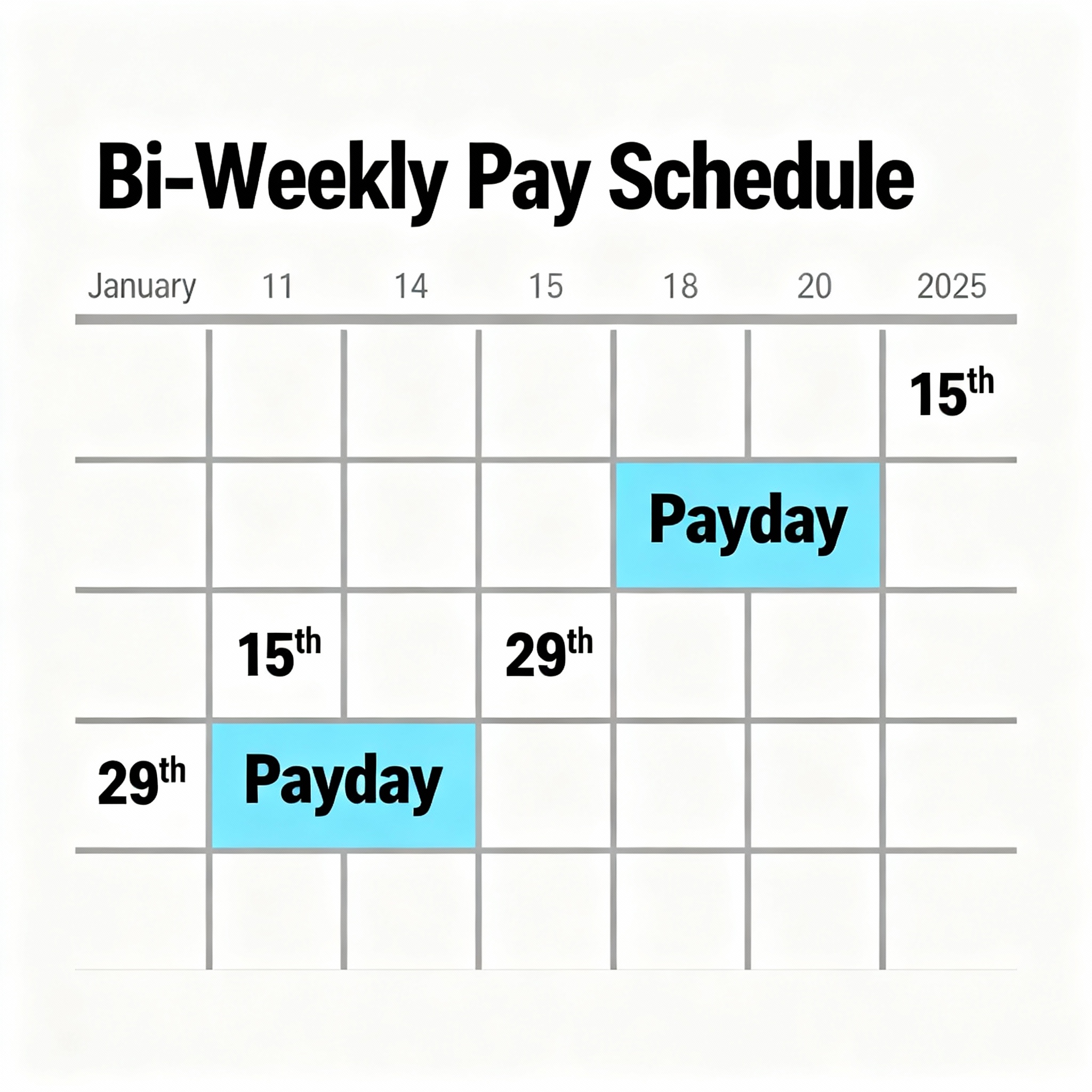
This frequency normally translates to 26 paychecks in a year period as a year has 52 weeks. Payments are usually made on the same day of the week as the rest of the Fridays, with employees enjoying a predictable stream of income. The math means that the year will have two months when the employees will get three paychecks each month as opposed to two. It has been popular as a way of making the calculation of overtime easier and as a way of ensuring uniform income.
Advantages of Bi weekly Pay
The bi-weekly pay has not been popular in the U.S. randomly; there are several particular benefits of the two-weekly pay to the staff as well as the employer:
-
Predictable Timing for Employees: Employees are made aware of the timing of their payments, like once every other Friday. This uniformity assists them in individual financial planning and budgeting. You will hear the employees say, "What does 'biweekly' mean?" or "What does 'biweekly' mean?" because there are likely to be employees who appreciate this routine.
-
Boosts Employee Morale: The increase in frequency of cash flow—26paychecks a year—is an important benefit. Semi-annually, the workers are given a third paycheck within a calendar month, which most of them use to settle debts or save up, producing a nice financial bonus sensation. This recurrent revenue has the ability to boost the cash flow among employees.
-
Simpler Overtime Tracking: The two-week time frame is quite congruent with the 40-hour workweek and the requirements of the Fair Labor Standards Act (FLSA) in calculating overtime. In the case of your payroll software, this uniformity will result in an easier time overseeing overtime and compliance.
-
Alignment with State Laws: Numerous state legislations in the U.S. have particular demands on the frequency at which employees, especially hourly paid workers, should be compensated, with most preferring a weekly or bi-weekly compensation.
Disadvantages of Bi weekly Pay
Although the bi-weekly schedule is extremely popular, there are some administrative issues with it:
-
Higher Administrative Costs: Since you do payroll 26 times annually, your HR and payroll department or your payroll software bears a greater administrative burden than the administrative burden of semi-monthly payroll 24 times per year. When your payroll company charges a fee per run, this will add to your overall expense in a year.
-
Complicates Monthly Budgeting (for the Employer): With two months out of 12 having three paychecks every year, the budgeting and cash flow forecasting of monthly budgets may become a little more complicated as a budgeter.
-
Potential for Budgeting Challenges (for the Employee): While two additional paychecks are excellent, the fact that the amount of each paycheck will be slightly less (annual pay is divided between 26 and 24) could be a factor against employees who have fixed monthly bills.
What is Semi monthly Pay?
Semi-monthly payroll is a payment schedule where employees receive their pay twice a month on set dates, usually the 1st and 15th or the 15th and the last day of the month. This approach results in 24 paychecks each year, dividing an employee’s monthly salary into two equal parts. It offers predictable payment dates, making it easier for employees to manage their finances. Semi-monthly payroll is common in salaried positions and industries that need to align pay with monthly expenses and budgets. For hourly employees, calculating pay can be trickier because of different workdays in each pay period. Overall, semi-monthly payroll provides a good balance between payroll efficiency and financial predictability for both employees and employers.
Advantages of Semi monthly Pay
This is the schedule most frequently used with salaried employees and with employers because of its easy financial management:
-
Predictable Monthly Cost for Employers: The payroll cost is predictable and regular (24 pay periods annually), with the expenses being regular and foreseeable every calendar month, and this makes the management of the cash flow easier.
-
Simpler Benefit Deductions: Since any benefit deductions (such as health insurance or 401 (k) contributions) are usually on a monthly cycle, it is easy and predictable to divide the deduction evenly between 2 paychecks. This program is perfectly compatible with predetermined monthly costs.
-
Aligns with Fixed Monthly Expenses: Most bills of employees, like rent and mortgages, are paid on a monthly basis. A semi monthly payment schedule can be effective because employees will be able to plan their budgets, as they will get money at certain important due dates. The semi-monthly meaning of this is monthly consistency.
-
Lower Administrative Workload: This schedule only has 24 pay runs every year, which lessens the overall rate of payroll processing and presents a decreased administrative workload and, in case your payroll solution is per-payrun priced, may result in reduced costs as well.
Disadvantages of Semi monthly Pay
The fixed date system brings about complexities that may interfere with the employees and payroll:
-
Inconsistent Pay Dates: The 1st or 15th of the month may fall on any day of the week, a weekend, or a holiday, so the actual payday usually changes. When workers inquire as to what does pay semi-monthly means, they ought to understand that the day of payment is not as regular as the day of the week schedule.
-
Complex Overtime for Hourly Workers: The working hours are not always in the one- or two-week work schedule. This has the ability to divide a single workweek and the corresponding overtime hours between two separate semi monthly payrolls and complicate and make error-prone overtime calculations for hourly workers.
-
Less Frequent Cash Flow for Employees: Due to the absence of bi-weekly pay, gaps in payment may exceed two weeks, something that is considered a disadvantage by some employees and makes them feel like they receive a lower wage frequency.
-
Perceived as a Downside by Some Employees: It might be perceived as a negative thing by the employees, who could view the reduced frequency of payment (24 vs 26 paychecks) as a poorer attribute, though the overall compensation of the employee will be the same.
Bi-weekly vs. Semi-monthly Pay Schedules: What's the Difference?
The difference between a bi weekly and a semi monthly pay schedule has a different implication on your operations and your team, though the terms may be similar. We will dissect the main distinctions of each to make your decision accurately. The basic distinction is in the number:
-
Bi-weekly pay: It is paid after every two weeks. This translates to 26 pay periods annually.
-
Semi-monthly pay: The payment is done once every two months. This causes 24 pay periods in a year.

|
Feature |
Bi weekly Pay |
Semi monthly Pay |
|
Pay Frequency |
Every two weeks |
Twice per month |
|
Annual Paychecks |
26 pay periods (Two months have a "bonus" 3rd check) |
24 pay periods (Always two per month) |
|
Payday Timing |
Same day of the week (e.g., every other Friday). High predictability for employees. |
Fixed calendar dates (e.g., the 1st and 15th). The day of the week will vary. |
|
Paycheck Amount |
Smaller (Annual salary / 26) |
Larger (Annual salary / 24) |
|
Overtime/Hourly |
Easier to calculate as pay periods align with 14-day work cycles. |
More complex, as the pay period can split a single workweek. |
|
Admin Burden |
Higher (more pay runs) |
Lower (fewer pay runs) |
Do I Earn More With Semi Monthly Pay?
This is among the most frequently asked questions, as well as, Which pay schedule would achieve the greatest pay? and "number of pay periods per year.

Pro-tip
Semi monthly pay dates do not make you more money. The pay schedule is not applicable in your case, as your annual salary will always be the same. The difference is cooked up in terms of the way your annual salary is split.
Semi-monthly: Salary divided in 24 checks;
Bi-weekly: Salary divided in 26 checks.
Thus, a semi-monthly check will theoretically be larger than a biweekly check, but with reduced frequency of payment.
- Semi-monthly Pay: $60,000 / 24 = $2,500 gross per paycheck.
- Bi-weekly Salary: $60,000 / 26 = $2,307.69 gross per paycheck.
Case Study: How to Calculate the Paycheck.
Take, for instance, the methods of calculating my semi-monthly earnings as a salaried employee with an annual salary of $60,000.
The difference between biweekly and semi-monthly is apparent where the number of dollars is paid on a check, but the sum of 60,000 is the same."
Bi-weekly vs Semi-monthly Pay Schedule: Which One is Better?
The pay schedule is neither better nor worse, and the correct option will be selected in relation to your workforce and business needs.
|
Best for... |
Bi-weekly Pay |
Semi-monthly Pay |
|
Hourly Workforce |
✓ Yes. Simplifies compliance and overtime. |
X No. Overtime tracking is complex. |
|
Salaried Workforce |
✓ Acceptable. Employees enjoy extra paychecks. |
✓ Yes. Payroll is consistent and easy to budget monthly. |
|
Lower Administrative Cost |
X No. More frequent processing (26 runs). |
✓ Yes. Fewer pay runs (24 runs) are more cost-effective. |
|
Employee Cash Flow |
✓ Yes. More frequent payments (every 14 days). |
X No. Longer gaps between paydays. |
The decision to use biweekly and semimonthly payments is a strategic choice.
-
When you have a huge number of hourly workers, the semi-monthly pay can prove difficult, and the staff may be more motivated with a paycheck every other Friday; then the bi-weekly timetable is probably your best opportunity.
-
When your company has mainly salaried employees who are of the opinion of simplified monthly budgeting with less administrative overhead and are at ease with the fixed-date semi-monthly pay dates, then the semi monthly paycheck schedule has obvious benefits.
-
Industry Standard: The recent survey conducted by the U.S. Bureau of Labor Statistics (BLS) Current Employment Statistics (CES) survey indicates that the most prevalent schedule in the private industry is bi-weekly pay.
Do You Know?
According to a survey conducted by the Bureau of Labor Statistics, about 43% of the total number of private businesses in the U.S. operate on a bi-weekly payroll system, with a mere 20% employing a semi-monthly payroll system. This underscores the fact that the bi-weekly pay schedule is the most prevalent one in the U.S. presently.
Conclusion
Modern payroll solutions should be capable of managing either of the choices stated above and, by automating complex calculations, provide advanced payroll flexibility for either bi-weekly payrolls with two extra pay periods or semi-monthly payrolls of variable days of the week. This processor guides above compliance with labor laws and instills a sense of predictability for employees, irrespective of the selected schedule. Hence, the aim is to facilitate less administrative burden and processing errors, thus enhancing employee satisfaction.
Suggested Read:
How Global Payroll Software Simplifies Payments for Remote Teams in USA
How Payroll Software Can Simplify Compliance for USA Companies
Why Investing in Right Payroll Software is Crucial for Your Business in USA
How to Select the Best Payroll Software for Your USA Business
Choose Best Payroll Software to Boost USA Business Productivity