
What we'll cover
Share with your community!


Get Free Consultation
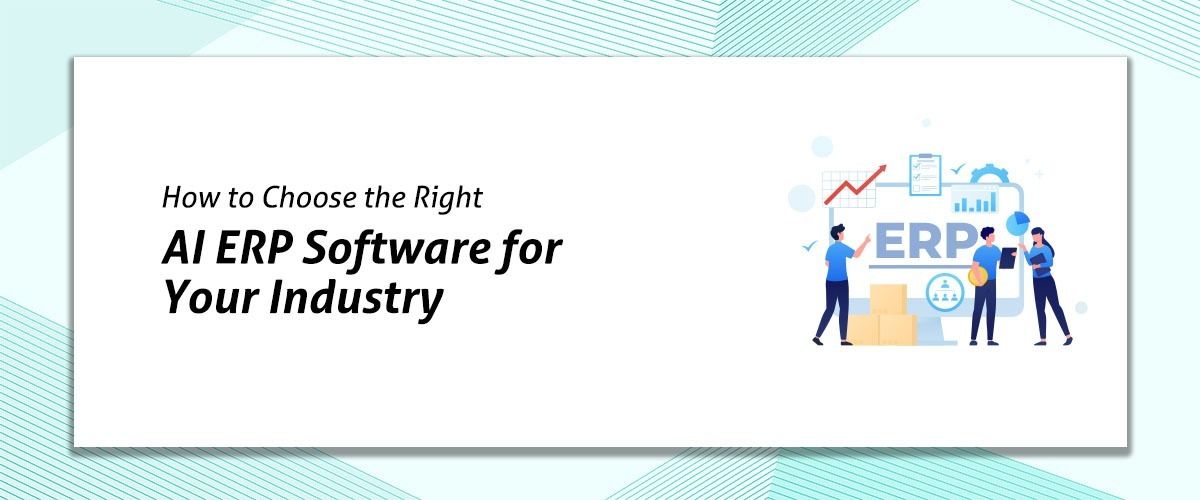
How to Choose the Right AI ERP Software for Your Industry
 David N. Wilks
For enterprises in the U.S. that want to gain operational independence, selecting the right AI-based Enterprise Resource Planning (ERP) platform has become a pivotal point of competition. Rapidly changing markets defined by replacing traditional transaction entry-based processes with agentic workflows and predictive analytic capabilities can destroy an organization’s supply chain and drive up cloud costs when using the wrong ERP system. Generic, full-service ERP solutions are no longer viable options for U.S.-based business leaders, who require highly tailored, industry-specific AI technology solutions and vertical AI layers that are designed specifically to meet their unique industry requirements or use cases. Selecting the right platform also means assessing the efficiency of how the machine learning is integrated into the platform operates relative to your company’s business operations today.
What Is AI ERP Software?
The next evolution of Enterprise Resource Planning software is AI ERP systems that are the future of Enterprise Resource Planning systems; integrating machine learning (ML), natural language processing (NLP), and advanced predictive analytics into the head end of an enterprise's data core. Previously, an ERP system was a static repository of financial information, inventory, and employee data as it depended on manual entries to keep track of these types of information. AI ERP systems, on the other hand, do this much differently. By constantly monitoring the flow of information across multiple departments within an enterprise, AI ERP software can instantaneously discover the relationships among disparate pieces of information through complex operational patterns being created and discovered; forecast potential disruptions within the supply chain; and harmonize multi-currency general ledger transactions in real-time without requiring the assistance or involvement of any human.
In the U.S. marketplace, the largest deployment area in the world, AI ERP software has transitioned from early-stage projects of experimentation to the foundational layer of infrastructure for companies enhancing their operational process. With the desire for organizations to manage macroeconomic fluctuations and severe labour shortages, driving the use of AI ERP systems to deliver hyper-automation across their work processes. Instead of providing data on historical sales numbers or levels of inventory as a historical record, AI ERP software works with decision-makers every day to provide proactive suggestions regarding the use of dynamic pricing, the identification of manufacturing floor maintenance opportunities, and/or alerting buyers about delays in international shipments, a long time before those delays disrupt a company's operational efficiency.
Why Does Your US-Based Business Need AI ERP Software?
US companies must utilize AI ERP Systems to adapt to the uncertain economy quickly because using outdated and fixed software will slow down the ability to respond to rapid changes in inflation and cost of capital.
Additionally, American supply chains, manufacturers, and back-office work are facing chronic labor shortages, so hyper automation is becoming necessary. For example, US companies are using intelligence-based ERPs instead of spending costly man-hours on labor-intensive activities like multi-state tax compliance, inventory reconciliation, and procurement matching; ERPs will autonomously complete these recurring transactions via intelligent software.
By removing these time-consuming administrative tasks through the use of machine learning models that automate them, US companies will grow their business by increasing revenue and expanding their operations while avoiding hiring bottlenecks or high fixed costs to operate the business.
How Do You Identify the Right AI ERP Software for Your Industry?
Choosing the right AI-enhanced ERP solution demands an investigation beyond the vendor's marketing hype and into the actual operational processes and data compatibility. Here are some foundational criteria you should use to assess potential vendors to determine which ERP platform is best suited for your individual industry:
1. Look at Training on Each Vertical Model: You will want to ensure that the native machine learning algorithms within the ERP have been trained utilizing datasets specific to your particular industry (i.e., predictive maintenance for manufacturing, or multi-state automated taxation for retail in the US), not just a generic corporate workflow dataset.
2. Conduct an Audit of Data Hygiene Requirements: You will need to determine how much data cleansing your organization will need to do before deploying, as advanced AI-based algorithms will only make poor-quality legacy data yield more inaccurate automated predictions.
3. Verify Compliance and Data Isolation: Confirm that the provider maintains solid data isolation boundaries (i.e., HIPAA, SOC 2 Type II) and that your proprietary corporate metrics and customer logs are never used to train any public-facing Large Language Model.
4. Evaluate Human in the Loop Safeguards: It ensures that the system you select has an agentic framework that gives your team the ability to review, override, or approve significant autonomous decisions made by the ERP (e.g., automatic reordering of inventory; vendor-switching) at the time they are executed in production.
5. Distinguish between native vs. bolted-on layers of AI: When determining which platform to implement a generative AI assistant or predictive algorithms, you should look for a platform that has both natively integrated into the core database architecture in place of an unaffordable or lagging out-of-the-box (3rd party) bolt-on module.
What Features Should You Look for in AI ERP Software?
As you assess an AI-enabled enterprise resource planning (ERP) system, think more than just about basic digital bookkeeping, and focus instead on features that will allow you to operate autonomously. The appropriate platform will feature these capabilities that turn your data into actionable predictive outcomes:
- Autonomously Reconcile Finances: Incorporates machine learning algorithms to automatically match invoices, identify deviations in AI expense management and reconcile complicated multi-currency ledgers with little to no accounting intervention.
- Predictive Supply Chain & Inventory Analytics: Forecasts fluctuations in demand, continually recalculates the right amount of safety stock needed to cover that demand, and automatically alerts you when certain vendors or shipments are likely to miss deadlines.
- Generative Executive Reporting: Employs natural-language query interfaces that allow executives to type queries, such as, Show me product lines with declining margins this quarter, in an intuitive, conversational manner to create in-depth analytics-based charts in real time.
- Automated Regulatory & Tax Compliance: Continuously tracks any changes to state, federal and/or international tax codes and makes automatic adjustments to workflow processes so your organization will continue to meet high standards of regulatory compliance with applicable reporting requirements.
- Agentic Process Automation: Moves away from rigid scripted processes toward a more fluid, intelligent means of managing complex multi-step workflows, such as self-drafting, self-routing, and self-completing purchase orders when inventory levels reach critical quantities.
- Predictive Asset & Resource Management: Takes data from sensors in equipment and labor logs to accurately forecast anticipated windows for conducting maintenance and identifies when labor gaps may exist because project timelines shift.
How Does AI ERP Software Compare Across Different US Industries?
AI ERP software acts as a centralized data brain, but how that brain operates depends heavily on the industry it serves. Because different US sectors face distinct regulatory hurdles and operational bottlenecks, the AI algorithms are trained to solve entirely different problems.
Different industries in the United States have different regulatory challenges and operational roadblocks; therefore, the AI algorithms used within those industries have been trained to solve different problems. AI ERP software will behave as a centralized data brain regardless of the industry.
Predictive Maintenance (Manufacturing) The main focus in manufacturing is automating shop floors and protecting existing fixed assets. AI connects directly to factory equipment sensors, providing manufacturing owners and operators with early detection of machinery failures (weeks before they occur), dynamically scheduling shop production shifts according to the health of the machine, and automatically managing the amount of raw materials coming in so there will be no deadstock in the warehouse.
Demand Driven (Retail and eCommerce the two biggest factors impacting retailers/eCommerce are how fast a customer wants to receive a product and consumer demand trends. AI ERP solutions continuously collect data from real-time marketplaces, social media trends, and local weather forecasts to determine the most current pricing on products sold through their online channel; moreover, they automatically reroute physical inventory between regional distribution centers when there is a sudden spike in product demand.
The health care delivery system has a high level of regulation and security, which also heavily specifies the requirements for AI fashion design and experience, in addition to being compliant with privacy laws (HIPAA). AI can help to optimize operational resources, such as by predicting patient volumes in emergency rooms (ER) to automate nurse shift schedules; improving the claims process for insurance, and tracking medical supplies and their lifecycle.
In a similar manner to warehousing or distribution centers that rely on the physical inventory of products or services, AI helps to improve how IT consulting firms and accounting firms manage their human capital or financial resources (as there will be no physical inventory of either). For example, AI uses current project pipeline data to predict future decreases in talent supply; automates the tracking of billable hours to employees; and alerts businesses to unprofitable clients considerably earlier in the life cycle of the project than normally possible.
Logistics and supply chain management focus mainly on route optimization and transit resiliency. AI continually analyzes international shipping lane data, the increasing levels of congestion at U.S. ports, and regional fuel costs, enabling organizations to adjust their delivery schedules or change their delivery partners so they can provide products at the most economical price.
What Are the Common Challenges When Implementing AI ERP Software?
- Mishandled Data and Poor Data Quality: To provide accurate predictions, AI systems require organized, clean historical data. Supplying the AI systems with dirty, duplicated, or siloed legacy data will result in flawed predictions for both inventories and financials.
- Investments in Initial Capital and Cloud Infrastructure: The initial cost of advanced AI models and the required cloud computing resources to process continual, increasing volumes of data in real time is significant and places pressure on mid-sized corporate budgets before any ROI is recognized.
- Cultural Resistance by Staff and Mistrust of Employees: Many employees, including frontline staff and mid-level managers, express concerns about automated systems either because they fear losing their job to automation or because they do not understand why an AI model ordered a different inventory quantity than was historically done or rejected a financial report.
- Severe System Integration and API Friction: When connecting an AI-enabled ERP to existing peripheral software (i.e., legacy warehouse management systems, point-of-sale systems, proprietary customer relationship management platforms, etc.), fragile API connections often exist, resulting in delays in synchronizing data.
- Model Drift and the Maintenance of Algorithms: AI models are not set-it-and-forget-it systems; they will lose predictive power over time because of multiple variables, including changes in macro market conditions, dynamics of the supply chain, and purchasing habits of corporations, causing the underlying machine learning models to require continuous recalibration.
How Do You Evaluate AI ERP Software Vendors in the US Market?
When looking to evaluate potential AI-powered ERP vendors within the United States, go beyond polished sales demonstrations to look closely at their underlying data architecture, contractual agreements, and compliance with regulations. Your evaluation will be based on how the ERP system is primarily used to operate company-wide operations; therefore, the evaluation framework should be centered on data security and real-life performance capabilities of the system.
If you want to find your way through the complicated enterprise software marketplace in the USA, set up your vendor due diligence process around these three important bases:
- Auditing Data Sovereignty and AI Training Terms: Ensure that your vendor's MSA has sufficient terms written into it protecting your proprietary corporate personal data. This would include an explicit statement that your company's financial records, customer data, and operational logs will remain 100 percent isolated within your tenant space and never used to train public LLMs.
- Verify Compliance with US Regulatory Frameworks: Make sure that the vendor's infrastructure is up-to-date and has valid SOC 2 Type II certifications. Depending on which industry you are in, also check that the vendor has native support for the appropriate regional and federal regulations (for example, HIPAA for healthcare data or ITAR for defense contract compliance) that apply to your industry, and that they can provide automated multi-state sales tax calculations through Avalara integration for retail businesses.
- Differentiate Between Native AI Versus Bolted-On: Ask the vendor about the design of its software so you can get an understanding of how the software is designed. Many legacy providers deliver software that consists of traditional, rules-based software scripts that have been wrapped with generic labels for AI marketing purposes. Evaluating vendors whose machine learning models are embedded directly into their database layer will provide your company with real-time data ingestion and predictive analytics capabilities.
- Require Proof that There Are Human-in-the-Loop Controls: An autonomous ERP system can cause chaos by generating vast amounts of inventory orders or incorrectly flagging transactions if there is no oversight over the AI systems. Verify that the platform has strong process gates that will allow internal teams to easily review, modify, or deny the execution of an AI-generated workflow prior to that workflow being executed in a production environment.
- Examine Actual Implementation Timelines and API Friction: Ask for reference examples in your industry to assess the real-world feasibility of implementing the vendor's products and/or solutions. Examine the vendor's technical documentation to verify whether the vendor's products or solutions include an open API and a pre-built connector to confirm the AI engine has been successfully integrated.
Conclusion
There are many points to take into account when selecting an appropriate AI ERP Software solution. First, you must carefully assess which aspects of each machine learning capability are relevant and useful to your business's unique operations. Next, you need to determine the appropriate security boundaries for any data governance processes in place, which also includes verifying any native system integrations, as this will impact how effectively your organization can grow autonomously. Choosing the AI ERP platform that best fits your organization is critical to ensuring that your core enterprise processes will be able to seamlessly scale with the ever-changing demands of your marketplace. Thirdly, in order to help you navigate your procurement process with confidence, use softwareadviser.ai the most comprehensive SaaS marketplace available for business leaders to search, evaluate, purchase, and manage their complete line of required software solutions needed to keep their companies running smoothly.

Long live the pulse of real-time data; the typical annual staff survey is dead. With workplaces transitioning to hybrid models and the rise of quiet r [...]
David N. Wilks
US property groups face a constant struggle tracking endless lease renewals, multi-state commercial buys, and complex vendor disclosures. For years, r [...]
David N. Wilks
Running a profitable kitchen today takes more than just cooking notable food; it all comes down to how fast you get food to the consumer's door. In 20 [...]