
The New Era of Customer Acquisition
Winning new customers is still very much the baseline for any business. However, lately, well-worn tactics like cold outreach and broad-based ad campaigns no longer deliver the way they used to. Buyers notice. They pause longer. They expect an experience that’s actually relevant, maybe a bit faster too. It’s not about how many people get your message. Value, not volume, is what drives the work now.
That’s left marketing teams wanting more than just heaps of raw data. They’re after tools smart enough to “get” the audience, to spot intent, to act quickly, and (ideally) always at the right moment. That’s exactly where AI-powered customer acquisition platforms fit.
AI quietly changes the rules for finding, attracting, and converting customers. Instead of just guessing, businesses tap into machine learning to identify promising leads. tailor their outreach, and quickly determine what’s working and what isn’t. Growth feels less frantic and more targeted.
What Is an AI-Driven Customer Acquisition Engine?
An AI-driven customer acquisition engine isn’t just another tool stacked on top of your CRM. It’s more like the connective tissue: artificial intelligence, automation, and analytics all working together to steer prospects from “maybe” to “ready to sign.” It learns from every touchpoint, often adjusting its approach as new patterns emerge.
Picture the engine inside a modern AI-powered customer acquisition platform. It’s pulling in data constantly from the website, CRM, social media, purchase history, all of it. Gradually, it figures out what actually converts. Messaging changes. Audiences get easier to understand. Sometimes, it even surprises the team running it.
A robust AI engine tends to offer:
-
Predictive lead scoring, so prospects with a real chance of buying.
-
Automated optimization, so bids, timing, and creative are all moving in sync with results.
-
Personalization, which means messages, offers, timing, and even the channel itself, by user.
-
Transparent analytics for channels and strategies, and not just the ones that hit.
These aren’t siloed functions; they’re built to inform each other. The impact is compounded.
How AI Accelerates the Conversion Process
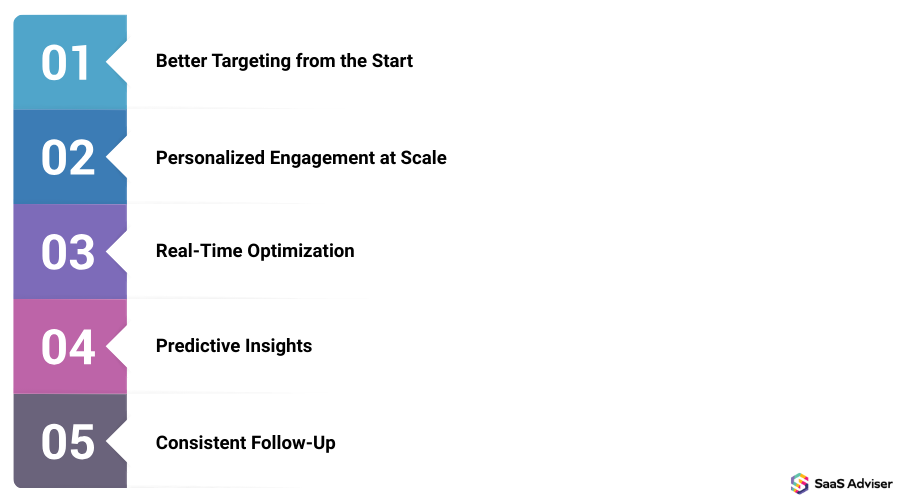
AI’s value gets real when it smooths the road from curiosity to “let’s go.” Not every step is obvious, though.
-
Better Targeting from the Start
AI reviews mountains of signals: clicks, old purchases, region, how often folks stay on the site. From there, it narrows down which audiences are actually worth the effort. The signal-to-noise ratio just gets better.
-
Personalized Engagement at Scale
Every message isn’t just “dear customer”—it lands with context. AI can fine-tune emails, yes, but it also mixes up timing, channels, and those small nudges (think a product rec at a random-but-right moment). More attempts result in a reply than not.
-
Real-Time Optimization
AI monitors campaigns in the background constantly. Something falls flat? Text changes, budgets shift, even creative swaps, all without anyone needing to hit “pause.” And yet, manual adjustments are also welcome because you have the expertise.
-
Predictive Insights
Patterns matter, as the data reveals, when it comes to what pushes people over the edge when they make a purchase. AI picks up on that. Sales teams determine where to allocate their time, and productivity improves.
-
Consistent Follow-Up
Plenty of leads, they just go quiet. Perhaps it's timing, or perhaps there was no follow-up. That’s where AI helps with reminders, triggered emails, and timely retargeting. As a result, fewer things slip through.
The Business Impact of an AI-Driven Acquisition Engine
Using AI to acquire new customers? Nice! Most probably, you’re seeing
-
Higher conversions: Not every lead converts, but prioritising those with intent improves the average.
-
Lower costs: Automation trims wasted spending, and fewer resources get spread too thin.
-
Faster decisions: Teams see campaign feedback soon, not weeks later. Better experiences: Personalization means more buyers feel “seen,” though not everyone loves it.
-
Stronger retention: Value-driven engagement builds relationships. Not instantly, but over time, it works.
For SaaS, retail, and services (really, most industries), it means more efficiency and, usually, more growth.
Real-World Applications Across Industries
AI-powered acquisition isn’t tied to one sector. The use cases are varied and sometimes overlap.
-
E-commerce: AI reads browsing, predicts intent, and suggests products. A shopper clicks “running shoes” yesterday and today sees relevant offers.
-
SaaS: Platforms can identify high activity from low-conversion users, prompting them with onboarding or targeted offers.
-
Financial Services: Banks detect life events or spending patterns, triggering timely offers.
-
Travel and Hospitality: AI tracks searches and favourite dates and sends updates or perks. Browsers become bookers.
-
Healthcare and Wellness: Segmentation becomes sharper—patients receive reminders for checkups, and program promotions arrive on schedule.
In each case, AI replaces blunt assumptions with evidence. The accuracy improves, the effort needed declines somewhat, and results feel less erratic.
How to Implement an AI-Driven Acquisition Engine
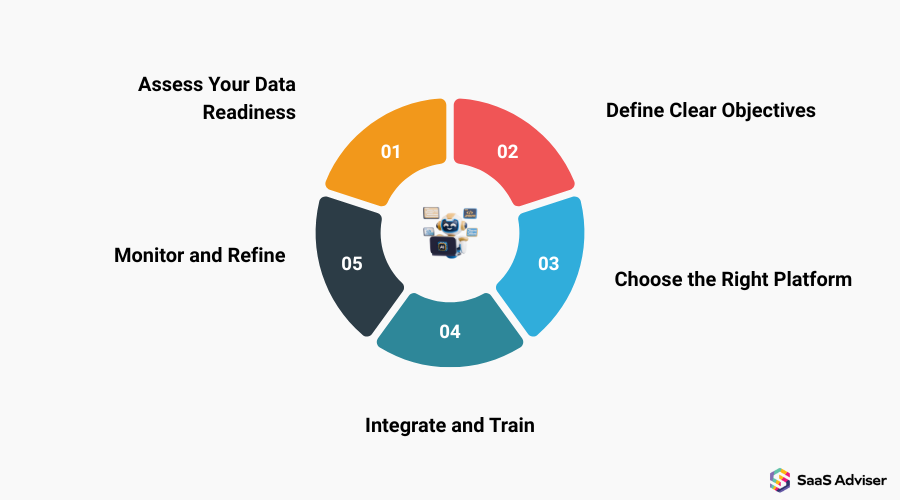
No need to reinvent the core stack. Usually, it’s about adding the intelligence on top.
-
Assess Your Data Readiness
Start by examining what you currently collect, including CRM records, web logs, ad output, and customer tickets. If it’s messy or siloed, results suffer. Clean, accessible data feeds the algorithm.
-
Define Clear Objectives
Set reasonable objectives, such as better leads, more conversions, and reduced expenses. Pick one to start. Too many at once, and you lose focus.
-
Choose the Right Platform
Find a platform that utilizes predictive models and automation, but ensure it integrates seamlessly with your existing systems. Bells and whistles don’t matter if integration’s a headache.
-
Integrate and Train
After launch, load in as much relevant data as you can. Both real-time and historical data aid the AI in becoming acquainted with your customers' realities. Expect a learning curve.
-
Monitor and Refine
You can’t just “set and forget” AI. Performance shifts, buyers change, and algorithms need tweaks. Check in often, and make adjustments. Sometimes small tests reveal a lot.
Challenges and Best Practices
While AI brings clear advantages, businesses should approach implementation thoughtfully.
Challenges:
-
Data often doesn’t cooperate; inaccurate or incomplete records can derail AI predictions.
-
Integrating data from various sources is rarely seamless and typically requires significant technical effort or the use of new tools.
-
AI may offer recommendations, but human judgment is still necessary; sometimes a call just can’t be automated.
-
Team trust in AI systems doesn’t happen instantly; skepticism or hesitation is common in early stages.
Best Practices:
-
Start with a focused, testable use case instead of attempting a massive shift all at once.
-
Keep records of how and why the AI makes key decisions to provide transparency and foster understanding.
-
Blend quantitative AI insights with qualitative human intuition. Numbers aren’t everything.
-
Monitor compliance and privacy closely; meeting GDPR or similar standards is the beginning, not the end.
At its essence, AI amplifies human skills when used effectively.
The Future of AI in Customer Acquisition
The future of customer acquisition will be defined by precision, automation, and empathy, all powered by AI. As technology evolves, we can expect:
-
Personalization will go much deeper. Campaigns will shift in real time, learning from each person’s mood, choices, and context. The “one-size-fits-all” approach is fading fast.
-
Voice assistants and chatbots are taking center stage. People will glide from a question to a purchase. Sometimes all inside a single, ongoing chat.
-
Predictive retention is gaining ground. AI won’t just focus on finding new customers; it’ll spot churn risks early and trigger the right action, sometimes before teams even notice.
-
Unified data systems are slowly becoming reality. AI is stitching together marketing, sales, and customer service data so brands see the full customer journey, with all its quirks and inconsistencies.
To put it briefly, AI will keep shifting the process of acquiring customers from one of persuasion to one of understanding.
Final Thoughts
AI is changing the way companies attract and convert customers; no surprise there. What's different now is that an AI-powered customer acquisition engine allows companies to reach prospects with pinpoint accuracy, make more informed decisions, and increase conversions in ways that traditional approaches just cannot.
Combining automation, rich data, and adaptive intelligence is becoming a must for businesses looking to grow effectively. Investing in an AI-powered platform means building a system that learns continuously, tweaks itself, and, ideally, delivers better outcomes with each interaction.

.jpg "Cloud Payroll Solutions: The Future of Payroll Management in USA")