
What we'll cover
Share with your community!


Get Free Consultation
Best AI Accounting Software 2026: Reviews, Features & Pricing
-min.jpg) Ankit Patel
Ankit Patel
Managing a clean set of books is not enough to run a business in 2026; you need a system that truly helps you. The days of "good enough" record-keeping and manual data input are long gone. With its ability to manage every dollar in real-time, handle laborious paperwork, and even identify cash flow trends before they become issues, today's AI accounting technologies have completely transformed the game. This implies that American company owners will finally abandon those cumbersome spreadsheets in favor of a proactive approach. You're not just keeping compliant when you let machine learning do the heavy work; you're also freeing up your time to concentrate on expanding your company.
Why is AI Accounting Software Essential in 2026?
Proactive financial management has replaced reactive record-keeping in the U.S. business environment in 2026. Manual data entry is no longer only slow; it is now a competitive liability due to the enormous volume of digital transactions and the pace of the American market. AI-driven platforms are essential for turning accounting from a year-end chore into a daily strategic advantage because they provide the real-time visibility required to handle high-interest scenarios and moving supply chains.
In the current regulatory climate, precision and compliance have reached a key turning point. Due to the use of sophisticated data-matching algorithms by the IRS and state agencies, human error in tax filing or expense classification might result in automatic audits more often than in the past. AI software lowers this risk and protects business plan software from costly fines by upholding "always-on" compliance, scrutinizing every transaction for abnormalities, and ensuring that U.S. GAAP regulations are obeyed with almost 100% accuracy.
Cash flow is still crucial for small and fledgling companies in the United States. By 2026, AI systems will be able to forecast future resources in addition to analyzing past spending. By analyzing historical trends and broader economic trends, these systems offer predictive forecasting, which allows owners to anticipate cash shortages or investment opportunities months in advance. The capacity to foresee market shifts and handle unforeseen liquidity issues is essential.
Key Features to Look For
-
Zero-Touch Entry: High-precision OCR eliminates the need for human input by automatically extracting data from invoices and receipts.
-
Smart Categorization: By machine learning software from previous behavior, machine learning maps transactions to your chart of accounts.
-
Instant Audit Trails: To ensure transparency for IRS or internal reviews, each automated entry has a digital footprint.
-
Dynamic Forecasting: 90-day cash flow estimates are produced by real-time analysis based on historical trends and patterns.
-
Anomaly Detection: Continuous monitoring finds duplicate invoices, unusual expenditure, or even fraud before it affects the books.
-
Natural Language Queries: By posing simple English queries, users can produce intricate financial reports.
-
Live Ecosystem Sync: For a single financial view, bi-directional data flow links bank feeds, payroll, and CRM.
-
Automated Tax Mapping: For a stress-free filing process, systems match annual expenses with tax categories.
Best AI Accounting Software Reviews (including Features & Pricing)
Profiles of the Best AI Accounting Software (2026)
1. Zoho Books
Zia, Zoho's own AI assistant, is firmly ingrained in the accounting process. Important AI features include voice-activated reporting, anomaly detection in transaction patterns, and payment delay prediction. Additionally, it automates the process of "tagging" expenses according to past performance.
-
Free: For companies with less than $50,000 in revenue.
-
Standard: Basic automation, $15–$20 per month.
-
Professional/Elite: $35–$150 a month (advanced inventory and automated process).
-
Perfect For: SMBs using the Zoho ecosystem (CRM, Mail, Projects) already.
2. Sage One Accounting
With Sage Copilot, Sage has transformed from a traditional brand into a cutting-edge AI powerhouse.
-
Important AI Features: Sage employs "Continuous Accounting" to automatically reconcile bank feeds every day. Its AI analyzes spending against local tax codes in real time to find potential for tax savings.
-
Pricing: The minimal "Start" package costs about $10 per month, whereas regular company demands cost more than $35 per month.
-
Ideal For: Reputable SMBs and accountants who want strong, trustworthy reporting and international compliance.
3. Ficsus.nl
A major participant in the European market that has increased its AI capacity to manage intricate VAT and international digital tax regulations. Key AI Features: Nearly 100% accurate "Scan & Recognize" technology for bills and receipts. The Dutch and EU-specific tax filing process is automated using AI.
-
Pricing: It varies from €12.50 to €45 per month, depending on the number of transactions and users.
-
Perfect For: Independent contractors and small businesses in the Netherlands or the EU.
4. SnelStart
SnelStart has evolved into a cloud-native platform that emphasizes AI-powered cooperation between accountants and entrepreneurs. Automated link-matching between invoices and bank statements is one of the main AI features. It has a "smart dashboard" that displays future liquidity using predictive modeling.
-
Pricing Ranges: From €15/month for invoicing to €75+/month with full accounting and AI insights.
-
Ideal For: Dutch business owners seeking a smooth, automated connection to their CPAs (certified public accountants).
Benefits of AI in Accounting for US Businesses
For American companies navigating the 2026 economic landscape, implementing AI-driven accounting is now a basic necessity rather than a luxury. The main advantages are as follows:
1. Super-Efficiency and Cost-Reduction
-
Touchless Operations: AI reduces the cost per invoice from roughly $6.30 to less than $3.00 by automating up to 90% of manual data entry.
-
Fast Monthly Closes: Autonomous technologies allow financial analysis software teams to focus on strategy instead of reconciliation by reducing the month-end closure cycle by more than seven days.
2. Accuracy and Risk Reduction
-
Improved Accuracy: When compared to conventional human oversight, AI-powered anomaly detection can cut substantial misstatements by up to 76%.
-
Proactive Fraud Prevention: All transactions are continuously scanned in real-time to identify any duplication or questionable trends before they affect your bank account.
3. Strategic Foresight
-
Predictive Cash Flow: Owners may foresee liquidity shortfalls before they arise thanks to sophisticated algorithms that produce 90-day rolling predictions that take U.S. market volatility into account.
-
Scenario Modeling: By using "what-if" research, businesses may rapidly assess the financial impacts of a new hire, price rise, or capital outlay.
4. Easy Compliance
-
Audit Availability: AI keeps a digital "paper trail" for each entry, guaranteeing that your books are always clear and adhere to US GAAP regulations.
-
Automated Tax Logic: In order management software to make end-of-year files easier, systems automatically map expenses to tax categories based on the most recent IRS codes.
Common Use Cases for AI Accounting Software
AI has evolved from a backend tool to a front-line worker in the 2026 U.S. market. Three main use cases are as follows:
1. Independent Receivables & Payables
AI is used by contemporary American companies to manage bills throughout their whole lifespan without the need for human interaction. These systems take information from vendor bills, compare it to purchase orders, and plan payments to maximize early-payment discounts using high-precision computer vision. The "Days Sales Outstanding" (DSO) for American small businesses is greatly decreased by AI agents that proactively monitor aging reports and deliver tailored, tone-appropriate reminders to late payers.
2. Monitoring Fraud and Compliance Proactively
AI is being used by American businesses as a defensive measure as the IRS and other agencies implement sophisticated digital auditing capabilities. These platforms offer "always-on" anomaly detection, which scans all transactions in real-time to identify potential rule breaches, odd expenditure surges, and duplication. Businesses may navigate tax season with minimal manual preparation and high confidence by keeping an ongoing digital audit trail and automatically mapping spending to current tax rules.
3. Real-Time Strategic Forecasting
Conventional monthly reports are out of date in 2026 due to the unpredictable U.S. economy. These days, accounting software offers rolling 90-day cash flow forecasts that change every hour in response to market developments and bank data. In order to make data-driven decisions that formerly needed a complete staff of financial analysts, business leaders use these "living" reports to conduct scenario simulations, such as the financial impact of a new hire or a possible supply chain disruption.
Which AI Accounting Platform Best Fits Your 2026 Business Needs?
The U.S. market will have moved from basic digital ledgers to completely independent financial ecosystems by 2026. The capacity to operate as "intelligent agents" as opposed to merely static software is currently a defining characteristic of leading technologies. A new generation of AI-native competitors has surfaced, delivering real-time, touchless bookkeeping that completely does away with the conventional month-end closure, while legacy platforms have incorporated machine learning to sustain their substantial market shares.
There is a distinct difference between "AI-Native" and "AI-Enhanced" solutions in the current market comparisons. Conventional industry leaders are perfect for companies that need strong connectivity with external CPAs since they concentrate on comprehensive third-party connectors and automatic tax mapping. Modern AI-native solutions, on the other hand, provide better predictive analytics and natural language interfaces, enabling business owners to ask questions about their financial situation in simple English and get immediate, data-driven strategy advice.
In 2026, pricing structures have also changed to take this technical change into account. With an emphasis on automatic spending classification and billing, entry-level rates for freelancers and small enterprises usually range from $25 to $100 per month. The monthly cost of mid-market and startup-focused systems, which frequently incorporate extensive multi-entity consolidation and hybrid human-AI assistance, can range from $500 to more than $1,500. The decision ultimately comes down to whether a company values the hyper-automation of an AI-first platform or the well-known ecosystem of an established provider.
Conclusion
The transition from basic automation to complete financial intelligence characterizes the state of AI accounting in 2026. Selecting the ideal platform requires striking a balance between the practical requirements of your US-based company and cutting-edge capabilities like automated shutting. Our specialty at SaaS Adviser is closing this gap by offering professional advice and software services to assist you in putting in place the ideal financial stack. Let our staff guide you through the future of accounting to recover your time and guarantee accuracy.
The industry leader for small businesses offers specialized AI agents for anomaly detection and automated expense categorization starting at around $30–$60 per month.
The premier startup-focused platform provides an AI-driven finance stack that tracks real-time burn rates and runway starting at $549 per month.
A top-tier AI-native service provides unified bookkeeping and tax compliance designed specifically for US startups and global founders.
A highly accessible platform offers smart invoicing and basic automation with a robust free tier ideal for solo entrepreneurs.
The leading AI-native ERP automates up to 90% of manual workflows and multi-entity consolidations for roughly $500 per month.
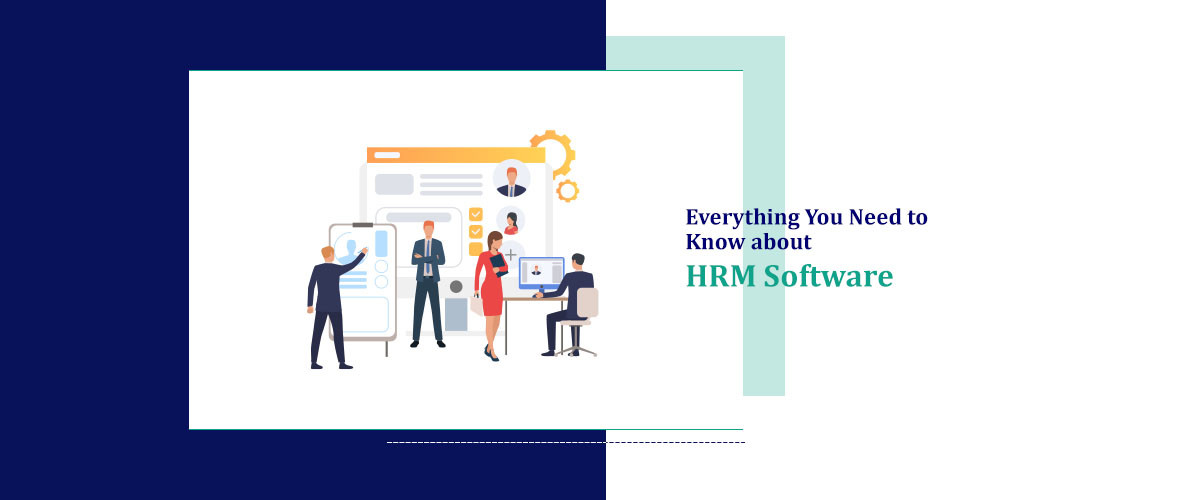
The use of Human Resource Management Systems (HRM) software has become essential for HR process optimisation. HRM enables HR departments to work effec [...]

Vaishali

An endpoint breach occurs when an attacker gains unauthorized access to your network through a connected device — a laptop, smartphone, tablet, or s [...]
mitisha j
Maintaining a high-performing team in a digital environment requires more than just periodic check-ins. It demands a structured approach wher [...]